In the early months of 2020, as the novel coronavirus SARS-CoV-2 swept across the globe, healthcare systems were thrust into a crisis unlike any other in modern history. Beyond the immediate clinical challenges of treating a new and deadly disease, a critical administrative need emerged: how to accurately classify and track it. Enter the International Classification of Diseases, Tenth Revision, Clinical Modification (ICD-10-CM). What might seem like a dry, technical exercise—assigning a code—became a fundamental pillar of the pandemic response. The creation and implementation of code U07.1, COVID-19, was not merely an update to a medical classification system; it was the creation of a universal language that allowed the world to quantify, analyze, and ultimately combat the virus.
This code, a simple alphanumeric string, carries immense weight. It is the key that unlocks data on hospital capacity, mortality rates, vaccine effectiveness, and the long-term societal impact of the virus. For healthcare providers, accurate assignment of U07.1 and its related codes is directly tied to patient care, appropriate reimbursement, and institutional integrity. This article delves deep into the world of the ICD-10 code for COVID-19, moving beyond a basic description to explore the intricate guidelines, complex scenarios, and profound implications that surround this essential tool of modern medicine. We will navigate the challenges of sequencing, the nuances of coding for “Long COVID,” and the critical importance of precise physician documentation. This is the story of how a classification system designed for a steady-state healthcare environment adapted in real-time to a global emergency, and why its accurate application remains more critical than ever.
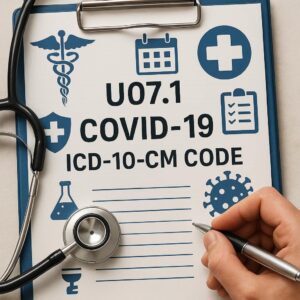
ICD-10-CM Code for COVID-19
Chapter 1: The Foundation – Understanding ICD-10-CM and Its Role in Modern Medicine
What is ICD-10-CM? A Brief History and Purpose
The International Classification of Diseases (ICD) is a global health diagnostic tool managed by the World Health Organization (WHO). It provides a system of diagnostic codes for classifying diseases, including nuanced classifications of signs, symptoms, abnormal findings, complaints, social circumstances, and external causes of injury or disease. The “Tenth Revision” (ICD-10) was endorsed by the WHO in 1990, and the “Clinical Modification” (ICD-10-CM) is the specific set of diagnosis codes used in the United States for all healthcare encounters. It was fully implemented on October 1, 2015, replacing the previous ICD-9-CM system.
The primary purposes of ICD-10-CM are multifaceted:
-
Standardization: It creates a common language among physicians, nurses, coders, insurers, and public health officials.
-
Epidemiology and Public Health: It is the cornerstone of tracking disease incidence and prevalence, identifying outbreaks, and monitoring health trends across populations.
-
Billing and Reimbursement: In the U.S. healthcare system, diagnosis codes are directly linked to medical billing. They are used by insurance companies, including Medicare and Medicaid, to determine coverage and reimbursement for services. Accurate coding is essential for healthcare providers to receive appropriate payment.
-
Research: Researchers use aggregated ICD-10-CM data to study treatment outcomes, drug efficacy, healthcare costs, and the natural history of diseases.
The Critical Link: Diagnostic Codes, Reimbursement, and Public Health Surveillance
The connection between a diagnostic code and hospital reimbursement is governed by complex systems like the MS-DRG (Medicare Severity-Diagnosis Related Group) system. When a patient is discharged, their diagnoses and procedures are translated into codes. These codes are grouped into an MS-DRG, which determines a fixed payment amount to the hospital. If COVID-19 (U07.1) is incorrectly listed as a secondary diagnosis when it was the primary reason for admission, the hospital may be assigned to a lower-paying DRG, resulting in significant financial loss. Conversely, correctly coding the severity, such as adding a code for pneumonia or ARDS, can justify a higher-paying DRG that reflects the true resources used in the patient’s care.
From a public health perspective, codes like U07.1 are the raw data that inform policy. When the CDC reports that COVID-19 hospitalizations are rising in a specific region, that data is aggregated from thousands of individual U07.1 codes submitted by hospitals. This information guides decisions on mask mandates, vaccination site placements, and allocations of monoclonal antibodies or other treatments.
Chapter 2: The Primary Code – U07.1 COVID-19 Decoded
Official Code Description and Tabular List Instructions
The code U07.1 is found in Chapter 22 of the ICD-10-CM manual, which is designated for “Codes for Special Purposes.” It is categorized under the subheading “Provisional assignment of new diseases of uncertain etiology or emergency use.” The official descriptor is simply “COVID-19.”
Crucially, the ICD-10-CM Official Guidelines for Coding and Reporting provide specific instructions for this code. The guideline states: *”Code only a confirmed diagnosis of COVID-19 as documented by the provider. This confirmation does not require documentation of a positive test result for COVID-19. The provider’s diagnostic statement that the patient has COVID-19 is sufficient.”*
This guideline is paramount and is often a source of confusion. Let’s break it down.
The Paramount Importance of Physician Documentation
In medical coding, the physician’s documentation in the medical record is the ultimate source of truth. While a positive lab test is strong objective evidence, the code assignment hinges on the provider’s clinical judgment and diagnosis. If a physician documents “COVID-19,” “SARS-CoV-2 infection,” or “novel coronavirus,” the coder can assign U07.1, even in the absence of a test result. This is vital for situations early in the pandemic or in resource-limited settings where testing was scarce. The physician may diagnose based on clinical symptoms (fever, cough, loss of taste/smell) and a known exposure.
Confirmed Cases: The Role of Laboratory Testing
In the vast majority of cases, confirmation is achieved through a positive test result. The standard is a molecular test (e.g., PCR) or an antigen test. The medical record should clearly document the positive result. Coders are instructed not to code a “suspected,” “possible,” or “rule out” COVID-19 diagnosis. If the provider has not explicitly stated the diagnosis, the coder must wait for confirmation or query the provider.
Clinical Criteria and Epidemiological Linkage: When a Test is Not Available
As per the coding guidelines, a test is not mandatory. For example, if a patient presents with classic symptoms and their spouse was just confirmed to have COVID-19, a physician may diagnose “clinically confirmed COVID-19” without testing. This diagnosis is sufficient for coding U07.1. This flexibility ensures that cases are captured for public health surveillance even when testing capabilities are overwhelmed.
Chapter 3: The Sequencing Conundrum – Reason for Admission vs. Manifestation
The Golden Rule of ICD-10-Coding: The Principal Diagnosis
The principal diagnosis is defined as “the condition established after study to be chiefly responsible for occasioning the admission of the patient to the hospital for care.” Correctly identifying and sequencing the principal diagnosis is the most critical step in inpatient coding. The sequencing of U07.1 depends entirely on the circumstances of the hospitalization.
Scenario Analysis: COVID-19 as the Reason for Admission
Scenario: A patient is admitted to the hospital with fever, shortness of breath, and a confirmed positive COVID-19 test. A chest X-ray confirms pneumonia due to COVID-19. The physician’s admission note states, “Patient admitted for COVID-19 pneumonia.”
-
Analysis: COVID-19 is the underlying cause of the pneumonia and is the reason for the admission.
-
Correct Coding:
-
Principal Diagnosis: U07.1, COVID-19
-
Secondary Diagnosis: J12.82, Pneumonia due to COVID-19
-
Scenario Analysis: Asymptomatic COVID-19 Identified During a Separate Admission
Scenario: A patient is admitted for a scheduled hip replacement (elective surgery). As part of routine pre-admission testing, the patient tests positive for COVID-19 but is completely asymptomatic. The surgery is postponed. The patient is admitted for isolation and monitoring but requires no treatment for COVID-19.
-
Analysis: The reason for admission was the hip replacement. The COVID-19 infection was an incidental finding that altered the plan of care but was not the reason for seeking hospital care.
-
Correct Coding:
-
Principal Diagnosis: The code for the intended procedure (e.g., a code for joint pain or osteoarthritis of the hip).
-
Secondary Diagnosis: U07.1, COVID-19
-
( Sequencing U07.1 Based on Reason for Admission)
| Clinical Scenario | Principal Diagnosis | Secondary Diagnosis(s) | Rationale |
|---|---|---|---|
| Symptomatic COVID-19 Patient admitted with cough, fever, and hypoxia due to COVID-19. |
U07.1 (COVID-19) | Codes for symptoms (e.g., R06.02 for shortness of breath) and complications (if any). | COVID-19 is the underlying etiology causing the symptoms that prompted the admission. |
| COVID-19 Pneumonia Patient admitted with respiratory failure due to COVID-19 pneumonia. |
U07.1 (COVID-19) | J12.82 (Pneumonia due to COVID-19), J96.00 (Acute respiratory failure) | The pneumonia and respiratory failure are direct manifestations of the COVID-19 infection. |
| Incidental Finding Patient admitted for appendicitis; pre-op test reveals asymptomatic COVID-19. |
K35.80 (Acute appendicitis) | U07.1 (COVID-19) | The appendicitis is the reason for admission. COVID-19 is a coexisting condition that may affect care but is not the reason for it. |
| MIS-A Patient admitted with shock and cardiac dysfunction due to Multisystem Inflammatory Syndrome in Adults. |
M35.89 (Other specified systemic involvement of connective tissue) | U07.1 (COVID-19) | MIS is the acute, life-threatening condition being treated. U07.1 is used to indicate the viral etiology. |
Chapter 4: Capturing Severity – The Critical Role of Additional Codes
Simply coding U07.1 does not paint a complete clinical picture. The severity of illness is captured through additional codes that describe the specific manifestations and complications.
Coding for Pneumonia: J12.82 and the Specificity of U07.1
There is a specific code for COVID-19-related pneumonia: J12.82, Pneumonia due to COVID-19. This code should never be used alone. It must always be accompanied by U07.1. The sequencing depends on the reason for admission, as shown in the scenarios above. This combination provides much richer data than U07.1 alone, indicating a more severe course of the disease.
Acute Respiratory Distress Syndrome (ARDS): The J80 Code
ARDS is a severe and common complication of critical COVID-19. It is coded with J80, Acute respiratory distress syndrome. When ARDS is documented as being due to COVID-19, the coder would assign:
-
U07.1, COVID-19
-
J80, Acute respiratory distress syndrome
The code J80 is also used to indicate extreme severity.
Other Manifestations: Loss of Smell/Taste, Hypercoagulability, and More
COVID-19 can affect nearly every organ system. Accurate coding requires capturing these manifestations:
-
Loss of smell or taste: R43.8 (Other disturbances of smell and taste)
-
Hypercoagulable state: D68.69 (Other thrombophilia)
-
Acute kidney failure: N17.9 (Acute kidney failure, unspecified)
-
Myocarditis: I40.0 (Infective myocarditis) – *Note: There is an Excludes1 note for myocarditis associated with COVID-19, which directs the coder to use U07.1 and not I40.0. Always check the tabular list for instructions.*
-
COVID-19 associated cough: R05.1 (Acute cough)
Chapter 5: The Complexities of “Post-COVID” and Chronic Conditions
Defining Post-COVID-19 Condition (Long COVID)
A significant percentage of individuals experience persistent symptoms long after the acute phase of the infection has resolved. This condition, often called “Long COVID,” is formally known as Post-COVID-19 Condition. The WHO defines it as symptoms that persist for at least 2 months and cannot be explained by an alternative diagnosis, typically occurring 3 months from the onset of COVID-19.
Code U09.9: Guidelines for Use and Documentation Requirements
To address this, a new code was introduced: U09.9, Post COVID-19 condition, unspecified. The coding guidelines for this code are very specific:
-
It is used for patients with a history of confirmed COVID-19 who are experiencing ongoing symptoms.
-
It should not be used for a current, active COVID-19 infection.
-
The documentation must support that the patient is being seen for the sequelae of COVID-19, not the acute illness.
Sequencing Long COVID: Managing Ongoing, Chronic Health Issues
The sequencing of U09.9 follows the same “reason for visit” principle.
-
If a patient is seen specifically for fatigue and brain fog attributed to Long COVID, U09.9 would be the first-listed diagnosis.
-
If a patient with known Long COVID is seen for an unrelated condition (e.g., an annual physical), U09.9 would be listed as a secondary diagnosis, along with Z86.16 (Personal history of COVID-19).
Chapter 6: Special Populations and Situations
COVID-19 in Pregnancy: Codes from Chapter 15 (O98.5-)
COVID-19 in a pregnant patient is coded from Chapter 15, which covers pregnancy, childbirth, and the puerperium. The specific code is O98.51- (Other viral diseases complicating pregnancy, first trimester), O98.52- (…second trimester), or O98.53- (…third trimester). An additional code from Chapter 1, U07.1, must be used to identify the specific viral disease. The code from the O98.5- category is always the principal diagnosis when the pregnancy is the reason for admission.
Newborns and Perinatal Exposure: Codes from Chapter 16 (P00.89, P35.8)
Coding for newborns requires careful attention.
-
Newborn born to a mother with COVID-19: If the newborn tests negative and is asymptomatic, code P00.89, Newborn affected by other maternal conditions is used. This indicates exposure without infection.
-
Newborn with confirmed COVID-19: Code U07.1 is assigned. The coder must determine if the infection was contracted in utero (congenital) or postpartum. If congenital, code P35.8, Other congenital viral diseases may be considered, but U07.1 is typically still required. This is a complex area that relies heavily on provider documentation.
Multisystem Inflammatory Syndrome (MIS): Codes for Children (M35.81) and Adults (M35.89)
MIS is a serious condition where different body parts become inflamed. There are specific codes for this:
-
M35.81, Multisystem inflammatory syndrome in children (MIS-C)
-
M35.89, Other specified systemic involvement of connective tissue (used for MIS in adults, MIS-A)
These codes are sequenced first, followed by U07.1 to indicate the association with COVID-19.
Exposure and Screening: Codes Z20.822 and Z11.52
-
Z20.822, Contact with and (suspected) exposure to COVID-19: Used when a patient has been exposed but has no symptoms and is not being tested. For example, a well-person coming for a check-up who mentions a household exposure.
-
Z11.52, Encounter for screening for COVID-19: Used when an asymptomatic patient presents for routine testing (e.g., for travel, work, or pre-procedure screening). This code is not used if the patient has symptoms or known exposure.
Personal History of COVID-19: The Z86.16 Code
Z86.16, Personal history of COVID-19 is used to indicate that a patient has recovered from a previous COVID-19 infection. This is important information for their permanent medical history and may be relevant to their ongoing care, especially in the context of potential long-term effects.
Chapter 7: The Impact of Accurate Coding – Beyond the Medical Record
The ripple effects of a single ICD-10 code extend far beyond the patient’s chart.
Driving Public Health Policy and Resource Allocation
Accurate, real-time data on COVID-19 hospitalizations, by severity, allowed governments to see which regions were becoming hotspots. This data directly informed decisions on deploying mobile hospitals, shifting ventilators, and directing monoclonal antibody treatments. Tracking codes for MIS-C helped identify this rare but dangerous syndrome in children quickly.
Fueling Clinical and Epidemiological Research
Researchers use large databases of ICD-10 codes to answer critical questions. By analyzing data from millions of coded records, they have been able to:
-
Identify risk factors for severe disease (e.g., specific comorbidities).
-
Study the effectiveness of treatments and vaccines in real-world settings.
-
Characterize the incidence and spectrum of Long COVID symptoms.
Ensuring Appropriate Hospital Reimbursement and Financial Stability
As previously discussed, correct coding is a matter of financial viability for hospitals. The costs of treating a patient with severe COVID-19 pneumonia and ARDS are enormous. If the coding does not reflect this severity, the reimbursement will be insufficient, threatening the hospital’s ability to continue providing care. Audits by Medicare and private insurers constantly review records to ensure coding accuracy, and improper coding can lead to hefty fines and recoupments.
Chapter 8: Common Pitfalls and Auditing Challenges
Insufficient Documentation: The Coder’s Greatest Hurdle
The most common problem is vague documentation. Terms like “possible COVID,” “pending results,” or “rule out” are not codeable. Coders must query the physician for clarification. A strong clinical documentation improvement (CDI) program is essential to ensure providers document clearly and specifically.
Misinterpreting “Suspected” vs. “Confirmed” Cases
Coders must be vigilant in distinguishing between a suspected case (use Z20.822 or a symptom code) and a confirmed case (use U07.1). Assigning U07.1 without confirmation can lead to inaccurate data and billing errors.
Incorrect Sequencing Leading to Denials
Placing U07.1 as the principal diagnosis when it was an incidental finding is a frequent cause of claim denials. Auditors will review the entire record to determine the true reason for admission. Education for both coders and physicians on the importance of sequencing is crucial.
Conclusion: The Enduring Legacy of a Code
The ICD-10 code U07.1, COVID-19, transformed a clinical diagnosis into actionable data that shaped the global pandemic response. Its accurate application is a multidisciplinary effort, reliant on precise physician documentation, expert medical coding, and a clear understanding of complex guidelines. As COVID-19 transitions from a pandemic emergency to an endemic public health issue, the principles of accurate classification—capturing acute illness, chronic sequelae, and historical context—will continue to be vital for patient care, financial stability, and the advancement of medical knowledge.
Frequently Asked Questions (FAQs)
Q1: Can I code U07.1 if the physician documents “COVID-19” but the test result is negative?
A: No. If a test result is negative and the physician still believes the patient has COVID-19, they must document their clinical medical decision-making clearly (e.g., “Clinical diagnosis of COVID-19 despite negative antigen test due to high suspicion and typical symptoms”). The coder would then assign U07.1 based on that confirmed clinical diagnosis. If the physician dismisses COVID-19 based on the negative test, U07.1 is not assigned.
Q2: How do I code a patient who is seen for a follow-up of Long COVID but also has a new positive COVID-19 test (reinfection)?
A: This is a complex scenario. The reason for the encounter dictates the sequencing. If the visit is primarily to manage Long COVID symptoms and the reinfection is asymptomatic or mild, U09.9 would be first-listed, and U07.1 would be added for the reinfection. If the patient is being treated for the acute reinfection, then U07.1 becomes the first-listed diagnosis, and U09.9 would be secondary. Clear documentation is essential.
Q3: What is the difference between Z11.52 (screening) and Z20.822 (exposure)?
A: Z11.52 is for a patient with no symptoms and no known exposure who is being tested as a routine precaution. Z20.822 is for a patient who has no symptoms but has a known exposure to a person with COVID-19. If a patient with a known exposure develops symptoms, you would code the symptoms, not Z20.822.
Q4: When should I use the personal history code Z86.16?
A: Use Z86.16 when a patient has a past history of COVID-19 that is relevant to their current care or medical history but is not the reason for the encounter. For example, if a patient is being seen for asthma and their record notes they had COVID-6 months ago, Z86.16 would be added. It should not be used for a current infection or for Post-COVID-19 Condition (which uses U09.9).
Additional Resources
For the most up-to-date and authoritative information, always consult these primary sources:
-
Centers for Disease Control and Prevention (CDC) ICD-10-CM Official Guidelines for Coding and Reporting: https://www.cdc.gov/nchs/icd/icd10cm.htm (Check for the current fiscal year’s file).
-
American Health Information Management Association (AHIMA): https://www.ahima.org/ (Provides educational resources, webinars, and practice guidance on coding for COVID-19).
-
American Academy of Professional Coders (AAPC): https://www.aapc.com/ (Another leading organization for coders, with articles and forums discussing coding challenges).
-
World Health Organization (WHO) International Classification of Diseases: https://www.who.int/standards/classifications/classification-of-diseases (Provides the international context for the ICD system).