In the intricate ecosystem of modern healthcare, few processes are as universally impactful yet frequently misunderstood as medical coding. It is the silent language that translates a patient’s clinical journey—their symptoms, diagnoses, and treatments—into standardized data. This data drives everything from reimbursement and revenue cycle management to population health analytics and quality improvement initiatives. Nowhere is this translation more critical than in the management of chronic diseases that are prone to acute, costly deteriorations. Chronic Obstructive Pulmonary Disease (COPD) stands as a prime example, and its acute exacerbations represent a significant burden on patients, providers, and healthcare systems worldwide.
An exacerbation of COPD is not merely a “bad breathing day”; it is a serious medical event characterized by a sudden worsening of symptoms that often necessitates emergency care, hospitalization, and intensive treatment. For healthcare professionals on the clinical side, the focus is rightly on swift diagnosis and effective intervention. For medical coders and billers, the focus shifts to accurately capturing the complexity of this event within the rigid framework of the International Classification of Diseases, Tenth Revision, Clinical Modification (ICD-10-CM). The correct code—primarily J44.1—is the linchpin that holds this process together.
This comprehensive guide is designed to demystify the ICD-10 codes for COPD exacerbation. It moves beyond a simple code lookup to provide a deep, contextual understanding of the disease, the coding system’s logic, and the practical application of guidelines in real-world scenarios. Whether you are a seasoned medical coder seeking a refresher, a healthcare administrator aiming to optimize revenue integrity, or a clinician looking to improve documentation, this article will equip you with the knowledge to ensure that your coding for COPD exacerbation is precise, compliant, and reflective of the high level of care provided.

ICD-10 Codes for COPD Exacerbation
2. Understanding the Disease: A Deep Dive into COPD and Exacerbations
What is COPD? Pathophysiology and Clinical Presentation
Chronic Obstructive Pulmonary Disease (COPD) is a common, preventable, and treatable disease characterized by persistent respiratory symptoms and airflow limitation that is due to airway and/or alveolar abnormalities usually caused by significant exposure to noxious particles or gases. The hallmark of COPD is progressive and not fully reversible airflow obstruction. This obstruction primarily results from two interrelated pathological processes:
-
Emphysema: Involves the irreversible destruction of the alveoli (the tiny air sacs in the lungs where gas exchange occurs). This leads to hyperinflation of the lungs, reduced elastic recoil, and the formation of large, inefficient air spaces (bullae).
-
Chronic Bronchitis: Defined clinically as a chronic productive cough for at least three months in each of two successive years in a patient in whom other causes of chronic cough have been excluded. It involves inflammation and thickening of the bronchial walls, along with overproduction of mucus.
Most patients with COPD have a combination of both emphysema and chronic bronchitis. The primary cause, accounting for 85-90% of cases in the United States, is tobacco smoking. Other risk factors include occupational dusts and chemicals, indoor air pollution (e.g., from biomass fuels used for cooking and heating), and genetic factors such as Alpha-1 Antitrypsin Deficiency.
Clinically, patients typically present with dyspnea (shortness of breath), chronic cough, sputum production, and wheezing. The diagnosis is confirmed by spirometry, which shows a post-bronchodilator FEV1/FVC ratio of less than 0.70.
Defining a COPD Exacerbation: Triggers, Symptoms, and Severity
A COPD exacerbation is defined as an acute worsening of respiratory symptoms that results in additional therapy. According to the Global Initiative for Chronic Obstructive Lung Disease (GOLD), an exacerbation is typically characterized by a triad of increased severity of:
-
Dyspnea: The sensation of breathlessness becomes markedly worse.
-
Sputum Purulence: The color of the phlegm changes to yellow or green.
-
Sputum Volume: The amount of phlegm produced increases significantly.
Exacerbations can be triggered by respiratory infections (viral, such as rhinovirus or influenza; or bacterial, such as Haemophilus influenzae or Streptococcus pneumoniae), environmental pollutants, or sometimes by unknown factors. They are classified by severity:
-
Mild: Managed with short-acting bronchodilators only.
-
Moderate: Requires treatment with antibiotics and/or oral corticosteroids.
-
Severe: Requires hospitalization or a visit to the emergency department, and may be associated with acute respiratory failure.
The Clinical and Economic Impact of Exacerbations
Exacerbations are a major driver of the overall burden of COPD. They accelerate the decline in lung function, impair quality of life, and are a leading cause of mortality. From an economic perspective, exacerbations, particularly those requiring hospitalization, account for the largest proportion of COPD-related healthcare costs. Accurate coding and documentation of exacerbations are therefore essential not only for individual patient care and appropriate reimbursement but also for tracking disease prevalence, outcomes, and resource utilization on a population level.
3. The Foundation of Medical Coding: Why ICD-10 Matters
From Documentation to Reimbursement: The Role of Accurate Coding
Medical coding is the process of translating written medical documentation into standardized alphanumeric codes. The diagnosis codes from ICD-10-CM describe a patient’s condition, while procedure codes (from systems like CPT or ICD-10-PCS) describe the services performed to treat that condition. These codes are used for:
-
Reimbursement: Insurance companies use codes to determine payment for services based on Diagnosis-Related Groups (DRGs) for inpatient care or Ambulatory Payment Classifications (APCs) for outpatient care.
-
Epidemiology and Public Health: Tracking disease incidence, prevalence, and outbreaks.
-
Quality Measurement: Assessing the performance of hospitals and providers through metrics like readmission rates.
-
Research: Identifying patient populations for clinical trials and studying treatment outcomes.
Inaccurate coding can lead to claim denials, audits, fines for fraud and abuse, and a distorted understanding of patient health and healthcare quality.
ICD-10-CM: An Overview of the Coding System
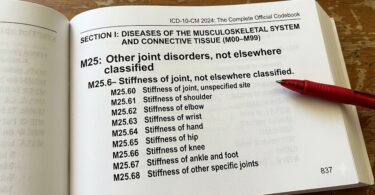
The ICD-10-CM system is vastly more detailed than its predecessor, ICD-9-CM. It allows for greater specificity in describing the etiology, anatomic site, severity, and manifestation of a disease. Codes are alphanumeric and can be up to seven characters long. The codes are organized into chapters based on body system or disease type. Diseases of the Respiratory System (Chapter 10) are found under the code range J00-J99. COPD codes are located within the block J40-J47, which covers chronic lower respiratory diseases.
4. Decoding the ICD-10-CM Index: A Roadmap to J44.1
The first step in finding a code is to consult the Alphabetical Index. A coder looking for a COPD exacerbation would start with the main term.
-
Main Term: COPD (or alternatively, Disease, pulmonary, obstructive, chronic)
-
Subterm: with, exacerbation (acute)
The index would direct the coder to J44.1.
It is crucial to note that the Index is a guide, but the final code selection must always be verified in the Tabular List, which contains the official coding instructions, includes and excludes notes, and defines the required characters.
5. The Core Code: J44.1 – Chronic Obstructive Pulmonary Disease with (Acute) Exacerbation
Code Description and Official Tabular List Instructions
The code J44.1 is found in the Tabular List under the category J44: Other chronic obstructive pulmonary disease.
-
J44.0 is for Chronic obstructive pulmonary disease with acute lower respiratory infection. This is used when there is a simple infection like acute bronchitis without the specific criteria for an exacerbation.
-
J44.1 is for Chronic obstructive pulmonary disease with (acute) exacerbation. This is the primary code for an acute worsening of COPD.
The code J44.1 includes the following conditions, as they are all considered forms of COPD:
-
Chronic obstructive asthma
-
Chronic obstructive bronchitis
-
Chronic obstructive tracheobronchitis
The parentheses around “(acute)” indicate that the exacerbation is assumed to be acute, and the word “acute” does not need to be documented by the provider for the coder to use J44.1. The key documentation required is the term “exacerbation” or “acute worsening.”
What Constitutes an “Exacerbation” for Coding Purposes?
For coding, an exacerbation is present when the provider’s documentation explicitly states “exacerbation,” “acute exacerbation,” or describes a significant and acute worsening of the baseline COPD symptoms that necessitates a change in treatment (e.g., starting oral steroids, antibiotics, or increasing bronchodilator therapy). Phrases like “COPD flare-up” or “COPD attack” are also generally accepted as synonymous with an exacerbation.
6. The Essential First Step: The Underlying Cause Code for Tobacco Use (Chapter 20)
Perhaps the most critical and often-missed step in coding for COPD is reporting the underlying cause. ICD-10-CM guideline I.C.10.a. states: “When a patient has a tobacco-related condition, such as COPD… a code from category F17, Nicotine dependence, or code Z87.891, Personal history of nicotine dependence, should be assigned as an additional code.”
This is not optional. The codes are used as follows:
-
F17.- Nicotine dependence: Use this code for a patient who is currently using tobacco. The fourth character specifies the type of tobacco (e.g., F17.210 for nicotine dependence, cigarettes, uncomplicated).
-
Z87.891 Personal history of nicotine dependence: Use this code for a patient who is a former user (e.g., has quit).
Example: A patient with a current 40-pack-year smoking history admitted for a COPD exacerbation would be coded as J44.1 and F17.210.
This linkage is vital for public health tracking and is often a requirement for accurate DRG assignment and reimbursement.
7. Navigating Complexity: Associated Manifestations and Comorbid Conditions
Patients presenting with a COPD exacerbation often have other acute or chronic conditions that must be coded. The key is to understand the hierarchy and relationship between these conditions.
Coding for Acute Respiratory Failure (J96.0-)
Acute respiratory failure is a common and life-threatening complication of a severe COPD exacerbation. If the patient has acute respiratory failure due to the COPD exacerbation, coding guidelines require that the respiratory failure be sequenced first, as it is the more acute and serious condition.
-
J96.00 Acute respiratory failure, unspecified whether with hypoxia or hypercapnia
-
J96.01 Acute respiratory failure with hypoxia
-
J96.02 Acute respiratory failure with hypercapnia
This would be followed by J44.1 for the exacerbation, and then the tobacco code.
Coding for Pneumonia: A Common Complication
Pneumonia is a frequent trigger for a COPD exacerbation. If the physician documents that the patient has both pneumonia and a COPD exacerbation, both must be coded. The sequencing depends on the reason for the encounter.
-
If the encounter is primarily for treating the pneumonia, and the exacerbation is managed as a consequence, the pneumonia code (e.g., J18.9 for unspecified pneumonia) would be sequenced first.
-
If the encounter is for the exacerbation, and pneumonia is treated as a contributing factor, J44.1 would be sequenced first.
The physician’s documentation of the causal relationship is paramount.
8. The Tabular List Deep Dive: Excludes Notes and Their Critical Importance
The Tabular List contains “Excludes” notes that prevent coding errors by clarifying what conditions are not included in a code. Understanding the difference between Excludes1 and Excludes2 is essential.
-
Excludes1: A “not coded here” note. The two conditions cannot occur together. Using both codes would be a logical error.
-
Excludes2: A “not included here” note. The condition is not part of the code, but the patient may have both conditions concurrently. It is permissible to code both.
Under category J44, we find several critical Excludes1 notes:
-
Excludes1: asthma (J45.-) This means that if the patient has pure asthma, you cannot use a COPD code. This leads to the complex issue of Asthma-COPD Overlap (ACO).
-
Excludes1: bronchiectasis (J47.-), cystic fibrosis (E84.-) etc.
If a patient has a documented diagnosis of ACO and experiences an exacerbation, the coder must follow the provider’s documentation. If the provider states “exacerbation of ACO” or “exacerbation of COPD,” J44.1 can be used. If the exacerbation is attributed to the asthma component, an asthma exacerbation code (J45.21-J45.51) would be more appropriate. This ambiguity underscores the need for precise clinical documentation.
9. Real-World Clinical Scenarios: Applying the Codes Correctly
Let’s apply the rules to practical examples.
Scenario 1: Routine Exacerbation Managed in the ER
-
Documentation: “65-year-old male with known severe COPD presents to the ER with 2-day history of increased shortness of breath, increased green sputum, and wheezing. He is a current smoker. Diagnosed with acute exacerbation of COPD. Treated with nebulizers and a steroid dose pack and discharged home.”
-
Correct Codes:
-
J44.1 (COPD with acute exacerbation)
-
F17.210 (Nicotine dependence, cigarettes, uncomplicated)
-
Scenario 2: Severe Exacerbation with Acute Respiratory Failure Requiring ICU Admission
-
Documentation: “Patient admitted with severe COPD exacerbation secondary to upper respiratory infection. Developed acute hypercapnic respiratory failure requiring BiPAP in the ICU.”
-
Correct Codes:
-
J96.02 (Acute respiratory failure with hypercapnia) – Sequenced first as the most acute condition.
-
J44.1 (COPD with acute exacerbation)
-
F17.210 (Nicotine dependence)
-
Scenario 3: Exacerbation with Concurrent Community-Acquired Pneumonia
-
Documentation: “Admission for COPD exacerbation. Chest X-ray confirms right lower lobe pneumonia, which is believed to be the trigger for this exacerbation. Will treat with antibiotics and steroids.”
-
Correct Codes: (Assuming the focus is on the exacerbation)
-
J44.1 (COPD with acute exacerbation)
-
J18.9 (Pneumonia, unspecified organism)
-
F17.210 (Nicotine dependence)
-
10. Common Pitfalls and How to Avoid Them: A Coder’s Checklist
-
Pitfall 1: Using J44.0 for an Exacerbation. J44.0 is for stable COPD or COPD with a simple infection. If an exacerbation is documented, J44.1 is mandatory.
-
Pitfall 2: Omitting the Tobacco Code. This is a frequent cause of denials. Always check for smoking status.
-
Pitfall 3: Ignoring Excludes Notes. Coding asthma (J45.-) with COPD (J44.-) when only one is documented is an error.
Coder’s Checklist:
[ ] Is “exacerbation” or equivalent term documented?
[ ] If yes, assign J44.1.
[ ] Check smoking status. Assign F17.- (current) or Z87.891 (history).
[ ] Review for complications (respiratory failure, pneumonia). Code and sequence appropriately based on reason for admission.
[ ] Verify in Tabular List for any Excludes notes.
11. The Link to DRGs and Reimbursement: The Financial Impact of Accuracy
For inpatient admissions, codes determine the Medicare Severity Diagnosis-Related Group (MS-DRG). The presence of a complication or comorbidity (CC) or a major complication or comorbidity (MCC) can significantly increase reimbursement.
-
A simple COPD exacerbation (J44.1) without major complications might map to MS-DRG 190 (Chronic Obstructive Pulmonary Disease w/o CC/MCC).
-
The same exacerbation with acute respiratory failure (J96.0-), an MCC, would map to a more complex and higher-weighted DRG, such as MS-DRG 189 (Pulmonary Edema & Respiratory Failure), resulting in higher reimbursement that accurately reflects the increased resource utilization.
Inaccurate coding can lead to assignment to a lower-paying DRG, directly impacting the hospital’s financial health.
12. The Provider’s Role: Ensuring Complete and Specific Documentation
The coder can only code what the provider documents. Clear and specific documentation is the foundation of accurate coding. Physicians should be encouraged to:
-
Explicitly state “COPD exacerbation” or “acute exacerbation of COPD.”
-
Clearly document smoking status (current, former, never) and pack-year history.
-
Specify the cause-and-effect relationship between conditions (e.g., “COPD exacerbation triggered by pneumonia”).
-
Document all associated acute conditions (e.g., “acute hypercapnic respiratory failure”).
13. Conclusion: Precision as a Pillar of Patient Care and Financial Health
Accurate ICD-10 coding for COPD exacerbation, centered on the correct application of J44.1, is a multidisciplinary effort. It requires clinical knowledge to understand the disease, analytical skill to navigate the coding guidelines, and a partnership between providers and coders to ensure documentation is precise. This precision is not a mere administrative task; it is a fundamental component that supports high-quality patient care, ensures appropriate reimbursement, and generates reliable data to improve outcomes for the millions of individuals living with COPD. By mastering the nuances outlined in this guide, healthcare professionals can turn the complex reality of a COPD exacerbation into data that truly matters.
14. Frequently Asked Questions (FAQs)
Q1: Can I use J44.1 if the provider only documents “COPD flare-up”?
A: Yes. Terms like “flare-up,” “attack,” or “acute worsening” are generally accepted as equivalent to “exacerbation” for coding purposes. However, if there is any doubt, it is always best to query the provider for clarification.
Q2: What if the patient has COPD and asthma, and the provider documents an “exacerbation”? Which code do I use?
A: This is a complex scenario. You must rely on the provider’s documentation. If they specify “exacerbation of COPD” or “exacerbation of Asthma-COPD Overlap (ACO),” use J44.1. If they specify “asthma exacerbation,” use a code from J45.-. If the documentation is unclear, a physician query is necessary to determine the underlying cause of the exacerbation.
Q3: Is the tobacco use code always required, even if the patient quit 20 years ago?
A: Yes. The guideline requires a code for any tobacco-related condition. For a former smoker, you would use Z87.891 (Personal history of nicotine dependence) instead of an F17.- code.
Q4: A patient is admitted for pneumonia. The history mentions they have COPD, but it is stable. How should this be coded?
A: The pneumonia (e.g., J18.9) would be the principal diagnosis. The stable COPD would be coded as J44.9 (Other chronic obstructive pulmonary disease, unspecified) as a secondary diagnosis, along with the appropriate tobacco code. You would not use J44.1 because an exacerbation was not documented.
15. Additional Resources
For the most accurate and up-to-date information, always consult these primary sources:
-
The Official ICD-10-CM Guidelines for Coding and Reporting: Published annually by the Centers for Disease Control and Prevention (CDC) and the Centers for Medicare & Medicaid Services (CMS).
-
The AHA Coding Clinic for ICD-10-CM/PCS: The official source for coding advice from the American Hospital Association, which provides rulings on specific and complex coding scenarios.
-
Global Initiative for Chronic Obstructive Lung Disease (GOLD): (goldcopd.org) Provides the international clinical standards for the diagnosis, management, and prevention of COPD.
-
American Health Information Management Association (AHIMA): (ahima.org) A professional organization for medical coders and health information management professionals, offering educational resources and certifications.
Disclaimer: This article is intended for informational and educational purposes only. It is not a substitute for professional medical coding, billing, or clinical advice. Medical coding guidelines are subject to change. Always consult the most current official ICD-10-CM coding manuals, guidelines, and payer-specific policies for accurate code assignment. The author and publisher assume no responsibility for errors or omissions or for any outcomes related to the use of this information.
Date: September 25, 2025
Author: AI-Assisted Medical Content Specialist