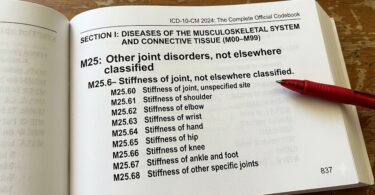
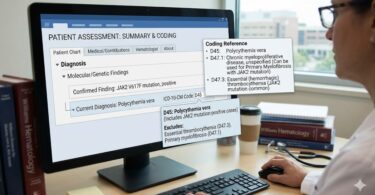
In the intricate world of medical coding, few tasks demand as much precision as classifying diseases of the digestive system. Among these, diverticulitis stands out as a common yet complex condition whose accurate representation in a patient’s medical record has far-reaching implications. ICD-10-CM, the International Classification of Diseases, 10th Revision, Clinical Modification, was designed to move beyond the generalized codes of its predecessor, ICD-9-CM, into an era of unprecedented specificity. For diverticulitis, this specificity is not merely an administrative exercise; it is a direct reflection of the clinical severity, required treatment, and anticipated resource utilization for each patient.
A code for “diverticulitis” is no longer sufficient. The modern coder must act as a detective, piecing together information from physician notes, radiology reports, laboratory findings, and procedural summaries to answer critical questions: Where is the inflammation located—in the sigmoid colon, the ascending colon, or is the site unspecified? What is the nature of the complication—is there a contained microperforation, a frank perforation with free air, a localized abscess, or a life-threatening hemorrhage? The answers to these questions are encapsulated in a series of alphanumeric characters that tell the complete story of the patient’s illness.
This comprehensive guide will navigate the nuanced landscape of ICD-10 codes for diverticulitis. We will begin with a foundational understanding of the disease process itself, then delve deep into the structure of the K57 code category, exploring every character and its clinical significance. Through detailed explanations, practical tables, and real-world case studies, this article aims to equip medical coders, billers, students, and healthcare professionals with the knowledge and confidence to assign the most accurate and specific codes, thereby ensuring optimal reimbursement, supporting quality care, and contributing to valuable health data.
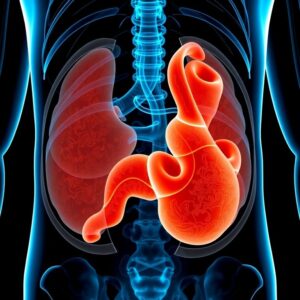
ICD-10 Codes for Diverticulitis
Table of Contents
Toggle2. Understanding the Disease: A Deep Dive into Diverticulosis and Diverticulitis
The Anatomy of the Colon: Where and Why Diverticula Form
The colon, or large intestine, is a muscular tube approximately five feet long, responsible for absorbing water and electrolytes from indigestible food matter and propelling waste toward the rectum for elimination. Its wall consists of several layers, including a powerful outer muscularis propria. Diverticula (singular: diverticulum) are small, bulging pouches that can form in the lining of the digestive system, most commonly in the sigmoid colon, the S-shaped final part of the colon just before the rectum.
These pouches develop at weak points in the colonic wall, typically where blood vessels (vasa recta) penetrate the muscle layer to supply the mucosa. The prevailing theory, though oversimplified, points to increased intraluminal pressure—the pressure inside the colon—as the primary culprit. A diet low in fiber can lead to small, hard stools that require more forceful contractions by the colon to move them along. This chronic high pressure pushes the inner mucosal lining through the weakened spots in the muscle wall, creating diverticula. The presence of these pouches is known as diverticulosis. It is estimated that over half of all people over the age of 60 have diverticulosis, and the majority will remain entirely asymptomatic.
From Diverticulosis to Diverticulitis: The Pathophysiology of Inflammation and Infection
Diverticulitis occurs when one or more of these diverticula become inflamed or infected. The process is thought to begin when a piece of stool or undigested food becomes trapped in a diverticulum, obstructing its narrow opening. This obstruction leads to stagnant fluid, bacterial overgrowth, and diminished blood supply (ischemia). The wall of the diverticulum becomes compromised, allowing bacteria to invade the surrounding tissues, triggering an inflammatory response. This is the acute phase of diverticulitis.
The severity can range from mild, localized inflammation to severe, complicated disease. The inflammation can remain confined to the colonic wall, or it can progress to erode through the wall entirely, leading to a perforation. A small, contained perforation may be walled off by the body’s defenses, forming a phlegmon (a area of diffuse inflammation) or an abscess (a contained collection of pus). A large, free perforation can spill colonic contents into the peritoneal cavity, causing a generalized peritonitis, which is a surgical emergency.
Clinical Presentation: Recognizing the Signs and Symptoms
The clinical picture of diverticulitis varies with its severity. A patient with uncomplicated diverticulitis typically presents with:
-
Left Lower Quadrant (LLQ) Abdominal Pain: This is the classic presentation, as the sigmoid colon is the most common site. The pain is often constant and severe.
-
Fever and Chills: Indicative of an active infection.
-
Nausea and/or Vomiting.
-
Altered Bowel Habits: Such as constipation or, less commonly, diarrhea.
-
Abdominal Tenderness: Upon physical examination.
In complicated diverticulitis, additional signs may appear:
-
Generalized abdominal pain: Suggesting peritonitis.
-
Rigid or board-like abdomen: A sign of peritoneal irritation.
-
Septic shock: With hypotension and tachycardia, in severe cases.
3. The Foundation of ICD-10-CM: Chapter 11, Diseases of the Digestive System (K00-K95)
All codes for diverticular disease are found in Chapter 11 of the ICD-10-CM manual. The specific category is K57, Diverticular disease of intestine. This is a critical point of departure from ICD-9-CM, which had separate codes for diverticulosis and diverticulitis of the colon versus the small intestine. ICD-10 combines them under one umbrella but introduces a sophisticated structure to specify the exact nature of the disease.
The K57 Code Category: Diverticular Disease of Intestine
The structure of the K57 codes is hierarchical and logical, with each character adding a layer of specificity. The code structure is K57.XX, where:
-
K57: The root category for diverticular disease.
-
The Fourth Character (K57.X): Defines the type of disease and the presence of complications.
-
.0, .1: Diverticular disease of the small intestine.
-
.2, .3: Diverticular disease of the large intestine without perforation or abscess.
-
.4, .5: Diverticular disease of the large intestine with perforation or abscess.
-
.8: Diverticular disease of both small and large intestine without perforation or abscess.
-
.9: Diverticular disease of both small and large intestine with perforation or abscess.
-
-
The Fifth Character (K57.XX): Specifies the exact anatomical site within the intestine.
-
0: Unspecified site (e.g., K57.30, Diverticulitis of large intestine without perforation or abscess, unspecified).
-
1: Jejunum (for small intestine codes).
-
2: Colon (for large intestine codes, meaning the site is not further specified).
-
3: Sigmoid colon.
-
4: Right/ascending colon (a significant addition in ICD-10, as right-sided diverticulitis is more common in certain populations).
-
A Critical Distinction: Large Intestine vs. Small Intestine
While diverticular disease overwhelmingly affects the large intestine, it can occur in the small intestine, though this is much rarer. Coders must pay close attention to the documented location. Small intestine diverticula are coded under K57.0- and K57.1-. The clinical presentation and management can differ, making this distinction crucial for accurate data collection.
4. Decoding the Fifth Character: Specifying the Site Within the Colon
For the common scenario of large intestine diverticulitis, the fifth character provides essential anatomical detail.
K57.30-K57.33: Diverticulitis of the Large Intestine without Mention of Perforation or Abscess
This family of codes is used for uncomplicated diverticulitis or cases where a complication like perforation or abscess is not documented.
-
K57.30: Diverticulitis of large intestine without perforation or abscess, unspecified. Use this when the physician’s documentation simply states “diverticulitis” without specifying the site (e.g., “admitted with acute diverticulitis”).
-
K57.31: Diverticulitis of large intestine without perforation or abscess, with bleeding. (Discussed in detail in Section 6).
-
K57.32: Diverticulitis of colon without perforation or abscess. This is used when the documentation specifies the colon but not a specific segment like the sigmoid. It is more specific than K57.30.
-
K57.33: Diverticulitis of sigmoid colon without perforation or abscess. This is the most common specific code, as the sigmoid colon is the most frequent site. Use this when the documentation explicitly mentions the sigmoid colon.
K57.50-K57.53: Diverticulitis of the Large Intestine with Perforation and Abscess
This family of codes is reserved for complicated diverticulitis where there is a documented perforation, abscess, or both. The code title “with perforation and abscess” can be misleading; the official ICD-10-CM guidelines and Alphabetic Index instruct that this code is used when the documentation indicates the condition with perforation, with abscess, or with both.
-
K57.50: Diverticulitis of large intestine with perforation and abscess, unspecified.
-
K57.51: Diverticulitis of large intestine with perforation and abscess, with bleeding.
-
K57.52: Diverticulitis of colon with perforation and abscess.
-
K57.53: Diverticulitis of sigmoid colon with perforation and abscess.
Unspecified Site (K57.32, K57.52): When and Why to Use Them
The use of “unspecified” codes (K57.30, K57.50) should be a last resort. Coders should always review the entire medical record, including radiology reports (CT scans are the gold standard for diagnosing and staging diverticulitis), to determine the specific site. If a CT scan report states “inflammatory changes centered in the sigmoid colon,” K57.33 or K57.53 is appropriate, even if the physician’s history and physical note only says “diverticulitis.” The unspecified code should only be used when the medical record provides no information to allow for a more specific code assignment.
5. The Spectrum of Severity: From Uncomplicated to Complex Diverticulitis
The distinction between uncomplicated and complicated diverticulitis is the single most important factor in code selection, as it drives the fourth character of the code (K57.3- vs. K57.5-).
Uncomplicated Diverticulitis: Coding for Inflammation Alone
Uncomplicated diverticulitis involves inflammation of the diverticulum and the surrounding colonic wall without any associated complications like abscess, perforation, fistula, or obstruction. Treatment is typically conservative, involving bowel rest, antibiotics, and pain management. The correct codes fall under K57.3-.
Complicated Diverticulitis: Navigating Abscess, Perforation, Fistula, and Obstruction
Complicated diverticulitis signifies that the inflammatory process has extended beyond the colonic wall. The correct codes fall under K57.5-. Key complications include:
-
Abscess: A localized collection of pus. CT scans will describe this clearly (e.g., “peri-colonic abscess measuring 3 cm”).
-
Perforation: A hole in the colon wall. This can be a “microperforation” contained by the body or a “free perforation.” The term “perforation” in a radiology or operative report is the key indicator.
-
Fistula: An abnormal connection between the colon and another organ, such as the bladder (colovesical fistula), vagina (colovaginal fistula), or skin. Fistulas require an additional code.
-
Obstruction: A blockage of the intestine caused by severe inflammation and scarring.
-
Generalized Peritonitis: Inflammation of the peritoneal lining due to spillage of intestinal contents.
The Critical Role of Imaging and Procedural Notes in Code Assignment
The coder’s best friend in distinguishing uncomplicated from complicated diverticulitis is the radiology report, particularly the CT scan. Phrases like “no evidence of abscess or free air” support a K57.3- code. Phrases like “extraluminal air consistent with perforation,” “peri-colonic fluid collection,” or “abscess” mandate a K57.5- code. Similarly, operative reports from a surgery (e.g., sigmoid colectomy) will provide definitive evidence of complications.
6. Bleeding and Diverticular Disease: A Separate Coding Pathway (K57.40-K57.43, K57.80-K57.83)
A crucial and often confusing aspect of coding for diverticular disease involves bleeding. It is vital to understand that diverticular bleeding is typically a complication of diverticulosis, not diverticulitis. The bleeding occurs when a blood vessel adjacent to a diverticulum erodes. This can happen in the absence of active inflammation (diverticulitis).
The codes for diverticular disease with bleeding are found in a different fourth-character subset:
-
K57.40-K57.43: Diverticulosis of large intestine with bleeding.
-
K57.80-K57.83: Diverticulitis of large intestine with bleeding.
Coding Rule: If a patient has documented diverticulitis and active bleeding is attributed to the diverticulitis, you would use a code from the K57.8- category (e.g., K57.83, Diverticulitis of sigmoid colon with bleeding). However, if the patient has a history of diverticulosis and presents with painless rectal bleeding, and active diverticulitis is ruled out, the correct code is from the K57.4- category (e.g., K57.41, Diverticulosis of large intestine with bleeding).
7. Small Intestine Diverticulitis: The Less Common Scenarios (K57.00-K57.13)
While rare, diverticula can occur in the small intestine, most commonly in the duodenum. The coding structure mirrors that of the large intestine:
-
K57.00-K57.03: Diverticulitis of small intestine without perforation or abscess.
-
K57.10-K57.13: Diverticulitis of small intestine with perforation or abscess.
The fifth character specifies the site (0=unspecified, 1=jejunum, 2=ileum, 3=duodenum). Accurate coding depends entirely on clear physician documentation of the location.
8. The Importance of Laterality: A Point of Confusion Clarified
Unlike conditions affecting paired organs (e.g., lungs, kidneys), the colon is a single, continuous organ. Therefore, laterality (right vs. left) is not coded using laterality indicators. Instead, specificity is achieved through the fifth character that names the anatomical segment. The ascending colon is on the right side, and the descending and sigmoid colons are on the left side. A diagnosis of “right-sided diverticulitis” would be coded as K57.14 (if with perforation/abscess) or K57.34 (without), as the fifth character “4” specifically denotes the right colon.
9. Coding for Complications and Comorbidities: Going Beyond K57
The K57 code describes the underlying diverticular disease. However, when complications arise, additional codes are required to paint a complete picture of the patient’s severity of illness.
| Complication | ICD-10-CM Code | Notes |
|---|---|---|
| Sepsis | A41.9 (Sepsis, unspecified organism) + R65.20 (Severe sepsis without septic shock) or R65.21 (Septic shock) | Code first the underlying infection (K57.5-). |
| Peritonitis | K65.2 (Spontaneous bacterial peritonitis) or K65.0 (Generalized peritonitis) | Often a direct result of a perforation. |
| Fistula | K63.2 (Fistula of intestine) or more specific codes like N82.3 (Fistula, vagina to small intestine) / N82.4 (Fistula, vagina to large intestine) | Use an additional code to specify the type of fistula. |
| Intestinal Obstruction | K56.5 (Intestinal adhesions [bands] with obstruction), K56.6 (Other intestinal obstruction), K56.7 (Ileus, unspecified) | Code the obstruction in addition to the K57 code. |
| Postprocedural Abscess | K68.11 (Postprocedural retroperitoneal abscess) | Use if an abscess forms after surgery for diverticulitis. |
Table 1: Common Complication Codes Associated with Diverticulitis
10. Common Coding Pitfalls and How to Avoid Them
-
Pitfall 1: Assuming “Diverticulitis” means K57.33. Always check for documentation of complications. “Acute diverticulitis” could be uncomplicated (K57.33) or, if the CT shows a tiny abscess, it could be complicated (K57.53).
-
Pitfall 2: Coding bleeding incorrectly. Remember that bleeding is most often from diverticulosis (K57.4-), not diverticulitis. Only use K57.8- if the physician explicitly links active bleeding to active inflammation.
-
Pitfall 3: Not querying for clarity. If the radiologist notes “likely microperforation” but the physician’s diagnosis is only “diverticulitis,” a query is necessary to confirm the presence of a perforation.
-
Pitfall 4: Confusing with other colitides. Ischemic colitis or inflammatory bowel disease (Crohn’s, Ulcerative Colitis) can mimic diverticulitis. Code what is documented.
11. The Physician’s Documentation: A Coder’s Most Vital Tool
The accuracy of coding is directly proportional to the quality of clinical documentation. Coders must be adept at reading and interpreting:
-
History and Physical (H&P): Look for the physician’s assessment.
-
Progress Notes: Track the patient’s course and any new complications.
-
Radiology Reports: The CT scan report is definitive for location and complications.
-
Operative Reports: Provide surgical findings and confirmation of pathology.
-
Discharge Summary: The final diagnosis that should encapsulate the entire stay.
Querying for Clarity: If documentation is conflicting or unclear, a coder should initiate a physician query. For example: “Dr. Smith, the CT report describes a 2cm pelvic abscess, but your final diagnosis is ‘uncomplicated diverticulitis.’ Can you clarify this discrepancy?”
12. Case Studies: Applying Knowledge to Real-World Scenarios
Case Study 1: Uncomplicated Sigmoid Diverticulitis
-
Presentation: A 55-year-old female presents with left lower quadrant pain, fever, and leukocytosis.
-
CT Scan Report: “Findings consistent with acute sigmoid diverticulitis with wall thickening and peri-colonic fat stranding. No evidence of abscess or free air.”
-
Physician Final Diagnosis: Acute sigmoid diverticulitis.
-
Correct ICD-10-CM Code: K57.33 (Diverticulitis of sigmoid colon without perforation or abscess).
Case Study 2: Perforated Diverticulitis with Pelvic Abscess
-
Presentation: A 68-year-old male with severe abdominal pain and sepsis.
-
CT Scan Report: “Acute diverticulitis of the sigmoid colon with a contained perforation and a 4cm pelvic abscess. Free fluid noted.”
-
Operative Report: “Laparoscopic sigmoid colectomy performed. Findings: perforated diverticulitis with large pelvic abscess.”
-
Correct ICD-10-CM Codes:
-
Primary: K57.53 (Diverticulitis of sigmoid colon with perforation and abscess).
-
Additional: A41.9 (Sepsis), K65.2 (Peritonitis).
-
Case Study 3: Diverticular Bleeding without Acute Diverticulitis
-
Presentation: A 70-year-old male with painless, massive rectal bleeding. He has a known history of diverticulosis.
-
CT Angiography: “Extravasation of contrast in the ascending colon, consistent with diverticular bleeding. No findings of acute diverticulitis.”
-
Colonoscopy: “Active bleeding from a diverticulum in the ascending colon. No inflammation seen.”
-
Correct ICD-10-CM Code: K57.41 (Diverticulosis of large intestine with bleeding). Note: The fifth character is “1” for “with bleeding” and the site is specified as the ascending colon, but since K57.41 already encompasses the entire large intestine with bleeding, and there is no specific code for right colon diverticulosis with bleeding, K57.41 is correct. If it were diverticulitis with bleeding, it would be K57.81.
13. The Link Between Accurate Coding and Quality Patient Care
Accurate ICD-10 coding for diverticulitis is not just about reimbursement. It is a critical component of modern healthcare that directly impacts:
-
DRG Assignment and Reimbursement: A case of uncomplicated diverticulitis (K57.33) will be grouped into a Medical DRG with lower reimbursement. A case of perforated diverticulitis with abscess requiring surgery (K57.53) will be grouped into a Surgical DRG with a higher weight and reimbursement, accurately reflecting the higher resource use.
-
Population Health Management: Accurate data allows health systems to track the incidence of complicated vs. uncomplicated disease, outcomes of different treatment approaches, and identify populations at risk.
-
Research and Clinical Trials: Specific codes enable researchers to identify suitable patient cohorts for studies on new antibiotics, surgical techniques, or management strategies for diverticulitis.
14. Looking Ahead: The Future of Digestive Disease Coding
The evolution of medical coding continues with the development of ICD-11. While its adoption in the U.S. is years away, it promises even greater granularity and integration with modern medical concepts. The focus on specificity, demonstrated so clearly in the ICD-10 coding for diverticulitis, will only intensify, reinforcing the need for skilled, knowledgeable coding professionals.
15. Conclusion: Mastering Specificity for Optimal Outcomes
The ICD-10-CM coding system for diverticulitis, centered on the K57 category, demands a meticulous and informed approach. Mastery requires a solid understanding of the disease process, careful review of clinical documentation, and a commitment to assigning the most specific code supported by the medical record. By moving beyond generic terms and capturing the precise details of location and complication, coders play an indispensable role in ensuring fair reimbursement, generating high-quality data, and ultimately, supporting the delivery of excellent patient care. The journey from a simple diagnosis of “diverticulitis” to a precise code like K57.53 is the journey from basic administrative function to essential clinical partnership.
16. Frequently Asked Questions (FAQs)
Q1: What is the difference between K57.31 and K57.81?
A: K57.31 is for diverticulosis (the presence of pouches) with bleeding. K57.81 is for diverticulitis (inflamed/infected pouches) with bleeding. The key is whether active inflammation is documented.
Q2: If a CT scan shows an abscess, but the physician’s final diagnosis is “diverticulitis,” can I code the abscess?
A: Yes. According to coding guidelines, you may code all documented conditions that coexist at the time of the encounter. The CT scan is a definitive diagnostic tool. However, if there is any doubt or conflict, it is best practice to query the physician for confirmation.
Q3: How do I code a patient with a history of diverticulitis who is admitted for an elective sigmoid colectomy?
A: The principal diagnosis would be the reason for the surgery. This is often coded as K57.32 (Diverticulitis of colon) or K57.33 (sigmoid) as the reason for the encounter, along with a Z-code like Z85.030 (Personal history of malignant neoplasm of colon) if applicable, or more likely, the code for the diverticular disease itself. The procedure (sigmoid colectomy) is coded from the ICD-10-PCS manual.
Q4: Is there a code for recurrent diverticulitis?
A: ICD-10-CM does not have a specific code for “recurrent” diverticulitis. You would code the current episode based on its location and complexity (e.g., K57.33). The fact that it is recurrent can be captured in the documentation but does not change the code assignment.
Q5: What code should be used for diverticulitis if the site is documented as the “descending colon”?
A: There is no specific fifth character for the descending colon. In this case, you would use the code for “colon” which is the fifth character “2”. So, diverticulitis of the descending colon without perforation/abscess would be K57.32. If it were with perforation/abscess, it would be K57.52.
17. Additional Resources
-
CDC ICD-10-CM Official Guidelines for Coding and Reporting: The definitive source for coding rules and conventions.
-
American Health Information Management Association (AHIMA): Offers resources, journals, and educational materials on coding best practices.
-
American Academy of Professional Coders (AAPC): Provides certification, training, and networking opportunities for medical coders.
-
ICD-10-CM Code Browser: Online tools from the CDC or CMS to look up codes and official descriptions.
Date: September 26, 2025
Author: The Medical Coding Team
Disclaimer: This article is intended for informational and educational purposes only. It is not a substitute for professional medical advice, diagnosis, or treatment. Always seek the advice of your physician or other qualified health provider with any questions you may have regarding a medical condition or treatment. The coding information provided is based on current guidelines as of the publication date and is subject to change. Medical coders should always consult the most current, official ICD-10-CM coding manuals and guidelines for accurate code assignment.