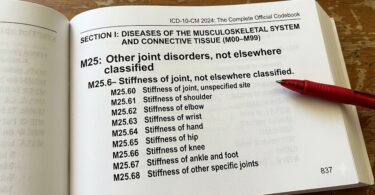
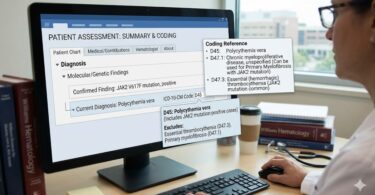
Ear pain, or otalgia, is one of the most common complaints driving patients to seek medical care, representing millions of healthcare encounters annually across primary care, pediatrics, urgent care, and otolaryngology (ENT) settings. It is a symptom that transcends age, from the inconsolable infant with a first ear infection to the elderly adult with a complex, referred pain syndrome. For the medical coder, however, “ear pain” is not a single, simple entry in a ledger. It is a diagnostic puzzle, a narrative woven from clinical documentation that must be translated into the precise, standardized language of the International Classification of Diseases, 10th Revision, Clinical Modification (ICD-10-CM).
The transition from the limited codes of ICD-9 to the expansive specificity of ICD-10-CM was a paradigm shift. What was once a handful of codes for “otitis media” has blossomed into a detailed taxonomic structure that demands a deep understanding of anatomy, etiology, laterality, and acuity. Selecting the correct code is not an academic exercise; it is a critical function that directly impacts patient care, reimbursement integrity, public health data tracking, and the financial viability of healthcare providers. An incorrectly coded encounter can lead to claim denials, audits, and a distorted picture of the patient’s health journey.
This article is designed to be the definitive guide for medical coders, billers, students, and healthcare providers who seek to master the art and science of ICD-10 coding for ear pain. We will move beyond a simple code lookup and embark on a detailed exploration of the coding universe related to otalgia. We will dissect the codes within Chapter 8: Diseases of the Ear and Mastoid Process, venture into other chapters for the myriad causes of referred pain, and establish a robust workflow to ensure accuracy and compliance. By the end of this guide, you will not only know which code to assign but, more importantly, you will understand the clinical reasoning behind it, empowering you to navigate even the most complex cases with confidence.
ICD-10 Codes for Ear Pain
Table of Contents
Toggle2. The Critical Importance of Precise Ear Pain Coding
The implications of accurate ICD-10 coding for a seemingly straightforward symptom like ear pain are profound and multi-faceted. Precision in this area is non-negotiable for several key reasons:
-
Reimbursement Accuracy: At its most practical level, ICD-10 codes justify the medical necessity of the services rendered. A payer reviewing a claim for an office visit, a tympanostomy, or a course of antibiotics needs to see a diagnosis code that aligns perfectly with the treatment provided. Using a nonspecific code like the default R-series “pain” code when a more specific otitis media code is available can lead to denial. For instance, coding H66.001 (Acute suppurative otitis media without spontaneous rupture of ear drum, right ear) is far more definitive and justifiable for antibiotic treatment than a generic R07.0 (Pain in throat) or even H92.01 (Otalgia, right ear).
-
Clinical Decision Support and Population Health: Aggregated ICD-10 data forms the backbone of modern epidemiology. Public health officials use this data to track the incidence of specific infections, such as a seasonal spike in H66.9 (Otitis media, unspecified) or the prevalence of complications like H70.09 (Acute mastoiditis, other). This information guides vaccine development, antibiotic stewardship programs, and resource allocation. Inaccurate coding muddies this data, leading to flawed conclusions and ineffective public health interventions.
-
Risk Adjustment and Quality Metrics: In value-based care models, the health status of a patient population is critical. Hierarchical Condition Categories (HCCs) use ICD-10 codes to risk-adjust payments and predict healthcare costs. A chronic, debilitating condition like H93.1- (Tinnitus) or recurrent H66.3- (Chronic atticoantral suppurative otitis media) contributes to a patient’s risk score. Under-coding or mis-coding these conditions can negatively impact a provider’s reimbursement and performance metrics.
-
Legal and Compliance Integrity: The medical record is a legal document. The codes assigned must be a faithful and accurate representation of the documented clinical picture. In the event of an audit by a Recovery Audit Contractor (RAC) or other entity, the coder must be able to defend every code selection based on the provider’s documentation. Using an unspecified code as a matter of habit, rather than due to a lack of documentation, is a compliance risk.
In essence, precise coding transforms a subjective complaint of “ear pain” into an objective, actionable, and valuable piece of healthcare information.
3. Navigating the ICD-10-CM Chapter Structure: A Primer
To code ear pain effectively, one must first understand the organizational logic of the ICD-10-CM manual. The system is divided into 22 chapters, each covering a specific disease or organ system. For otalgia, two chapters are of paramount importance:
-
Chapter 8: Diseases of the Ear and Mastoid Process (H60-H95): This is the primary home for conditions that originate within the ear itself. The blocks within this chapter are anatomically organized:
-
H60-H62: Diseases of the external ear
-
H65-H75: Diseases of the middle ear and mastoid
-
H80-H83: Diseases of the inner ear
-
H90-H94: Other disorders of the ear
-
H95: Intraoperative and postprocedural complications and disorders of ear and mastoid process, not elsewhere classified
-
-
Chapter 18: Symptoms, Signs, and Abnormal Clinical and Laboratory Findings, Not Elsewhere Classified (R00-R99): This chapter is reserved for codes that describe a symptom when a definitive diagnosis has not been established. The most relevant code here is R07.0 (Pain in throat), which is a symptom code. Crucially, the ICD-10-CM guidelines explicitly state that codes from Chapter 18 should not be used if a more definitive diagnosis from another chapter is available. Furthermore, within Chapter 8 itself, there is a specific code for otalgia: H92.0- (Otalgia). The guidelines note that H92.0- should be used in addition to the code for the underlying cause, if known.
Understanding this hierarchy is the first step in accurate coding: always code the definitive diagnosis first. The symptom code is secondary.
4. H92.0- Otalgia and Effusion: The Foundation Codes
The H92 category is for “Other disorders of ear, not elsewhere classified.” It contains three subcategories, with H92.0 being dedicated to otalgia.
-
H92.0- Otalgia: This code is used when the provider documents “ear pain,” “otalgia,” or “earache” without specifying an underlying cause. It requires a 5th digit to specify laterality:
-
H92.01 Otalgia, right ear
-
H92.02 Otalgia, left ear
-
H92.03 Otalgia, bilateral
-
H92.09 Otalgia, unspecified ear
-
Clinical Application: This code is most appropriately used in two scenarios:
-
At an initial encounter where the workup is incomplete, and the cause of the pain is truly unknown.
-
As a secondary code when a definitive cause is known, to emphasize the presenting symptom. For example, for a patient with confirmed acute otitis media, you would code H66.001 as the primary diagnosis and could add H92.01 as a secondary code.
-
H92.1- Otorrhea (bleeding from ear): While not pain-specific, this is a common associated symptom.
-
H92.2- Otorrhagia (discharge from ear): Another key associated symptom.
It is a common coding error to default to H92.0- when a more specific code from the H60-H83 range is documented. Always look for the definitive diagnosis first.
5. H60-H95: Delving into Diseases of the Ear and Mastoid Process
This is the core of otalgia coding. The vast majority of ear pain originates from pathologies within the ear structures themselves. Let’s explore these blocks in detail.
H60-H62: Diseases of the External Ear
The external ear includes the auricle (pinna) and the external auditory canal. Conditions here often cause significant, localized pain.
H60 – Otitis Externa: Inflammation of the outer ear canal.
-
H60.0- Abscess of external ear: A collection of pus (e.g., furuncle).
-
H60.1- Cellulitis of external ear: A diffuse skin infection.
-
H60.2- Malignant otitis externa: A severe, life-threatening infection that spreads to the skull base, typically in diabetics or immunocompromised patients. H60.20 is unspecified, while H60.21-
requires a 7th character for laterality. -
H60.3- Other infective otitis externa: This is the “standard” swimmer’s ear. It is further broken down by organism if known (e.g., H60.33- Acute otitis externa, non-infective), but the most common code is H60.31- Acute otitis externa, right/left/bilateral.
-
H60.5- Acute otitis externa, non-infective: For inflammation from allergies or irritation.
-
H60.8- Other otitis externa: Includes chronic otitis externa.
-
Note: Codes in H60 require a 6th character for laterality.
H61 – Other disorders of external ear: Non-infectious conditions.
-
H61.0- Chondritis and perichondritis of external ear: A serious infection of the ear cartilage, often following trauma or piercing.
-
H61.1- Noninfective disorders of pinna: Includes conditions like psoriasis or eczema.
-
H61.2- Impacted cerumen: A very common cause of ear pain and conductive hearing loss.
-
H61.3- Acquired stenosis of external ear canal: Narrowing from scarring or inflammation.
H62 – Disorders of external ear in diseases classified elsewhere: These are codes for external ear manifestations of systemic diseases (e.g., herpes zoster, impetigo). The underlying disease must also be coded.
H65-H75: Diseases of the Middle Ear and Mastoid
This is the most frequent source of otalgia, especially in children. The middle ear is the air-filled space behind the eardrum containing the ossicles.
H65 – Nonsuppurative otitis media: Otitis media with effusion (OME), or “glue ear.”
-
H65.0- Acute serous otitis media
-
H65.1- Other acute nonsuppurative otitis media
-
H65.2- Chronic serous otitis media
-
H65.3- Chronic mucoid otitis media
-
H65.4- Other chronic nonsuppurative otitis media
-
H65.9- Unspecified nonsuppurative otitis media
H66 – Suppurative and unspecified otitis media: This is the classic, painful acute otitis media (AOM) often preceded by an upper respiratory infection.
-
H66.0- Acute suppurative otitis media: This is the most common code for a bacterial ear infection. It requires a 5th digit for laterality and a 6th character to specify if there is a spontaneous rupture of the tympanic membrane.
-
H66.001: Acute suppurative otitis media without spontaneous rupture of ear drum, right ear
-
H66.002: … left ear
-
H66.003: … bilateral
-
H66.004: … unspecified ear
-
H66.011: Acute suppurative otitis media with spontaneous rupture of ear drum, right ear (etc.)
-
-
H66.1- Chronic tubotympanic suppurative otitis media: “Benign” chronic otitis media, involving a central perforation.
-
H66.2- Chronic atticoantral suppurative otitis media: “Dangerous” chronic otitis media, involving the attic of the middle ear and risk of cholesteatoma.
-
H66.3- Other chronic suppurative otitis media
-
H66.4- Suppurative otitis media, unspecified
-
H66.9- Otitis media, unspecified
H67 – Otitis media in diseases classified elsewhere: Similar to H62, for conditions like otitis media in measles or influenza.
H68 – Eustachian salpingitis and obstruction: Dysfunction of the Eustachian tube is a key factor in otitis media.
-
H68.0 Eustachian salpingitis
-
H69.0 Patulous Eustachian tube
H70 – Mastoiditis and related conditions: This is a serious complication where a middle ear infection spreads to the mastoid bone behind the ear.
-
H70.0- Acute mastoiditis
-
H70.1- Chronic mastoiditis
-
H70.2- Petrositis: Infection of the petrous part of the temporal bone.
-
H72 – Perforation of tympanic membrane: A hole in the eardrum, which can be acute or chronic and cause pain.
H74 – Other disorders of middle ear and mastoid: Includes conditions like H74.3- Cholesteatoma, a destructive skin growth that requires surgical intervention.
H80-H83: Diseases of the Inner Ear
Inner ear disorders more commonly cause vertigo and hearing loss, but can also cause a deep, aching pain or a sensation of fullness.
-
H81.0- Meniere’s disease: Characterized by vertigo, tinnitus, and aural fullness, which can be painful.
-
H83.0- Labyrinthitis: Inflammation of the inner ear, often viral.
6. Beyond the Ear: The Complex World of Referred Otalgia
Referred pain is pain perceived at a location other than the site of the painful stimulus. The ear is innervated by several cranial nerves (V, VII, IX, X) and cervical nerves (C2, C3), which also supply other head and neck structures. Pathology in these other areas can manifest as ear pain, even though the ear itself is healthy. This is a critical concept for coders, as the ICD-10 code must reflect the source of the pain, not the location.
Temporomandibular Joint (TMJ) Disorders (M26.6-)
TMJ dysfunction is a very common cause of referred otalgia. The pain is often described as a dull ache in front of the ear, worsened by chewing.
-
M26.60 Temporomandibular joint disorder, unspecified
-
M26.62 Arthralgia of temporomandibular joint
-
M26.63 Articular disc disorder of temporomandibular joint
Dental Origins (K00-K14)
Dental problems are another frequent culprit.
-
K04.7 Periapical abscess without sinus
-
K08.89 Other specified disorders of teeth and supporting structures (e.g., bruxism)
-
K12.2 Cellulitis and abscess of mouth (e.g., from an infected wisdom tooth)
Pharyngeal and Tonsillar Issues (J02, J03, J35, J39.2)
Infections and inflammations of the throat can cause significant referred ear pain via the glossopharyngeal nerve (CN IX).
-
J02.0 Streptococcal pharyngitis
-
J03.90 Acute tonsillitis, unspecified
-
J35.0 Chronic tonsillitis
-
J39.2 Other diseases of pharynx (e.g., pharyngitis)
Other Referred Pain Sources
-
Salivary Gland Disorders: K11.2 Sialoadenitis (inflammation of the parotid gland).
-
Neck Pathology: Cervical radiculopathy (M54.12-) or arthritis.
-
Cancers: Tumors of the oropharynx (C10.9), larynx (C32.9), or nasopharynx (C11.9) can present with otalgia as the first symptom.
-
Trigeminal Neuralgia (G50.0): Can cause sharp, shooting facial pain that radiates to the ear.
-
Eagle Syndrome: Elongation of the styloid process, coded to M26.89 Other specified dentofacial anomalies.
The following table provides a quick-reference guide for common causes of ear pain and their corresponding ICD-10 codes.
Common Causes of Ear Pain and Their ICD-10 Codes
| Cause of Ear Pain | Clinical Scenario | Primary ICD-10 Code | Code Specificity & Notes |
|---|---|---|---|
| Acute Otitis Media | Child with URI, fever, pulling at ear, bulging red TM. | H66.00- / H66.01- | Requires 5th digit for laterality and 6th character for TM rupture. |
| Otitis Externa | Teenager with ear pain after swimming; canal is swollen and painful. | H60.31- | Requires 5th digit for laterality. |
| Otitis Media with Effusion | Child with hearing loss and fluid behind TM, but no acute inflammation. | H65.0- | Requires 5th digit for laterality and chronicity. |
| Impacted Cerumen | Adult with sudden hearing loss and ear fullness/ache after using Q-tips. | H61.20 | Laterality is unspecified, but can be specified with H61.21-/22-. |
| Temporomandibular Joint Disorder | Adult with ear pain and jaw clicking/popping, worse with chewing. | M26.60 | Requires 5th digit for specific TMJ disorder. |
| Pharyngitis/Tonsillitis | Patient with sore throat, fever, and referred ear pain. | J02.9 or J03.90 | Code the specific type of pharyngitis/tonsillitis if known. |
| Dental Abscess | Patient with severe toothache and ipsilateral ear pain. | K04.7 | |
| Malignant Otitis Externa | Diabetic elderly patient with severe, deep ear pain and granulation tissue in canal. | H60.20 | Requires 7th character for laterality. A serious condition. |
| Cholesteatoma | Patient with chronic ear drainage and deep ear pain. | H71.3- | Requires 5th digit for laterality. |
| Unspecified Otalgia | Initial visit, cause of ear pain not yet determined. | H92.01- | Use only when a definitive diagnosis cannot be made. |
7. The Coding Process in Action: A Step-by-Step Workflow
To ensure consistent accuracy, follow this logical workflow when coding for ear pain:
-
Review the Entire Encounter: Read the chief complaint, history of present illness, physical exam findings (especially otoscopic exam), assessment, and plan.
-
Identify the Definitive Diagnosis: What does the provider state is the cause of the ear pain? Look for phrases like “Assessment: Acute suppurative otitis media” or “Diagnosis: TMJ arthralgia.” This is your primary code.
-
Determine Specificity:
-
Anatomy: Is it the external, middle, or inner ear?
-
Laterality: Is it right (1), left (2), bilateral (3), or unspecified (9)? Never assume laterality.
-
Acuity: Is it acute, chronic, or recurrent?
-
Etiology: Is it infectious, non-infectious, or traumatic?
-
-
Check for Associated Manifestations: Does the patient also have otorrhea (H92.1-), hearing loss (H90.-), or vertigo (R42)? Code these as secondary diagnoses if addressed during the encounter.
-
Code the Symptom (If Appropriate): If the definitive diagnosis is from Chapter 8 (H60-H95), you generally do not need to add H92.0- (otalgia). However, if the pain is a significant focus of treatment or the diagnosis is from another chapter (e.g., TMJ disorder), adding H92.0- as a secondary code can be justified to reflect the presenting symptom.
-
Verify Code Against Guidelines: Perform a final check against the current year’s ICD-10-CM Official Guidelines for Coding and Reporting and any payer-specific policies.
-
Sequence Correctly: List the primary reason for the encounter first.
8. Case Studies: Applying Knowledge to Real-World Scenarios
Case Study 1: The Pediatric Ear Infection
-
Documentation: 4-year-old male presents with 2-day history of fever, irritability, and pulling at his right ear. Otoscopic exam reveals a bulging, erythematous, opaque right tympanic membrane with poor mobility. No perforation noted.
-
Assessment: Acute bacterial otitis media, right ear.
-
Coding: H66.001 (Acute suppurative otitis media without spontaneous rupture of ear drum, right ear). The code is specific to the anatomy (middle ear), laterality (right), and clinical findings (no rupture).
Case Study 2: The Swimmer’s Ear
-
Documentation: 16-year-old female presents with right ear pain for 3 days, exacerbated by pulling on the pinna. She was swimming daily last week. Canal is edematous, erythematous, and filled with debris.
-
Assessment: Acute otitis externa, right ear.
-
Coding: H60.331 (Acute otitis externa, right ear).
Case Study 3: The Case of Referred Pain
-
Documentation: 45-year-old male presents with a 3-week history of a dull, aching pain in his left ear. Otoscopic exam is normal. He reports a history of grinding his teeth at night and has tenderness over the left TMJ on palpation.
-
Assessment: Likely referred otalgia secondary to temporomandibular joint disorder.
-
Coding: M26.62 (Arthralgia of temporomandibular joint). While H92.02 could be added as a secondary code, the TMJ disorder is the underlying cause and must be sequenced first.
Case Study 4: The Complex Chronic Case
-
Documentation: 55-year-old female with a long history of right ear problems presents with otorrhea and deep ear pain. Exam reveals a retraction pocket in the pars flaccida with keratin debris.
-
Assessment: Chronic atticoantral suppurative otitis media with cholesteatoma, right ear.
-
Coding: H71.31 (Cholesteatoma, right ear). This code takes precedence as it identifies the specific, pathological entity causing the chronic otitis media.
9. Common Pitfalls and How to Avoid Them
-
Pitfall 1: Defaulting to Unspecified Codes. Using H66.9 (Otitis media, unspecified) or H92.09 (Otalgia, unspecified) when the documentation supports a more specific code.
-
Solution: Scrutinize the documentation for clues on laterality, acuity, and pathology. Query the provider if necessary.
-
-
Pitfall 2: Misidentifying Referred Pain. Coding H92.0- when the provider has clearly identified a source outside the ear, like a dental problem.
-
Solution: Understand the concept of referred otalgia. The code must reflect the etiology, not just the symptom location.
-
-
Pitfall 3: Ignoring Laterality. Using “unspecified” laterality codes when the record clearly states “right” or “left.”
-
Solution: Pay meticulous attention to the physical exam and assessment. Laterality is a fundamental component of specificity in ICD-10.
-
-
Pitfall 4: Confusing Otitis Media Types. Using a code for otitis media with effusion (H65.-) when the patient has acute suppurative otitis media (H66.0-).
-
Solution: OME implies fluid without signs of acute infection. AOM implies acute inflammation, pain, and often fever. Know the clinical difference.
-
-
Pitfall 5: Incorrect Sequencing. Listing the symptom code (H92.0-) before the definitive diagnosis code.
-
Solution: Always sequence the code representing the established diagnosis first.
-
10. The Role of Documentation and Physician Queries
The coder is entirely dependent on the quality of the provider’s documentation. Vague terms like “ear infection” are no longer sufficient. Coders should look for documentation that specifies:
-
Site: External ear, middle ear, mastoid?
-
Laterality: Right, left, or bilateral?
-
Acuity: Acute, chronic, recurrent?
-
Severity/Type: Suppurative, serous, mucoid?
-
Associated Conditions: With or without spontaneous rupture? With cholesteatoma?
When documentation is unclear, incomplete, or conflicting, the coder must initiate a physician query. This is a formal, compliant process to clarify the record. A query should never be leading (e.g., “Was the otitis media acute?”). Instead, it should be open-ended or include multiple choices (e.g., “Please clarify the type of otitis media: acute suppurative, otitis media with effusion, or other?”).
11. The Future of Coding: ICD-11 and Beyond
The World Health Organization (WHO) has already released ICD-11, which will eventually be adopted in the US as ICD-11-CM. It features a more logical, digital-friendly structure. While the US implementation timeline is years away, understanding its direction is valuable. In ICD-11, codes are alphanumeric and structured in a parent-child relationship, which may allow for even greater specificity and ease of use. The foundational knowledge gained from mastering ICD-10’s detailed anatomy and etiology will be directly transferable, making the future transition smoother for proficient coders.
12. Conclusion
Accurate ICD-10 coding for ear pain is a complex but masterable skill that hinges on a deep understanding of otologic anatomy and pathology. It requires moving beyond the symptom to identify the precise underlying cause, whether it originates in the ear itself or is referred from a distant site. By adhering to a disciplined workflow, prioritizing specificity, engaging in compliant physician queries, and committing to ongoing education, medical coders can ensure the integrity of the data they generate—data that is vital for patient care, appropriate reimbursement, and the advancement of public health.
13. Frequently Asked Questions (FAQs)
Q1: When should I use H92.0- (Otalgia) versus a code from H60-H95?
A: Use a code from H60-H95 when a definitive diagnosis of an ear condition is documented (e.g., otitis externa, otitis media). Use H92.0- only when the cause of the ear pain is unknown or as a secondary code to emphasize the symptom when the primary diagnosis is from outside Chapter 8 (e.g., TMJ disorder).
Q2: What is the most specific code I can use for a simple, uncomplicated ear infection in a child?
A: The most specific code is typically from the H66.0- category. For example, H66.001 for Acute suppurative otitis media without spontaneous rupture of ear drum, right ear. Avoid the unspecified H66.9 code.
Q3: How do I code for a patient who has ear pain from a known tooth abscess?
A: You would code the dental condition as the primary diagnosis, as it is the cause of the referred pain. For example, K04.7 (Periapical abscess without sinus). You generally would not code H92.0- in this scenario unless the otalgia itself required separate evaluation or treatment.
Q4: The provider documented “bullous myringitis.” What code should I use?
A: Bullous myringitis is a painful condition involving blisters on the tympanic membrane, often associated with mycoplasma or viral infections. It is classified under H73.8- Other specified disorders of tympanic membrane.
Q5: Are there any Z-codes relevant to ear pain coding?
A: Yes. For example, if a patient has a history of recurrent otitis media but presents for a well-child visit without current symptoms, you might use Z87.19 Personal history of other diseases of the digestive and genitourinary systems (which includes personal history of diseases of the ear and mastoid process). For encounters to remove ear tubes, you would use Z45.2 Adjustment and management of vascular access device or a specific procedure code, with a diagnosis code indicating the reason for the tube placement (e.g., H65.-, H66.-).
14. Additional Resources
-
CDC – ICD-10-CM Official Guidelines for Coding and Reporting: https://www.cdc.gov/nchs/icd/icd-10-cm.htm (The definitive source for rules and updates).
-
American Academy of Professional Coders (AAPC): https://www.aapc.com/ (Provides certification, training, and resources).
-
American Health Information Management Association (AHIMA): https://www.ahima.org/ (Another leading authority on health information management and coding).
-
National Center for Biotechnology Information (NCBI): https://www.ncbi.nlm.nih.gov/ (For clinical research on otologic conditions).
-
American Academy of Otolaryngology–Head and Neck Surgery (AAO-HNS): https://www.entnet.org/ (For clinical practice guidelines, e.g., on otitis media).
Date: September 28, 2025
Author: The Medical Coding Specialist Team
Disclaimer: *The information contained in this article is for educational and informational purposes only and is not intended as a substitute for professional medical advice, diagnosis, or treatment. Always seek the advice of your physician or other qualified health provider with any questions you may have regarding a medical condition or coding practice. Adherence to the most current official ICD-10-CM guidelines and payer-specific policies is mandatory.*