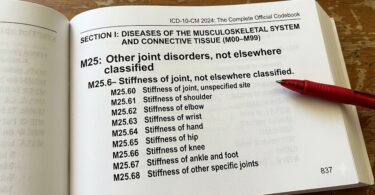
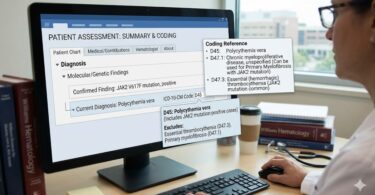
In the intricate landscape of modern healthcare, the language spoken between clinicians, coders, insurers, and researchers is not one of words, but of codes. At the heart of this coded dialogue lies the International Classification of Diseases, Tenth Revision, Clinical Modification (ICD-10-CM), a system of staggering depth and specificity. Among its thousands of codes, one, I25.5, stands as a sentinel for a particularly pervasive and debilitating condition: Ischemic Cardiomyopathy. This is not merely a code for a diseased heart muscle; it is a narrative code that tells a story of chronic coronary insufficiency, of myocardial cells starved of oxygen, and of the heart’s gradual descent into failure.
The accurate application of I25.5 is far more than an administrative exercise. It is a critical act of clinical translation that directly impacts patient care, drives appropriate reimbursement, fuels vital public health research, and shapes our understanding of the burden of cardiovascular disease. A miscoded or underspecified claim can obscure the true nature of a patient’s illness, lead to denied payments for essential services, and corrupt the data used to allocate resources and develop new treatments. This article aims to be the definitive guide to I25.5. We will journey from the fundamental pathophysiology of the disease itself, through the nuanced rules and conventions of the ICD-10-CM system, to the practical application of these rules in complex clinical scenarios. Our goal is to empower coders, clinicians, and healthcare administrators with the knowledge to ensure that every time I25.5 is used, it tells the patient’s story with precision, clarity, and clinical integrity.

ICD-10 Codes for Ischemic Cardiomyopathy
2. Understanding the Clinical Foundation: What is Ischemic Cardiomyopathy?
Before a single code can be assigned, a deep understanding of the clinical entity is paramount. Ischemic Cardiomyopathy (ICM) is the most common cause of heart failure in the Western world. It is not a single event but a chronic, progressive syndrome.
Pathophysiology: From Coronary Artery Disease to Heart Muscle Dysfunction
The story of ICM begins with Coronary Artery Disease (CAD). Atherosclerosis, the buildup of fatty plaques in the coronary arteries, leads to narrowing (stenosis) and reduced blood flow to the heart muscle (myocardium). This ischemia can manifest in two primary ways:
-
Myocardial Infarction (Heart Attack): A sudden, complete blockage of a coronary artery causes death (necrosis) of a segment of heart muscle. This scar tissue does not contract, leading to a permanent weakening of the heart’s pumping ability.
-
Repetitive Stunning and Hibernation: Repeated episodes of reduced blood flow, even without a full-blown heart attack, can “stun” the myocardium, causing temporary dysfunction. If the reduced flow is chronic, the muscle may enter a state of “hibernation”—alive but chronically dysfunctional, conserving energy in a state of low work output.
Over time, through a combination of discrete infarctions and the cumulative effect of chronic ischemia, the heart undergoes remodeling. The chambers enlarge, the muscle walls thin and weaken, and the heart loses its efficient, elliptical shape, becoming a dilated, globular, and inefficient pump. This is the essence of ischemic cardiomyopathy: a dilated, hypocontractile heart as a direct consequence of chronic coronary artery disease.
Clinical Presentation and Diagnosis: Beyond the Symptoms
Patients with ICM typically present with the classic signs and symptoms of heart failure:
-
Dyspnea (Shortness of breath): Initially on exertion, but progressing to orthopnea (breathlessness when lying flat) and paroxysmal nocturnal dyspnea (waking up gasping for air).
-
Fatigue and Weakness: Due to reduced cardiac output and poor perfusion of skeletal muscles.
-
Fluid Retention: Leading to peripheral edema (swelling in legs and ankles) and pulmonary edema (fluid in the lungs), manifesting as crackles heard with a stethoscope.
Diagnosis is multifactorial, relying on:
-
Patient History: A history of known CAD, prior MI, or cardiovascular risk factors (hypertension, diabetes, smoking, hyperlipidemia).
-
Physical Examination: Findings of elevated jugular venous pressure (JVP), S3 gallop, and bilateral lower extremity edema.
-
Echocardiogram: The cornerstone of diagnosis, providing a visual assessment of heart structure and function, most importantly, the Ejection Fraction (EF).
-
Coronary Angiography: The gold standard for confirming the presence and severity of CAD, demonstrating the blockages responsible for the ischemia.
-
Cardiac MRI: Provides exceptional detail of heart structure and can identify scar tissue from prior infarctions.
The Role of Ejection Fraction: A Key Classifier
While not directly part of the ICD-10 code I25.5, the Ejection Fraction is a critical clinical descriptor. It measures the percentage of blood pumped out of the left ventricle with each contraction.
-
Heart Failure with Reduced Ejection Fraction (HFrEF): EF ≤ 40%. This is the most common presentation of ICM.
-
Heart Failure with Mildly Reduced Ejection Fraction (HFmrEF): EF 41-49%.
-
Heart Failure with Preserved Ejection Fraction (HFpEF): EF ≥ 50%. While ICM can sometimes present with HFpEF, it is less common.
This distinction is crucial for treatment and is often captured with additional ICD-10 codes for the type of heart failure.
3. Navigating the ICD-10-CM Code Set: An Overview
The ICD-10-CM system is organized logically, with chapters based on etiology or body system. Chapter 9, “Diseases of the Circulatory System” (codes I00-I99), is where we find I25.5.
The Structure and Logic of ICD-10-CM
ICM codes follow a hierarchical structure:
-
Chapter: I00-I99 – Diseases of the Circulatory System
-
Block: I20-I25 – Ischemic Heart Diseases
-
Category: I25 – Chronic Ischemic Heart Disease
-
Subcategory: I25.5 – Ischemic Cardiomyopathy
The system demands specificity. Laterality, etiology, manifestation, and acuity must be captured wherever possible. This specificity is what allows for the rich data collection that ICD-10-CM enables.
The Importance of Specificity and Medical Necessity
Accurate coding is the foundation of medical necessity. A physician’s clinical documentation must support the codes assigned. For ICM, this means the record should clearly link the cardiomyopathy to the underlying coronary atherosclerosis, often through diagnostic test results like an echocardiogram and angiography. Vague terms like “weak heart” are insufficient; “ischemic cardiomyopathy with reduced ejection fraction of 30%” provides the necessary justification for code I25.5.
4. A Deep Dive into Code I25.5: Ischemic Cardiomyopathy
Let us now focus our lens on the code itself.
Official Code Description and Instructional Notes
-
ICD-10-CM Code: I25.5
-
Full Code Title: Ischemic cardiomyopathy
-
Code Type: Billable/Specific
The official Tabular List entry for I25.5 is accompanied by critical instructional notes that dictate its proper use.
Code Also: The Imperative of Coding the Underlying Atherosclerosis
The most important instruction beneath I25.5 in the Tabular List is:
Code also: underlying atherosclerosis of the coronary artery vessels.
This is a directive, not a suggestion. Ischemic cardiomyopathy is, by definition, a consequence of coronary artery atherosclerosis. Therefore, you must assign an additional code from category I25.1- to specify the type of atherosclerotic heart disease.
Commonly used “code also” options include:
-
I25.110: Atherosclerotic heart disease of native coronary artery with unstable angina pectoris
-
I25.118: Atherosclerotic heart disease of native coronary artery with other forms of angina pectoris
-
I25.119: Atherosclerotic heart disease of native coronary artery with unspecified angina pectoris
-
I25.10: Atherosclerotic heart disease of native coronary artery without angina pectoris
The choice depends on the clinical documentation regarding the presence and type of angina.
Excludes1 and Excludes2: Understanding Critical Distinctions
The “Excludes” notes are vital for preventing double-coding and misclassification.
-
Excludes1: “Not coded here.” These are conditions that are mutually exclusive. You cannot code I25.5 with an Excludes1 condition.
-
I25.5 Excludes1: cardiomyopathy due to hypertension (I51.7). If the documentation states the cardiomyopathy is solely due to hypertension, you must use I51.7, not I25.5. However, a patient can have both conditions; the coder must rely on the physician’s linkage of etiology.
-
-
Excludes2: “Not included here, but you can code both if the patient has both.” These are conditions that are distinct but can co-occur.
-
I25.5 Excludes2: cardiomyopathy due to other underlying disease – code to underlying disease.
-
*amyloid (E85.-)*
-
glycogen storage (E74.0)
-
sarcoid (D86.85), etc.
This note means that if the cardiomyopathy is explicitly stated to be due to sarcoidosis, you code D86.85. But if a patient has ICM and sarcoidosis, and the sarcoidosis is not the cause of the cardiomyopathy, you can code both I25.5 and D86.85.
-
-
5. Coding Scenarios: From Clinical Documentation to Accurate Code Assignment
Theory is best understood through practice. Let’s examine common patient scenarios.
Scenario 1: Newly Diagnosed Ischemic Cardiomyopathy with Systolic Heart Failure
-
Clinical Presentation: A 65-year-old male with a history of hypertension and type 2 diabetes presents with progressive shortness of breath and fatigue. Echocardiogram reveals a dilated left ventricle with severely reduced systolic function, EF 25%. Cardiac catheterization shows severe multi-vessel coronary artery disease.
-
Physician’s Final Diagnosis: “Ischemic cardiomyopathy with systolic heart failure, secondary to severe native vessel coronary artery disease. Ejection Fraction 25%.”
-
Correct Code Assignment:
-
I25.5 – Ischemic cardiomyopathy
-
I25.10 – Atherosclerotic heart disease of native coronary artery without angina pectoris
-
I50.21 – Acute systolic heart failure
-
-
Rationale: I25.5 is the foundational condition. I25.10 is required by the “code also” note, and since no angina is mentioned, I25.10 is appropriate. I50.21 specifies the type and acuity of the heart failure manifestation.
Scenario 2: Chronic Ischemic Cardiomyopathy with an Acute Exacerbation
-
Clinical Presentation: A 72-year-old female with a known history of ischemic cardiomyopathy is admitted for worsening lower extremity edema and weight gain. She is diagnosed with an acute on chronic systolic heart failure exacerbation.
-
Physician’s Final Diagnosis: “Acute decompensated heart failure due to underlying chronic ischemic cardiomyopathy.”
-
Correct Code Assignment:
-
I50.23 – Acute on chronic systolic heart failure (This is the reason for the encounter/the acute exacerbation)
-
I25.5 – Ischemic cardiomyopathy (The underlying chronic cause)
-
I25.10 – Atherosclerotic heart disease of native coronary artery without angina pectoris (The “code also” condition)
-
-
Rationale: In an inpatient setting, the code for the acute condition treated (the heart failure exacerbation) is typically sequenced first.
Scenario 3: Ischemic Cardiomyopathy with Coexisting Atrial Fibrillation
-
Clinical Presentation: A patient with stable ischemic cardiomyopathy presents for a routine follow-up. Their primary issue today is management of their persistent atrial fibrillation.
-
Physician’s Final Diagnosis: “Persistent atrial fibrillation. Underlying ischemic cardiomyopathy is stable.”
-
Correct Code Assignment:
-
I48.2 – Chronic atrial fibrillation (The reason for the encounter)
-
I25.5 – Ischemic cardiomyopathy (The comorbid condition)
-
I25.10 – Atherosclerotic heart disease of native coronary artery without angina pectoris
-
-
Rationale: When an encounter is for management of a chronic condition that is not a manifestation of the underlying disease, that condition is sequenced first.
Scenario 4: The Post-Infarction Patient and Differentiating Cardiomyopathy
-
Clinical Presentation: A patient is seen 3 months after a large anterior wall ST-elevation myocardial infarction (STEMI). An echo shows a dilated heart with an EF of 35%.
-
Physician’s Final Diagnosis: “Post-MI cardiomyopathy. Ischemic cardiomyopathy.”
-
Correct Code Assignment:
-
I25.5 – Ischemic cardiomyopathy
-
I25.10 – Atherosclerotic heart disease of native coronary artery without angina pectoris
-
I25.2 – Old myocardial infarction
-
-
Rationale: The term “post-MI cardiomyopathy” is clinically synonymous with ischemic cardiomyopathy. Code I25.5 captures the current cardiomyopathy state. I25.2 is added to reflect the history of the specific event that led to it. Do not code the old acute MI codes (I21.- or I22.-) as they are for the acute phase.
Scenario 5: Encounter for Device Implantation (e.g., ICD)
-
Clinical Presentation: A patient with established ischemic cardiomyopathy and an EF of 28% is admitted for the elective implantation of an implantable cardioverter-defibrillator (ICD) for primary prevention.
-
Physician’s Final Diagnosis: “Ischemic cardiomyopathy with severe LV dysfunction. Admitted for ICD implantation.”
-
Correct Code Assignment:
-
I25.5 – Ischemic cardiomyopathy
-
I25.10 – Atherosclerotic heart disease of native coronary artery without angina pectoris
-
Z95.810 – Presence of automatic (implantable) cardiac defibrillator (This would be assigned after the procedure)
-
Procedure Code: 0JH608Z (Insertion of Defibrillator Generator into Chest Subcutaneous Tissue and Fascia, Open Approach)
-
-
Rationale: The underlying condition justifying the procedure (ICM) is sequenced as the principal diagnosis. The procedure itself is coded separately.
6. Advanced Coding Considerations and Common Pitfalls
Sequencing of Codes: Which Code Goes First?
The order in which codes are listed (sequencing) is critical for reimbursement through DRGs (Diagnosis-Related Groups). The general rules are:
-
Inpatient: Sequence the condition that occasioned the admission.
-
Outpatient: Sequence the reason for the encounter first.
Distinguishing I25.5 from I21.- and I22.- (Acute MI) and I51.7 (Cardiomegaly)
-
vs. Acute MI (I21.-): I21.- is for the acute event. Once the acute phase has passed, the residual condition is coded (I25.5 for ICM, I25.2 for old MI). Do not use both for the same episode of care.
-
vs. Cardiomyopathy in Hypertensive Heart Disease (I51.7): This is a common point of confusion. If the physician explicitly links the cardiomyopathy to hypertension, use I51.7. If it is linked to CAD, use I25.5. If both are contributing factors, both codes may be used, but the linkage in the documentation is key.
The Impact of Comorbidities: Hypertension, Diabetes, and Chronic Kidney Disease
Patients with ICM often have multiple comorbidities. These must be coded as they impact risk adjustment and reimbursement (via HCCs – Hierarchical Condition Categories).
-
I10: Essential (primary) hypertension
-
E11.9: Type 2 diabetes mellitus without complications
-
N18.3: Chronic kidney disease, stage 3
7. The Role of Ischemic Cardiomyopathy Coding in Healthcare Analytics and Reimbursement
Accurate coding of I25.5 transcends the individual patient record.
-
DRGs (Diagnosis-Related Groups): In the inpatient setting, the principal diagnosis (often I25.5 or a heart failure code) determines the base DRG, which carries a specific payment weight. Complications and comorbidities (CCs/MCCs) can shift the DRG to a higher-paying tier.
-
HCCs (Hierarchical Condition Categories): Used in risk-adjusted payment models like Medicare Advantage, I25.5 is a significant HCC. Accurate coding ensures that health plans receive appropriate capitation payments to manage the complex needs of these patients, reflecting their true cost of care.
-
Public Health and Research: Aggregated data from I25.5 codes allows researchers and public health officials to track the prevalence of ICM, identify at-risk populations, evaluate the effectiveness of treatments, and allocate public health resources efficiently.
The table below summarizes the key components of a correctly coded ICM case:
Essential Components for Accurate Ischemic Cardiomyopathy (I25.5) Coding
| Component | Purpose | Example ICD-10 Codes |
|---|---|---|
| Foundation Code | Identifies the primary condition of a cardiomyopathy caused by ischemia. | I25.5 (Ischemic cardiomyopathy) |
| “Code Also” Requirement | Mandatorily identifies the underlying cause: coronary atherosclerosis. | I25.10 (Atherosclerotic heart disease without angina) I25.110 (Atherosclerotic heart disease with unstable angina) |
| Manifestation Code | Describes the current state of heart failure, a common manifestation. | I50.21 (Acute systolic HF) I50.23 (Acute on chronic systolic HF) I50.42 (Chronic diastolic HF) |
| Etiology/History Code | Provides context, such as a prior infarction that led to the condition. | I25.2 (Old myocardial infarction) |
| Comorbidity Codes | Captures other chronic conditions that impact care and risk adjustment. | I10 (Hypertension) E11.9 (Type 2 Diabetes) I48.2 (Chronic Atrial Fibrillation) |
8. Conclusion: Mastering the Code for Better Patient Care and Data Integrity
The accurate application of ICD-10 code I25.5 for Ischemic Cardiomyopathy is a linchpin in the modern healthcare system. It requires a symbiotic relationship between precise clinical documentation and expert coding knowledge. By understanding the pathophysiology, adhering to the “code also” directives, navigating the excludes notes, and sequencing codes correctly, healthcare professionals ensure that this simple alphanumeric string, I25.5, fulfills its multifaceted role. It justifies medical necessity, drives appropriate reimbursement, and, most importantly, contributes to the high-quality data that fuels advancements in the treatment and prevention of one of the world’s most burdensome diseases. In the end, precise coding is not about numbers; it is about accurately reflecting the patient’s story to facilitate better care and outcomes for all.
9. Frequently Asked Questions (FAQs)
Q1: Can I code I25.5 if the patient has not had a heart attack?
A: Yes. While a prior MI is a common cause, ischemic cardiomyopathy can result from chronic ischemia without a discrete infarction, a condition sometimes referred to as “myocardial hibernation.” The key is the documentation linking the cardiomyopathy to coronary artery disease, typically confirmed by angiography.
Q2: What is the difference between I25.5 and code I51.7 (Cardiomegaly)?
A: I51.7 is used for cardiomyopathy that is explicitly stated to be due to hypertension. I25.5 is used when the cause is ischemic heart disease. The physician’s documentation of the etiology is the determining factor.
Q3: A patient has both ischemic cardiomyopathy and hypertensive heart disease. Which code do I use?
A: You can code both I25.5 and I51.7 if the physician’s documentation supports that both conditions are present and contributing to the patient’s cardiac status. The sequencing would depend on the reason for the encounter.
Q4: How do I code a patient who had an MI 6 months ago and now has cardiomyopathy?
A: You would code I25.5 (Ischemic cardiomyopathy) and I25.2 (Old myocardial infarction). You would not use an acute MI code (I21.-) as the acute event has passed.
Q5: Is the ejection fraction (EF) included in code I25.5?
A: No, I25.5 does not specify the EF. The EF is captured with additional codes from the I50.- (Heart failure) category, such as I50.21 (Acute systolic heart failure) or I50.42 (Chronic diastolic heart failure).
10. Additional Resources
For the most accurate and up-to-date information, always consult the primary sources:
-
ICD-10-CM Official Guidelines for Coding and Reporting: Published annually by the CDC and CMS. This is the definitive rulebook.
-
American Health Information Management Association (AHIMA): Provides professional resources, articles, and education on coding best practices.
-
American Academy of Professional Coders (AAPC): Offers certification, training, and networking opportunities for medical coders.
-
American Heart Association (AHA) Professional Heart Daily: Provides the latest clinical research and guidelines on ischemic heart disease and cardiomyopathy, which informs clinical documentation.
-
Centers for Medicare & Medicaid Services (CMS): Provides resources on DRGs, HCCs, and other reimbursement models.
Date: October 4, 2025
Author: The Health Informatics Team
Disclaimer: The information contained in this article is for educational and informational purposes only and is not intended as a substitute for professional medical advice, diagnosis, or treatment. Always seek the advice of your physician or other qualified health provider with any questions you may have regarding a medical condition or medical coding. The author and publisher are not responsible for any errors or omissions or for any consequences from application of the information herein.