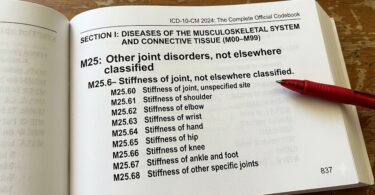
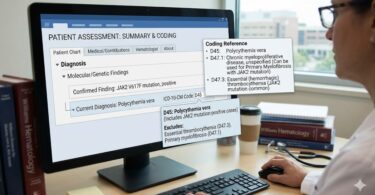
A patient presents with a swollen knee. It’s a common complaint in clinics, emergency departments, and orthopedic offices worldwide. To the patient, it’s a source of pain, stiffness, and a limitation to their daily life. To the clinician, it’s a diagnostic puzzle, a symptom pointing to a myriad of potential underlying conditions—from a simple sprain to a complex autoimmune disease. But to the medical coder and biller, that swollen knee is a critical data point, a specific alphanumeric code that must be assigned with precision and accuracy. This code, from the International Classification of Diseases, Tenth Revision, Clinical Modification (ICD-10-CM), does more than just describe a symptom; it tells a story. It drives reimbursement, influences public health statistics, and facilitates critical research.
The ICD-10 code for joint swelling is not a single, universal identifier. It is a gateway to a complex, hierarchical system that demands a deep understanding of anatomy, pathophysiology, and clinical documentation. A coder cannot simply look up “swelling, joint” and call it a day. They must become a detective, piecing together clues from the patient’s medical record to arrive at the most specific code possible. Was the swelling caused by trauma or disease? Is it acute or chronic? Which joint is affected? Is it one joint or many? The answers to these questions lead down vastly different coding pathways.
This article serves as a definitive guide to navigating the intricate world of ICD-10 codes for joint swelling. We will move beyond the basics, delving into the clinical nuances that separate one code from another. We will explore the relevant chapters, dissect the official coding guidelines, and analyze real-world scenarios. Our goal is to equip you with the knowledge and confidence to assign these codes accurately, ensuring compliance, optimizing revenue cycle management, and, most importantly, contributing to high-quality patient data.

ICD-10 codes for joint swelling
Table of Contents
Toggle2. Understanding the Clinical Picture: What is Joint Swelling?
Before a single code can be assigned, a fundamental understanding of the clinical presentation is essential. Joint swelling, or arthralgia with effusion, is the visible and palpable enlargement of a joint due to an increase in synovial fluid, hypertrophy of the synovial membrane, or both.
Pathophysiology: Why Do Joints Swell?
The joint capsule, lined by the synovial membrane, normally contains a small amount of synovial fluid for lubrication. Swelling occurs when this delicate balance is disrupted:
-
Inflammation: In conditions like rheumatoid arthritis or gout, the immune system triggers an inflammatory response. This causes the synovial membrane to become thickened (hypertrophy) and produce excess fluid (effusion).
-
Infection: Pathogens (bacteria, viruses) can invade the joint space, leading to a septic joint. The body’s fight against the infection results in a purulent effusion.
-
Trauma: A direct blow or twist can cause bleeding into the joint (hemarthrosis) or an inflammatory effusion due to damage to ligaments, cartilage, or bone.
-
Degeneration: In osteoarthritis, the breakdown of cartilage leads to bone-on-bone friction and the formation of bony spurs (osteophytes), contributing to a visibly enlarged, though often not fluid-filled, joint.
Common Causes and Differential Diagnoses
A coder must be aware of the common etiologies to correctly interpret documentation:
-
Inflammatory:
-
Rheumatoid Arthritis
-
Psoriatic Arthritis
-
Gout and Pseudogout
-
Ankylosing Spondylitis
-
-
Infectious:
-
Septic Arthritis (bacterial)
-
Viral Arthritis (e.g., Parvovirus B19)
-
-
Degenerative:
-
Osteoarthritis
-
-
Traumatic:
-
Sprains, Strains, Contusions
-
Fractures
-
Meniscal or Labral Tears
-
-
Other Systemic Conditions:
-
Lupus (SLE)
-
Sarcoidosis
-
Hemophilia (leading to hemarthrosis)
-
Lyme Disease
-
3. Navigating the ICD-10-CM Index: Your Starting Point
The journey to the correct code always begins with the ICD-10-CM Alphabetic Index. If you look up “Swelling, joint,” you will be directed to “see also Inflammation, joint.” Under “Inflammation, joint,” you will find a list of cross-references to more specific terms like arthritis, arthropathy, etc. This is a clear signal that “swelling” alone is not specific enough. You must code the underlying cause.
The index is a tool, not the final answer. The coder must always verify the code in the Tabular List, where all inclusion and exclusion notes, instructions on laterality, and code definitions reside.
4. Chapter 13: Diseases of the Musculoskeletal System and Connective Tissue (M00-M99)
This is the primary chapter for coding joint swelling due to disease processes. It is meticulously organized by etiology.
The Arthritis Family: M00-M25
This block contains the most frequently used codes for joint swelling.
Infectious Arthropathies (M00-M02)
These codes are used when a bacterial or other pathogen directly invades the joint.
-
M00, Pyogenic arthritis: This is for bacterial infections. The code requires an additional code from category B95-B96 to identify the bacterial agent (e.g., Staphylococcus aureus).
-
M00.9, Pyogenic arthritis, unspecified: A commonly used code in emergency settings before culture results are available.
-
Specificity Example: M00.061, Pyogenic arthritis, right knee.
-
Inflammatory Polyarthropathies (M05-M14)
This section covers autoimmune and crystal-induced arthritis.
-
Rheumatoid Arthritis (M05-M06):
-
M05.4-, Rheumatoid arthritis with rheumatoid factor: Requires a 5th or 6th character to specify the joint(s) involved.
-
M06.0-, Seronegative rheumatoid arthritis: For RA without the rheumatoid factor.
-
-
Gout (M10):
-
M10.0-, Idiopathic gout: The classic, painful swelling often of the first metatarsophalangeal joint (podagra).
-
Example: M10.071, Idiopathic gout, right ankle and foot.
-
-
Other Specified Inflammatory Arthropathies (M12):
-
M12.5-, Traumatic arthropathy: For joint swelling that is a direct consequence of a past injury, not the acute injury itself.
-
Osteoarthritis (M15-M19)
Osteoarthritis (OA) is a degenerative “wear-and-tear” arthritis. Swelling in OA is often due to bony enlargement and mild synovitis.
-
M17, Osteoarthritis of knee: Highly specific, requiring laterality.
-
Example: M17.0, Bilateral primary osteoarthritis of knee.
-
-
M19, Other and unspecified osteoarthritis: Used for other joints like the shoulder (M19.01-) or hip (M19.05-).
Other Joint Disorders (M20-M25)
This is a crucial category for when the specific cause is not a major systemic disease.
-
M25.4, Effusion of joint: This is the most direct code for “joint swelling” when the provider has not specified a definitive diagnosis. It is a symptom code, not a disease code. It requires a 5th or 6th character to specify the joint.
-
Examples:
-
M25.41, Effusion of right shoulder
-
M25.42, Effusion of left shoulder
-
M25.46, Effusion of knee
-
-
Important Note: According to ICD-10-CM guidelines, this code should not be used if the effusion is associated with a underlying condition that is already represented by another code. For instance, if the diagnosis is “septic arthritis of the knee,” you would code M00.961, not M25.461. M25.4 is for when the effusion is the primary reason for the encounter or when its cause is unknown.
-
Systemic Connective Tissue Disorders (M30-M36)
Conditions like Systemic Lupus Erythematosus (SLE) often present with joint swelling as one of many symptoms.
-
M32.1-, Systemic lupus erythematosus with organ or system involvement: Joint involvement would be documented by the provider. The joint swelling itself is not coded separately with an M25.4 code; it is inherent to the SLE diagnosis.
5. Chapter 19: Injury, Poisoning, and Certain Other Consequences of External Causes (S00-T88)
When joint swelling is the direct result of an injury, Chapter 19 takes precedence. The codes in this chapter are specific to the injury type and location.
-
Acute Injuries:
-
S83.2-, Tear of meniscus, current injury: A meniscal tear will almost always cause a knee effusion.
-
S93.4-, Sprain of ankle: Ligamentous injuries lead to significant swelling.
-
S80.0-, Contusion of knee: A bruise can cause localized swelling.
-
-
Post-Traumatic Sequelae:
-
If a patient has persistent swelling and pain in a joint years after an old fracture, you would not use an acute injury code. Instead, you would look to codes like M12.5-, Traumatic arthropathy (in Chapter 13) or the sequelae codes in Chapter 19 (e.g., S93.4-S for sequela of ankle sprain).
-
6. Other Relevant Chapters: A Whole-Body Approach
Joint swelling can be a manifestation of a disease originating outside the musculoskeletal system.
-
Chapter 1 (A00-B99): Lyme disease (A69.23) is a classic example of an infectious disease causing arthritis.
-
Chapter 3 (D50-D89): Hemophilia (D66, D67, D68) can lead to spontaneous bleeding into joints (hemarthrosis).
-
Chapter 4 (E00-E90): Gout was previously mentioned under M10, but its root cause is a metabolic disorder (E79.0, Hyperuricemia).
7. The Critical Role of Laterality and Specificity
ICD-10-CM’s power lies in its granularity. The system demands specificity regarding which joint is affected and on which side of the body.
Common Joint Codes and Their Laterality Specificity
| Joint Category | ICD-10-CM Block | 5th/6th Character Examples | Importance |
|---|---|---|---|
| Shoulder | M25.4- (Effusion) | .41 (Right), .42 (Left), .43 (Unspecified) | Critical for surgical planning and tracking overuse injuries. |
| Hip | M25.4- (Effusion) | .45 (Right), .46 (Left), .47 (Unspecified) | Differentiates causes of groin and thigh pain. |
| Knee | M25.4- (Effusion) | .46- (Requires 6th character: 1-right, 2-left, 3-unspecified) | One of the most commonly coded joints. High impact on mobility. |
| Ankle/Foot | M25.4- (Effusion) | .47- (Requires 6th character for specific location) | Essential for differentiating ankle vs. foot pathology. |
| Wrist/Hand | M25.4- (Effusion) | .44- (Requires 6th character for specific location) | Important for occupational medicine and rheumatoid arthritis. |
8. Common Coding Scenarios and Clinical Vignettes
Let’s apply this knowledge to realistic patient encounters.
Vignette 1: The Acute, Hot, Red Knee
-
Presentation: A 55-year-old male presents to the ER with a suddenly swollen, red, hot, and exquisitely painful right knee. He has a fever of 101.5°F.
-
Provider Documentation: “Patient presents with acute monoarthritis of the right knee. Clinical suspicion for septic joint. Arthrocentesis performed, fluid sent for culture and cell count.”
-
Coding: While the final diagnosis is pending, the provider has documented a clinical diagnosis of a probable infectious process. The most accurate code is M00.961, Pyogenic arthritis, unspecified, right knee. An additional code from B96 (e.g., B96.2 for Staphylococcus) can be added once culture results return. You would not use M25.461 (effusion) because the effusion is a symptom of the suspected pyogenic arthritis.
Vignette 2: The Chronic, Aching, Bilateral Hands
-
Presentation: A 48-year-old female sees her rheumatologist for a follow-up. She has a long-standing diagnosis of rheumatoid arthritis, is rheumatoid factor positive, and has symmetric swelling and tenderness in her metacarpophalangeal (MCP) joints bilaterally.
-
Provider Documentation: “Established patient with RF-positive rheumatoid arthritis, currently with active synovitis in the MCP joints of both hands.”
-
Coding: The definitive diagnosis is known. You would code M05.741, Rheumatoid arthritis with rheumatoid factor of right hand and M05.742, … of left hand. The swelling is an integral part of the RA diagnosis and is not coded separately.
Vignette 3: The Ankle Swelling After a Fall
-
Presentation: A 25-year-old soccer player twists her left ankle during a game. She presents to an Urgent Care center with immediate pain and swelling over the lateral ankle.
-
Provider Documentation: “Lateral ankle sprain, left ankle. No fracture noted on X-ray.”
-
Coding: This is a clear acute injury. The code is S93.412, Sprain of lateral collateral ligament of left ankle. The swelling is a symptom of the sprain and is not coded separately.
Vignette 4: Unexplained Multi-Joint Swelling with Systemic Symptoms
-
Presentation: A 35-year-old male presents with a 3-week history of fatigue, a facial rash, and swelling in his knees, wrists, and PIP joints.
-
Provider Documentation: “Patient with multi-joint arthralgia and effusion, malar rash. Differential includes SLE. Labs pending.”
-
Coding: In this case, a definitive diagnosis has not been established. The reason for the encounter is the investigation of the symptoms. You would code the symptoms. This could include M25.469, Effusion of knee, unspecified (if the knee effusion is a primary focus), R53.83, Fatigue, and L81.9, Disorder of pigmentation, unspecified (for the rash). Once a diagnosis of SLE (M32.9) is confirmed, that single code would replace the symptom codes in future encounters.
9. Pitfalls and Best Practices in Coding Joint Swelling
-
The Danger of Assumption: Never assume the cause of swelling based on the patient’s age or medication list. Code only what is documented by the provider.
-
Documentation is King: If the documentation is unclear, query the provider. Phrases like “likely osteoarthritis” or “probable gout” may not be sufficient for coding a definitive diagnosis. Encourage providers to be specific: “acute gouty arthritis,” “primary OA of the right hip,” “post-traumatic effusion of the left knee.”
-
When to Use “Unspecified” Codes: Unspecified codes (e.g., M25.40, Effusion of unspecified joint) are legitimate and necessary when the medical record lacks the specific detail. However, they should be a last resort, as they may lead to claim denials or downcoding. Always strive for the highest level of specificity supported by the documentation.
10. Conclusion
Accurate ICD-10 coding for joint swelling is a multifaceted process that extends far beyond a simple keyword lookup. It requires a synthesis of clinical knowledge, meticulous attention to documentation detail, and a rigorous application of coding guidelines. By understanding the pathophysiology behind the swelling, mastering the structure of ICD-10-CM Chapters 13 and 19, and relentlessly pursuing specificity in laterality and etiology, coders can ensure the integrity of patient data and the financial health of their organizations. The journey from a patient’s swollen joint to the final, precise code is a critical pathway in modern healthcare, one that demands both expertise and diligence.
11. Frequently Asked Questions (FAQs)
Q1: What is the direct ICD-10 code for “joint swelling”?
A: The most direct code is from the M25.4- category (Effusion of joint). However, this is a symptom code. You must first determine if the swelling is due to a definitive, coded diagnosis (like arthritis or an injury). If it is, you code the definitive diagnosis, not the effusion. Use M25.4- when the cause is unknown or the effusion itself is the primary focus of treatment.
Q2: When should I use a code from Chapter 19 (Injury) vs. Chapter 13 (Musculoskeletal)?
A: Use Chapter 19 for acute, new injuries where the swelling is a direct consequence of the trauma (e.g., a sprain, strain, or fracture). Use Chapter 13 for joint swelling due to a disease process (e.g., arthritis, infection) or for the chronic, long-term consequences of an old injury (e.g., traumatic arthropathy, M12.5-).
Q3: How do I code joint swelling when the provider’s diagnosis is not definitive?
A: You must code what is documented. If the provider only documents “joint swelling” or “effusion,” then code M25.4- for the specific joint. If they document symptoms like “pain and swelling,” you may code both the pain (M25.5-) and the effusion (M25.4-). If they document a “probable” or “rule out” diagnosis, code the symptoms, not the rule-out condition.
Q4: Why is laterality so important? Can’t I just use an “unspecified” code?
A: Laterality is a fundamental component of data specificity in ICD-10. Using “unspecified” codes when the side is known can lead to claim denials, as payers view it as incomplete documentation. It also degrades the quality of data used for public health tracking and research. Always use a right, left, or bilateral code if the medical record specifies it.
12. Additional Resources
-
CDC ICD-10-CM Official Guidelines for Coding and Reporting: The definitive source for all coding rules and conventions. Updated annually.
-
American Health Information Management Association (AHIMA): Offers a wealth of resources, including practice briefs, webinars, and certification programs for coders.
-
American Academy of Professional Coders (AAPC): Provides training, certification, and local chapter meetings for networking and education.
-
American College of Rheumatology (ACR): While clinical, their guidelines and diagnostic criteria can help coders understand the conditions they are coding.
-
ICD-10-CM Complete Code Set (current year): The full, updated code set from an authoritative publisher like Optum or AMA.
Date: October 9, 2025
Author: The Medical Coding Specialist Team
Disclaimer: The information contained in this article is for educational and informational purposes only and is not intended as a substitute for professional medical advice, diagnosis, or treatment. Always seek the advice of your physician or other qualified health provider with any questions you may have regarding a medical condition or treatment, and before undertaking a new health care regimen. Never disregard professional medical advice or delay in seeking it because of something you have read in this publication. The authors and publishers are not responsible for any errors or omissions or for any consequences from application of the information in this document.