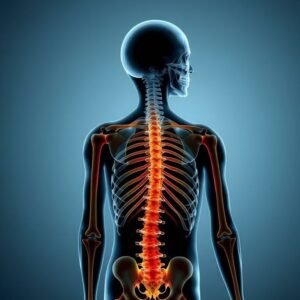
Imagine the human spine not as a rigid pillar, but as a marvel of biological engineering—a graceful, S-shaped column of bones, discs, and nerves that provides structural support, allows for fluid movement, and protects the delicate spinal cord. This natural architecture includes gentle curves: the lordotic curves of the neck and lower back, which curve inward, and the kyphotic curve of the thoracic spine, which curves outward. But what happens when this gentle thoracic curve becomes exaggerated, transforming from a functional arch into a debilitating hump? This is the reality of pathological kyphosis, a spinal deformity that affects millions worldwide, causing pain, functional limitation, and a significant impact on quality of life.
For the physician, the focus is on diagnosis, treatment, and compassionate care. For the medical coder, however, the focus shifts to a different kind of precision: the accurate translation of this complex clinical picture into a standardized alphanumeric language—the International Classification of Diseases, Tenth Revision, Clinical Modification (ICD-10-CM). In the modern healthcare ecosystem, these codes are far more than mere statistical tools. They are the fundamental currency of communication, driving reimbursement, informing public health initiatives, fueling clinical research, and ensuring regulatory compliance. A single misplaced character in an ICD-10 code for kyphosis can trigger a chain reaction—leading to claim denials, skewed health data, audit flags, and ultimately, a disruption in the revenue cycle that supports patient care.
This article is designed to be the definitive guide for medical coders, billers, clinical documentation specialists, and healthcare administrators navigating the intricate world of ICD-10 codes for kyphosis. We will move beyond simple code lists and delve deep into the “why” behind the “what.” We will deconstruct the clinical nuances of various kyphotic conditions, explore the labyrinthine structure of the ICD-10-CM manual, and master the art of code selection through real-world case studies. Our journey will illuminate how precise coding is not just an administrative task, but a critical component of high-quality, financially sustainable patient care. Prepare to embark on a comprehensive exploration where clinical knowledge and coding expertise converge.
ICD-10 codes for Kyphosis
Chapter 1: Deconstructing Kyphosis – A Clinical Deep Dive
To code a condition accurately, one must first understand it profoundly. Kyphosis is not a single disease but a descriptive term for an excessive forward curvature of the spine. This chapter lays the clinical foundation upon which all accurate coding is built.
What is Kyphosis? The Anatomy of a Spinal Curve
A normal thoracic kyphosis measures between 20 and 45 degrees when assessed on a lateral (side-view) X-ray. This curve is essential for balancing the head over the pelvis and absorbing mechanical stress. Kyphosis becomes a diagnosable condition when this curvature exceeds 50 degrees, often becoming visibly apparent as a rounded or “hunchback” posture. The consequences extend beyond cosmetics:
-
Biomechanical Stress: The exaggerated curve places abnormal stress on the vertebrae, discs, and supporting muscles and ligaments.
-
Pain: Chronic back pain is a common symptom, often localized to the apex of the curve or resulting from muscle fatigue.
-
Neurological Compromise: In severe cases, the curvature can narrow the spinal canal, leading to spinal stenosis and compression of the spinal cord or nerve roots. This can cause weakness, numbness, tingling, or even bowel and bladder dysfunction.
-
Cardiopulmonary Restrictions: A severe thoracic kyphosis can reduce space in the chest cavity, restricting lung expansion and heart function, leading to shortness of breath.
The Many Faces of Kyphosis: A Classification System
The etiology, or underlying cause, of kyphosis is the primary determinant for its ICD-10-CM code. The clinical classification system is directly mirrored in the structure of the code set.
Postural Kyphosis (M40.0)
This is the most common type, particularly in adolescents. It is a flexible, “round-back” posture caused by poor habitual posture and weakened spinal muscles. The vertebral bones themselves are normally shaped. It is typically non-painful and corrects completely when the patient lies flat or makes a conscious effort to stand straight. From a coding perspective, it’s crucial that the physician’s documentation explicitly states “postural” to use this code.
Scheuermann’s Kyphosis (M42.0-)
Also known as Scheuermann’s disease, this is a rigid structural kyphosis that presents during adolescence. Its hallmark is a wedging of at least three adjacent vertebrae by 5 degrees or more, visible on X-ray. Unlike postural kyphosis, the curve does not correct with posture changes. The exact cause is unknown but is believed to involve a growth abnormality of the vertebral endplates. It is often painful and can progress during growth spurts. ICD-10 provides specific codes under category M42 for this condition, distinguishing between juvenile and adult onset.
Congenital Kyphosis (Q76.419)
This is a structural deformity present at birth, resulting from a failure of normal vertebral formation or segmentation during fetal development. For example, a vertebra may be shaped like a wedge (failure of formation) or multiple vertebrae may be fused together (failure of segmentation). This type of kyphosis is often severe and progressive, and it is frequently associated with other congenital anomalies. Codes for congenital conditions are found in Chapter 17 of ICD-10-CM (Q00-Q99).
Age-Related and Pathological Kyphosis
This is a broad category encompassing kyphosis caused by another underlying disease process or degeneration.
-
Osteoporotic Kyphosis: Often seen in postmenopausal women, this results from compression fractures of the weakened vertebral bodies, leading to anterior wedging and an increased kyphotic angle. This is colloquially known as a “dowager’s hump.”
-
Traumatic Kyphosis: Caused by fractures of the vertebrae that heal in a collapsed, kyphotic position.
-
Post-surgical Kyphosis: A known complication of spinal surgeries, particularly extensive laminectomies (removal of the lamina) that destabilize the spine.
-
Kyphosis Secondary to Other Diseases: Conditions like ankylosing spondylitis, spinal tumors (primary or metastatic), infections (osteomyelitis, tuberculosis of the spine-Pott’s disease), and metabolic bone diseases can all lead to kyphotic deformity.
Chapter 2: The ICD-10-CM Coding System – A Primer for Precision
Before we assign a single code, it is imperative to understand the system we are working within. ICD-10-CM is a significant evolution from its predecessor, ICD-9-CM, designed for greater clinical specificity.
The Philosophy Behind ICD-10: From Vague to Specific
ICD-9-CM contained approximately 13,000 diagnosis codes. ICD-10-CM expanded this to over 68,000. This expansion was not for complexity’s sake, but for clarity. The driving principles include:
-
Laterality: Specifying right, left, or bilateral involvement.
-
Etiology: Distinguishing between underlying causes (e.g., postural vs. pathological).
-
Anatomic Specificity: Identifying the precise spinal region (cervical, thoracic, lumbar, sacral, coccygeal).
-
Episode of Care: Differentiating between initial and subsequent encounters for injuries.
-
Severity and Specificity: Providing codes for various stages and manifestations of a disease.
Navigating the ICD-10-CM Manual: Structure and Conventions
The ICD-10-CM manual is divided into two parts:
-
The Index to Diseases and Injuries: An alphabetical list of terms and their corresponding code(s). This is your starting point for a lookup.
-
The Tabular List of Diseases and Injuries: A numerical list of all codes containing official conventions, inclusions, exclusions, and instructions. You must always verify the code in the Tabular List after locating it in the Index.
Key conventions to understand:
-
Excludes1: A “pure” excludes note. The two conditions cannot be coded together because they are mutually exclusive.
-
Excludes2: A “not included here” note. The condition is not part of the code it is excluded from, but the patient may have both conditions concurrently. Both codes can be used if applicable.
-
“Use additional code”: Instructs you to code also the underlying etiology or manifestation.
-
Code first: Tells you to sequence the underlying disease code before the manifestation code.
-
7th Character Extensions: Used primarily in Chapter 19 (Injury) and a few other chapters to provide information about the encounter (e.g., A – initial encounter, D – subsequent encounter, S – sequela).
Chapter 3: A Guide to the ICD-10-CM Codes for Kyphosis
This chapter provides a detailed walkthrough of the specific ICD-10-CM codes relevant to kyphosis, organized by their parent categories.
Code Category M40: Kyphosis and Lordosis
This category is for acquired, postural, and “other” kyphosis, not classified elsewhere.
-
M40.00 – Postural kyphosis, site unspecified: Used when the physician documents postural kyphosis but does not specify the spinal region.
-
M40.01 – Postural kyphosis, occipito-atlanto-axial region
-
M40.02 – Postural kyphosis, cervical region
-
M40.03 – Postural kyphosis, cervicothoracic region
-
M40.04 – Postural kyphosis, thoracic region
-
M40.05 – Postural kyphosis, thoracolumbar region
-
M40.06 – Postural kyphosis, lumbar region
-
M40.07 – Postural kyphosis, lumbosacral region
-
M40.09 – Postural kyphosis, multiple sites in spine
-
M40.10 – Other secondary kyphosis, site unspecified: This code is for kyphosis that is a direct result of another condition, but that condition does not have its own specific kyphosis code elsewhere. The underlying cause (e.g., osteoporosis) should be coded first.
-
M40.20 – Unspecified kyphosis, site unspecified: This is a vague code that should be used only when the medical documentation is insufficient to determine the type of kyphosis. Its use is discouraged as it can lead to reimbursement issues.
Code Category M41: Scoliosis
While this category is for scoliosis (a lateral curvature of the spine), it is critical for differentiating a key condition.
-
The Important Distinction: Kyphosis vs. Kyphoscoliosis (M41.0-M41.9)
Kyphoscoliosis is a complex spinal deformity that combines both an excessive forward curvature (kyphosis) and a lateral curvature (scoliosis). This is a distinct condition coded within the scoliosis category (M41). If the physician documents “kyphoscoliosis,” you must code from M41, not from M40. Common codes include:-
M41.9 – Scoliosis, unspecified: Used for kyphoscoliosis when the type is not specified.
-
M41.40 – Neuromuscular scoliosis, site unspecified: For kyphoscoliosis secondary to conditions like cerebral palsy, muscular dystrophy, or spinal cord injury.
-
Code Category M42: Spinal Osteochondrosis
This is the home for Scheuermann’s disease.
-
M42.00 – Juvenile osteochondrosis of spine, site unspecified: This is the code for classic Scheuermann’s disease diagnosed in a child or adolescent.
-
M42.01-M42.07: Codes for juvenile osteochondrosis at specific sites (e.g., cervical, thoracic).
-
M42.10 – Adult osteochondrosis of spine, site unspecified: Used for Scheuermann’s disease that is diagnosed or persists into adulthood.
-
M42.11-M42.17: Codes for adult osteochondrosis at specific sites.
Code Category M84: Disorders of Continuity of Bone
This category is essential for coding kyphosis resulting from vertebral fractures.
-
M84.48- – Pathological fracture of vertebra, other specified site: This code is used when a vertebra fractures due to a disease process that weakens the bone, leading to kyphosis. The underlying disease (e.g., osteoporosis, bone metastasis) must be coded first.
-
Example: A patient with severe osteoporosis sustains a T12 compression fracture, resulting in a kyphotic deformity. Code first M80.08A (Age-related osteoporosis with current pathological fracture, vertebra(e), initial encounter) followed by M84.48XA (Pathological fracture, other specified site, initial encounter).
-
Code Category M96: Postprocedural Musculoskeletal Disorders
This category captures kyphosis that arises as a direct consequence of medical or surgical treatment.
-
M96.1 – Postlaminectomy kyphosis: A specific and important code for kyphosis that develops after a laminectomy procedure, most commonly in the cervical spine.
Code Category Q76: Congenital Malformations of Spine and Bony Thorax
-
Q76.419 – Congenital kyphosis, site unspecified: This code is for kyphosis present at birth due to a vertebral formation defect. More specific codes are available if the site is known (e.g., Q76.411 – Congenital kyphosis, occipito-atlanto-axial region).
Chapter 4: The Art of Code Selection – A Step-by-Step Clinical Documentation Improvement (CDI) Approach
Accurate coding is a diagnostic process in itself. Follow this structured approach to ensure precision.
Step 1: Identify the Type of Kyphosis
Scrutinize the documentation for keywords: “postural,” “Scheuermann’s,” “congenital,” “secondary to,” “post-traumatic,” “post-laminectomy.”
Step 2: Determine the Etiology (Cause)
This is the most critical step. Is it due to posture, a growth disorder, a birth defect, osteoporosis, a tumor, or a past surgery? The etiology will point you to the correct chapter in ICD-10.
Step 3: Specify the Anatomical Site and Laterality
Whenever possible, code to the highest level of specificity. “Thoracic kyphosis” is better coded as M40.04 than M40.20.
Step 4: Identify Associated Conditions and Complications
Code all relevant diagnoses. For a pathological fracture, code the underlying osteoporosis. For post-infectious kyphosis, code the history of spinal tuberculosis.
Step 5: Differentiate Between Current Injury and Sequelae
If the kyphosis is a late effect (sequela) of an old fracture, you would use a sequela code (7th character ‘S’) from the injury chapter, not a code from M40.
Chapter 5: Common Coding Scenarios and Case Studies
Let’s apply our knowledge to realistic patient encounters.
Case Study 1: The Elderly Female with Osteoporotic Wedge Fractures
-
Scenario: A 75-year-old female with a known history of osteoporosis presents for a follow-up visit regarding progressive upper back pain and a stooped posture. A recent DEXA scan confirms osteoporosis. A lateral spine X-ray reveals multiple wedge compression fractures of T8, T9, and T11, resulting in a 65-degree thoracic kyphosis.
-
Documentation: “Severe thoracic kyphosis secondary to osteoporotic vertebral compression fractures.”
-
Code Selection:
-
M80.08A – Age-related osteoporosis with current pathological fracture, vertebra(e), initial encounter. (Code first as per instructional note under M84.4-).
-
M84.48XA – Pathological fracture, other specified site (thoracic vertebrae), initial encounter.
-
M40.04 – Postural kyphosis, thoracic region. (Note: While the kyphosis is structural, it is often coded as “other secondary kyphosis” M40.14. However, if the coder is uncertain, a query may be needed to clarify if the physician considers this a “postural” adaptation or a direct structural consequence. This ambiguity highlights the need for precise documentation).
-
Case Study 2: The Adolescent with Back Pain and Rigid Curve
-
Scenario: A 14-year-old male is referred to an orthopedic surgeon for evaluation of a “hunchback.” He has persistent mid-back pain that worsens with activity. On exam, the thoracic kyphosis is rigid and does not correct with hyperextension. X-rays show anterior wedging of >5 degrees in three consecutive thoracic vertebrae (T7, T8, T9), confirming Scheuermann’s disease.
-
Documentation: “Scheuermann’s kyphosis of the thoracic spine.”
-
Code Selection:
-
M42.04 – Juvenile osteochondrosis of spine, thoracic region.
-
Case Study 3: Post-Surgical Deformity Following Laminectomy
-
Scenario: A 45-year-old male underwent a C3-C7 laminectomy for cervical spinal stenosis two years ago. He now returns with new complaints of neck pain and a forward-head posture. Imaging reveals a loss of normal cervical lordosis and the development of a cervical kyphotic deformity.
-
Documentation: “Post-laminectomy cervical kyphosis.”
-
Code Selection:
-
M96.1 – Postlaminectomy kyphosis. (This code is specific and does not require a site modifier).
-
Chapter 6: The High Stakes of Coding Accuracy – Compliance, Reimbursement, and Patient Care
Inaccurate coding is not a victimless error. Its ramifications are wide-ranging.
-
Impact on Reimbursement: Diagnosis codes directly influence Diagnosis-Related Groups (DRGs) for inpatient stays and Ambulatory Payment Classifications (APCs) for outpatient services. An unspecified code like M40.20 may map to a lower-paying DRG than a specific code like M42.04, resulting in significant financial loss for the hospital.
-
Compliance and Audit Risks: Using incorrect codes can be construed as fraud, waste, or abuse by auditors from Medicare, Medicaid, or private payers. This can lead to hefty fines, recoupments, and even exclusion from federal healthcare programs.
-
The Role in Population Health and Research: Accurate codes provide the data that public health officials use to track disease prevalence and allocate resources. Researchers rely on this data to study disease patterns and treatment outcomes. Inaccurate codes corrupt this vital information pipeline.
Chapter 7: Advanced Topics and Future Directions
The world of medical coding is constantly evolving.
ICD-11: What Does the Future Hold?
The World Health Organization has already released ICD-11, which features a more logical, digital-friendly structure. While the U.S. has not yet set a transition date, understanding its framework is beneficial. In ICD-11, spinal deformities like kyphosis are found in the “Diseases of the Musculoskeletal System” chapter and allow for even greater granularity in specifying etiology and severity.
The Role of AI and Computer-Assisted Coding (CAC)
AI-powered CAC tools are becoming standard. They analyze clinical documentation in the Electronic Health Record (EHR) and suggest appropriate codes. However, the human coder’s role is shifting from simple code assignment to that of a reviewer, auditor, and expert who understands the clinical context to validate and correct the AI’s suggestions. The deep knowledge outlined in this article will remain indispensable.
Chapter 8: Visual Guide and Reference Tables
ICD-10-CM Code Quick Reference Guide for Kyphosis
| Kyphosis Type | Etiology / Key Feature | Primary ICD-10-CM Category | Example Code(s) | Important Notes |
|---|---|---|---|---|
| Postural | Flexible, poor posture | M40 | M40.04 (Thoracic) | Must be explicitly documented as “postural.” |
| Scheuermann’s | Rigid, vertebral wedging in adolescence | M42 | M42.04 (Juvenile, thoracic) | Different codes for juvenile (M42.0-) and adult (M42.1-). |
| Congenital | Present at birth, vertebral malformation | Q76 | Q76.419 (Site unspecified) | Look for documentation of “congenital.” |
| Secondary to Osteoporosis | Vertebral compression fractures | M80 & M84 | M80.08A, M84.48XA | Code first the osteoporosis with fracture. |
| Post-laminectomy | Complication of spine surgery | M96 | M96.1 | Very specific code; no site needed. |
| Kyphoscoliosis | Combined lateral and forward curvature | M41 | M41.9 (Unspecified) | Do not code as kyphosis (M40). This is a scoliosis code. |
| Post-traumatic | Late effect of old vertebral fracture | S12.0XXS, etc. | S12.000S (Fracture of C0-C2, sequela) | Use sequela (7th char ‘S’) codes from Chapter 19. |
| Unspecified | Documentation is insufficient | M40 | M40.20 (Site unspecified) | Use as a last resort. Can trigger audits and denials. |
Conclusion
Accurate ICD-10 coding for kyphosis is a multifaceted process that demands a firm grasp of spinal anatomy, pathology, and the intricate structure of the coding manual. Moving beyond vague, unspecified codes to precise, etiology-driven assignments is paramount for ensuring fair reimbursement, maintaining regulatory compliance, and contributing to valuable health data. The coder’s role is not that of a passive data-entry clerk, but that of a critical thinker and clinical partner, bridging the gap between patient care and the administrative engines of modern medicine.
Frequently Asked Questions (FAQs)
Q1: What is the default ICD-10 code for kyphosis if the physician’s documentation is unclear?
A1: The least specific code is M40.20 (Unspecified kyphosis). However, using this code is strongly discouraged. It is best practice to initiate a physician query to clarify the type (e.g., postural, Scheuermann’s, secondary) and site of the kyphosis for accurate coding.
Q2: How do I code kyphosis in a patient with both osteoporosis and a history of a fall?
A2: This requires careful analysis. If the fall was a minor event that would not normally cause a fracture in healthy bone (a “pathological fracture”), the kyphosis is coded as secondary to osteoporosis (M80.0- and M84.4-). If the fall was significant and the primary cause of the fracture in a patient who also has osteoporosis, the fracture is coded from Chapter 19 (Injury) with a 7th character for the encounter, and the osteoporosis is coded as a comorbid condition using a code from the M81.0- category (osteoporosis without current pathological fracture).
Q3: What is the difference between M40.04 (Postural kyphosis, thoracic) and M40.14 (Other secondary kyphosis, thoracic)?
A3: M40.04 is reserved for flexible, posture-related kyphosis where the vertebrae are structurally normal. M40.14 is a catch-all for kyphosis that is clearly caused by another condition that doesn’t have its own specific code elsewhere in ICD-10. For example, if the kyphosis is attributed to chronic muscle spasm or a condition not classifiable to congenital, Scheuermann’s, or post-procedural categories, M40.14 might be appropriate. The physician’s documentation of the cause is key.
Q4: When should I use a code from the congenital chapter (Q76.419) versus a code from the musculoskeletal chapter (M40-M43)?
A4: Use a congenital code (Q76.419) when the kyphosis is explicitly documented as being present at birth due to a failure of vertebral formation. Use codes from M40-M43 for kyphosis that is acquired later in life, regardless of the patient’s current age. A 30-year-old being diagnosed with a congenital kyphosis they’ve had since birth would still be coded with Q76.419.
Additional Resources
-
The Official ICD-10-CM Guidelines for Coding and Reporting: Published annually by the Centers for Disease Control and Prevention (CDC) and the Centers for Medicare & Medicaid Services (CMS). This is the ultimate authority.
-
American Health Information Management Association (AHIMA): Offers a wealth of resources, including practice briefs, webinars, and certification programs for coders.
-
American Academy of Professional Coders (AAPC): Another leading organization providing certification, training, and local chapter networking for medical coders.
-
American Academy of Orthopaedic Surgeons (AAOS): While aimed at clinicians, their public and professional websites offer excellent detailed descriptions of spinal conditions, which can enhance a coder’s clinical understanding.
-
National Organization for Rare Disorders (NORD): A useful resource for understanding and coding rare congenital or syndromic conditions that may include kyphosis.
Date: October 9, 2025
Author: The Medical Coding Specialist Team
Disclaimer: The information contained in this article is for educational and informational purposes only and is not intended as a substitute for professional medical advice, diagnosis, or treatment. Always seek the advice of your physician or other qualified health provider with any questions you may have regarding a medical condition or treatment, and before undertaking a new health care regimen. Medical coding guidelines are subject to change; always refer to the most current official ICD-10-CM coding manuals and payer-specific policies.