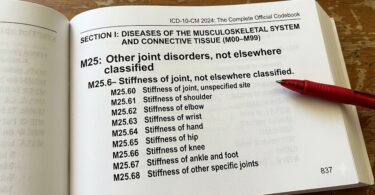
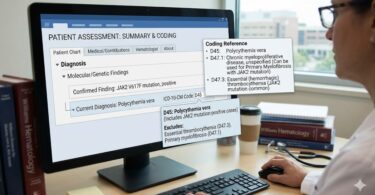
In the intricate ecosystem of modern healthcare, a single alphanumeric sequence—an ICD-10-CM code—holds immense power. It is the linchpin connecting a patient’s lived experience of pain and disability to the complex administrative and financial machinery that sustains medical practice. For the patient suffering from a stiff, aching lower back, the diagnosis is “lumbar spondylosis.” For the clinician, it represents a degenerative pathway that must be managed. But for the medical coder, billing specialist, and healthcare administrator, it translates into a precise, standardized code that dictates medical necessity, justifies treatment, and ensures appropriate reimbursement. The code for lumbar spondylosis is far from a mere clerical entry; it is a critical data point that fuels clinical decision-making, epidemiological research, and the very financial viability of a medical practice.
This article delves deep into the world of ICD-10 codes for lumbar spondylosis, moving beyond a simplistic code lookup to explore the rich context that surrounds it. We will dissect the pathology itself, unravel the structure and logic of the ICD-10-CM system, and provide a detailed roadmap for navigating the nuanced distinctions between similar codes. Our goal is to equip you—whether you are a seasoned coder, a healthcare provider, a student, or an administrator—with the knowledge to approach this common diagnosis with confidence and precision, ensuring that your coding is not only accurate but also tells the complete and correct story of the patient’s condition.
ICD-10 codes for lumbar spondylosis
2. Understanding the Pathology: What is Lumbar Spondylosis?
The Aging Spine: A Natural Process?
Lumbar spondylosis is not a single disease but rather an umbrella term that describes age-related wear and tear affecting the spinal discs, joints, and bones of the lower back (the lumbar spine, L1-L5). While often considered a “normal” part of aging, akin to wrinkles on the skin, its progression and symptomatic expression vary dramatically from person to person. By the age of 60, a significant majority of adults will show radiographic evidence of spondylosis, though not all will experience pain. The lumbar spine is particularly susceptible to this degenerative process due to its role in bearing the majority of the body’s weight and facilitating a wide range of motions, including bending, lifting, and twisting.
Key Pathological Components: DDD, Osteophytes, Facet Joint Arthritis, and Ligamentous Changes
The term “spondylosis” encompasses a cascade of interrelated degenerative changes:
-
Intervertebral Disc Degeneration (DDD): This is often the inciting event. The intervertebral discs, which act as shock absorbers between the vertebrae, begin to lose hydration and elasticity. The tough outer layer (annulus fibrosus) weakens, and the gel-like center (nucleus pulposus) dries out. This leads to a loss of disc height, reducing the space between vertebrae.
-
Osteophyte Formation (Bone Spurs): In response to the increased stress and instability from disc degeneration, the body attempts to remodel the bone. This often results in the formation of osteophytes—small, bony projections that develop along the edges of the vertebrae. While intended to stabilize the joint, these bone spurs can encroach upon the spaces where nerves exit the spinal canal, leading to compression.
-
Facet Joint Osteoarthritis: The facet joints are small, paired joints at the back of the spine that guide and limit movement. The altered biomechanics from disc degeneration place abnormal stress on these joints, leading to cartilage breakdown, inflammation, and hypertrophy (enlargement), further contributing to pain and stiffness.
-
Ligamentous Changes: Ligaments that stabilize the spine, such as the ligamentum flavum, can thicken and become less elastic (hypertrophy). This thickening can also protrude into the spinal canal, narrowing the space available for the neural elements.
Clinical Presentation: From Asymptomatic to Debilitating Pain
The clinical picture of lumbar spondylosis is highly variable. Many individuals are entirely asymptomatic, with changes discovered incidentally on X-rays. For those who are symptomatic, common presentations include:
-
Mechanical Low Back Pain: A deep, aching pain localized to the lower back that is typically worse with activity (e.g., prolonged standing, walking, bending) and improves with rest.
-
Stiffness: Particularly upon waking in the morning or after periods of inactivity.
-
Reduced Range of Motion: Difficulty bending or twisting the torso.
-
Referred Pain: A dull ache that may be felt in the buttocks or posterior thighs.
It is crucial to distinguish these generalized symptoms from the more specific symptoms of nerve compression (radiculopathy), which we will explore in a later section.
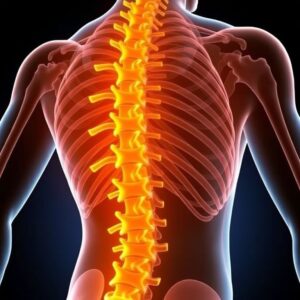
(Image: A comparative illustration of a healthy lumbar spine versus one with advanced spondylosis, showing disc space narrowing, bone spurs, and facet joint hypertrophy.)
[IMAGE: A side-by-side diagram. Left: Healthy spine with well-hydrated discs and normal facet joints. Right: Spine with spondylosis showing collapsed discs, bone spurs pinching nerves, and enlarged, arthritic facet joints.]
3. The ICD-10-CM Coding System: A Primer for Precision
From ICD-9 to ICD-10: A Leap in Specificity
The transition from ICD-9-CM to ICD-10-CM in 2015 represented a monumental shift in medical coding. ICD-9, with its approximately 14,000 codes, was outdated and lacked the detail required for modern medicine. ICD-10-CM, with over 68,000 codes, introduced a level of specificity that allows for a much more accurate depiction of a patient’s condition. This specificity is critical for value-based care, precise reimbursement, and robust public health data tracking.
The Structure of an ICD-10-CM Code: A Story in Seven Characters
An ICD-10-CM code is not a random string of characters. Its structure is logical and hierarchical:
-
Category (Characters 1-3): The code starts with a letter followed by two numbers, indicating the general category of the disease or injury. For musculoskeletal disorders, the chapter typically starts with the letter “M.”
-
Etiology, Anatomic Site, Severity, and Other Details (Characters 4-7): The subsequent characters provide specific details. The 4th character often specifies the etiology or sub-type, the 5th character often details the anatomical site (e.g., vertebral level), and the 6th and 7th characters can denote laterality, severity, or other qualifying information.
For example, in the code M51.16:
-
M51: Category – Other intervertebral disc disorders
-
.1: 4th character – Specifies spondylosis (a type of disc disorder)
-
6: 5th/6th character – Specifies the lumbar region without myelopathy or radiculopathy.
This structure forces a clarity that was often missing in ICD-9, directly impacting clinical and administrative outcomes.
4. Deconstructing the ICD-10-CM Code M51.16: Spondylosis without Myelopathy or Radiculopathy, Lumbar Region
The Category M51: A Family of Intervertebral Disc Disorders
The M51 category is titled “Other intervertebral disc disorders,” and it serves as the home for a range of conditions affecting the discs, including those that are degenerative in nature. It is distinct from categories for disc disorders in other regions (like the cervical spine, M50) and from categories for deformities (M40-M43) or spondylopathies (M45-M49).
The Importance of the 5th and 6th Characters: Anatomical Specificity
Under category M51, the 4th character “.1” is dedicated to “Spondylosis,” which the ICD-10-CM index directly leads to from “Spondylosis, with radiculopathy, lumbar.” However, the 5th and 6th characters are where the critical differentiation occurs. The character set allows coders to specify the precise spinal region and the presence or absence of neurological complications.
-
M51.16: Spondylosis without myelopathy or radiculopathy, lumbar region.
-
M51.17: Spondylosis with radiculopathy, lumbar region.
The code M51.16 is the default code for uncomplicated lumbar spondylosis. It is used when the medical record documents the degenerative condition but does not provide evidence of nerve root compression (radiculopathy) or spinal cord compression (myelopathy, which is rare in the lumbar spine).
When to Use M51.16: The “Uncomplicated” Case
You would assign M51.16 when the provider’s documentation includes terms such as:
-
“Lumbar spondylosis”
-
“Degenerative disc disease of the lumbar spine”
-
“Lumbar osteoarthritis”
-
“Spondylitic changes, L-spine”
…and the documentation is silent on, or explicitly rules out, symptoms or signs of radiculopathy (e.g., radiating pain, numbness, weakness, positive straight leg raise test) or myelopathy.
5. Navigating the Crucial Distinctions: Myelopathy and Radiculopathy
The single most important coding decision for lumbar spondylosis revolves around the presence or absence of neurological compromise. Misinterpreting this distinction is the most common source of coding errors.
Lumbar Radiculopathy (M54.16): The Pinched Nerve
Radiculopathy refers to a condition where a spinal nerve root is compressed, inflamed, or injured, leading to neurological deficits along the path of that nerve.
-
Clinical Signs and Symptoms (Sciatica): The classic presentation is sciatica—pain that radiates from the lower back down the buttock and into the leg, often following a specific dermatomal pattern (e.g., L5 radiculopathy causes pain down the lateral leg and top of the foot). Accompanying symptoms can include numbness, tingling (paresthesia), and muscle weakness in the same distribution.
-
Documentation Requirements for Coders: A coder cannot assume radiculopathy based on radiating pain alone. The provider’s documentation must explicitly link the symptom to nerve root compression. Look for phrases like:
-
“Lumbar radiculopathy”
-
“Right L5 radiculopathy”
-
“Sciatica due to foraminal stenosis at L4-L5”
-
“Nerve root compression confirmed on MRI”
-
If the provider documents only “low back pain with radiation to the leg” but does not diagnose “radiculopathy,” the coder should query the provider for clarification. The code for radiculopathy, when not linked to a specific disc disorder, is M54.16 (Radiculopathy, lumbar region).
Lumbar Spondylosis with Radiculopathy (M51.17): Linking Cause and Effect
The code M51.17 is used when the provider has established a direct causal link between the lumbar spondylosis and the radiculopathy. This is typically the case when a bone spur or a bulging disc from the degenerative process is physically compressing a nerve root.
-
Why M51.17 is More Specific than M54.16: According to the ICD-10-CM Official Coding Guidelines, when a causal relationship is stated, the combination code (M51.17) should be used. It is more precise because it identifies both the underlying cause (spondylosis) and the resulting condition (radiculopathy). Using M51.17 is generally preferred and more accurate than coding M51.16 and M54.16 separately.
Myelopathy: A Cautionary Note for the Lumbar Spine
Myelopathy refers to compression and dysfunction of the spinal cord itself. This is a critical distinction. True myelopathy from spondylosis is exceedingly rare in the lumbar spine because the spinal cord typically ends around the L1-L2 level, forming the cauda equina (a bundle of nerve roots). Compression of the cauda equina is a surgical emergency, but it is not coded as myelopathy. Myelopathy codes (like M51.0-) are primarily for the cervical and thoracic spine. If a provider incorrectly uses “myelopathy” in a lumbar context, a coder should query for clarification.
6. The Coding Workflow: A Step-by-Step Guide from Patient Chart to Final Code
Accurate coding is a systematic process. Here is a step-by-step approach for lumbar spondylosis.
-
Step 1: Analyze the Diagnostic Statement
-
Read the final diagnosis listed by the provider. Is it “lumbar spondylosis,” or “lumbar spondylosis with L5 radiculopathy”?
-
-
Step 2: Scrutinize the Clinical Documentation
-
Cross-reference the diagnosis with the History of Present Illness (HPI), Review of Systems (ROS), Physical Exam, and Assessment & Plan.
-
HPI/ROS: Does the patient describe radiating pain, numbness, or weakness?
-
Physical Exam: Are there positive neurological findings? (e.g., decreased sensation, diminished reflexes, motor weakness, positive straight leg raise).
-
Imaging/Studies: Do the MRI or EMG/NCS reports confirm nerve root compression?
-
-
Step 3: Apply Official Coding Guidelines
-
Apply the guideline for “coding of causal relationships.” If the documentation links the radiculopathy to the spondylosis, use the combination code M51.17.
-
If radiculopathy is documented but not linked to the spondylosis, you may need to code both M51.16 and M54.16, but a query is often warranted.
-
-
Step 4: Assign the Final Code
-
Based on the evidence gathered, assign the most specific code possible.
-
M51.16: Spondylosis only.
-
M51.17: Spondylosis causing radiculopathy.
-
M54.16: Radiculopathy, cause unspecified or not spondylosis.
-
7. Common Pitfalls and How to Avoid Them: Ensuring Clean Claims
Pitfall 1: Assuming Radiculopathy
-
Error: Coding M51.17 because the patient has leg pain.
-
Solution: Radiating pain does not equal radiculopathy. Radiculopathy requires objective neurological signs or a definitive diagnosis from the provider. When in doubt, query.
Pitfall 2: Incomplete Documentation
-
Error: The provider documents “DDD L-spine” in the assessment, but the physical exam notes “decreased sensation in the right foot.” The coder only sees the assessment and codes M51.16.
-
Solution: Coders must perform a complete chart review. The conflicting or supplementary information in the physical exam would necessitate a query to the provider to clarify the final diagnosis.
Pitfall 3: Confusing Spondylosis with Spondylolisthesis
-
Error: Using an M51.- code for spondylolisthesis.
-
Solution: Spondylolisthesis (M43.1-) is a condition where one vertebra slips forward over the one below it. It is a different diagnosis with its own set of codes. Ensure the documentation is clear.
Pitfall 4: Misinterpreting “Lumbago”
-
Error: Coding “lumbago” (M54.5) as the primary diagnosis when a more specific structural diagnosis like spondylosis exists.
-
Solution: “Lumbago” is a nonspecific term for low back pain. According to coding guidelines, if a definitive diagnosis is known, it should be coded instead of the symptom. Code the spondylosis (M51.16), not the lumbago (M54.50).
8. The Role of Supporting Documentation: Imaging, EMG, and Physical Exam Findings
The coder’s ability to assign the correct code is entirely dependent on the quality of the provider’s documentation. Key supporting evidence includes:
-
Imaging Reports (MRI, CT, X-ray): A radiologist’s report that states “severe facet hypertrophy and disc osteophyte complex causing severe right L5 neural foraminal narrowing and likely impingement of the traversing L5 nerve root” provides strong objective evidence to support a code of M51.17.
-
Electrodiagnostic Studies (EMG/NCS): These tests measure the electrical activity of muscles and nerves. A report confirming “active L5 radiculopathy” is powerful documentation for coding radiculopathy.
-
Detailed Physical Exam: A thorough neurological exam documenting dermatomal sensory loss, myotomal weakness, and reflex changes provides the clinical correlation needed to justify a radiculopathy diagnosis.
9. Beyond the Basics: Related Codes and Comorbidities
Patients with lumbar spondylosis often have other related conditions. It is important to know when to code them separately.
Differentiating Common Lumbar Spine Diagnoses in ICD-10-CM
| Diagnosis | ICD-10-CM Code | Description | Key Differentiator |
|---|---|---|---|
| Spondylosis without Radiculopathy | M51.16 | Degenerative changes (DDD, bone spurs) without nerve compression. | No documented neurological deficits. |
| Spondylosis with Radiculopathy | M51.17 | Degenerative changes causing nerve root compression. | Causal link established between spondylosis and radiculopathy. |
| Radiculopathy, Lumbar | M54.16 | Nerve root compression, cause unspecified or not spondylosis. | Used when the cause is not linked to a disc disorder (e.g., from diabetes). |
| Spinal Stenosis, Lumbar | M48.06- | Narrowing of the spinal canal. | Code for the stenosis itself. Often coexists with spondylosis (code both if both are treated). |
| Spondylolisthesis | M43.1- | Anterior slippage of one vertebra over another. | A deformity, not a pure degenerative disc disorder. Has its own code family. |
| Low Back Pain (Lumbago) | M54.50-M54.59 | A symptom, not a definitive diagnosis. | Code only if a more specific cause (like spondylosis) is not diagnosed. |
-
Spinal Stenosis (M48.06-): This is a common comorbidity. If the patient has both lumbar spondylosis and lumbar spinal stenosis, and both are addressed during the encounter, both codes should be assigned.
-
Spondondylolisthesis (M43.1-): As noted in the table, this is a distinct diagnosis. Code it separately if documented.
-
Coding for Pain (M54.50-M54.59): The ICD-10-CM guidelines state that you should not code a symptom (like pain) when a definitive diagnosis that explains the symptom is known. Therefore, if the diagnosis is lumbar spondylosis (M51.16), you would not additionally code low back pain (M54.59). The pain is inherent to the condition.
10. The Impact of Accurate Coding: Clinical, Financial, and Data Integrity
Precise coding for lumbar spondylosis has far-reaching consequences:
-
Driving Revenue Cycle Management: An inaccurate code can lead to claim denials or down-coding. Using M51.17 for a case that only supports M51.16 may be seen as “upcoding” and trigger an audit. Conversely, using M51.16 for a true radiculopathy case may lead to under-reimbursement, as the more complex condition warrants a higher Resource-Based Relative Value Scale (RBRVS) weight.
-
Supporting Population Health Management and Research: Accurate codes are the raw data for public health. They help researchers track the prevalence of degenerative spine conditions, identify risk factors, and measure treatment outcomes on a large scale. Health systems use this data to allocate resources and develop effective care pathways for chronic conditions like spondylosis.
11. Conclusion: The Art and Science of Precision Coding
Navigating the ICD-10 code for lumbar spondylosis requires a blend of scientific understanding and analytical skill. It is not a simple task of memorization but a dynamic process of clinical interpretation, documentation analysis, and strict adherence to guidelines. The correct code—be it M51.16, M51.17, or another related code—is the crucial endpoint of a journey that begins with the patient’s pain and ends with a data point that accurately reflects their condition, ensures fair reimbursement, and contributes to the broader knowledge of spinal health.
12. Frequently Asked Questions (FAQs)
Q1: Can I code both M51.16 and M54.16 (radiculopathy) together?
A: Generally, no. If the radiculopathy is due to the spondylosis, you must use the single, combination code M51.17. Using both M51.16 and M54.16 would be considered incorrect unless there is a clear, separate cause for the radiculopathy unrelated to the spondylosis. Always query the provider if the relationship is unclear.
Q2: What is the ICD-10 code for “degenerative disc disease” of the lumbar spine?
A: “Degenerative disc disease” (DDD) is essentially synonymous with spondylosis in this context. The correct code is M51.16 (Spondylosis without myelopathy or radiculopathy, lumbar region).
Q3: My provider’s documentation only says “lumbar arthritis.” What code should I use?
A: “Lumbar arthritis” is a nonspecific term. It could refer to facet joint arthritis (which is part of spondylosis) or other conditions. You should query the provider for a more precise diagnosis. If no further clarification is available and based on clinical context, M51.16 is often the most appropriate code, but this highlights the need for precise documentation.
Q4: How does coding change if the patient has had a previous spinal fusion?
A: This introduces codes for “postprocedural states.” If the patient is being seen for spondylosis at a level adjacent to a previous fusion (a common issue known as “adjacent segment disease”), you would code the spondylosis (e.g., M51.16) along with a code from category M96.-, such as M96.1 (Postlaminectomy syndrome not elsewhere classified) if applicable, to indicate the post-surgical status. The primary reason for the visit guides the sequencing.
Q5: What is the difference between M51.16 and M47.816 (Spondylosis without myelopathy or radiculopathy, lumbar region)?
A: This is an excellent and complex question. M47.- is for “Spondylosis,” but it is classified under “Spondylopathies,” which primarily includes inflammatory and specific structural disorders. M47.816 specifically refers to spondylosis with myelopathy or radiculopathy in the lumbar region, which, as discussed, is a rare scenario for myelopathy. The Index in ICD-10-CM typically directs you to M51.- for spondylosis. For pure, degenerative lumbar spondylosis without neurological compromise, M51.16 is the most direct and commonly used code. If there is any doubt, following the Alphabetic Index is the safest course.
13. Additional Resources
For the most accurate and up-to-date coding information, always consult these primary sources:
-
ICD-10-CM Official Guidelines for Coding and Reporting: Published annually by the CDC and CMS. This is the definitive rulebook for coders.
-
American Health Information Management Association (AHIMA): A leading professional organization for health informatics and information management, offering webinars, articles, and certifications.
-
American Academy of Professional Coders (AAPC): A premier organization for medical coding training, certification, and ongoing education, with local chapters and national conferences.
-
Current ICD-10-CM Code Set: Available through the CDC’s FTP server and within all commercial coding software and books. Ensure you are using the current year’s edition.
-
Your Payer’s Local Coverage Determinations (LCDs): Medicare Administrative Contractors (MACs) and other payers often publish LCDs that provide specific guidance on what diagnoses support medical necessity for certain procedures related to the spine.
Date: October 11, 2025
Author: The Health Informatics Team
Disclaimer: The information contained in this article is for educational and informational purposes only and is not intended as a substitute for professional medical advice, diagnosis, or treatment. Always seek the advice of your physician or other qualified health provider with any questions you may have regarding a medical condition or treatment, and before undertaking a new health care regimen. Medical coding is complex and constantly evolving; coders should always consult the most current, official ICD-10-CM coding guidelines and payer-specific policies.