Tuberculosis (TB) is an ancient scourge that has plagued humanity for millennia, with evidence of spinal TB found in Egyptian mummies dating back to 3000 BC. Despite monumental advances in medical science, it remains a formidable global health challenge. The World Health Organization (WHO) estimates that in a single year, over 10 million people fall ill with TB, and it claims over a million lives. Pulmonary Tuberculosis (PTB), the form of the disease that affects the lungs, is the most common and infectious manifestation. In the intricate ecosystem of modern healthcare, accurately identifying, treating, and tracking this disease is paramount. This is where the silent, yet powerful, language of medical coding comes into play.
The International Classification of Diseases, Tenth Revision, Clinical Modification (ICD-10-CM) is the standardized system used in the United States to translate complex medical diagnoses, procedures, and symptoms into alphanumeric codes. For a disease as significant as PTB, accurate ICD-10 coding is not merely an administrative or billing formality; it is a critical pillar supporting clinical care, public health surveillance, epidemiological research, and healthcare economics. A miscoded case of TB can lead to skewed disease prevalence data, misallocation of public health resources, and potential complications in patient care coordination. This article serves as a definitive guide, a detailed map through the labyrinth of ICD-10 codes for Pulmonary Tuberculosis. We will dissect the code structure, explore the clinical nuances that dictate code selection, and illuminate the profound impact of coding accuracy in the ongoing fight against one of the world’s deadliest infectious diseases.
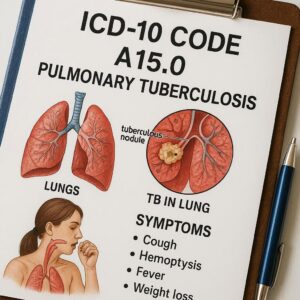
ICD-10 Code for Pulmonary Tuberculosis
2. Understanding the Foundation: What is ICD-10?
Before delving into the specifics of TB codes, it is essential to understand the system that houses them.
A Brief History of Disease Classification
The effort to systematically classify causes of death and disease began in earnest in the 17th and 18th centuries. The International Statistical Institute adopted the first international list of causes of death in 1893, known as the International List of Causes of Death. This evolved over the decades, with the World Health Organization taking over responsibility in 1948 and publishing the Sixth Revision, which for the first time included causes of morbidity, hence becoming the International Classification of Diseases. The Tenth Revision (ICD-10) was endorsed by the WHO in 1990, and the United States implemented its clinical modification, ICD-10-CM, for diagnosis coding on October 1, 2015, replacing the outdated ICD-9-CM system.
The Structure of an ICD-10-CM Code
ICD-10-CM codes are alphanumeric and can range from three to seven characters in length. The structure is hierarchical and logical.
-
Chapter: The first character is always a letter, which corresponds to a chapter. Tuberculosis codes fall under Chapter 1: Certain Infectious and Parasitic Diseases (A00-B99). The letter ‘A’ covers certain infectious and parasitic diseases.
-
Category: The first three characters (the letter and two digits) form the category. For TB, the categories are A15-A19.
-
Subcategory and Extension: Characters after the decimal point provide greater specificity. The fourth, fifth, sixth, and sometimes seventh characters detail the etiology, anatomical site, severity, and other clinical details.
For example, in the code A15.0:
-
A15: Category for “Respiratory tuberculosis, confirmed by bacteriological and histological examination.”
-
A15.0: Subcategory for “Tuberculosis of lung, confirmed by sputum microscopy with or without culture.”
This level of specificity is a significant advancement over ICD-9, allowing for more precise data collection and clinical distinction.
3. The Clinical Landscape of Pulmonary Tuberculosis
To code a disease accurately, one must first understand it clinically. PTB is not a monolithic entity but a disease with a spectrum of presentations.
Etiology and Pathogenesis: The Mycobacterium tuberculosis Complex
PTB is caused by bacteria belonging to the Mycobacterium tuberculosis complex, most commonly M. tuberculosis itself. These are slow-growing, aerobic bacilli with a unique, waxy cell wall (rich in mycolic acids) that makes them resistant to many antibiotics and allows them to survive in harsh environments, including inside human immune cells. Transmission occurs via airborne droplets when a person with active pulmonary TB coughs, sneezes, or speaks. Inhaled bacilli are deposited in the alveoli of the lungs, typically in the mid-zones, where the infection begins.
Clinical Spectrum: From Latent to Active Disease
Not everyone infected with M. tuberculosis becomes sick. The immune system can often wall off the bacilli, creating a state of Latent TB Infection (LTBI). Individuals with LTBI are asymptomatic, non-infectious, and usually have a positive TB skin test or interferon-gamma release assay (IGRA), but no evidence of active disease on chest X-ray. However, they harbor a lifelong risk of progression to active disease, especially if their immune system becomes compromised.
Active Tuberculosis occurs when the bacilli overcome the immune defenses and begin to multiply, causing symptomatic illness. This can happen shortly after primary infection (primary TB) or years later from reactivation of a latent focus (reactivation TB). Symptoms are often insidious and constitutional (“B symptoms”) including:
-
Persistent cough (lasting >3 weeks), sometimes with hemoptysis (coughing up blood)
-
Fever, night sweats
-
Unintentional weight loss and anorexia
-
Fatigue
-
Chest pain
Diagnosis: Smear, Culture, Molecular Tests, and Radiology
A definitive diagnosis of active PTB requires a multi-modal approach:
-
Tuberculin Skin Test (TST) or IGRA: Useful for detecting infection but cannot distinguish between latent and active disease.
-
Sputum Smear Microscopy: A rapid test that looks for acid-fast bacilli (AFB) under a microscope. A positive smear indicates a high bacterial load and high infectivity.
-
Nucleic Acid Amplification Tests (NAATs): Rapid molecular tests (e.g., Xpert MTB/RIF) that can detect M. tuberculosis DNA and simultaneously test for resistance to rifampin, a key first-line drug, within hours.
-
Mycobacterial Culture: The gold standard for diagnosis. It is more sensitive than smear microscopy and is essential for species identification and drug susceptibility testing (DST). However, it can take 2-8 weeks for results.
-
Chest Radiography (X-ray) and Computed Tomography (CT): Imaging reveals characteristic findings such as infiltrates, cavities (especially in the upper lobes), lymph node enlargement, and pleural effusions, but these are not definitive for TB.
Treatment Principles and Drug Regimens
Treatment for active PTB involves a multi-drug regimen over a long duration to prevent relapse and the emergence of drug resistance. The standard first-line regimen for drug-susceptible TB is a 6-month course of four drugs: Isoniazid (INH), Rifampin (RIF), Pyrazinamide (PZA), and Ethambutol (EMB). Directly Observed Therapy (DOT) is recommended to ensure adherence. Drug-resistant TB, including Multi-Drug Resistant TB (MDR-TB) and Extensively Drug-Resistant TB (XDR-TB), requires more complex, prolonged, and toxic regimens.
4. Navigating the ICD-10-CM Chapter 1: Certain Infectious and Parasitic Diseases (A00-B99)
The TB codes are nestled within a block of codes from A15 to A19. Understanding the logic of this block is crucial for accurate navigation.
The Block for Tuberculosis (A15-A19)
The codes are organized primarily by the method of confirmation and the anatomical site of the disease.
-
A15: Respiratory tuberculosis, confirmed by bacteriological and histological examination. This category is used when there is definitive laboratory confirmation of the diagnosis.
-
A16: Respiratory tuberculosis, not confirmed by bacteriological or histological examination. This category is for clinically diagnosed or presumed TB where definitive lab confirmation is lacking.
-
A17: Tuberculosis of the nervous system.
-
A18: Tuberculosis of other organs. (e.g., bones, genitourinary system, intestines).
-
A19: Miliary tuberculosis. A severe form of disseminated TB.
The primary distinction for pulmonary cases lies between A15 and A16, hinging entirely on the presence or absence of laboratory confirmation.
5. A Deep Dive into Pulmonary Tuberculosis Codes (A15.0-A15.9)
This section provides the granular detail required for precise coding.
The Primacy of Bacteriological and Histological Confirmation
The codes in category A15 are the most specific and are assigned when the medical record provides evidence that the TB diagnosis was confirmed by one of the following:
-
Microscopy: Visualization of acid-fast bacilli (AFB) in a smear from sputum or bronchial washings.
-
Culture: Growth of M. tuberculosis from a clinical specimen.
-
Histology: Tissue biopsy (e.g., from lung or pleura) showing classic TB granulomas (caseating granulomas) with or without visible AFB.
-
Molecular Methods: A positive NAAT (e.g., Xpert MTB/RIF) is considered a confirmatory test.
Deconstructing the Codes: A15.0 to A15.9
-
A15.0 – Tuberculosis of lung, confirmed by sputum microscopy with or without culture: This code is used when the diagnosis is confirmed by a positive sputum smear. This is often the first and most rapid form of confirmation. The phrase “with or without culture” means that even if a culture was not done or is still pending, the positive smear is sufficient to assign this code.
-
A15.4 – Tuberculosis of lung, confirmed histologically: This code is assigned when the diagnosis is made via a tissue biopsy of the lung itself, showing histological evidence of TB. This might occur, for example, during a video-assisted thoracoscopic surgery (VATS) biopsy for a lung nodule that turns out to be TB.
-
A15.5 – Tuberculosis of larynx, trachea and bronchus, confirmed bacteriologically and histologically: This code is for TB affecting the upper respiratory tract (larynx, trachea, bronchi). It requires confirmation, typically via biopsy of a laryngeal or endobronchial lesion or a positive culture from bronchial washings.
-
A15.6 – Tuberculous pleurisy, confirmed bacteriologically and histologically: This refers to TB of the pleural space (the space between the lungs and the chest wall), often presenting as a pleural effusion. Confirmation requires a positive culture of pleural fluid or a pleural tissue biopsy showing TB granulomas. A positive AFB smear of pleural fluid is rare due to the low bacillary load.
-
A15.7 – Primary respiratory tuberculosis, confirmed bacteriologically and histologically: This code is for confirmed primary pulmonary TB, which is the initial infection, more commonly seen in children. It may present as the “Ghon complex” (a calcified lung lesion and associated lymph node) on imaging.
-
A15.8 – Other respiratory tuberculosis, confirmed bacteriologically and histologically: This is a catch-all code for other confirmed respiratory TB not specified elsewhere. An example could be tuberculous empyema (pus in the pleural space).
-
A15.9 – Respiratory tuberculosis unspecified, confirmed bacteriologically and histologically: This code should be used sparingly. It is for a confirmed respiratory TB case where the specific anatomical site within the respiratory system is not documented. Coders should always review the record for more specific information before defaulting to this code.
Case Studies: Applying the Codes in Real-World Scenarios
-
Case 1: A 45-year-old man presents with a 4-week history of cough, fever, and night sweats. A chest X-ray shows a cavity in the right upper lobe. Three sputum samples are sent for AFB smear and culture. The smear returns positive. The physician documents “Pulmonary Tuberculosis, sputum AFB smear positive.”
-
Correct Code: A15.0 (The positive smear provides bacteriological confirmation).
-
-
Case 2: A patient with HIV is admitted with shortness of breath. A CT scan shows a large pleural effusion. A thoracentesis is performed, and the fluid is sent for analysis. The culture for M. tuberculosis returns positive after 4 weeks.
-
Correct Code: A15.6 (Tuberculous pleurisy confirmed by culture).
-
-
Case 3: A 60-year-old woman undergoes a bronchoscopy for a persistent lung mass. A biopsy of the mass is taken. The pathology report states “Chronic granulomatous inflammation with caseous necrosis, consistent with tuberculosis.” AFB stains on the tissue are negative.
-
Correct Code: A15.4 (The histological findings on lung biopsy are confirmatory, even though the AFB stain was negative).
-
6. Other Tuberculosis Codes with Pulmonary Manifestations
Respiratory Tuberculosis, Not Confirmed Bacteriologically or Histologically (A16.0-A16.2)
This category is used when a provider makes a diagnosis of TB based on clinical signs, symptoms, and radiological findings, but without the definitive laboratory proof required for A15. The codes mirror the A15 category (e.g., A16.0 for tuberculosis of lung, bacteriological and histological examination not done, A16.2 for tuberculous pleurisy without mention of bacteriological confirmation). This is often used when a patient has a high clinical suspicion for TB and is started on empirical treatment, but confirmatory tests are negative, pending, or not performed.
Tuberculosis of Other Organs: Miliary Tuberculosis (A19.-)
Miliary TB is a form of disseminated TB where the bacilli spread via the bloodstream, seeding countless tiny foci (resembling millet seeds) throughout the body, including the lungs. It is a severe, life-threatening condition. The codes under A19 are used based on the acuity:
-
A19.0 – Acute miliary tuberculosis of a single specified site
-
A19.1 – Acute miliary tuberculosis of multiple sites
-
A19.2 – Acute miliary tuberculosis, unspecified
-
A19.9 – Miliary tuberculosis, unspecified
If a patient has miliary TB with pulmonary involvement, the miliary TB code (A19.-) is sequenced as the principal diagnosis, as it describes the more severe, systemic illness. A code from A15 or A16 may be assigned as an additional code to specify the pulmonary involvement.
7. The Critical Role of Documentation in Accurate Coding
The coder’s world is built upon the foundation of clinical documentation. Incomplete or ambiguous documentation is the primary cause of coding errors.
What Physicians Need to Document
For optimal coding, the provider’s documentation should clearly state:
-
The specific diagnosis: “Pulmonary Tuberculosis,” “Tuberculous Pleurisy,” etc.
-
The anatomical site: Lung, larynx, pleura, etc.
-
The method of confirmation: “Confirmed by sputum culture,” “AFB smear positive,” “Diagnosis confirmed by lung biopsy,” or “Clinically diagnosed, pending culture results.”
-
Laterality: Although not a specific requirement for most TB codes, good practice includes specifying the lung involved (e.g., “cavitary lesion in the left upper lobe”).
Querying for Clarity: The Coder’s Responsibility
If the documentation is unclear regarding confirmation, the coder has a professional responsibility to issue a physician query. For example:
-
Scenario: The physician documents “Active Pulmonary TB” and the patient is started on a four-drug regimen. The lab report shows a sputum AFB smear is negative, but the culture is still pending.
-
Query: “Dear Dr. Smith, the patient is being treated for Active Pulmonary TB. The sputum AFB smear is documented as negative, and the culture is pending. Can you please clarify if this is a clinical diagnosis without bacteriological confirmation, or are we awaiting culture results for definitive confirmation? This will determine whether to assign a code from category A15 or A16.”
8. Sequencing and Comorbidities: The Order of Things
Correctly sequencing diagnoses is vital for accurate reimbursement and data reporting.
Principal Diagnosis vs. Secondary Diagnoses
The principal diagnosis is the condition established after study to be chiefly responsible for occasioning the admission of the patient to the hospital. For a patient admitted specifically for treatment of active PTB, the A15 or A16 code would be the principal diagnosis.
Coding HIV and Tuberculosis
HIV and TB have a synergistic, deadly relationship. When a patient has both, the coding is specific.
-
Code first the underlying disease, which is B20: Human immunodeficiency virus [HIV] disease.
-
Code additionally the tuberculosis (A15-A19).
-
Use an extra code to identify the resistance to antimicrobial drugs (Z16.-) if applicable.
-
Example: A patient with AIDS is admitted for treatment of newly diagnosed, smear-positive pulmonary TB. The codes would be: B20 (HIV disease), A15.0 (TB of lung, confirmed by smear), and perhaps Z16.11 (Resistance to multiple antimycobacterial drugs) if MDR-TB is confirmed.
Coding Tuberculosis with Other Conditions (e.g., Diabetes, Malnutrition)
Conditions like diabetes mellitus are significant risk factors for TB reactivation. If a patient is admitted for TB and also has diabetes, the TB code (A15/A16) is typically the principal diagnosis. The diabetes code (e.g., E11.9) is assigned as a secondary/comorbidity code. Similarly, malnutrition (E43-E46) would be coded as a comorbidity if present.
9. A Comparative Table: Pulmonary Tuberculosis Codes at a Glance
The following table provides a quick reference for the most commonly used pulmonary TB codes.
10. The Impact of Accurate Coding: Beyond Reimbursement
While correct coding ensures appropriate DRG assignment and hospital reimbursement, its impact is far more profound.
Public Health Surveillance and Epidemic Control
ICD-10 codes are the primary data source for national and global disease surveillance. Accurate A15-A19 coding allows public health departments (like the CDC) to:
-
Track the incidence and prevalence of TB accurately.
-
Identify hotspots and outbreaks.
-
Monitor trends in drug-resistant TB (by linking codes with lab data).
-
Evaluate the effectiveness of TB control programs.
-
Justify funding and allocate resources for prevention and treatment.
Quality Metrics and Value-Based Care
Healthcare quality reporting programs often track conditions like TB. Accurate coding ensures that hospitals are correctly rated on their performance in managing these complex patients. It also helps in risk-adjusting patient populations for value-based payment models.
Research and Resource Allocation
Epidemiologists and clinical researchers rely on coded data to study the natural history of TB, identify risk factors, and assess the outcomes of different treatment strategies. Inaccurate coding creates “noise” in this data, leading to flawed research conclusions and potentially misguided public health policies.
11. Common Pitfalls and How to Avoid Them
-
Pitfall 1: Confusing Latent and Active TB. Latent TB (LTBI) is coded as R76.11 (Nonspecific reaction to tuberculin test without active tuberculosis) or R76.12 (Nonspecific reaction to cell-mediated immunity measurement of gamma interferon antigen response without active tuberculosis). Never use an A15-A19 code for LTBI.
-
Pitfall 2: Defaulting to A16 when A15 is supported. Always check the laboratory and pathology reports. If a positive culture, smear, or biopsy exists, the code must be from the A15 category.
-
Pitfall 3: Incorrectly sequencing HIV and TB. Remember, for a patient with both, B20 is always coded first.
-
Pitfall 4: Using outdated codes. ICD-10 is updated annually on October 1st. Coders must use the most current version of the code set and guidelines.
12. Conclusion: Mastering the Code to Combat the Disease
Accurate ICD-10 coding for Pulmonary Tuberculosis is a critical skill that bridges clinical care and population health. It requires a solid understanding of the disease’s clinical nuances, a meticulous approach to reviewing medical documentation, and a firm grasp of the hierarchical structure of the ICD-10-CM system. By moving beyond mere reimbursement to appreciate its role in public health surveillance, quality measurement, and research, medical coders, clinicians, and healthcare administrators can ensure that every coded case of TB contributes meaningfully to the global effort to understand, control, and ultimately eradicate this ancient plague. The labyrinth of codes, when navigated with expertise, becomes a powerful map guiding us toward a TB-free world.
13. Frequently Asked Questions (FAQs)
Q1: What is the ICD-10 code for Latent TB Infection (LTBI)?
A: The codes for LTBI are R76.11 (Nonspecific reaction to tuberculin test without active tuberculosis) or R76.12 (Nonspecific reaction to cell-mediated immunity measurement of gamma interferon antigen response without active tuberculosis). These are used when a patient has a positive TST or IGRA but no signs or symptoms of active disease.
Q2: How do I code a patient who is being “ruled out” for TB?
A: Do not code a diagnosis that is uncertain. Code only the signs and symptoms (e.g., R05.1 Cough, R50.9 Fever) that prompted the evaluation. Once a definitive diagnosis is made, then assign the appropriate TB code.
Q3: What is the difference between A15.0 and A15.4?
A: A15.0 is used when confirmation is by sputum smear microscopy. A15.4 is used when confirmation is by histological examination of a lung tissue biopsy. The method of confirmation dictates the code.
Q4: A patient has both pulmonary TB and TB of the spine (Pott’s disease). How do I code this?
A: You would assign multiple codes. Code the pulmonary TB (e.g., A15.0) and also code the spinal TB (A18.01 – Tuberculosis of spine). The sequencing depends on the reason for the encounter. If the patient is admitted primarily for treatment of the pulmonary disease, A15.0 would be principal. If admitted for spinal surgery due to Pott’s disease, A18.01 would be principal.
Q5: How do I code for Multi-Drug Resistant TB (MDR-TB)?
A: First, assign the appropriate anatomical TB code from A15-A19 based on the site and confirmation. Then, assign an additional code from category Z16 (Resistance to antimicrobial drugs). For resistance to multiple antimycobacterial drugs, use Z16.11. For resistance to a single drug, a different Z16 code would be used (e.g., Z16.21 for isoniazid resistance).
14. Additional Resources
-
Centers for Disease Control and Prevention (CDC) – TB Division: https://www.cdc.gov/tb/ (For clinical and public health guidelines).
-
American Health Information Management Association (AHIMA): https://www.ahima.org/ (For coding best practices and education).
-
American Academy of Professional Coders (AAPC): https://www.aapc.com/ (For coding certification and resources).
-
ICD-10-CM Official Guidelines for Coding and Reporting: Published annually by the CDC and CMS. This is the definitive source for coding rules.
-
World Health Organization (WHO) – Tuberculosis: https://www.who.int/health-topics/tuberculosis (For global perspectives and data).
Date: October 22, 2025
Author: Dr. Anya Sharma, MD, CCS-P, CPC
Disclaimer: This article is intended for educational and informational purposes only. It is not a substitute for professional medical coding advice, official coding guidelines, or clinical judgment. Medical coders must always refer to the most current version of the ICD-10-CM Official Guidelines for Coding and Reporting and the complete code set. The author and publisher are not responsible for any errors or omissions or for any outcomes related to the use of this information.