In the intricate ecosystem of modern healthcare, the seamless integration of clinical medicine and administrative precision is paramount. Nowhere is this synergy more critical than in the domain of diagnostic testing, where a sophisticated tool like the QuantiFERON-TB Gold (QFT) assay represents a triumph of immunology, yet its financial and operational viability within a medical practice hinges on a seemingly mundane element: the correct application of an ICD-10 code. This alphanumeric string, often relegated to the back offices of clinics and hospitals, is the linchpin that connects patient care to provider reimbursement. A correct code ensures smooth payment, supports public health surveillance, and validates the medical necessity of the intervention. An incorrect code, however, triggers a cascade of negative consequences: claim denials, revenue loss, audit flags, and potential compliance issues.
This article is designed as the definitive guide for a diverse audience—from physicians, physician assistants, and nurse practitioners who order the test, to medical coders, billers, and practice administrators who translate clinical action into financial reality. We will embark on a detailed exploration that exceeds superficial coding tips, delving into the science of the QFT test, the rationale behind coding guidelines, and the nuanced clinical scenarios that challenge even experienced professionals. Our goal is not only to provide the correct codes but to foster a deep understanding of the “why” behind them, empowering you to navigate this landscape with confidence and expertise. By the end of this comprehensive resource, you will have mastered the art and science of appropriately justifying the medical necessity of QuantiFERON-TB Gold testing, ensuring your practice remains both clinically excellent and financially sound.
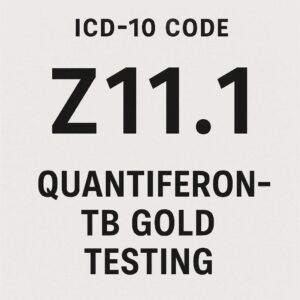
ICD-10 code for QuantiFERON-TB Gold testing
2. Understanding the Diagnostic Tool: A Deep Dive into QuantiFERON-TB Gold
Before a single code can be assigned, it is essential to understand what the QuantiFERON-TB Gold test is, how it works, and its role in clinical decision-making. This foundation is critical for making informed coding choices that accurately reflect the clinical context.
2.1. The Science Behind the Test: From Tuberculin to T-Cells
For decades, the Tuberculin Skin Test (TST), or Mantoux test, was the cornerstone of tuberculosis (TB) infection detection. While it remains in use, its limitations are significant: it requires a return visit within 48-72 hours for interpretation, it can be confounded by prior Bacille Calmette-Guérin (BCG) vaccination, and it is susceptible to false positives due to exposure to non-tuberculous mycobacteria.
The QuantiFERON-TB Gold assay represents a paradigm shift. It is an in vitro interferon-gamma release assay (IGRA) that measures the cell-mediated immune response to Mycobacterium tuberculosis antigens. In simple terms, it is a blood test that looks for evidence of an immune system that has “seen” TB before.
The Mechanism, Step-by-Step:
-
Blood Collection: A fresh whole blood sample is drawn from the patient into specialized tubes.
-
Incubation: The blood is incubated with specific M. tuberculosis antigens (ESAT-6, CFP-7, and TB7.7). If the patient’s T-cells have been previously sensitized to these antigens (i.e., they have a TB infection), they will release interferon-gamma (IFN-γ).
-
Measurement: The amount of IFN-γ in the plasma is measured using an enzyme-linked immunosorbent assay (ELISA).
-
Interpretation: The result is calculated and reported as:
-
Positive: Suggests infection with M. tuberculosis complex.
-
Negative: Suggests no immune response to the antigens is detected.
-
Indeterminate: The test control failed, often due to low mitogen response (e.g., in immunocompromised patients) or high background nil levels. This result is non-diagnostic.
-
The key advantages of QFT are its high specificity (it is not affected by BCG vaccination), the need for only a single patient visit, and the objective, quantitative result that is not subject to interpreter bias.
2.2. QFT-Plus vs. QFT-Gold: An Evolutionary Step
The QuantiFERON-TB Gold Plus (QFT-Plus) is the next-generation version of the test. It includes an additional antigen tube designed to also stimulate CD8+ T-cells, in addition to the CD4+ T-cells targeted by the original QFT-Gold. This is believed to potentially enhance sensitivity, particularly in individuals who are immunocompromised, where the CD8+ response may be more robust. From a coding perspective, the clinical intent and diagnostic purpose are identical to its predecessor, and the same ICD-10 codes are applied. The CPT code may differ slightly (86480 for QFT-Gold, 86481 for QFT-Plus), so it is crucial to verify which test was performed.
2.3. Clinical Indications: Who Should Be Tested?
The Centers for Disease Control and Prevention (CDC) and professional societies have clear guidelines on who should be tested for TB infection. Testing should be performed on individuals who are at increased risk for developing TB disease, not the general population without risk factors. Key populations include:
-
Contacts of individuals with known or suspected infectious TB disease.
-
Immigrants from countries with high TB incidence.
-
Healthcare workers and others in congregate settings.
-
Individuals who are immunocompromised (e.g., HIV infection, organ transplant recipients, patients on TNF-alpha antagonists).
-
Patients prior to initiation of immunosuppressive therapy.
This concept of “risk” is the bedrock of medical necessity for screening codes.
3. The Foundation of Medical Billing: ICD-10-CM and Medical Necessity
The International Classification of Diseases, Tenth Revision, Clinical Modification (ICD-10-CM) is more than a list of diseases; it is a standardized system for reporting diagnoses and reasons for encounters. Its primary function in billing is to justify the services provided.
3.1. Why Correct Coding is Non-Negotiable
Incorrect ICD-10 coding can lead to:
-
Claim Denials: Payers will reject claims if the diagnosis code does not align with their policy for the service rendered.
-
Delayed Reimbursement: Appeals and resubmissions consume time and resources.
-
Compliance Risks and Audits: Systematic coding errors can trigger audits from payers or government entities like the Office of Inspector General (OIG), leading to fines and penalties.
-
Skewed Data: Inaccurate coding corrupts public health data and disease surveillance efforts.
3.2. The Concept of “Medical Necessity” and its Documentation
“Medical necessity” is the principle that a service or procedure is reasonable and necessary for the diagnosis or treatment of a patient’s condition. For a QFT test, the ICD-10 code must tell the story of why the test was needed. The documentation in the patient’s medical record is the sole source of truth for this story. A coder can only assign a code that is supported by the provider’s documentation.
4. A Comprehensive Guide to ICD-10 Codes for QuantiFERON-TB Gold
This section provides a detailed breakdown of the most relevant ICD-10-CM codes, their appropriate use cases, and the critical documentation required to support them.
4.1. The Asymptomatic Patient: Screening for Tuberculosis (Z11.1)
-
ICD-10 Code: Z11.1 – Encounter for screening for respiratory tuberculosis
-
Usage: This is the most common code for QFT testing. It is used when a patient has no signs or symptoms of TB but is being tested due to an identified risk factor. The encounter is for the purpose of screening.
-
Documentation Requirements: The provider’s note should clearly state the reason for screening. Examples:
-
“Patient here for pre-employment TB screening as required by hospital policy.”
-
“Patient is a new immigrant from a high-TB-burden country and is asymptomatic. Here for routine latent TB screening.”
-
“Patient starting infliximab for rheumatoid arthritis. Requires baseline TB screening prior to initiating immunosuppressive therapy.”
-
-
Key Consideration: Z11.1 is a “Z-code,” which are used for factors influencing health status and contact with health services. They are perfectly valid as primary diagnosis codes when the screening is the reason for the encounter.
4.2. Confirmed Diagnosis: Coding for Latent Tuberculosis Infection (R76.11)
-
ICD-10 Code: R76.11 – Nonspecific reaction to tuberculin skin test without active tuberculosis
-
Note: While this code’s descriptor mentions the “tuberculin skin test,” the ICD-10-CM Official Coding Guidelines and the AHA Coding Clinic have confirmed that R76.11 is the appropriate code for a positive IGRA (like QFT) in the absence of active TB disease.
-
-
Usage: This code is used to report a confirmed positive QFT result. It signifies that the patient has latent tuberculosis infection (LTBI). It is not used for the encounter where the test is ordered. It is used for follow-up encounters where the result is discussed and a treatment plan is initiated.
-
Documentation Requirements: The note must explicitly state the positive QFT result and the absence of active disease.
-
“Patient returns for results of QFT test performed last week. Test is positive. Patient remains asymptomatic with clear chest X-ray. Diagnosis: Latent TB Infection. We will discuss treatment options.”
-
-
Crucial Distinction: Do not use an active TB code (A15.-) for a positive QFT in an asymptomatic patient. This is a clinically and coding significant error.
4.3. The Complex Landscape of Active Tuberculosis (A15.-, A19.-)
This family of codes is used when active TB disease is suspected or confirmed. The QFT test may be used as part of the diagnostic workup.
-
Primary Codes:
-
A15.0 – Tuberculosis of lung
-
A15.4 – Tuberculosis of intrathoracic lymph nodes
-
A15.5 – Tuberculosis of larynx, trachea, and bronchus
-
A15.6 – Tuberculous pleurisy
-
A15.7 – Primary respiratory tuberculosis
-
A19.- – Miliary tuberculosis
-
-
Usage: These codes are used when the patient presents with signs and symptoms suggestive of active TB (e.g., prolonged cough, fever, night sweats, weight loss, hemoptysis) and the QFT is part of the diagnostic evaluation. If active TB is confirmed, this code would be used for all subsequent encounters related to the treatment of that active disease.
-
Documentation Requirements: The provider must document the clinical signs and symptoms. Example: “Patient presents with 4-week history of productive cough, night sweats, and 10lb weight loss. Chest X-ray shows infiltrates in the right upper lobe. Differential includes community-acquired pneumonia vs. active tuberculosis. Ordering QFT, sputum for AFB culture, and PCR.”
4.4. Special Populations and Exposure Scenarios (Z20.1, Z22.-)
-
ICD-10 Code: Z20.1 – Contact with and (suspected) exposure to tuberculosis
-
Usage: This code is appropriate when a patient is known to have been exposed to a person with active TB. It indicates the reason for testing is a specific exposure, rather than a general screening based on population risk.
-
Documentation Requirements: The note should document the exposure. Example: “Patient’s household member was recently diagnosed with active pulmonary TB. Patient is here for contact investigation and baseline TB testing.”
-
ICD-10 Code: Z22.- – Carrier of infectious disease
-
Z22.1 – Carrier of bacterial diseases, other
-
-
Usage: This code is less commonly used for LTBI. Its use is somewhat controversial and payer-specific. Some experts argue that “carrier” status implies the potential to transmit, which is not the case with LTBI. R76.11 is generally the preferred and more widely accepted code for a diagnosed LTBI state.
4.5. Nonspecific Signs and Symptoms: The Role of R-Codes
If a patient presents with symptoms that could be due to TB (e.g., cough, fever, weight loss) but the diagnosis is uncertain, it is appropriate to code the symptoms while the workup is in progress.
-
Examples:
-
R05.9 – Cough, unspecified
-
R50.9 – Fever, unspecified
-
R06.02 – Shortness of breath
-
R63.4 – Abnormal weight loss
-
-
Usage: These codes signal that the test is being performed for a diagnostic purpose, not a routine screening. They justify the medical necessity based on the patient’s symptomatic presentation.
4.6. The Crucial Documentation Link: What the Provider’s Note Must Contain
The coder’s ability to select the correct ICD-10 code is entirely dependent on the provider’s documentation. A vague note like “order QFT” is insufficient. The medical record must answer the question: “Why today?”
Essential Elements for Documentation:
-
Patient’s Status: Asymptomatic vs. Symptomatic.
-
Reason for Test/Medical Necessity: Specific risk factor (e.g., “immigrant,” “starting anti-TNF therapy,” “healthcare worker”), known exposure, or documented signs/symptoms.
-
Result (for follow-up visits): Clearly stated positive, negative, or indeterminate result and the resulting diagnosis (e.g., “Latent TB Infection”).
5. Navigating Common and Complex Clinical Scenarios: Case Studies
Let’s apply this knowledge to realistic patient encounters.
Case Study 1: The Pre-Employment Screening
-
Scenario: A 28-year-old woman presents for a health clearance required for her new job as a nurse at a local hospital. She has no symptoms.
-
Action: QFT blood draw is performed.
-
Correct ICD-10 Code: Z11.1 (Encounter for screening for respiratory tuberculosis).
-
Rationale: The sole reason for the test is screening based on occupational risk. The patient is asymptomatic.
Case Study 2: The Recent Immigrant with a Positive Test
-
Scenario: A 45-year-old man from a high-TB-burden country was screened with QFT one week ago. He returns to the clinic for his results. He remains asymptomatic.
-
Action: The provider informs him his QFT is positive. A chest X-ray is normal. He is diagnosed with LTBI and offered treatment.
-
Correct ICD-10 Code: R76.11 (Nonspecific reaction to tuberculin skin test without active tuberculosis).
-
Rationale: This encounter is for the management of a confirmed diagnosis (LTBI), not for screening. The screening was completed at the prior visit.
Case Study 3: The Immunosuppressed Patient Starting Biologics
-
Scenario: A 60-year-old woman with severe rheumatoid arthritis is scheduled to start adalimumab. Her rheumatologist orders a QFT test.
-
Action: QFT blood draw.
-
Correct ICD-10 Codes:
-
Primary: Z11.1 (Encounter for screening for respiratory tuberculosis).
-
Secondary: M06.9 (Rheumatoid arthritis, unspecified) – This provides the context for why she is at risk and needs screening.
-
-
Rationale: The screening is medically necessary due to the planned immunosuppressive therapy. Coding both the screening and the underlying condition paints a complete picture for the payer.
Case Study 4: Rule-Out Active TB in a Hospitalized Patient
-
Scenario: A 70-year-old man is admitted with a 3-week history of cough, fever, and weight loss. His chest X-ray is suspicious. The hospitalist orders a QFT as part of the infectious workup.
-
Action: QFT is sent from the inpatient unit.
-
Correct ICD-10 Codes: The primary code(s) would be the signs and symptoms or the suspected condition driving the admission.
-
R05.9 (Cough)
-
R50.9 (Fever)
-
R63.4 (Abnormal weight loss)
-
OR A15.0 (Tuberculosis of lung) if the provider’s assessment strongly points to active TB.
-
-
Rationale: The test is diagnostic, not screening. The codes must reflect the patient’s acute presenting problem.
6. Beyond ICD-10: The CPT Code and the Complete Claim
A complete claim requires both a diagnosis code (ICD-10) and a procedure code (CPT/HCPCS).
6.1. CPT Code 86480: Unpacking the Technical and Professional Components
-
CPT Code 86480: QuantiFERON-TB Gold test.
-
CPT Code 86481: QuantiFERON-TB Gold Plus test.
-
Components:
-
Technical Component (TC): Covers the equipment, reagents, and lab technician time to perform the test. This is billed by the performing laboratory.
-
Professional Component (PC): Covers the pathologist’s interpretation and report. This is often bundled but can be billed separately if a distinct, written interpretation is provided.
-
Global: Billed when the same entity provides both components.
-
Most ordering providers bill only for the office visit (e.g., 99213) and the specimen collection (36415). The lab that performs the QFT assay bills for 86480 or 86481.
7. The Audit Trail: Ensuring Compliance and Avoiding Denials
Proactive compliance is the best defense against audits and denials.
7.1. Common Reasons for Claim Denials and How to Prevent Them
| Denial Reason | Prevention Strategy |
|---|---|
| Lack of Medical Necessity | Always link the test to a documented risk factor (Z11.1 + secondary code) or symptom (R-codes). Never use a screening code for a symptomatic patient. |
| Insufficient Documentation | Educate providers to document the “why.” Implement EHR templates that prompt for “Reason for Test.” |
| Using an Active TB Code for LTBI | Use R76.11 for a positive QFT in an asymptomatic patient. Reserve A15.- for confirmed or highly suspected active disease. |
| Mismatched CPT/ICD-10 Code | Ensure the narrative of the ICD-10 code aligns with the intent of the CPT code. A screening code (Z11.1) justifies a screening test. |
8. The Future of TB Diagnostics and Coding
The field of TB diagnostics is evolving. Next-generation IGRAs and molecular tests like PCR are becoming more prevalent. ICD-11, which is on the horizon, promises greater specificity. Coders and providers must commit to lifelong learning to stay current with these changes, ensuring that the precision of their documentation and coding keeps pace with the precision of modern medicine.
9. Conclusion: Synthesizing Knowledge for Optimal Patient Care and Practice Health
Mastering ICD-10 coding for QuantiFERON-TB Gold is a multifaceted skill that blends clinical knowledge with administrative accuracy. The correct application of codes like Z11.1 for screening and R76.11 for confirmed LTBI is fundamental to compliant billing. This precision ensures that vital public health screening and diagnostic efforts are sustainably funded, allowing providers to focus on their primary mission: delivering exceptional patient care. By understanding the clinical rationale, demanding robust documentation, and applying codes with intention, healthcare professionals can navigate this complex landscape with confidence, ensuring both the clinical and financial health of their practice.
10. Frequently Asked Questions (FAQs)
Q1: Can I use Z11.1 if the patient has a history of BCG vaccination?
A: Yes. In fact, one of the primary advantages of QFT over the TST is that it is not affected by BCG. The reason for testing is still screening based on risk, so Z11.1 remains the correct code for the initial test order.
Q2: What is the ICD-10 code for an “indeterminate” QuantiFERON result?
A: There is no specific code for an indeterminate result. The encounter should be coded based on the original reason the test was ordered (e.g., Z11.1 for screening, or R-codes for symptoms). The provider may also code any condition that contributed to the indeterminate result, such as a code for the patient’s immunocompromised state.
Q3: Our patient tested positive and we are starting treatment. What code do we use for the follow-up visits?
A: Once LTBI is diagnosed, the diagnosis code for follow-up visits is R76.11. This code represents the condition for which the patient is receiving care.
Q4: Is it ever okay to use A15.9 (Tuberculosis, unspecified) for a positive QFT?
A: No, this is a critical error. A15.9 signifies active tuberculosis disease. A positive QFT alone, in an asymptomatic patient with a clear chest X-ray, indicates latent infection, coded with R76.11. Using an active TB code for LTBI can lead to significant clinical misinterpretation and claim denials.
Q5: Who is responsible if a claim is denied due to an incorrect ICD-10 code?
A: Ultimately, the healthcare provider (or the entity billing under the provider’s NPI) is legally responsible for the accuracy of the claim. While coders and billers are specialists, the provider must ensure that their documentation accurately supports the codes submitted.
11. Additional Resources
-
Centers for Disease Control and Prevention (CDC) – TB Division: https://www.cdc.gov/tb/ (For clinical guidelines and testing recommendations)
-
American Medical Association (AMA) CPT Network: (For the most current CPT codes and descriptors)
-
CMS ICD-10-CM Official Guidelines for Coding and Reporting: https://www.cms.gov/medicare/coding/icd10 (The definitive source for coding rules)
-
American Health Information Management Association (AHIMA): https://www.ahima.org/ (For coding best practices and education)
Disclaimer: This article is for informational purposes only and is intended for healthcare professionals and medical coders. It is not a substitute for professional medical coding advice, clinical guidance, or the latest official coding resources. Code assignment can vary based on specific patient circumstances and payer policies. Always consult the current year’s ICD-10-CM Official Guidelines for Coding and Reporting, the AMA CPT manual, and individual payer guidelines for definitive coding instruction. The author and publisher are not responsible for any claims, losses, or damages arising from the use of this information.
Date: October 23, 2025
Author: Dr. Evelyn Reed, MD, MPH, CIC