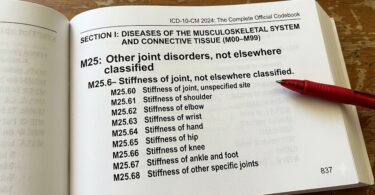
Wrist pain is a ubiquitous human experience. From the repetitive strain of a data entry clerk to the acute trauma of a weekend athlete, from the degenerative ache of arthritis to the mysterious discomfort that arises without a clear cause, it is a complaint that echoes through countless physician offices, urgent care centers, and emergency departments every day. For the clinician, the focus is rightly on the patient: diagnosing the underlying pathology, alleviating suffering, and restoring function. Yet, for every clinical action, there is an administrative counterpart that translates the complex narrative of human illness into the standardized language of medical codes. At the heart of this translation for wrist pain lies the International Classification of Diseases, Tenth Revision, Clinical Modification (ICD-10-CM).
This article is not merely a list of codes for “wrist pain.” It is a deep exploration into the logic, nuance, and critical importance of accurately classifying this common symptom within the modern healthcare ecosystem. The code assigned for a patient’s wrist pain is far more than a bureaucratic footnote; it is a data point that fuels reimbursement, informs public health statistics, drives quality improvement initiatives, and impacts the very financial viability of a medical practice. An incorrectly chosen code can lead to claim denials, compliance audits, skewed health data, and a fundamental misrepresentation of the patient’s condition. Therefore, mastering the ICD-10 coding for wrist pain is an essential skill for medical coders, billers, practice managers, and the clinicians themselves. This comprehensive guide will navigate the intricate pathways of the ICD-10-CM manual, transforming the seemingly simple task of coding wrist pain from a rote memorization exercise into a sophisticated process of clinical reasoning and administrative precision.
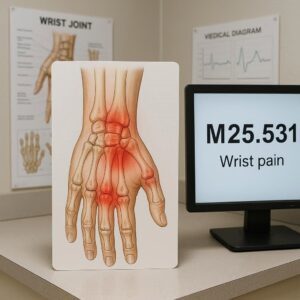
ICD-10 code for wrist pain
Chapter 1: Deconstructing the ICD-10-CM System for Musculoskeletal Conditions
1.1 The Philosophy Behind ICD-10: From Vague to Specific
The transition from ICD-9 to ICD-10 represented a quantum leap in medical coding specificity. Where ICD-9 offered a limited number of generic codes, ICD-10 introduced a system designed to capture detailed clinical information. This was driven by a need for better data to support value-based care, improve patient outcomes, and ensure accurate reimbursement for the complexity of services provided. For conditions like wrist pain, this means the system demands answers to questions that were previously optional: Which wrist? What is the underlying cause? Is this an initial injury or a follow-up? What is the specific anatomical structure affected?
1.2 Navigating the M00-M99 Chapter: Diseases of the Musculoskeletal System and Connective Tissue
The primary home for wrist pain codes in ICD-10-CM is Chapter 13, which covers diseases of the musculoskeletal system and connective tissue (codes M00-M99). This chapter is organized by anatomical site and then by disease process (e.g., arthropathies, dorsopathies, soft tissue disorders). When a definitive diagnosis for the wrist pain is established (e.g., osteoarthritis, ganglion cyst), the coder will typically find the most accurate code within this chapter. It is crucial to note that codes in this chapter are often laterality-specific, requiring a final digit to indicate right, left, or unspecified.
Chapter 2: The Foundation Code – M25.539 (Pain in Unspecified Wrist)
The code M25.539 falls under the category M25.5 (Pain in joint). This is the most general code available for wrist pain and should be used sparingly and only under specific circumstances.
2.1 When and Why to Use This “Catch-All” Code
The use of “unspecified” codes is justified in a few limited scenarios:
-
Lack of Clinical Information: The provider’s documentation does not specify whether the pain is in the right or left wrist, and there is no way to ascertain this information from the medical record.
-
Bilateral Pain with a Single Code: If a patient has pain in both wrists and the provider documents it as a single, bilateral condition, but there is no single code that captures “bilateral wrist pain,” M25.539 may be used. However, it is often more accurate to code each wrist separately (M25.531 and M25.532) if the documentation supports it.
-
Admitting Diagnosis: In an inpatient setting, an unspecified code might be used as the admitting diagnosis while further workup is conducted to determine the precise cause.
2.2 The Clinical and Reimbursement Limitations of “Unspecified”
Relying on M25.539 as a default is a significant coding pitfall. From a clinical perspective, it provides poor data for tracking the prevalence and treatment of wrist conditions. From a reimbursement standpoint, payers often view unspecified codes with skepticism. They may see it as a sign of incomplete documentation or an attempt to code for a condition that hasn’t been fully diagnosed, which can lead to claim denials or down-coding. Furthermore, for risk-adjusted payment models like Medicare Advantage, unspecified codes carry little to no weight, potentially resulting in underpayment for the patient’s true clinical burden.
Chapter 3: Laterality – The Non-Negotiable Specificity
One of the most fundamental specificities required by ICD-10 is laterality—identifying which side of the body is affected.
3.1 M25.531 (Pain in Right Wrist)
3.2 M25.532 (Pain in Left Wrist)
These codes are used when the provider has documented pain in a specific wrist but has not yet arrived at a more definitive diagnosis (e.g., the patient is being worked up for the pain). They are a significant improvement over the unspecified code.
3.3 The Critical Importance of Documenting Laterality
The responsibility for accurate laterality coding falls first on the clinician. The medical record must clearly state “right wrist pain,” “left wrist pain,” or “bilateral wrist pain.” Ambiguous terms like “pain in the wrist” or “non-dominant wrist pain” without further clarification force the coder to use the unspecified code, M25.539, with all its associated drawbacks. This simple act of documentation is a low-effort, high-impact step in ensuring clean claims and accurate data.
Chapter 4: Pain as a Symptom of a Definitive Diagnosis
The golden rule of ICD-10 coding is: Code to the highest level of specificity. In the context of wrist pain, this almost always means that if a definitive diagnosis has been established, you must code the diagnosis itself, not the symptom of pain.
4.1 Coding the Cause, Not the Symptom: A Fundamental Principle
Using a pain code (M25.53-) when a definitive diagnosis is known is incorrect. The pain is a symptom of the underlying condition. Coding the condition provides a much richer and more accurate picture for treatment, research, and reimbursement. Let’s explore this principle through common wrist conditions.
4.2 Case Study: Carpal Tunnel Syndrome (G56.01-G56.03)
Carpal Tunnel Syndrome (CTS) is a common cause of wrist pain, characterized by compression of the median nerve.
-
ICD-10 Codes:
-
G56.01: Carpal tunnel syndrome, right upper limb
-
G56.02: Carpal tunnel syndrome, left upper limb
-
G56.03: Carpal tunnel syndrome, bilateral upper limbs
-
-
Coding Rationale: Even though the patient presents with pain, tingling, and numbness, the diagnosis is CTS. Therefore, the specific G56.0- code is required. Using M25.531 for a diagnosed case of right CTS would be inaccurate.
4.3 Case Study: Osteoarthritis (M19.031-M19.039)
Osteoarthritis (OA) is a degenerative joint disease and a leading cause of chronic wrist pain, especially in older adults.
-
ICD-10 Codes: The coding for OA is highly specific, requiring knowledge of the type of arthritis.
-
Primary Osteoarthritis (M19.03-): Used when no specific cause is identified (wear-and-tear).
-
M19.031: Primary osteoarthritis, right wrist
-
M19.032: Primary osteoarthritis, left wrist
-
M19.039: Primary osteoarthritis, unspecified wrist
-
-
Post-traumatic Osteoarthritis (M19.13-): Used when the arthritis is a direct result of a past injury.
-
Secondary Osteoarthritis (M19.23-): Used when the arthritis is due to another underlying condition (e.g., rheumatoid arthritis, obesity).
-
-
Coding Rationale: The provider’s documentation must specify the type of osteoarthritis. The coder cannot assume “primary.” The pain is a direct symptom of the OA, so the OA code is assigned.
4.4 Case Study: Sprains and Strains (S63.5- & S66.-)
Acute injuries from falls or trauma are frequent causes of wrist pain.
-
ICD-10 Codes (Sprain of wrist and hand): Category S63.-
-
S63.59-: Other sprain of radiocarpal joint. This is a common code for a general wrist sprain.
-
S63.5- requires a 7th character (A, D, or S) to denote the encounter type (see Chapter 5).
-
-
ICD-10 Codes (Strain of muscle, fascia and tendon at wrist and hand level): Category S66.-
-
Codes are specific to the injured structure (e.g., S66.119- for strain of flexor muscle).
-
-
Coding Rationale: The sprain or strain is the diagnosis causing the pain. The S63.5- or S66.- code is primary. The pain code is not used as a primary code in this scenario.
4.5 Case Study: Fractures (S62.-)
A fracture is a definitive diagnosis that always takes precedence over a pain code.
-
ICD-10 Codes: The S62 category is detailed and specific.
-
S62.0-: Fracture of navicular [scaphoid] bone of wrist
-
S62.1-: Fracture of other carpal bone(s)
-
S62.2-: Fracture of first metacarpal bone
-
S62.5-: Fracture of other metacarpal bone
-
-
Coding Rationale: These codes also require 7th characters for encounter type. The code precisely identifies the fractured bone, which is critical for treatment and tracking outcomes.
4.6 Case Study: Ganglion Cysts (M67.43-)
A ganglion cyst is a common benign lump that can cause localized pain or discomfort.
-
ICD-10 Codes:
-
M67.431: Ganglion, right wrist
-
M67.432: Ganglion, left wrist
-
M67.439: Ganglion, unspecified wrist
-
-
Coding Rationale: The diagnosis is the ganglion cyst. The code M67.43- is assigned, not a general pain code.
4.7 Case Study: De Quervain’s Tenosynovitis (M65.4)
This is a painful condition affecting the tendons on the thumb side of the wrist.
-
ICD-10 Code: M65.4 – Radial styloid tenosynovitis [de Quervain]
-
Coding Rationale: This code is specific to this condition and is not laterality-specific within the code itself. The provider’s documentation should still note which wrist is affected for clinical purposes, but the code M65.4 is used for either side.
4.8 Case Study: Rheumatoid Arthritis (M05.731-M06.839)
Rheumatoid arthritis (RA) is an autoimmune disorder that commonly affects the wrists.
-
ICD-10 Codes: Coding for RA is complex.
-
M05.7-: Rheumatoid arthritis with rheumatoid factor without organ or systems involvement. The 4th character specifies the site (e.g., M05.731 for right wrist, M05.732 for left wrist, M05.739 for unspecified wrist).
-
M06.8-: Other specified rheumatoid arthritis (used for seronegative RA).
-
-
Coding Rationale: The systemic diagnosis of RA is coded, with the wrist specified as the site of manifestation. The pain is a symptom of the inflammatory arthritis.
Chapter 5: The Intricacies of Traumatic Injury Coding
Injuries (fractures, sprains, strains) are coded from Chapter 19 of ICD-10-CM, “Injury, poisoning and certain other consequences of external causes” (S00-T88). This chapter has unique rules.
5.1 The S-Section and the 7th Character Imperative
Codes in the S-section require a 7th character to define the encounter. This is non-negotiable for accurate coding.
-
A – Initial encounter: Used for active treatment (e.g., emergency room visit, initial casting, surgery).
-
D – Subsequent encounter: Used for routine healing and aftercare (e.g., cast change, removal, follow-up office visit).
-
S – Sequela: Used for complications or conditions that arise as a direct result of the injury (e.g., chronic pain, limited range of motion, malunion of a fracture) after the acute phase has passed.
5.2 Understanding Initial, Subsequent, and Sequela Encounters
A patient with a wrist sprain will have different codes for each phase of care:
-
Initial Encounter (S63.591A): Patient goes to the Urgent Care, gets diagnosed with a right wrist sprain, and is placed in a splint.
-
Subsequent Encounter (S63.591D): Patient sees their primary care physician two weeks later for a follow-up and splint adjustment.
-
Sequela (S63.591S): Six months later, the patient is seen for persistent stiffness and weakness in the right wrist, directly attributed to the old sprain.
5.3 Combining Codes: The Injury and the Pain
For acute injuries, the injury code (e.g., the sprain code) inherently includes the pain. Therefore, an additional code for pain is generally not necessary. However, if the pain is being managed separately or is a focus of treatment in a way not typical for the injury, a pain code could potentially be added as a secondary code, but this is rare. The injury code alone is almost always sufficient.
Chapter 6: The Documentation- Coding Symbiosis
Accurate coding is impossible without precise clinical documentation. The coder is entirely dependent on the information provided in the medical record.
6.1 What Clinicians Must Document for Optimal Coding
For a coder to assign the most specific code for wrist pain, the clinician’s note should include:
-
Laterality: Right, Left, or Bilateral.
-
Specific Diagnosis: e.g., “Carpal Tunnel Syndrome,” “Triquetral Fracture,” “Osteoarthritis.”
-
Cause/Etiology: e.g., “post-traumatic,” “due to rheumatoid arthritis.”
-
Acuity: Acute, Chronic, or Acute on Chronic.
-
For Injuries: A clear description of the injury and the encounter type (initial, subsequent).
6.2 Common Documentation Pitfalls and How to Avoid Them
-
Pitfall: “Wrist pain.” (Missing laterality).
-
Solution: Develop EHR templates that require a “Right/Left/Bilateral” selection.
-
Pitfall: Documenting “arthritis” without specifying the type (osteo vs. rheumatoid).
-
Solution: Encourage use of specific drop-down menus or structured data fields.
-
Pitfall: For a follow-up for a fracture, not clearly stating it’s a “healing fracture” or “post-fracture care.”
-
Solution: Use standardized phrases that clearly indicate the encounter type.
6.3 The Role of the Coder in Querying for Clarity
When documentation is ambiguous, the coder’s responsibility is to query the provider. A query is a formal request for clarification. For example: “The note states ‘wrist pain.’ Please specify right, left, or bilateral.” This process is a critical component of clinical documentation improvement (CDI) and ensures the integrity of the coded data.
Chapter 7: The Real-World Impact of Accurate Wrist Pain Coding
The consequences of precise versus imprecise coding extend far beyond the medical records department.
7.1 Reimbursement and Revenue Cycle Management
Payers use ICD-10 codes to justify the medical necessity of procedures and services. A claim for physical therapy for “right wrist pain” (M25.531) is less specific and may be scrutinized more heavily than a claim for physical therapy for “right carpal tunnel syndrome” (G56.01). The latter clearly demonstrates a diagnosed condition that warrants treatment. Accurate coding reduces claim denials, speeds up reimbursement, and ensures the practice is paid appropriately for the complexity of care provided.
7.2 Population Health Management and Data Analytics
Healthcare organizations use coded data to identify trends. Accurate data on the prevalence of carpal tunnel syndrome in a specific workforce can lead to targeted ergonomic interventions. Inaccurate data, filled with unspecified pain codes, renders this analysis useless and hampers public health efforts.
7.3 Risk Adjustment and Hierarchical Condition Categories (HCCs)
In value-based care models like Medicare Advantage, patients are assigned a risk score based on their diagnoses. Chronic, serious conditions like rheumatoid arthritis (M05.731) carry a high HCC weight and result in higher reimbursement to the plan to cover the expected costs of care. Coding a patient’s rheumatoid wrist pain as “unspecified wrist pain” (M25.539) fails to capture this risk, leading to significant underfunding for the patient’s care.
7.4 Legal and Compliance Considerations
Incorrect coding can have legal ramifications. Knowingly and systematically upcoding (using a more severe code to get higher payment) is fraud. Consistently using unspecified codes when specific information is available can be seen as negligent and can trigger audits from payers or government agencies like the Office of the Inspector General (OIG).
Chapter 8: Step-by-Step Coding Scenarios with Rationales
Let’s apply the principles discussed to real-world patient scenarios.
8.1 Scenario 1: The Office Worker with Bilateral Pain
-
Presentation: A 45-year-old administrative assistant presents with a 6-month history of aching and tingling in both wrists, worse at night. Physical exam and nerve conduction studies confirm the diagnosis.
-
Documentation: “Bilateral Carpal Tunnel Syndrome.”
-
Correct Coding: G56.03 (Carpal tunnel syndrome, bilateral upper limbs).
-
Rationale: A definitive diagnosis has been made. The bilateral code is available and should be used. No pain code is needed.
8.2 Scenario 2: The Fall on an Outstretched Hand (FOOSH)
-
Presentation: A 20-year-old skateboarder falls and presents to the ED with acute right wrist pain and swelling. X-ray is negative for fracture.
-
Documentation: “Acute right wrist sprain. Initial encounter.”
-
Correct Coding: S63.591A (Other sprain of right radiocarpal joint, initial encounter).
-
Rationale: The injury is coded from Chapter 19. The specific code for a radiocarpal joint sprain is used with the 7th character ‘A’ for the initial ED visit.
8.3 Scenario 3: The Arthritic Flare-Up
-
Presentation: A 70-year-old patient with a known history of osteoarthritis presents for a follow-up for worsening pain in the left wrist. X-rays show progressive joint space narrowing.
-
Documentation: “Primary osteoarthritis, left wrist, with acute exacerbation of chronic pain.”
-
Correct Coding: M19.032 (Primary osteoarthritis, left wrist).
-
Rationale: The definitive diagnosis is primary osteoarthritis. The code is specific to the site and type. The pain is a symptom of this condition.
8.4 Scenario 4: Post-Surgical Pain
-
Presentation: A patient is seen for a follow-up 3 weeks after open reduction and internal fixation (ORIF) of a right distal radius fracture. The surgical site is healing well, but the patient reports significant post-operative pain that is being managed.
-
Documentation: “Post-operative pain following ORIF of right distal radius fracture. Subsequent encounter for fracture healing.”
-
Correct Coding: S52.501D (Unspecified fracture of the lower end of right radius, subsequent encounter for closed fracture with routine healing) AND G89.18 (Other acute postprocedural pain).
-
Rationale: This is a complex scenario. The fracture is healing (subsequent encounter, ‘D’). The pain is acute and directly related to the recent surgery, so a code from category G89 (Pain, not elsewhere classified) is appropriate as a secondary code to specify the reason for the encounter is pain management.
Chapter 9: Future Trends – The Road to ICD-11
The World Health Organization (WHO) has already released ICD-11, which will eventually be adopted in the US (as ICD-11-CM). It promises even greater granularity and a more logical, digital-friendly structure.
9.1 A Glimpse into ICD-11’s Structure for Musculoskeletal Pain
ICD-11 uses a clustering system. A code for wrist pain might be built from multiple components (e.g., a foundation code for “disorder of the wrist region,” combined with an etiology code for “due to osteoarthritis,” and a severity code). This allows for a more nuanced and comprehensive clinical picture in a single coded entry. While the US implementation is years away, understanding this direction emphasizes the ongoing trend towards maximum specificity in medical classification.
Chapter 10: Visual Guide to Coding Wrist Pain
The following flowchart provides a step-by-step visual algorithm for determining the correct ICD-10 code for a patient presenting with wrist pain.
Conclusion: Mastering the Code, Enhancing the Care
Accurate ICD-10 coding for wrist pain is a critical skill that bridges clinical care and healthcare administration. Moving beyond the generic “unspecified” code to specific, laterality-defined, and etiology-driven codes is paramount. This precision ensures proper reimbursement, fuels valuable health data analytics, supports risk-adjusted payment models, and maintains legal compliance. Ultimately, the meticulous work of translating a patient’s wrist pain into the correct alphanumeric code is not an administrative burden; it is a fundamental part of documenting the patient’s story in a language that the entire healthcare system can understand and act upon, thereby enhancing the quality and sustainability of care.
Frequently Asked Questions (FAQs)
Q1: Can I use both a pain code (M25.53-) and a definitive diagnosis code (e.g., G56.01) together?
A: Generally, no. The ICD-10-CM Official Guidelines state that you should not code a sign or symptom (pain) when a definitive diagnosis has been established. The pain is considered an integral part of the diagnosed condition. There are rare exceptions, such as when the pain is being managed in a specific context separate from the underlying disease, but this is not the norm.
Q2: What if the patient has pain in both wrists from different causes?
A: You should code both conditions. For example, if a patient has carpal tunnel syndrome in the right wrist (G56.01) and osteoarthritis in the left wrist (M19.032), both codes should be assigned. The sequencing (which code is listed first) depends on the reason for the encounter as documented by the provider.
Q3: My EHR system automatically suggests M25.539 for every wrist pain encounter. Is this okay?
A: No, this is a significant problem. While convenient, this promotes inaccurate and non-compliant coding. You should work with your IT and compliance departments to refine your EHR’s coding suggestions to encourage specificity. Coders and providers must always override auto-suggested codes that do not match the specific clinical documentation.
Q4: When is the 7th character ‘S’ (Sequela) used for a wrist injury?
A: The 7th character ‘S’ is used for encounters when the initial injury itself has healed, but a residual condition remains. Common examples include chronic pain, joint stiffness, weakness, or malunion of a fracture that continues to be a problem long after the initial treatment phase is over. The care being provided must be directly for the sequela, not for routine healing.
Q5: How do I code wrist pain that is referred from another site, like the neck?
A: If the provider documents that the wrist pain is referred from a cervical radiculopathy (a pinched nerve in the neck), you would code the underlying cause, which is the radiculopathy (e.g., M54.12, Radiculopathy, cervical region). You would not code the wrist pain separately, as it is a symptom of the spinal condition.
Additional Resources
-
The Official ICD-10-CM Guidelines: https://www.cms.gov/medicare/coding-billing/icd-10-cm – The definitive source for coding rules and conventions.
-
CDC ICD-10-CM Browser Tool: https://www.cdc.gov/nchs/icd/icd-10-cm.htm – A free, official tool to search for codes.
-
American Health Information Management Association (AHIMA): https://www.ahima.org/ – A leading professional organization for medical coders, offering resources, education, and certifications.
-
American Academy of Professional Coders (AAPC): https://www.aapc.com/ – Another major professional organization providing training, certification, and local chapter support for coders.
Date: November 02, 2025
Author: Medical Coding Insights Group
Disclaimer: The information provided in this article is for educational and informational purposes only and is not intended as medical or legal advice. While every effort has been made to ensure the accuracy of the ICD-10 codes and guidelines, these are subject to change. Always consult the most current, official ICD-10-CM code set and guidelines, along with your healthcare organization’s compliance officer and clinical staff, for definitive coding and billing decisions.