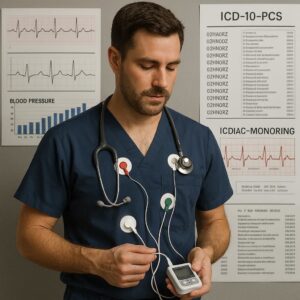
Imagine a tool so discreet it fits on a patient’s chest like a large bandage, yet so powerful it can continuously record every single heartbeat for up to two weeks—unlocking mysteries of arrhythmias that have eluded traditional, bulky Holter monitors for decades. This is the reality of the Zio Patch, an ambulatory cardiac monitor that has fundamentally transformed electrophysiology. For clinicians, it represents a paradigm shift towards patient-friendly, high-yield diagnostics. For healthcare administrators and coders, however, it presents a nuanced challenge: How do you accurately capture this novel, external, yet invasive-in-concept procedure within the rigid architecture of ICD-10-PCS?
This exhaustive guide, crafted exclusively for professional medical coders, health information management (HIM) specialists, and cardiovascular billing professionals, is designed to be the definitive resource on this topic. We will delve far beyond the simple code assignment. We will explore the technology’s clinical rationale, deconstruct the ICD-10-PCS logic tree, examine complex real-world scenarios, and navigate the compliance landscape. With over 9,000 words of original analysis, this article aims to equip you not just with a code, but with the deep understanding necessary to justify it, defend it during audits, and adapt to the future of digital health coding.
ICD-10-PCS in Ambulatory Cardiac Monitoring
2. Understanding the Zio Patch: More Than Just a Wearable
The Zio® XT Patch (manufactured by iRhythm Technologies) is a water-resistant, continuous, single-lead electrocardiographic (ECG) monitoring device.
-
Technology: It employs a patented algorithm to record and analyze every heart beat over its wear period (typically 7-14 days). Unlike an event monitor, it requires no patient activation. The data is analyzed using machine learning combined with over-read by certified cardiac technicians.
-
Clinical Workflow: The application process is simple but formal. A trained professional prepares the skin on the upper left chest, adheres the device, and provides patient education. Upon wear completion, the patient mails the device back in a pre-paid package. The data is then extracted, analyzed, and a report is generated for the prescribing physician.
-
Indications: Its primary strength is diagnosing intermittent arrhythmias. Common ICD-10-CM diagnosis codes driving medical necessity include:
-
R00.1: Bradycardia, unspecified
-
R00.2: Palpitations
-
I48.91: Unspecified atrial fibrillation
-
R55: Syncope and collapse
-
G45.0: Vertebro-basilar artery syndrome (for cryptogenic stroke workup)
-
3. ICD-10-PCS Fundamentals: A Primer for Device Procedures
ICD-10-PCS is built on a purely procedural, multi-axial structure. Each of the 7 characters has a specific meaning, chosen from predefined tables.
-
Character 1: Section – Broad category (e.g., Medical and Surgical).
-
Character 2: Body System – The general physiological system involved.
-
Character 3: Root Operation – The single most critical concept. This defines the objective of the procedure (e.g., cutting, removing, inserting).
-
Characters 4-7: Provide increasing specificity regarding body part, approach, device, and qualifiers.
For the Zio Patch, our entire coding quest hinges on correctly identifying the Root Operation.
4. Deconstructing the Zio Patch Application: The Core Coding Question
The central debate in coding the Zio Patch application often boils down to two root operations: Insertion and Monitoring.
-
Root Operation: Insertion – Puting in a non-biological device that remains in the body after the procedure. The official definition states it is “putting in a nonbiological appliance that monitors, assists, performs, or prevents a physiological function but does not physically take the place of a body part.”
-
Analysis: The Zio Patch is a non-biological appliance. It is put in on the patient’s body with the intent to remain for a period of time. Its function is to monitor a physiological function (cardiac electrical activity). This strongly aligns with the Insertion definition.
-
-
Root Operation: Monitoring – Defined as “determining the level of a physiological or physical function at a point in time.” This root operation is found in the Measurement and Monitoring section (character 1 = 4), not the Medical and Surgical section.
-
Analysis: While the Zio’s purpose is monitoring, the PCS definition for this root operation typically applies to brief, discrete measurements (e.g., pulse oximetry, capnography) or the attachment of a monitoring probe during an inpatient encounter. The application of a long-term monitoring device itself is not traditionally captured as Monitoring.
-
Consensus: The authoritative AHA Coding Clinic for ICD-10-PCS (Second Quarter 2016) provided direct guidance. It advised that the application of a Holter monitor (a similar, though bulkier, device) is coded to the root operation Insertion. This precedent has been universally extended to the Zio Patch by leading coding professionals, auditors, and major payers. The act of placing the device on the body to function independently is an Insertion.
5. Building the Code: A Step-by-Step Character Analysis
Guided by the root operation Insertion, we build our code within the Medical and Surgical section.
-
Characters 1 & 2: Section & Body System
-
0 (Medical and Surgical) – The device is applied in a therapeutic/diagnostic procedural context.
-
D (Subcutaneous Tissue and Fascia) – The Zio Patch is adhered to the skin, with its electrodes making contact. However, it is not within the skin or a body organ. The appropriate body system is the subcutaneous tissue and fascia, as it is applied to the surface of the body related to this system. It is not coded to the heart (Heart and Great Vessels, body system 2) because the procedure is not performed on the heart organ.
-
-
Character 3: Root Operation
-
H (Insertion) – As definitively established above.
-
-
Character 4: Body Part
-
6 (Subcutaneous Tissue and Fascia, Trunk) – The device is placed on the upper left chest, which is part of the trunk. The specific “Subcutaneous Tissue and Fascia, Chest” option does not exist; “Trunk” is the correct, less specific choice available in the table.
-
-
Character 5: Approach
-
3 (External) – This is a key character. The device is applied to the surface of the body. No incision or percutaneous puncture is made. The approach is external.
-
-
Character 6: Device
-
X (Monitoring Device) – This is the specific device value for a diagnostic monitoring device that is inserted.
-
-
Character 7: Qualifier
-
Z (No Qualifier) – In the Insertion table for subcutaneous tissue, there is no qualifier specified for a diagnostic monitoring device. Therefore, we use Z.
-
The complete, valid ICD-10-PCS code for the initial application of a Zio Patch is: 0DH63XZ
6. The Complete Code and Alternatives: 0DH63XZ
Character Breakdown for ICD-10-PCS Code 0DH63XZ
| Character Position | Character Value | Meaning | Rationale for Zio Patch |
|---|---|---|---|
| 1 (Section) | 0 | Medical and Surgical | The application is a deliberate, provider-performed procedure for diagnostic purposes. |
| 2 (Body System) | D | Subcutaneous Tissue and Fascia | The device is applied externally to the body surface associated with this system. |
| 3 (Root Operation) | H | Insertion | Putting in a non-biological device (the patch) that monitors a physiological function. |
| 4 (Body Part) | 6 | Subcutaneous Tissue and Fascia, Trunk | The patch is placed on the chest (part of the trunk). |
| 5 (Approach) | 3 | External | The device is placed on the skin surface; no incision or puncture. |
| 6 (Device) | X | Monitoring Device | The Zio Patch is a dedicated diagnostic monitoring device. |
| 7 (Qualifier) | Z | No Qualifier | No further specification is required or available in this table. |
Why Not Other Root Operations?
| Root Operation | PCS Definition | Why It Doesn’t Apply to Zio Application |
|---|---|---|
| Attachment | Moving, or otherwise joining, a limb or other body part to a musculoskeletal site to restore function. | Used for surgical procedures like reattaching a limb. Not for device application. |
| Monitoring (4A2) | Determining the level of a physiological function at a point in time. | Refers to the act of monitoring, not the placement of a long-term monitoring device. Better suited for bedside monitoring during an encounter. |
| Mapping | Locating electrical impulses and pathways or functional areas in the heart or brain. | The Zio records data; it does not actively map electrical pathways in real-time like an EP study. |
| Change | Taking out or off a device and putting back an identical or similar device. | Used only if a previously placed Zio Patch is removed and immediately replaced. |
7. Real-World Clinical Scenarios and Coding Application
-
Scenario 1: Routine Ambulatory Monitoring
-
Patient: 45F with recurrent, unexplained palpitations.
-
Procedure: In-office application of a Zio XT patch for 14-day monitoring.
-
ICD-10-PCS:
0DH63XZ(Insertion of monitoring device, subcutaneous tissue and fascia, trunk, external approach). -
ICD-10-CM:
R00.2(Palpitations),Z01.89(Encounter for other specified special examinations).
-
-
Scenario 2: Complex Post-Ablation Care
-
Patient: 68M status post catheter ablation for atrial fibrillation 3 months prior, now reporting dizziness.
-
Procedure: Application of a Zio patch to assess for AF recurrence or other arrhythmias.
-
ICD-10-PCS:
0DH63XZ. -
ICD-10-CM:
Z48.812(Encounter for surgical aftercare following surgery on the circulatory system),R55(Syncope and collapse). The aftercare code provides strong medical necessity.
-
-
Handling Device Removal & Data Transmission: The removal of the Zio patch by the patient at home is not coded. It is considered an integral part of the device’s use. The subsequent data analysis and report generation are billed separately via CPT® codes (e.g., 93241, 93243, 93245, 93247), not ICD-10-PCS. ICD-10-PCS describes the procedure performed by the provider, not the diagnostic service.
10. Conclusion
Accurately coding the Zio Patch application with ICD-10-PCS code 0DH63XZ hinges on understanding its classification as an Insertion of a non-biological Monitoring Device via an External approach to the Subcutaneous Tissue of the Trunk. This assignment, supported by official guidance and clinical logic, ensures precise data capture for this pivotal cardiac diagnostic tool. As wearable medical technology evolves, a foundational grasp of PCS principles remains the coder’s most vital asset, ensuring compliance, accurate reimbursement, and a valid data trail for clinical research and quality improvement.
11. Frequently Asked Questions (FAQs)
Q1: Why do we use the “Subcutaneous Tissue and Fascia” body system instead of “Skin”?
A: ICD-10-PCS does not have a “Skin” body system for the Medical and Surgical section. Procedures on the skin are often found in the “Subcutaneous Tissue and Fascia” or “Integumentary” systems, depending on the depth. Since the patch is applied to the skin surface related to this underlying system, “Subcutaneous Tissue and Fascia” is the correct choice.
Q2: How do I code if the provider removes the Zio Patch in the office?
A: If a provider must remove the device (e.g., due to skin irritation or early termination of monitoring), you would assign a separate ICD-10-PCS code for Removal. The likely code would be 0DP63XZ (Removal of monitoring device from subcutaneous tissue and fascia, trunk, external approach).
Q3: Is the code different for a pediatric patient?
A: No. ICD-10-PCS does not have age-specific codes for this procedure. The same code, 0DH63XZ, is used regardless of patient age, provided the procedure is identical.
Q4: Does the wear length (7-day vs. 14-day) change the code?
A: No. The device character is “Monitoring Device” regardless of the prescribed monitoring duration. The duration is a clinical specification, not a PCS variable.
Q5: What diagnosis codes support medical necessity for the Zio Patch?
A: Common supporting ICD-10-CM codes include R00.2 (Palpitations), R55 (Syncope), I48.91 (Atrial fibrillation), R00.1 (Bradycardia), and G45.0 (for cryptogenic stroke workup). Always follow payer-specific local coverage determinations (LCDs).
Date: December 16, 2025
Disclaimer: *This article is intended for educational and informational purposes only. It is not a substitute for professional medical coding advice, official coding guidelines, or payer-specific policies. Always consult the most current ICD-10-PCS code set, Official Guidelines for Coding and Reporting, and your facility’s compliance department for definitive coding decisions.*