If your dentist has recommended a gold crown, you’re considering one of dentistry’s most time-tested and reliable restorations. Beyond discussing the clinical benefits, a critical part of the process involves understanding the paperwork—specifically, the dental code for a gold crown. This code is the key to accurate billing, insurance predeterminations, and managing your out-of-pocket costs.
Navigating dental codes can feel like deciphering a secret language. Terms like D2790, “full cast high noble metal,” and “allowable amounts” get thrown around, often leaving patients confused. This guide exists to demystify all of it. We’ll provide a comprehensive, clear, and reliable breakdown of the specific code, what it includes, how insurance companies view it, and the financial factors you should consider. Our goal is to empower you with knowledge, turning a complex administrative topic into a tool you can use to make informed decisions about your dental health.
Whether you’re a patient planning treatment, a dental student, or a office administrator seeking a clear reference, this article will serve as your essential resource. Let’s start by answering the most fundamental question.

Dental Code for a Gold Crown
What is the Official ADA Dental Code for a Gold Crown?
The American Dental Association (ADA) maintains the Code on Dental Procedures and Nomenclature (CDT Code), which is the standard used across the United States for reporting dental services. Every procedure, from a simple cleaning to complex surgery, has a unique, five-character alphanumeric code.
For a gold crown, the primary ADA code is D2790.
The official descriptor for this code is: “Crown – full cast high noble metal.”
This precise wording is crucial. Let’s break down what each part means clinically and why the specific language matters for your treatment and billing.
-
“Crown”: This indicates the type of restoration—a full-coverage cap that encases the entire visible portion of a tooth, starting at the gum line.
-
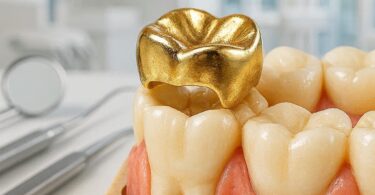
“Full Cast”: This refers to the fabrication method. The crown is made using a “lost-wax” casting technique. An exact wax model of your tooth is created, then replaced with molten metal in a mold, resulting in a single, solid piece of exceptionally strong metal. It is not layered, sintered, or milled like some other crown types.
-
“High Noble Metal”: This is the critical classification for the material. The ADA defines “high noble” as an alloy containing at least 60% noble metals (gold, platinum, palladium) and at least 40% gold. A traditional “gold crown” typically has a gold content ranging from 60% to over 80%, mixed with other metals like platinum or palladium for strength and copper for hardness.
Important Note: “D2790 is not a generic ‘metal crown’ code. It specifically denotes a crown made with a high percentage of precious metals. Using a less expensive alloy would require a different code, which directly impacts cost and often, insurance benefits,” explains a veteran dental insurance consultant.
This code covers the entire process for a single crown: the preparation appointment (shaping the tooth, taking impressions, placing a temporary crown), the lab fee for crafting the solid gold crown, and the seating appointment (removing the temporary, cementing the permanent crown, and making final adjustments).
Related and Alternative Codes You Might Encounter
While D2790 is the star of the show for a classic gold crown, you may see related codes on an estimate or bill. Understanding these prevents confusion.
-
D2791 – Crown – full cast noble metal: This is for a crown with a lower precious metal content. It must contain at least 25% noble metals but does not meet the 40% gold threshold for “high noble.” It’s less expensive than D2790.
-
D2792 – Crown – full cast predominantly base metal: This is for a non-precious metal crown, like a surgical stainless steel crown (common for baby teeth) or certain older types of crowns. It is the least expensive cast metal option.
-
D2740 – Crown – porcelain/ceramic substrate: For all-ceramic crowns (e.g., lithium disilicate, zirconia). These are tooth-colored, metal-free restorations.
-
D2750 – Crown – porcelain fused to high noble metal: A PFM (porcelain-fused-to-metal) crown where the underlying metal structure is a high noble alloy. The outer porcelain layer provides a tooth-colored appearance.
-
D2950 – Core buildup, including any pins: This is often billed in addition to D2790 if the tooth is severely broken down and requires a foundation restoration before the crown can be made.
-
D2930 – Prefabricated stainless steel crown – primary tooth: Used for baby teeth, not a custom cast gold crown.
The table below provides a quick comparative overview:
| CDT Code | Descriptor | Primary Material | Key Characteristics | Typical Use Case |
|---|---|---|---|---|
| D2790 | Crown – full cast high noble metal | High gold-content alloy (≥40% Au, ≥60% noble) | Extremely durable, biocompatible, minimal tooth wear | Posterior teeth (molars), patients with heavy bite forces, longevity focus |
| D2791 | Crown – full cast noble metal | Lower noble metal alloy (≥25% noble) | Durable, less costly than high noble | Similar to D2790 where cost is a greater factor |
| D2792 | Crown – full cast predominantly base metal | Non-precious metal (e.g., nickel-chrome) | Very strong, least expensive, higher potential for allergy | Budget-conscious treatment, temporary long-term crowns |
| D2740 | Crown – porcelain/ceramic substrate | Advanced ceramic (e.g., zirconia, emax) | Excellent aesthetics, metal-free, very strong | Highly visible teeth, patients with metal allergies/sensitivities |
| D2750 | Crown – porcelain fused to high noble metal | Porcelain over a high noble metal substructure | Good strength (metal) with aesthetic cover (porcelain) | A balance of strength for back teeth and acceptable aesthetics |
Why the Specificity of Code D2790 Matters: Clinical and Financial Implications
The ADA didn’t create separate codes for gold, ceramic, and base metal crowns arbitrarily. The D2790 code carries significant weight in both the clinical outcome and the financial transaction. Its specificity ensures transparency for all parties involved.
The Clinical Excellence Behind the Code
A crown billed under D2790 represents a specific tier of quality and performance:
-
Unmatched Durability: High noble gold alloys are incredibly strong yet malleable. They resist fracture and can withstand decades of chewing forces. They are less abrasive to opposing natural teeth than porcelain or even some ceramics.
-
Superior Biocompatibility: The high noble metal content makes these crowns exceptionally well-tolerated by gum tissues. They are highly corrosion-resistant and unlikely to cause allergic reactions or galvanic sensitivity.
-
Precision of Fit: The cast gold technique allows for a margin of fit so precise it is often measured in microns. This near-perfect seal is one of the top reasons gold crowns have such a legendary reputation for longevity and for preventing recurrent decay at the crown’s edge.
-
Minimal Tooth Preparation: Due to the strength of gold, a dentist can often preserve more of your natural tooth structure when preparing for a D2790 crown compared to other materials that require more bulk for strength.
The Financial and Insurance Translation
For your dental insurance company, the code D2790 tells them two main things:
-
The Type of Service: A single-unit crown (not a bridge).
-
The Material Tier: A “high noble” or “precious metal” crown, which is typically placed in the highest reimbursement tier for crown procedures—but with a critical caveat.
Most dental insurance plans have a “plan allowance” or “UCR (Usual, Customary, and Reasonable) fee for each procedure code. For code D2790, this allowance is often the same as for a D2750 (porcelain-fused-to-metal crown) or even a D2740 (all-ceramic crown). This is known as the “alternate benefit clause.”
What this means for you: If your plan’s allowance for a crown is $1,200, it will pay its percentage (e.g., 50%) of that $1,200, regardless of whether you choose a $1,300 PFM crown or a $1,800 full gold crown. Your out-of-pocket cost will be higher for the gold crown because the insurance company’s contribution is fixed at their allowance level. They consider the gold crown a “patient preference” upgrade in material.
Example Cost Breakdown:
-
Dentist’s Fee for D2790 Gold Crown: $1,800
-
Insurance Plan Allowance for Crown Procedure (any type): $1,200
-
Insurance Coverage (at 50% for crowns): $1,200 x 50% = $600
-
Patient Responsibility: ($1,800 – $600) = $1,200
This is why a predetermination of benefits is absolutely essential before proceeding with a gold crown. Your dental office can submit the D2790 code to your insurer in advance, and you will receive a written estimate of exactly what they will pay and what you will owe.
The Complete Journey of a D2790 Crown: From Diagnosis to Delivery
Understanding the code is one thing; understanding the value-packed process it represents is another. Here’s a step-by-step walkthrough of what you’re investing in when you see D2790 on your treatment plan.
1. Diagnosis and Treatment Planning
It begins with a comprehensive exam, including X-rays, to assess the tooth’s need for a crown. Your dentist will discuss all material options (gold, ceramic, PFM), explaining the pros, cons, and longevity of each. If a gold crown is the recommended choice—often for a back molar—they will create a detailed plan and provide a written estimate using code D2790.
2. The Preparation Appointment
This is the most involved visit.
-
Anesthesia: The area is completely numbed for comfort.
-
Tooth Preparation: The dentist precisely reshapes the tooth, removing a minimal, uniform amount of enamel to create space for the crown.
-
Impression: A highly accurate digital scan or a physical mold is taken of the prepared tooth and surrounding teeth. This is sent to the dental laboratory.
-
Temporary Crown: A provisional crown is placed to protect the tooth while your permanent gold crown is being crafted. This temporary is made from acrylic or composite material.
-
Shade Selection: While not needed for gold, the lab may still note the shade of adjacent teeth for gum-line aesthetics.
3. Laboratory Fabrication
A certified dental technician at an off-site lab receives your case.
-
Model Creation: A physical die of your tooth is made from the impression.
-
Wax-Up: The technician sculpts a perfect wax replica of your future gold crown.
-
The Casting Process: The wax model is placed in a casting ring, invested in a special material, and heated. The wax melts away (“lost-wax”), leaving a perfect hollow mold. Molten high noble gold alloy is centrifugally forced into this mold.
-
Finishing: The solid gold casting is recovered, cleaned, and meticulously polished. The technician refines the anatomy, bite, and margins to microscopic perfection.
4. The Seating Appointment
-
Temporary Removal: The temporary crown is carefully taken off.
-
Try-In: The gold crown is placed on your tooth without cement. The dentist checks the fit, your bite, and contact with neighboring teeth. Adjustments are made if needed.
-
Cementation: Once perfect, the tooth is isolated, and the interior of the crown is filled with a permanent dental cement. The crown is seated firmly, excess cement is removed, and the cement is light-cured or sets chemically.
-
Final Check: Your bite is checked one final time. You receive care instructions.
Cost Analysis: Investing in a D2790 Gold Crown
The fee for a D2790 procedure is typically the highest among single crowns. This reflects the combined cost of the precious material and the high skill level required for its fabrication and placement. Let’s explore the factors that determine the price.
Factors Influencing the Total Fee
-
Geographic Location: Fees vary significantly by region and local market costs.
-
Dentist’s Expertise: A dentist with extensive experience in restorative and crown work may charge more.
-
Laboratory Quality & Gold Market Price: The dentist works with a specific lab. Top-tier labs using high-quality alloys and master technicians charge more. The spot price of gold also fluctuates, indirectly affecting lab fees.
-
Case Complexity: A severely broken-down tooth requiring a core buildup (D2950) or crown lengthening surgery will increase the total cost.
-
Dental Insurance: As outlined, your insurer’s “allowable fee” and coverage percentage are the largest determinants of your out-of-pocket cost.
Is a Gold Crown Worth the Investment?
This is a personal calculation based on clinical need and financial philosophy. Consider this long-term perspective:
Advantages (Supporting the Investment):
-
Longevity: A well-made gold crown can last 30+ years, often outliving other types of crowns by decades. When amortized over its lifespan, the cost-per-year can be very low.
-
Fewer Complications: The precision fit and material properties lead to a lower risk of chipping, fracture, recurrent decay at the margin, and wear on opposing teeth.
-
Less Invasive: Often allows for more conservative tooth preparation.
Considerations:
-
High Upfront Cost: The initial fee is higher than other options.
-
Aesthetics: The metallic color is not suitable for visible teeth.
-
Insurance Reimbursement: Most plans do not cover the full cost, treating it as a premium material.
Navigating Dental Insurance with Code D2790: A Step-by-Step Guide
To avoid surprises, be proactive with your insurance. Follow this checklist:
-
Request a Pre-Treatment Estimate (Predetermination): Before scheduling the preparation appointment, ask your dental office to submit the planned procedure (D2790) to your insurance company. This is non-negotiable for a costly procedure.
-
Review the Explanation of Benefits (EOB): When the estimate comes back, you and your dentist will receive an EOB. Scrutinize it:
-
Does it show code D2790 as submitted?
-
What is the “plan allowance” for this code?
-
What is your coinsurance percentage (e.g., 50%)?
-
Is there a note about an “alternate benefit”? (It will likely say something like: “Plan benefit based on D2750”).
-
What is the patient estimated responsibility?
-
-
Communicate with Your Dental Office: Have the office manager walk you through the EOB and provide a final, written financial agreement that includes your estimated portion.
-
Understand Your Plan’s Annual Maximum: Most plans have a yearly cap ($1,000-$1,500 is common). A gold crown may use a significant portion of this, affecting other planned treatment.
-
Ask About Payment Options: Many offices offer payment plans, dental-specific financing (like CareCredit), or discounts for upfront payment in full.
Common Questions and Misconceptions About Gold Crowns and Code D2790
Q: Will my insurance cover a gold crown?
A: They will process a claim for D2790, but likely not cover it fully. They will typically pay their percentage of their lower “allowable fee” for a standard crown (like PFM), leaving you responsible for the difference. This is standard industry practice.
Q: Can my dentist use a different code to get better insurance coverage?
A: No. This is insurance fraud. Dentists are ethically and legally bound to report the accurate code for the procedure performed. Submitting D2750 (PFM) for a D2790 (gold) crown is incorrect and illegal.
Q: Are gold crowns still common today?
A: While their use has declined in favor of tooth-colored options for aesthetic reasons, they remain the gold standard (pun intended) for durability and biocompatibility in non-visible areas. Many dentists and specialists still highly recommend them for second molars.
Q: Is the tooth under a gold crown more prone to decay?
A: Quite the opposite. The precision fit of a cast gold crown provides one of the best seals against bacteria, making the tooth less prone to decay at the margin compared to many other crown types, assuming good oral hygiene.
Conclusion
The dental code D2790 is far more than a billing number; it is a precise descriptor for a restoration that represents the pinnacle of durability, precision, and biocompatibility in dentistry. While its upfront cost is higher and dental insurance often treats it as a premium option, its legendary longevity and clinical performance make it a wise long-term investment for the right tooth. By understanding this code, the process it entails, and how to navigate the insurance landscape, you can make a fully informed decision with confidence, ensuring your dental health and financial planning are perfectly aligned.
Frequently Asked Questions (FAQ)
Q: What exactly does “high noble metal” mean in code D2790?
A: It specifies that the dental alloy used must contain at least 60% noble metals (gold, platinum, palladium) and, within that, at least 40% must be gold. This ensures a high level of precious metal content for biocompatibility and performance.
Q: Why is my out-of-pocket cost for a gold crown so much higher than for a porcelain crown?
A: Due to the “alternate benefit clause” in most insurance plans. They set a standard reimbursement amount for a “crown” and pay a percentage of that, regardless of the more expensive material you choose. The difference between their allowance and the dentist’s fee for gold is your additional responsibility.
Q: Can I get a gold crown on a front tooth?
A: While technically possible, it is extremely uncommon for aesthetic reasons. Dentists typically recommend tooth-colored ceramics (code D2740) for visible teeth. Gold is reserved for posterior molars where its strength is most needed and it remains hidden.
Q: How long does the entire process for a D2790 crown take?
A: Typically two appointments scheduled 2-3 weeks apart. The first visit (1-2 hours) is for preparation and impressions. The second visit (30-60 minutes) is for placing the permanent crown. The interim time is for laboratory fabrication.
Q: Is a “gold crown” (D2790) the same as a “gold veneer”?
A: No. A crown (D2790) covers the entire tooth. A veneer is a thin layer that covers only the front surface of a tooth. Gold veneers exist but are very rare and have a different, less common code.
Author: The Dental Code Team
Disclaimer: This article is for informational purposes only and is not a substitute for professional medical or dental coding advice. Dental codes and insurance coverage are subject to change. Always consult with your dental provider and insurance carrier for specific information regarding your treatment plan and benefits.