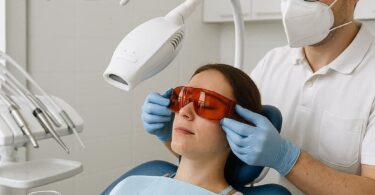
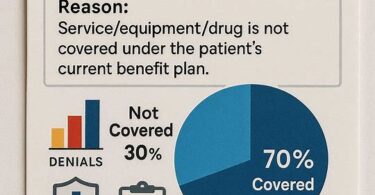
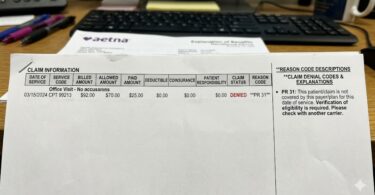
If you have recently visited a periodontist or your general dentist for a deep cleaning, you might have heard a few new terms. Words like “periodontal disease,” “scaling and root planing,” and “Arestin” can feel overwhelming. But what often confuses patients the most is not the procedure itself, but the language of the dental office: the insurance codes.
When you receive a treatment plan or an explanation of benefits (EOB) from your insurance company, you might see a mysterious five-digit number next to a procedure. If you were prescribed Arestin, that number is almost always D4381.
Understanding this code is crucial. It helps you understand what you are being charged for, why your dentist recommends it, and, most importantly, how your insurance will handle the cost. This guide is designed to walk you through everything you need to know about the dental code for Arestin in a simple, conversational way. We will cut through the jargon and give you the facts you need to make informed decisions about your oral health.
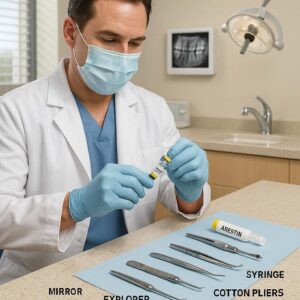
Dental Code for Arestin
Table of Contents
ToggleWhat is Arestin? A Quick Overview
Before we dive deep into the code, let’s talk about the star of the show: Arestin itself. You cannot understand the code without understanding the treatment.
Arestin is not a cleaning. It is a medication. Specifically, it is a minocycline hydrochloride microsphere, an antibiotic in a powder form.
Think of it this way: When you have periodontal disease, your gums pull away from your teeth, forming “pockets.” These pockets are like traps for bacteria. No matter how well you brush, you cannot reach the bottom of these pockets to clear out the infection.
During a deep cleaning (known as Scaling and Root Planing, or SRP), your dentist or hygienist physically scrapes away the tartar and bacteria from the root of the tooth. This is the foundation of gum disease treatment. However, sometimes, the bacteria are so entrenched that the cleaning alone isn’t enough to fully knock out the infection. This is where Arestin comes in.
After the scaling and root planing is complete on a specific area, the dentist places this tiny, powder-like antibiotic directly into the infected gum pocket. As it dissolves, it releases the antibiotic slowly over time, killing the remaining bacteria and allowing the gum tissue to heal and reattach to the tooth.
Important Note: Arestin is a site-specific treatment. This means it is only applied to the pockets that are still infected after the initial cleaning. It is not a pill you swallow, and it is not placed in healthy areas of your mouth.
The Specific Code: D4381
Now, let’s get to the heart of the matter. In the dental world, every single procedure has a specific code. These codes, known as Current Dental Terminology (CDT) codes, are maintained by the American Dental Association (ADA). They are the universal language that dentists use to communicate with insurance companies.
The dedicated dental code for Arestin is D4381.
The official CDT description for D4381 is:
“Localized delivery of antimicrobial agents via a controlled release vehicle into diseased crevicular tissue, per tooth.”
Let’s break that down into plain English:
-
Localized delivery: The medicine is placed exactly where it is needed.
-
Antimicrobial agents: A substance that destroys or suppresses bacteria (in this case, the antibiotic Arestin).
-
Controlled release vehicle: The “microspheres” in Arestin that dissolve slowly, releasing the medicine over time.
-
Diseased crevicular tissue: The infected gum pocket around the tooth.
-
Per tooth: This is the most critical part for billing. The code is applied for each individual tooth that receives the treatment.
So, if your dentist places Arestin on three different teeth, your treatment plan will show the code D4381 listed three times (or once with a quantity of 3).
How D4381 Relates to Scaling and Root Planing
It is vital to understand that D4381 is almost always billed in addition to the scaling and root planing codes (typically D4341 or D4342). They are separate procedures for separate purposes.
-
Scaling and Root Planing (D4341/D4342): This is the mechanical cleaning. It removes the buildup (calculus/tartar) from the tooth surface. Think of this as “tilling the soil.”
-
Arestin (D4381): This is the chemical treatment. It kills the infection left behind. Think of this as “applying fertilizer and weed killer” to ensure healthy regrowth.
You cannot have D4381 without first having the scaling and root planing on that same tooth. The cleaning must happen first to open the pocket and clear the debris so the antibiotic can reach the base of the infection.
When is the D4381 Code Used?
Not every patient with gum disease needs Arestin. Dentists follow specific clinical guidelines to determine when the use of this code is appropriate. It is not a one-size-fits-all solution.
Your dentist will typically recommend the D4381 procedure if:
-
Persistent Pocket Depth: After an initial course of scaling and root planing, you have at least one periodontal pocket that is 5mm or deeper. Healthy gums usually have pocket depths of 1-3mm. Depths of 4mm are often watch-and-wait, but 5mm+ are breeding grounds for bacteria.
-
Bleeding on Probing: When your dentist measures your pockets with a small probe, the site bleeds easily. This is a classic sign of active inflammation and infection. If a deep pocket doesn’t bleed, it might just be a “pocket” left over from previous bone loss, but if it bleeds, it means the infection is active.
-
Presence of Pathogens: In some cases, a dentist might take a small sample of the fluid in the pocket to test for specific types of aggressive bacteria known to cause periodontal disease. If these specific bugs are present, Arestin is a highly effective way to target them.
-
Failure to Respond to Initial Therapy: The standard of care is scaling and root planing. Your dentist will wait (usually 4-6 weeks) to see how your gums respond. If the pockets remain deep and inflamed after your body has had a chance to heal, it is a strong indicator that localized antibiotic therapy (D4381) is needed.
A Common Treatment Scenario
Imagine a patient, Sarah, with generalized moderate periodontitis.
-
Diagnosis: Dr. Lee diagnoses Sarah with gum disease. She has several pockets measuring 5mm and 6mm with bleeding.
-
Phase 1 Therapy: Dr. Lee performs Scaling and Root Planing (D4341) on all four quadrants of Sarah’s mouth. The goal is to remove the bacteria and tartar.
-
Re-evaluation: Sarah returns in 6 weeks. Dr. Lee re-measures her gums.
-
Most of her pockets have improved to 3mm or 4mm and are healthy.
-
However, three specific teeth (tooth #3, #19, and #30) still have 5mm pockets that bleed when touched.
-
-
Recommendation: Because those three specific sites have not resolved with the cleaning alone, Dr. Lee recommends placing Arestin in those three pockets to kill the lingering infection and promote healing. Sarah’s treatment plan will now include three units of D4381.
Insurance Coverage for D4381
This is the part where things can get a little tricky. Because Arestin is considered an “adjunctive” therapy (something that adds to the primary treatment), coverage varies wildly from one insurance plan to another.
Here is a realistic breakdown of what you can expect regarding insurance and the dental code for Arestin.
Medical vs. Dental Necessity
Insurance companies base their decisions on “medical necessity.” They ask, “Is this procedure required to treat the patient’s condition?”
-
The Pro Argument: Dental professionals argue that if a pocket is still infected (bleeding) and deep after scaling and root planing, the bacteria are likely embedded in the tissue. Arestin is medically necessary to resolve the infection and prevent tooth loss.
-
The Con Argument: Some insurance companies view Arestin as a convenience or a slightly enhanced version of the cleaning. They may argue that further mechanical debridement (another scaling) should be attempted first.
Coverage Scenarios
| Coverage Scenario | What It Looks Like | Patient Responsibility |
|---|---|---|
| Full Coverage (Rare) | A small percentage of premium PPO plans cover D4381 at 80-100% after the patient meets their deductible. | Low. You only pay your co-pay or co-insurance. |
| Partial Coverage (Most Common) | The plan covers a percentage (often 50%) of the cost. This is because D4381 often falls under “Major” or “Periodontics” categories, which have lower coverage than basic cleanings. | Moderate. You are responsible for the remaining 50% plus your deductible. |
| Plan Exclusion (Common) | The insurance policy explicitly states that “localized antimicrobial agents” or code D4381 is not a covered benefit. This does not mean it isn’t recommended; it just means the insurance company will not pay anything towards it. | High. You are responsible for the full cost of the procedure. |
| Frequency Limitations | Some plans that do cover it will place limits, such as “once every 3 years per tooth” or “a maximum of 8 units per year.” | Varies. If you need more than the limit, the excess is out-of-pocket. |
Why is it sometimes not covered?
It can be frustrating to be told you need a treatment, only to find out your insurance won’t help pay for it. There are a few reasons for this:
-
Cost vs. Premiums: Insurance is about risk management. Covering expensive, cutting-edge procedures for everyone would make premiums unaffordable. Arestin is more expensive than traditional scaling.
-
“Newer” Technology: While Arestin has been around for years, it is still considered a “specialty” item compared to a standard scale and polish.
-
Contractual Obligations: Dental offices sign contracts with insurance companies. These contracts dictate what they will be paid for. Some insurance companies simply refuse to include D4381 in their fee schedules.
Important Note for Readers: Always, always ask your dental office to do a “predetermination” or “pred estimate” of benefits. They will send the planned treatment (including the D4381 codes) to your insurance company to get a written estimate of what will be paid and what you will owe. This prevents surprise bills.
What to Expect During the D4381 Procedure
If your dentist has recommended this treatment, knowing what happens during the appointment can ease a lot of anxiety. The procedure is quick, minimally invasive, and relatively comfortable.
Here is a step-by-step walkthrough:
-
Assessment: The dentist or hygienist will first re-measure the specific pockets identified at your re-evaluation appointment to confirm they still require treatment.
-
Isolation: The area around the tooth is often isolated with cotton rolls or a small suction device to keep it dry. Saliva can wash away the medication before it has a chance to settle into the pocket.
-
Sub-gingival Irrigation (Optional): Sometimes, the pocket is gently flushed with water or a saline solution to remove any loose debris.
-
Placement: This is the key step. The Arestin cartridge is loaded into a special syringe-like device with a blunt, curved tip. The tip is gently inserted into the gum pocket until resistance is met (the bottom of the pocket). The dentist then slowly withdraws the tip while pressing the plunger, filling the pocket with the antibiotic microspheres.
-
Setting: The microspheres are mixed with a gel that becomes a liquid at room temperature but thickens slightly at body temperature. This helps them stay in place. You might see a white, paste-like substance at the gum line.
-
Pressure (Optional): In some cases, the dentist may apply gentle pressure with a damp gauze to help push the material into the pocket and control any minor bleeding.
-
Post-Placement Instructions: The most critical part of the appointment happens now. Your dentist will give you specific instructions.
The “Do’s and Don’ts” After Arestin
For the medication to work effectively, it needs to stay in the pocket. Your actions in the first week are vital.
For the first 7-10 days, you must avoid:
-
Flossing in the treated areas. Flossing will physically pull the microspheres out of the pocket. You can floss other teeth, but skip the treated sites.
-
Using interdental cleaners (like Waterpiks or small brushes) in the treated areas. The water pressure will rinse the antibiotic away.
-
Picking or probing at the area with your tongue or fingers.
-
Eating hard, sticky, or chewy foods (like caramels, nuts, or crusty bread) directly on the treated side. Stick to a softer diet for a few days.
-
Vigorous swishing when you rinse your mouth.
What you SHOULD do:
-
Brush carefully. You must keep the area clean, but be gentle. Brush the tooth’s surface, trying not to aggressively brush the gumline where the medicine is.
-
Use a prescribed mouth rinse (if given). Your dentist may prescribe an antimicrobial rinse (like chlorhexidine) to use in conjunction with the Arestin.
-
Attend your follow-up appointment. You will likely be asked to return in 4-6 weeks so the dentist can re-evaluate the pocket depth and see how well it has healed.
D4381 vs. Other Periodontal Treatments
It is helpful to see how Arestin (D4381) fits into the bigger picture of gum disease therapy. Here is a comparison with other common procedures.
D4381 vs. Arestin vs. Scaling and Root Planing (D4341)
| Feature | Scaling and Root Planing (SRP) – D4341 | Arestin Placement – D4381 |
|---|---|---|
| Purpose | To remove hard and soft deposits (tartar, plaque) from the tooth root. | To kill the specific bacteria causing the infection in the tissue. |
| Method | Mechanical. Using hand scalers and ultrasonic devices. | Chemical. Using a time-release antibiotic powder. |
| Scope | Usually performed on a whole quadrant or multiple teeth at once. | Site-specific. Performed on individual teeth that haven’t responded to SRP. |
| Timing | The initial, fundamental treatment for gum disease. | An adjunctive therapy, performed after SRP if needed. |
D4381 vs. Periodontal Maintenance (D4910)
This is a common point of confusion. Patients often wonder why they can’t just get Arestin at their regular cleanings.
| Feature | Periodontal Maintenance – D4910 | Arestin Placement – D4381 |
|---|---|---|
| What is it? | A “cleaning” for patients with a history of gum disease. It is a maintenance procedure to prevent the disease from getting worse. It involves monitoring pocket depths and polishing. | An active treatment for a specific site that is currently infected and inflamed. |
| Goal | To maintain the status quo and prevent new outbreaks. | To resolve an active, persistent infection. |
| Insurance Class | Considered a basic periodic service, often covered 2-4 times a year. | Considered a major or periodontal service, with different coverage limits. |
| Frequency | Typically every 3-4 months. | As needed, based on the presence of active disease sites. Usually no more than once or twice a year per tooth. |
D4381 vs. Periodontal Surgery (D4261, D4241)
If Arestin doesn’t work, what is the next step?
| Feature | Arestin – D4381 | Periodontal Surgery |
|---|---|---|
| Invasiveness | Minimally invasive. No cutting or stitches. | Invasive. Involves cutting the gum flap to access the root and bone. |
| Recovery | Minimal downtime. Only dietary restrictions for a week. | Significant recovery. Pain, swelling, dietary restrictions, and time off work may be needed. |
| Cost | Relatively low per tooth. | High. Surgical procedures are much more expensive. |
| Goal | To reduce pocket depth through chemical disinfection and tissue healing. | To physically reduce pocket depth by re-contouring the gum and bone. |
| Order of Treatment | Attempted before surgery. It is a conservative, non-surgical approach. | Considered after non-surgical therapies (SRP and Arestin) have failed to resolve the pockets. |
Cost Analysis: What to Expect for D4381
Money is a real concern for most people. Because Arestin is a pharmaceutical product, it has a cost associated with it that a standard cleaning does not. Let’s talk dollars and cents.
The Price Per Tooth
The cost for the D4381 procedure can vary based on your geographic location and the specific dental practice. However, a realistic range in the United States is typically between $25 and $75 per tooth.
This fee includes:
-
The cost of the Arestin cartridge itself.
-
The dentist’s or hygienist’s time and expertise in placing it.
-
The follow-up evaluation to check the results.
Why the Cost Can Add Up
Since it is billed “per tooth,” if you have several teeth that need treatment, the total can increase quickly.
-
1 tooth: $25 – $75
-
4 teeth: $100 – $300
-
8 teeth: $200 – $600
It is easy to see why understanding your insurance benefits is so important.
Questions to Ask Your Dental Office About Cost
Don’t be shy about discussing finances. A reputable office will be happy to provide clarity. Here are some good questions to ask:
-
“Can you send a predetermination to my insurance for the D4381 codes so we know exactly what my portion will be?”
-
“If my insurance doesn’t cover it, do you offer an in-office discount or a payment plan?”
-
“Is there a package price if I need Arestin on multiple teeth?”
-
“Does this fee include the necessary follow-up appointment to check the results?”
FAQ: Your Top Questions About the Dental Code for Arestin Answered
Here are answers to some of the most frequently asked questions we hear from patients.
Q: Is D4381 the same as Arestin?
A: Yes, in the vast majority of cases. While D4381 is the code for “localized delivery of antimicrobial agents,” Arestin is the brand name of the specific antimicrobial agent most commonly used with this code. If you see D4381 on your treatment plan, it almost certainly means your dentist is planning to place Arestin.
Q: Can D4381 be billed with a regular cleaning (D1110)?
A: Technically, a dentist could bill them together, but it is highly unlikely and clinically questionable. Arestin is a treatment for active periodontal disease. If you have active disease requiring antibiotics, you do not need a “prophylaxis” (regular cleaning); you need therapeutic treatment like scaling and root planing (D4341). Billing D4381 with a routine cleaning would raise red flags with insurance companies.
Q: Why did my insurance deny the claim for D4381?
A: Denials usually happen for one of three reasons:
-
Exclusion: Your specific plan contract excludes coverage for this code. You can verify this in your benefits booklet.
-
Medical Necessity: The insurance reviewer may not have seen sufficient documentation (like pocket depths of 5mm+ and bleeding) to justify the treatment.
-
Frequency: You may have reached the maximum allowed number of treatments for the year.
Q: Does insurance cover Arestin?
A: It depends on your plan. It is covered by some plans, partially covered by others, and completely excluded by many. Always check with your provider.
Q: How long does the Arestin stay in my gums?
A: The microspheres are designed to release the antibiotic over 14-21 days. However, the physical particles themselves will dissolve and disappear over time. You may see small white specks for a day or two, which is normal.
Q: Can I eat after getting Arestin?
A: Yes, but carefully. Avoid the treated area for the rest of the day. Stick to soft foods that don’t require heavy chewing on that side for about a week. Avoid hard, crunchy, or sticky foods that could dislodge the medication.
Additional Resources
For the most authoritative information on periodontal disease and treatment, we always recommend consulting directly with a periodontist or your general dentist.
You can also find reliable patient education materials on the website of the American Academy of Periodontology:
Visit the American Academy of Periodontology (perio.org) for more information on gum disease treatments
Conclusion
Navigating dental treatment codes can feel like learning a new language. We hope this guide has helped you understand that the dental code for Arestin, D4381, represents a targeted, modern, and minimally invasive way to fight persistent gum disease. It is a site-specific antibiotic treatment used after deep cleaning to help heal infected pockets and save teeth. By understanding what the code means, how it is used, and how it interacts with your insurance, you can have a more confident and informed conversation with your dental team about the best path to a healthy smile.
Disclaimer: This article is for informational purposes only and does not constitute medical or dental advice. It is not a substitute for professional consultation with a qualified dentist or periodontist. Always seek the advice of your dental provider with any questions you may have regarding a medical condition or treatment. Coverage and coding information is general and subject to change; you must verify benefits with your specific insurance provider.
Author: The Professional SEO Content Team
Date: March 06, 2026