Let’s be honest: few things in life are as mystifying as a dental insurance explanation of benefits (EOB). You go in for a procedure, and weeks later, you receive a document filled with alphanumeric codes that look more like a secret spy language than a medical receipt. If you are preparing to replace a missing tooth or a series of teeth with a fixed bridge, you have likely encountered one of the most important—and often misunderstood—terms in restorative dentistry: the abutment.
Understanding the dental code for an abutment bridge isn’t just about satisfying curiosity; it’s about financial preparedness. When you know what the codes mean, you can read your treatment plan with confidence, ask your dentist informed questions, and verify that your insurance claim is accurate.
In this guide, we are going to pull back the curtain. We will explore what an abutment actually is, why it requires its own specific code separate from the crown or bridge, and exactly which Current Dental Terminology (CDT) codes you need to look for. Whether you are a patient budgeting for care or a professional looking for a refresher, consider this your friendly, reliable roadmap.
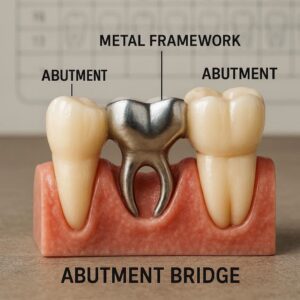
Dental Code for an Abutment Bridge
What is an Abutment? The Unsung Hero of Your Bridge
Before we dive into the codebook, we need to establish a clear picture of what we are talking about. Imagine building a bridge over a river. You cannot just lay the road deck across the water; you need strong pillars on either side to hold it up.
In dentistry, the “bridge” (the prosthetic teeth) works the same way.
-
The Pontic: This is the fake tooth (or teeth) that fills the gap where your natural tooth used to be. It “floats” above the gum line, attached to its neighbors.
-
The Abutment: These are the anchor teeth. They are the natural teeth or dental implants on either side of the gap that support the bridge.
However, the term “abutment” gets a bit more specific depending on the situation. In modern dentistry, there are two primary scenarios:
-
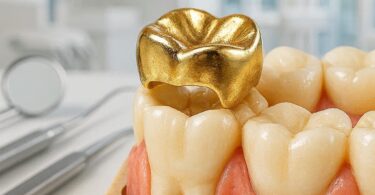
The Natural Tooth Abutment: In a traditional fixed bridge, your dentist reshapes the healthy teeth adjacent to the gap. These reshaped natural teeth then serve as the foundation (abutments) onto which the bridge is cemented.
-
The Implant Abutment: If the missing tooth is being replaced with an implant-supported bridge, the “abutment” refers to a small connector piece. This piece is screwed into the top of the titanium implant post (which sits in your jawbone) and acts as a core onto which the final crown or bridge is cemented.
So, why is this distinction so important? Because in the world of dental coding, they are billed completely differently. The code for preparing a natural tooth is different from the code for placing a manufactured component on an implant.
Why the Abutment Gets Its Own Code
This is a common source of confusion for patients. You might think, “I’m just getting a bridge, why are there so many line items?” Think of it like building a house. The contractor doesn’t just give you a bill that says “House.” They itemize the foundation, the framing, the plumbing, and the roofing.
The abutment is a distinct procedural step. It requires clinical skill, time, and materials. For an implant abutment, it is a precision-machined component that the dental lab or manufacturer creates. For a natural tooth, it requires the dentist to carefully shape the tooth structure. Therefore, insurance providers and dental offices must track this step separately to ensure proper reimbursement and accurate record-keeping.
The Core Dental Codes for an Abutment Bridge
Now, let’s get to the heart of the matter. The Current Dental Terminology (CDT) codes are published by the American Dental Association (ADA) and are updated annually. These are the standardized codes used by every dental office and insurance company in the United States.
When searching for the “dental code for abutment bridge,” you are likely looking for one of the following codes. We have broken them down into two main categories: those for implant abutments and those for natural tooth abutments.
The Implant Abutment Codes (The “Connector” Pieces)
If your bridge is supported by dental implants, you will almost certainly see one of these codes on your treatment plan.
D6056: Prefabricated Abutment
This code is used for a stock, off-the-shelf abutment. Think of it as a “one-size-fits-most” component. The dentist or lab may need to modify it by trimming or shaping it slightly to fit your specific case.
-
When it’s used: Often for posterior teeth where aesthetics are less critical, or in cases where a custom shape isn’t necessary.
-
What it includes: The cost of the manufactured part and the clinical time to place it on the implant.
D6057: Custom Abutment
This is the “tailor-made” option. A custom abutment is fabricated by a dental laboratory based on an impression of your implant, your gum tissue, and the surrounding teeth. The lab creates an abutment that perfectly fits your unique anatomy.
-
When it’s used: Almost exclusively for anterior (front) teeth where aesthetics are paramount. A custom abutment ensures the gum tissue heals beautifully and the final crown looks natural emerging from the gum.
-
What it includes: The laboratory fee for designing and milling the abutment, plus the dentist’s fee for placement. This code is often associated with a higher out-of-pocket cost because of the extensive lab work involved.
D6058: Abutment-Supported Porcelain/Ceramic Crown
This code represents the combination of an abutment and a crown. However, it is used specifically when the abutment and the crown are one solid, pre-made unit—often called a “uni-screw” or “screw-retained abutment crown.” It is less common than the two-step process but is still important to know.
-
How it differs: Instead of placing an abutment (D6056 or D6057) and then cementing a crown (D6059) on top, this is one single piece that screws directly into the implant.
D6059: Abutment-Supported Porcelain/Ceramic Crown
This is the code you will see most often for a beautiful, natural-looking implant crown. It describes a crown that is fabricated to fit onto a previously placed abutment (either custom or prefabricated). This is the final step in the restorative process.
Quick Reference: Implant Abutment Codes
| CDT Code | Description | Simple Analogy |
|---|---|---|
| D6056 | Prefabricated Abutment | Off-the-shelf shoe, might need insoles. |
| D6057 | Custom Abutment | Bespoke, hand-made shoe. |
| D6058 | Abutment-Supported Crown (one-piece) | A shoe where the sole and upper are inseparable. |
| D6059 | Crown for Abutment (separate) | The decorative shoe upper that goes on the sole. |
The Natural Tooth Abutment Codes (The Prepared Teeth)
When your bridge is anchored to your natural teeth, the “abutment” is simply your tooth after the dentist has reshaped it. Because of this, you won’t see a code that says “Abutment” on its own. Instead, you will see the code for the crown that is placed on that tooth. Remember, in a bridge, the abutment teeth receive crowns, and the missing tooth space gets a pontic.
D6740: Porcelain/Ceramic Retainer for a Bridge (Per Abutment)
This is a critical code to understand. In the context of a bridge, the word “retainer” does not mean a nightguard. It means the part of the bridge that holds it in place—specifically, the crown on the abutment tooth.
-
What it means: This code is used when the abutment teeth will be covered with an all-ceramic or all-porcelain crown as part of the bridge. It is billed per abutment tooth.
-
Example: If you have a three-unit bridge replacing one missing tooth, you will likely see this code on your treatment plan twice (one for the front abutment and one for the back abutment), plus a code for the pontic in the middle.
D6750: Porcelain Fused to High Noble Metal Retainer for a Bridge
This is the same concept as above, but for a different material. PFM (Porcelain Fused to Metal) crowns have been the gold standard for decades. They consist of a metal substructure for strength, with porcelain baked over it for aesthetics.
-
Why the metal matters: The code specifies the type of metal. “High Noble” means the alloy contains at least 60% noble metals (like gold, platinum, or palladium), with at least 40% being gold. These are the most biocompatible and well-tolerated metals.
D2957: Pin Retention – Per Tooth, In Addition to Restoration
Sometimes, a natural tooth abutment has very little height left above the gum line. To ensure the bridge stays securely in place, the dentist may need to place a small pin into the tooth structure to help lock the crown on.
-
What it is: This is an “add-on” code. You will see it in addition to the main retainer code (like D6740 or D6750). It represents the extra time and material needed for a complex case.
Important Note for Patients: When you look at a treatment plan for a traditional bridge, you will not see the word “abutment” on the line items. Instead, you will see codes for “retainers” (the crowns on your teeth) and “pontics” (the fake teeth). The “abutment” is the tooth itself; the “retainer” is the crown that protects it.
The Bridge Codes: Putting It All Together
Now that we understand the parts, let’s look at the whole. An abutment is useless without a bridge to support. Here are the codes you will see for the actual replacement teeth (the pontics) that complete your smile.
D6240: Pontic – Porcelain Fused to High Noble Metal
This is the code for a single fake tooth (pontic) that is made of porcelain fused to a high-noble metal base. It will be attached to the retainers (crowns) on either side.
D6245: Pontic – Porcelain/Ceramic
This code is for a pontic made entirely of porcelain or ceramic, with no metal substructure. These are the most aesthetically pleasing and are commonly used in the front of the mouth.
D6210: Pontic – Cast High Noble Metal
While less common today, sometimes an all-metal pontic is used for a posterior bridge where strength is the only concern and aesthetics are irrelevant (e.g., a very back tooth that no one sees).
A Sample Treatment Plan Walkthrough
Let’s imagine you are missing tooth #30 (a lower first molar). Your dentist plans to use tooth #29 and #31 as abutments to create a three-unit bridge. A modern, aesthetic treatment plan might look like this:
-
Procedure: Bridge on teeth #29, #30, #31
-
Tooth #29 (Abutment): D6740 – Porcelain/Ceramic Retainer for a Bridge
-
Tooth #30 (Pontic): D6245 – Pontic – Porcelain/Ceramic
-
Tooth #31 (Abutment): D6740 – Porcelain/Ceramic Retainer for a Bridge
If this were an implant bridge on two implants with a custom abutment, it might look like this:
-
Procedure: Implant-Supported Bridge
-
Tooth Site #29: D6057 – Custom Abutment
-
Tooth Site #29: D6059 – Abutment-Supported Porcelain/Ceramic Crown (Retainer)
-
Tooth Site #30: D6245 – Pontic – Porcelain/Ceramic (attached to adjacent crowns)
-
Tooth Site #31: D6057 – Custom Abutment
-
Tooth Site #31: D6059 – Abutment-Supported Porcelain/Ceramic Crown (Retainer)
Decoding Your Insurance: Coverage, Exclusions, and Fine Print
Knowing the codes is half the battle. The other half is understanding how your specific insurance plan interprets them. Dental insurance is not one-size-fits-all.
The “Missing Tooth” Clause
Most dental insurance plans have a clause that they will only cover the replacement of a tooth that was missing before you joined the plan. If you had a missing tooth for years and then decided to get a bridge, your insurance might deny the claim entirely, labeling it a “pre-existing condition.”
Frequency Limitations
Insurance companies love to limit how often they pay for things. A bridge is considered a major restorative procedure. If a bridge fails or breaks after a few years, most plans will not pay to replace it for a specific period, often 5 to 10 years. This is their “frequency” limitation.
The “Downgrade” Clause
This is a crucial one for abutment codes. Imagine your dentist recommends a beautiful all-ceramic bridge (codes D6740 and D6245) for your front tooth. Your insurance policy, however, may state that they will only pay for the “least expensive professionally acceptable treatment.” This is often a Porcelain Fused to Metal bridge.
In this case, the insurance company will “downgrade” their benefit. They will calculate what a PFM bridge would have cost, pay their percentage of that amount, and leave you to pay the difference out-of-pocket. This is why a treatment plan estimate and the final insurance payment can sometimes be far apart.
Reader Tip: Always ask your dentist’s office to send a “pre-determination” or “pre-authorization” to your insurance company before starting any bridge work. This is a non-binding estimate of what your insurance will pay. It gives you a realistic picture of your financial responsibility before any drilling begins.
Navigating Your Treatment Plan with Confidence
Walking into a financial consultation armed with knowledge changes the dynamic. It turns a confusing presentation into a collaborative conversation.
Questions to Ask Your Dentist or Office Manager
-
“I see code D6056 on my plan for the abutment. Is a custom abutment (D6057) an option for a better aesthetic result, and what would be the additional cost?”
-
“My bridge treatment plan lists D6740 for my abutment teeth. Does my insurance plan have a ‘downgrade’ clause for all-ceramic materials?”
-
“Could you please explain the difference in longevity or appearance between the materials you’ve recommended for the abutment retainers?”
-
“Is the fee for the abutment (D6057) inclusive of the lab fee, or is that a separate estimate?”
The Difference Between In-Network and Out-of-Network
If you see an in-network dentist, they have a contract with your insurance company. They have agreed to “write off” a certain portion of their fee, and you are typically only responsible for your co-pay and deductible.
If you see an out-of-network dentist, they have not agreed to those reduced fees. Your insurance will still pay their portion based on their usual and customary rates, but you will be responsible for the difference between the dentist’s full fee and the insurance payment. This is particularly relevant for high-cost items like custom abutments (D6057), as the out-of-network dentist’s fee may be significantly higher than what the insurance company deems “customary.”
The Future of Abutment Codes: Digital Dentistry
The world of dental coding is not static. As technology evolves, so do the procedures and, eventually, the codes used to describe them.
We are currently in the midst of a digital revolution. The rise of intraoral scanners (taking digital impressions instead of goopy material) and CAD/CAM technology (Computer-Aided Design and Computer-Aided Manufacturing) has streamlined the process of creating abutments and bridges.
While the core codes (D6056, D6057) remain the same, the way they are executed is changing.
-
Digital Workflow: Instead of sending a physical impression to a lab, a digital file is sent. The lab then mills a custom abutment (D6057) from a single block of ceramic in minutes.
-
Same-Day Dentistry: Some advanced offices have on-site milling machines. They can scan your implant, design the custom abutment and crown right there, mill them, and place them all in one appointment. The codes billed are the same (e.g., D6057 and D6059), but the patient experience is vastly different.
While there is speculation about future codes specifically for digitally fabricated restorations, as of now, the CDT codes remain technology-agnostic. They describe the what (a custom abutment), not the how (lost-wax casting vs. digital milling).
Additional Resources
For the most up-to-date and official information, it is always best to go straight to the source. The American Dental Association (ADA) publishes the code set annually.
Note: The ADA website requires a purchase for the full codebook, but it is the definitive resource used by all dental professionals. Your dentist’s office will also have a copy available for reference upon request.
Frequently Asked Questions (FAQ)
1. Why is there a separate code for the abutment? Can’t they just bundle it with the crown?
No, they cannot. The abutment placement and the crown placement are distinct clinical procedures requiring different skills and materials. For insurance and record-keeping purposes, they must be itemized separately to accurately reflect the work done and the materials used.
2. My dentist said I need a “custom abutment” (D6057). Is this really necessary, or is it just a way to charge me more?
While cost is a valid concern, a custom abutment is rarely “just a way to charge more.” In the aesthetic zone (front teeth), it is the standard of care. It ensures the crown emerges from the gum at the correct angle and that the gum tissue heals with a natural contour. A poorly fitted stock abutment can lead to gum inflammation and an unnatural-looking result.
3. Will my insurance cover 100% of the abutment code?
It is highly unlikely. Most dental insurance plans categorize implant components (abutments) and bridges as “major” services. Typical plans cover 50% of major services after you have met your annual deductible. You should expect to pay a significant portion of the cost for codes like D6056, D6057, and D6059.
4. What is the difference between an abutment and a post and core?
This is an excellent question. A post and core (D2952, D2954) is a restoration placed into a root canal-treated natural tooth to build it up so it can hold a crown. An abutment (D6056, D6057) is a piece placed on top of a dental implant. One involves natural tooth structure, the other involves a titanium implant.
5. I see code D6094 on my estimate. What is that?
D6094 is the code for an Abutment Supported Crown – Porcelain/Ceramic (for an Implant Retained Hybrid Prosthesis) . It is similar to D6059 but is specifically used when the crown is part of a larger, more complex case like an implant-supported overdenture or a hybrid denture that replaces an entire arch of teeth. It is less common for a single-unit bridge.
Conclusion
Understanding the dental code for an abutment bridge transforms you from a passive patient into an active participant in your healthcare journey. By recognizing the difference between a prefabricated implant abutment (D6056) and a custom one (D6057), and by understanding that a natural tooth abutment is represented by retainer codes like D6740, you can read your treatment plan with clarity. This knowledge empowers you to have meaningful conversations about materials, costs, and insurance coverage, ultimately leading to better decisions and a healthier, more confident smile.
Disclaimer:
This article is for informational purposes only and does not constitute medical, dental, or legal advice. Dental codes and insurance policies are subject to change and vary by provider. You should always consult with a qualified dental professional regarding your specific condition and treatment needs, and contact your insurance carrier for detailed information about your plan’s coverage.