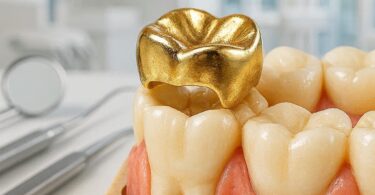
If you’ve been told you need a crown, and specifically one made from that high-tech, tooth-colored material your dentist raved about, you were likely introduced to Lithium Disilicate—better known by the brand name E.max. It’s the gold standard for front teeth and a favorite for backs due to its strength and lifelike translucency.
But then the treatment coordinator hands you a printout, and suddenly you are swimming in a sea of numbers: D2740, D6058, perhaps a line item for a “core buildup.”
Finding the correct dental code for E max crown is the first step toward understanding your treatment plan and your insurance coverage. This guide will walk you through exactly what codes your dentist uses, why they use them, and—most importantly—what that means for your wallet.
We will cut through the clinical jargon and give you the straight talk on how to read your dental benefits like a pro.

Dental Code for E Max Crown
Table of Contents
ToggleWhat is the CPT/HCPCS Code for a Crown?
Before we dive into the specifics of E.max, we need to clarify a common point of confusion. In the medical field, doctors use CPT codes (Current Procedural Terminology) to bill insurance. However, dentistry operates on a different system.
Dentists use CDT codes (Current Dental Terminology). These are maintained by the American Dental Association (ADA) and are the universal language for dental procedures in the United States.
So, when you are looking for the dental code for E max crown, you are actually searching for the specific CDT code that represents a single cast restoration—which is the category where an E.max crown lives.
The Primary Code: D2740
The vast majority of the time, the dental code for an E.max crown is D2740.
Let’s look at what that code actually describes:
-
Code: D2740
-
Description: Crown – porcelain/ceramic substrate
-
What it means: This code is used for a full-coverage restoration that is fabricated primarily from porcelain or ceramic materials. Because E.max is a ceramic (specifically a lithium disilicate ceramic), this is its home code.
Your dentist will use D2740 whether the crown is for your front tooth (incisor) or your back tooth (molar). It does not specify the brand (E.max), only the type of material (ceramic).
Alternative Code: D2750 (The Porcelain-Fused-to-Metal Comparison)
You might see this code on your treatment plan if you are comparing options. While not the code for an all-ceramic E.max crown, it is the code for a traditional Porcelain-Fused-to-Metal (PFM) crown.
-
D2750: Crown – porcelain fused to high noble metal
It is helpful to know this code because many insurance companies still use the cost of a PFM crown as their benchmark for what they will pay. If you opt for the E.max (D2740) and your insurance only bases allowances on the PFM code (D2750), you may end up with a higher out-of-pocket cost.
E.max vs. The Code: Material Matters
Why does the material matter when it comes to the code? Because insurance companies are skeptical by nature. They want to ensure the procedure matches the diagnosis.
E.max is a “premium” material. It offers:
-
Superior Esthetics: It mimics the translucency of natural enamel better than any other material.
-
Strength: It is incredibly durable, often eliminating the need for a metal liner.
-
Monolithic Construction: Because it is a single solid piece of ceramic, it is gentle on opposing teeth.
Because of these benefits, dentists prefer it. However, because it is often more expensive to fabricate in a lab than a standard PFM crown, the patient’s portion (the copay) can be higher.
Is there a specific code for “E.max”?
No. There is no specific CDT code that says “E.max.” The codes describe the service, not the specific brand of material used.
If you see “E.max” written on your treatment plan, it will almost always be next to the code D2740. Sometimes, dentists will add a note in the “narrative” section of the insurance claim stating, “All-ceramic crown utilizing lithium disilicate (E.max) due to high esthetic demand,” to justify the material choice.
Chairside vs. Lab: Same Code?
Modern dentistry has introduced Same-Day dentistry, often using machines called CEREC or Planmeca. These mills carve a crown out of a block of E.max while you wait.
Does the code change if the crown is made in the office versus a dental lab?
The answer is a bit nuanced, but generally: No, the code remains D2740.
However, there are specific “hard coding” rules with some insurance companies:
-
Lab-Fabricated E.max: Billed as D2740. The lab bill is paid by the dentist, and the fee reflects the lab cost.
-
Chairside (In-Office) E.max: This is also billed as D2740. However, because the dentist is not paying an outside lab, they are using their own machine and materials. The fee might be similar, but the insurance company pays the dentist for the service, not the place of manufacturing.
Important Note: There is a separate code for the digital impression if the dentist does not take a physical goopy mold.
-
D6058: This is actually an implant code. Do not confuse this.
-
D0367 or similar digital imaging codes: Sometimes, there is a separate fee for the digital scan (the “mold”) that precedes the crown. This may be a line item separate from the D2740 crown code, though many dentists bundle it into the crown fee.
The “Built-In” Cost: Understanding the Breakdown
When you see the dental code for an E.max crown on your estimate, it usually represents the final restoration. But getting that crown on your tooth involves several steps. Here is how a typical treatment plan breaks down, using the CDT codes:
| Procedure | CDT Code | Description | Typical Insurance Coverage |
|---|---|---|---|
| Comprehensive Exam | D0150 | Evaluation of overall oral health | 80% – 100% |
| X-Rays | D0274 (Bitewings) | Diagnostic images | 80% – 100% |
| Core Buildup | D2950 | Rebuilding tooth structure before the crown | 50% – 80% |
| The Crown | D2740 | The E.max crown itself | 50% |
| Cementation | D2954 (or inclusive) | Bonding the crown to the tooth | Often included in D2740 |
Core Buildup (D2950)
If your tooth has a large filling or decay, the dentist must build it up to create a “stump” for the crown to sit on. This is billed separately as D2950 (core buildup, including any pins). This is not part of the crown code.
How Insurance Applies to Your E.max Crown
Let’s get realistic about money. You want the E.max crown because it looks natural and is strong. Your dentist recommends it. But insurance companies love to pay the least expensive option.
Here is the reality of the dental code for E.max crown and insurance:
The “Alternate Benefit” Clause
Many insurance plans have a clause called the “Alternate Benefit Provision.” Here is how it works:
-
You need a crown on a back molar.
-
Your dentist recommends an all-ceramic E.max crown (D2740).
-
Your insurance policy says, “We consider a Porcelain-Fused-to-High-Noble-Metal crown (D2750) to be the standard for that tooth.”
-
They will pay their portion based on the cost of the PFM crown (D2750), not the E.max crown (D2740).
Example Math:
-
Cost of E.max Crown (D2740): $1,400
-
Insurance “Allowed Amount” for PFM (D2750): $1,100
-
Insurance pays 50% of their allowed amount: $550
-
You pay: $1,400 – $550 = $850
If the insurance had based it on the E.max code, they might have allowed $1,400 and paid $700. This $150 difference is why you must always read the fine print.
The Implant Scenario: Coding for E.max on Implants
If you have a dental implant, the crown part (the tooth you see) is often made of E.max. However, the code changes because it is attached to an implant abutment, not a natural tooth.
The dental code for an E.max crown on an implant is D6058.
-
D6058: Abutment supported porcelain/ceramic crown (implant)
This code specifically covers the crown that is screwed or cemented onto the implant abutment. If the crown is made of E.max, the lab bill will reflect that, but the code remains D6058.
Why Your Dentist Might Push for D2740
You might wonder, “Why doesn’t my dentist just use the code for a cheaper crown to make insurance happy?”
The answer is ethics and quality of care.
-
Conservation of Tooth Structure: E.max crowns require a very strong bond. This bond actually preserves more of your natural tooth compared to the “retention” features needed for metal crowns.
-
Metal Allergies: Many patients are allergic or sensitive to the base metals used in PFM crowns.
-
Esthetics: Light passes through an E.max crown. It doesn’t just sit on top of the tooth; it becomes part of it.
Using the code D2740 for an all-ceramic crown is the most accurate way to describe the service rendered. Fudging the code to use a metal code (D2750) for a non-metal crown is insurance fraud.
List: 5 Things to Check on Your Treatment Plan
To ensure you are getting the right procedure with the right code, check your estimate for these five items:
-
Look for D2740: Ensure the crown is listed under the Porcelain/Ceramic code, not the Porcelain-fused-to-metal code.
-
Check for “E.max” or “Lithium Disilicate”: The description line should ideally specify the material type, even though the code doesn’t.
-
Identify the Core Buildup: If you need one, ensure code D2950 is present. It is usually a separate cost.
-
Verify the Tooth Number: Make sure the crown is assigned to the correct tooth number (e.g., Tooth #8 vs. Tooth #30). This prevents billing errors.
-
Ask about the “Narrative”: Ask the front desk if they will submit a narrative to the insurance explaining why an all-ceramic crown is medically necessary (for esthetics on front teeth, or for metal allergies).
Additional Resources
For the most up-to-date information on coding changes, you should always refer to the source. The ADA releases the CDT code set annually.
-
Resource: American Dental Association – CDT Coding
Frequently Asked Questions (FAQ)
Q: Is E.max covered by dental insurance?
A: Yes, but usually under the general “crown” benefit. Most insurance plans cover crowns at 50%. However, they may limit their payment to the cost of a standard metal crown (PFM), leaving you to pay the difference for the premium E.max material.
Q: What is the difference between D2740 and D2750?
A: D2740 is for an all-ceramic/porcelain crown (like E.max). D2750 is for a crown that has a metal interior with porcelain baked on top (PFM). E.max has no metal, so D2740 is the correct code.
Q: Can a dentist use D2750 for an E.max crown?
A: They should not. Using a code that inaccurately describes the material is considered fraudulent billing. The treatment record must match the code submitted to insurance.
Q: Why is my E.max crown more expensive than the insurance “allowance”?
A: Because E.max is a premium material. Insurance companies base their allowances on the “least expensive yet professionally acceptable” treatment. If they deem a PFM crown acceptable, they will pay based on that code, regardless of which material you choose.
Q: Does the code include the temporary crown?
A: Usually, yes. The fee for the permanent crown (D2740) typically includes the cost of fabricating and placing the temporary crown you wear while the permanent one is being made.
Q: What is the code for a same-day CEREC E.max crown?
A: It is still D2740. The method of fabrication (milled in-office vs. sent to a lab) does not change the CDT code, though the dentist’s fee structure might be different.
Conclusion
The dental code for an E.max crown is almost exclusively D2740 (Crown – porcelain/ceramic substrate). Understanding this code empowers you to read your treatment plan accurately, ask informed questions about your materials, and anticipate how your insurance will process the claim.
While insurance might try to steer you toward a metal-based code, knowing the difference between D2740 and D2750 ensures you are getting the all-ceramic, metal-free restoration you and your dentist agreed upon. Always review your estimate, confirm the tooth number, and don’t hesitate to ask your dental office to explain the codes to you.
Disclaimer: This article is for informational purposes only and does not constitute legal, medical, or insurance advice. CDT codes are owned and maintained by the American Dental Association. Always consult with your dental insurance provider and dentist regarding your specific coverage and treatment plan.