Let’s be honest: for many people, the sound of a dental drill is enough to make their palms sweat. If you or a loved one experiences dental anxiety, you have likely heard of “laughing gas.” It is the secret weapon for turning a stressful appointment into a relaxing experience.
However, if you have ever tried to decipher a dental treatment plan or an insurance Explanation of Benefits (EOB), you might have stumbled upon a strange string of characters: D9239. This is the official language of dentistry, and understanding it can save you confusion and money.
In this guide, we will strip away the jargon and explain everything you need to know about the dental code for laughing gas. We will cover what it means, how it works, what it costs, and why it might just be the best investment in your dental health this year.
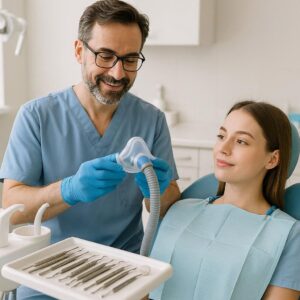
Dental Code for Laughing Gas
What is the Dental Code for Laughing Gas? (D9239)
In the world of dentistry, every procedure has a specific code. These are known as CDT codes (Current Dental Terminology). They ensure that dentists, insurance companies, and patients are all talking about the same thing.
The specific dental code for laughing gas is D9239.
-
The Code: D9239
-
The Full Description: “Nitrous oxide analgesia; non-intravenous.”
-
What it means: This code covers the administration of nitrous oxide (laughing gas) to help you relax. The “non-intravenous” part simply means it is inhaled through a mask, rather than injected into a vein.
You might occasionally hear older dentists or long-time patients refer to a different code, such as D9230. It is important to note that D9230 is an outdated code (often described as “unspecified anesthesia” or “inhalation of nitrous oxide”). The industry standard today is D9239. If you see the old code on a form, it is worth asking your insurance provider for clarification, but D9239 is the one you need to know.
Important Note for Readers:
D9239 covers the “administration” of the gas. This includes the expertise of the dentist or trained staff in monitoring you, the use of the equipment, and the gas itself. It is usually a separate fee from the dental procedure being performed (like a filling or a crown).
Understanding Nitrous Oxide: More Than Just “Gas”
Before we dive deeper into the insurance side of things, let’s talk about what actually happens when that little mask is placed over your nose. Understanding the process makes the code on your bill feel a lot less intimidating.
How It Works: A Step-by-Step
-
The Mask: A small, soft hood is placed over your nose. You are encouraged to breathe normally through your nose. The dentist is not putting you to sleep; you remain fully awake and aware.
-
The Cocktail: You breathe in a mixture of oxygen and nitrous oxide. The dentist controls the concentration, starting low and increasing it until you feel relaxed.
-
The Feeling: Within a few minutes, you should feel a sense of calm and well-being. You might feel a slight tingling in your arms and legs or feel a bit “floaty.” Time may seem to pass quickly. This is why it is so effective for long procedures.
-
The Reversal: When the procedure is over, the dentist turns off the nitrous oxide and gives you 100% pure oxygen to breathe for about five minutes. This flushes the gas from your system completely.
-
The Recovery: Unlike general anesthesia, the effects wear off almost instantly. You can drive yourself home and resume your normal activities immediately. This is one of its biggest advantages.
Who is it For?
Nitrous oxide is incredibly versatile. It is often recommended for:
-
Patients with Dental Anxiety: It takes the edge off the fear.
-
Patients with a Strong Gag Reflex: It helps you relax so the dentist can work comfortably.
-
Children: It can help young patients sit still during long or complex procedures.
-
Patients with Special Needs: It helps create a cooperative and comfortable environment.
Why Use D9239? The “Conscious Sedation” Difference
In dentistry, sedation is categorized on a spectrum. D9239 falls under the category of minimal sedation or conscious sedation.
To help you visualize where laughing gas sits in the world of dental comfort, here is a simple comparison table:
| Sedation Level | Common Method | Dental Code(s) | What You Feel | Recovery Time |
|---|---|---|---|---|
| Minimal Sedation | Nitrous Oxide (Laughing Gas) | D9239 | Awake, relaxed, and responsive. You can talk to the dentist. | Immediate. You can drive yourself home. |
| Moderate Sedation | Oral Sedation (a pill) or IV Sedation | D9222 (IV per 15 min) | Drowsy, may sleep through procedure but can be awakened. | Slower. You will need someone to drive you home. |
| Deep Sedation/General Anesthesia | Hospital-style anesthesia | D9223 (IV per 15 min, longer) | Unconscious. Asleep and not easily awakened. | Full day. Strict requirements for recovery and transportation. |
As you can see, D9239 is in a category of its own. It offers relaxation without the “hangover” or the need for a chaperone. This unique position is why it remains such a popular choice for patients and dentists alike.
Decoding Your Bill: Insurance and Out-of-Pocket Costs for D9239
Now, let’s get down to the practical question: “Is this covered, and how much will it cost me?” This is where understanding the code becomes financially beneficial.
Is D9239 Covered by Dental Insurance?
The answer is: It depends on your plan. Nitrous oxide is often viewed by insurance companies as a “convenience” or a “comfort” service rather than a medically necessary procedure.
-
Not Covered (Common): Many basic dental insurance plans do not cover D9239. In these cases, you will be responsible for the full fee.
-
Covered with Limitations (Less Common): Some mid-to-high tier PPO plans may cover a portion of the cost, usually 50% to 80%, similar to a basic restorative procedure. This is more common if the patient is a child or if the procedure is particularly complex.
-
Subject to Deductible: If it is covered, the fee for D9239 is usually subject to your annual deductible. You must meet your deductible before the insurance company starts paying.
Always call your insurance provider before the appointment. Ask them specifically: “What is my coverage for CDT code D9239, nitrous oxide analgesia?”
Average Costs for Laughing Gas
If you are paying out-of-pocket, what can you expect? The cost of D9239 varies by geographic location and the specific dental practice, but here is a general range:
-
Average Fee: The cost typically ranges from $50 to $150 per visit.
-
Bundling: Some dentists may include a “comfort package” in their fees for certain procedures. Always ask if the cost of nitrous oxide is separate from the cost of the filling or crown.
-
Time-Based Billing: While D9239 is typically a flat fee per session, you may occasionally see it billed in time increments, though this is less common than with IV sedation codes.
Why Does it Cost That Much?
When you pay for D9239, you are paying for more than just the gas. You are paying for:
-
The Equipment: The specialized delivery system and scavenging equipment (which removes excess gas from the room).
-
The Training: The dentist and dental assistants are trained in administering the gas and monitoring your vital signs.
-
The Medication: The cost of the nitrous oxide and oxygen themselves.
-
The Expertise: The dentist’s judgment in managing your sedation level to ensure safety and comfort.
The Patient Experience: A Story of D9239
To make this all a bit more real, let’s look at a typical patient scenario. Imagine Sarah, who needs a deep filling but gets very anxious at the dentist.
“I had been putting off a filling for months because I was so scared of the numbness and the noise. Finally, the pain got too bad. When I called to make the appointment, the receptionist asked if I had ever considered nitrous oxide. She mentioned the code—D9239—and told me it would be an extra $85 if I wanted it.
On the day of the appointment, I was still nervous. But when the dentist placed that little mask on my nose and told me to breathe, a wave of calm just washed over me. I could still feel the pinch of the local anesthetic shot, but I just didn’t care. It was like watching someone else get the shot from a distance. The whole filling took 45 minutes, but it felt like five. When it was over, they gave me oxygen for a few minutes, and I walked out feeling perfectly normal. That $85 was the best money I ever spent on my teeth.”
This story highlights the value of D9239: it transforms a traumatic event into a manageable one.
Common Questions About the Dental Code for Laughing Gas
To round out our guide, here are answers to the most frequently asked questions regarding nitrous oxide and its billing.
FAQ: Your Laughing Gas Questions Answered
1. Can I eat before an appointment where I am using D9239?
Yes. Unlike IV sedation or general anesthesia, you do not need to fast before receiving nitrous oxide. In fact, it is recommended to eat a light meal so you are not dizzy or nauseous.
2. Will I say embarrassing things while on laughing gas?
Probably not. Nitrous oxide provides a mild sedative effect, but you are still in control. You might feel more talkative or relaxed, but you are unlikely to say anything you wouldn’t normally say. It is not a “truth serum.”
3. Does D9239 hurt?
Not at all. The most uncomfortable part is the mask sitting on your nose, and most people forget it is there within minutes.
4. Are there any side effects?
Side effects are rare when administered correctly. The most common is mild nausea. If you start to feel sick, tell your dentist immediately; they can lower the concentration of gas. The pure oxygen at the end helps eliminate any residual effects.
5. My dentist recommended D9239 for my 8-year-old. Is that safe?
Yes, nitrous oxide is considered very safe for children. It is often used to help them cooperate during procedures. The dose is carefully monitored and adjusted for their size and weight.
6. What if I am pregnant?
Generally, nitrous oxide is avoided during pregnancy, especially in the first trimester, as a precaution. Always inform your dentist if you are or might be pregnant so they can discuss the safest options with you and your doctor.
Conclusion
Navigating the world of dental codes doesn’t have to be a headache. The dental code for laughing gas, D9239, is your gateway to a more relaxed and comfortable dental experience. It represents a safe, effective form of minimal sedation that allows you to remain awake and in control while the anxiety simply melts away.
Whether you are checking your insurance benefits or budgeting for an upcoming procedure, understanding this code empowers you to make informed decisions about your care. By separating the clinical code from the human experience, you can see D9239 for what it truly is: a tool designed to help you get the dental care you need without the fear you don’t.
Additional Resource
For the most up-to-date information on dental codes and sedation guidelines, the American Dental Association (ADA) is the definitive source. You can explore their resources on sedation and anesthesia here: ADA Guidelines on Anesthesia
Disclaimer:
This article is for informational purposes only and does not constitute medical or financial advice. Dental codes, insurance coverage, and treatment recommendations vary by provider and individual patient circumstances. Always consult with a qualified dental professional regarding your specific health needs and with your insurance provider regarding your specific coverage benefits.
Author: Professional English-speaking Web Writer
Date: March 19, 2026