If you’ve ever stared at a treatment plan from your orthodontist’s office, you’ve likely seen a confusing mix of letters and numbers. These aren’t random; they are the standardized language of dental billing. Understanding the dental code for orthodontics is like having a secret key to your treatment plan. It helps you understand what you’re paying for, why your insurance company covers certain parts, and what the road ahead looks like.
Whether you are a patient starting your braces journey, a parent trying to decipher a bill, or a new dental professional looking to master the administrative side of orthodontics, this guide is for you. We’ll break down the complex world of orthodontic coding into simple, clear sections. We’ll explore the different phases of treatment, the specific codes used for everything from a simple consultation to a complex surgical case, and how these codes translate to your financial responsibility.
Our goal is to make you feel empowered. When you understand the language of orthodontic codes, you can have more informed conversations with your orthodontist and your insurance provider, ensuring you get the most out of your investment in your smile.
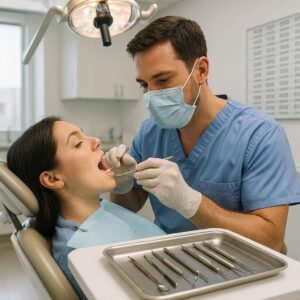
Dental Code for Orthodontics
Why Understanding Orthodontic Codes Matters
Before we dive into the specific numbers, let’s talk about why this matters. Orthodontic treatment is a significant commitment, both in terms of time and finances. It’s not like a simple filling or a routine cleaning. It’s a journey that can span two to three years.
For patients, knowing these codes allows you to be an active participant in your care. You can verify what services are being billed, ensure your insurance benefits are applied correctly, and ask better questions. For example, if your orthodontist mentions a “comprehensive treatment” code, you’ll know that this covers the entire active treatment phase, from the first wire to the final adjustment before retainers.
For dental professionals, accurate coding is the backbone of a healthy practice. It ensures timely reimbursement from insurance companies, reduces claim denials, and builds trust with patients by providing clear, transparent billing.
The American Dental Association (ADA) publishes the Current Dental Terminology (CDT) code set, which is updated annually. Orthodontic codes fall under a specific section, and using the correct one for the correct situation is crucial. A mistake, like using a comprehensive code for a limited case, can lead to denied claims or, in some cases, accusations of fraud.
Let’s start our journey by looking at the very first step: the initial examination.
Part 1: The Starting Point – Orthodontic Evaluation Codes
Every orthodontic journey begins with an evaluation. This is the appointment where the orthodontist takes a comprehensive look at your or your child’s teeth, jaws, and facial structure. This initial assessment is critical for determining if treatment is necessary, what type of treatment is best, and how long it might take.
This phase is typically billed using a series of codes that fall under the “Diagnostic” category. It’s important to note that these are often separate from the overall treatment fee.
D0140: Limited Oral Evaluation – Problem Focused
This is the most basic evaluation code. It’s used when a patient comes in with a specific, limited problem. For orthodontics, this might be used for a quick check on a specific tooth that seems out of alignment or a minor concern about a single issue. It does not involve a full set of records or a comprehensive treatment plan.
Think of this as a “spot check.” If a general dentist notices a potential crowding issue and refers the patient to an orthodontist for a quick opinion, the orthodontist might use D0140 for that initial, focused look.
D0150: Comprehensive Oral Evaluation – New or Established Patient
This is the heavy lifter of diagnostic codes for orthodontics. D0150 is used for a thorough evaluation of a patient’s entire oral cavity. This is the typical “new patient exam” that includes an orthodontic assessment.
During a D0150 appointment, the orthodontist will:
-
Review the patient’s medical and dental history.
-
Perform an extraoral exam (looking at the face and profile).
-
Perform an intraoral exam (looking inside the mouth).
-
Assess the teeth, gums, and supporting structures.
-
Evaluate the occlusion (the way the teeth bite together).
-
Discuss findings and potential treatment options.
This code is the foundation. It signals to the insurance company that a comprehensive evaluation was performed, which is a necessary prerequisite for any major orthodontic treatment.
D0160: Detailed and Extensive Oral Evaluation – Problem Focused, by Report
This code is a bit more specific. D0160 is used when a patient has a complex medical or dental history that requires a more detailed assessment than a standard limited evaluation. In orthodontics, this might be used for a patient with a history of cleft lip and palate, significant trauma, or complex syndromes that affect craniofacial growth.
The “by report” part is key. It means the dentist must provide a detailed written narrative explaining the complexity of the case and why this more extensive evaluation was necessary. It’s not a routine code; it’s for those cases that truly require extra time and documentation.
D0170: Re-evaluation – Post-Operative or Post-Treatment Visit
Orthodontic treatment isn’t always a straight line from point A to point B. Sometimes, things need to be checked mid-course. D0170 is used for a re-evaluation. This could be after a phase of treatment is completed (like Phase I), or to assess progress before moving to the next stage. It’s not for routine adjustments—that’s a different code. This is for a specific, dedicated re-assessment of the treatment plan.
D0180: Comprehensive Periodontal Evaluation – New or Established Patient
While not exclusively an orthodontic code, D0180 is extremely relevant. Orthodontic treatment, especially with braces, can significantly impact gum health. A comprehensive periodontal evaluation is essential before starting orthodontic treatment to ensure the gums and bone are healthy enough to support tooth movement.
If a patient has signs of gum disease (gingivitis or periodontitis), an orthodontist may require them to see a periodontist (a gum specialist) for this evaluation and treatment before proceeding with braces.
| Code | Description | Typical Patient Age & Scenario |
|---|---|---|
| D8010 | Interceptive – Primary Dentition | Ages 3-6; severe skeletal or habit issues. |
| D8020 | Interceptive – Transitional Dentition | Ages 7-10; palatal expanders, crossbite correction, space creation. |
| D8030 | Interceptive – Adolescent Dentition | Ages 11-15; specific, limited correction before comprehensive treatment. |
| D8040 | Interceptive – Adult Dentition | Adults; very limited treatment like uprighting a tooth for an implant. |
| D8080 | Comprehensive – Adolescent Dentition | Ages 12-17; full braces/aligners on a full set of permanent teeth. |
| D8090 | Comprehensive – Adult Dentition | Ages 18+; full braces/aligners with adult-specific considerations. |
Part 2: The Blueprint – Orthodontic Records and Imaging
Once the initial evaluation is complete and the orthodontist determines treatment is necessary, the next step is to gather diagnostic records. These are the detailed “blueprints” used to create a precise treatment plan. These records are typically billed separately from the evaluation and the treatment itself.
D0210: Intraoral – Complete Series of Radiographic Images
This is the standard for a full set of X-rays. It usually consists of 14 to 22 images that show every tooth, from crown to root, and the surrounding bone. In orthodontics, this is crucial for assessing:
-
The presence and position of unerupted or impacted teeth.
-
The health of the bone supporting the teeth.
-
The size and shape of the roots.
-
Any hidden pathology, like cysts or decay between teeth.
While a panoramic X-ray (discussed next) gives a broad overview, a full series provides the detailed, per-tooth data needed for safe and effective treatment.
D0230-D0330: Panoramic Radiographic Image
The panoramic X-ray, or panorex, is arguably the most recognized orthodontic X-ray. This single image shows the entire dentition, the upper and lower jaws, the temporomandibular joints (TMJ), and the sinuses. It’s invaluable for orthodontic diagnosis because it provides a global view of the developing dentition, especially in children and adolescents. It allows the orthodontist to see:
-
The stage of dental development.
-
The presence of extra teeth (supernumerary teeth) or congenitally missing teeth.
-
The position of the developing wisdom teeth.
-
The overall symmetry of the jaws.
The code for a panoramic X-ray has changed over the years. Currently, the CDT code set uses D0330 for a single panoramic image.
D0340: Cephalometric Radiographic Image
If the panoramic X-ray is the “map,” the cephalometric X-ray is the “blueprint.” A cephalometric image, or ceph, is a standardized lateral (side-view) X-ray of the head. It is arguably the most important diagnostic tool in orthodontics.
This X-ray allows the orthodontist to perform a cephalometric analysis, a complex tracing and measurement of the skull, jaws, and teeth. This analysis quantifies the relationship between the upper jaw (maxilla), lower jaw (mandible), and the base of the skull. It helps answer critical questions:
-
Is the patient’s jaw discrepancy due to a skeletal or dental problem?
-
Is the lower jaw too far forward (underbite) or too far back (overbite)?
-
Is the patient’s profile convex, straight, or concave?
-
How much growth is remaining?
This analysis is the foundation for creating a predictable treatment plan, especially for complex cases that might require surgery or growth modification.
D0350: Oral/Facial Photographic Images
A picture is worth a thousand words, and in orthodontics, this is certainly true. D0350 is used for taking a series of intraoral and extraoral photographs. These photos are essential for:
-
Documenting the pretreatment condition.
-
Creating patient education materials to show the patient what is being corrected.
-
Planning smile aesthetics.
-
Documenting progress.
-
Creating a medico-legal record of the case.
A typical orthodontic photo set includes 5 to 12 images: a full-face smile, a profile view, and multiple intraoral views showing the front, sides, and top and bottom arches.
D0470: Diagnostic Casts
This code is for the creation of diagnostic casts, more commonly known as study models. These are plaster or stone models of the patient’s teeth. While digital scanning is becoming increasingly common, traditional study models are still widely used. They allow the orthodontist to:
-
Study the occlusion from all angles in three dimensions.
-
Perform space analysis to determine if there is crowding or spacing.
-
Simulate tooth movements on a model.
-
Create custom appliances, like retainers or space maintainers.
In a digital workflow, the intraoral scan itself may be considered part of the diagnostic records process, but it is often billed under a different code or bundled into the treatment fee.
Important Note: Not all orthodontists bill for records separately. Many practices offer a “records package” that bundles the panoramic X-ray, cephalometric X-ray, photos, and study models into a single, comprehensive fee. It’s always a good idea to ask how records are handled during your initial consultation.
Part 3: The Main Event – Treatment Codes
This is the heart of orthodontic coding. The treatment codes distinguish between different types of orthodontic care. Using the correct code is not just a matter of billing; it defines the scope of treatment for the insurance company.
D8010 – D8090: Interceptive Orthodontic Treatment
These codes are used for Phase I or interceptive orthodontic treatment. This is typically performed on children who have a mix of primary (baby) and permanent teeth. The goal is not to straighten every tooth, but to address specific, often skeletal, problems that are easier to correct when the child is still growing.
D8010: Limited Orthodontic Treatment of the Primary Dentition
This code is used for interceptive treatment in a very young child, typically between the ages of 3 and 6, who still has all their baby teeth. This is rare and is usually reserved for problems that, if left untreated, could cause significant issues. Examples include:
-
Correcting a severe anterior crossbite (underbite) that is causing trauma to the gums.
-
Managing a “thumb-sucking” habit that is severely distorting the jaw and tooth position.
-
Intervening in cases of severe skeletal discrepancies.
D8020: Limited Orthodontic Treatment of the Transitional Dentition
This is the most common interceptive code. The transitional dentition is the “mixed dentition” stage where the child has a combination of primary and permanent teeth. This phase typically occurs between the ages of 7 and 10.
D8020 is used for specific, localized treatments such as:
-
Creating space for permanent teeth to erupt.
-
Correcting a single-tooth crossbite.
-
Using a palatal expander to widen a narrow upper jaw.
-
Correcting a severe deep bite that is damaging the palate.
-
Guiding the eruption of permanent teeth that are coming in at the wrong angle.
D8030: Limited Orthodontic Treatment of the Adolescent Dentition
This code is for interceptive treatment in the adolescent dentition, when most or all of the permanent teeth have erupted. It’s less common than D8020. It might be used for a specific problem in an older child, such as using a Herbst appliance to correct a Class II malocclusion (overjet) before the patient is ready for comprehensive braces.
D8040: Limited Orthodontic Treatment of the Adult Dentition
Similarly, this is for interceptive treatment in an adult with a full set of permanent teeth. This is a very rarely used code. An example might be a very limited orthodontic intervention to upright a molar to create space for a dental implant, without treating the rest of the bite.
D8050 – D8060: Interceptive Orthodontic Treatment – Removable Appliances
These codes are specifically for interceptive treatment using removable appliances. While the previous codes can be used for both fixed and removable appliances, these are more specific.
-
D8050: Interceptive orthodontic treatment of the primary dentition – removable appliance
-
D8060: Interceptive orthodontic treatment of the transitional dentition – removable appliance
Examples of removable appliances include:
-
Removable palatal expanders: Used to widen the upper jaw.
-
Removable space maintainers: Used to hold space open after a baby tooth is lost prematurely.
-
Removable habit appliances: Used to discourage thumb sucking or tongue thrusting.
-
Removable inclined planes: Used to correct a crossbite.
It’s crucial to note that these are “interceptive” codes, not comprehensive. They are designed for a specific, limited goal.
D8070 – D8090: Comprehensive Orthodontic Treatment
These are the codes for Phase II or full, comprehensive orthodontic treatment. This is the main event—the period where braces or aligners are used to straighten all the teeth and correct the overall bite.
D8070: Comprehensive Orthodontic Treatment of the Transitional Dentition
This code is used for comprehensive treatment that begins during the mixed dentition stage. This is a gray area. It is used when the orthodontist decides to begin full, comprehensive treatment early, rather than splitting it into two phases (interceptive and then comprehensive).
For example, if a 9-year-old has a severe crowding problem and all the permanent teeth are expected to erupt within a reasonable timeframe, the orthodontist might decide to place a full set of braces and treat them comprehensively from that point forward, rather than doing an expander now and braces later.
D8080: Comprehensive Orthodontic Treatment of the Adolescent Dentition
This is the most common orthodontic code. D8080 is used for comprehensive treatment on a patient who has a full set of permanent teeth (or nearly full) and is in their adolescent years. This is the classic braces treatment.
The treatment involves the use of fixed appliances (brackets and wires) or clear aligners to achieve a stable, functional, and aesthetic occlusion. The treatment is considered “comprehensive” because it addresses the entire dentition and the overall bite relationship.
D8090: Comprehensive Orthodontic Treatment of the Adult Dentition
This code is identical in scope to D8080, but it is used for patients who are 18 years or older. Adult orthodontics often comes with its own set of considerations, such as:
-
Periodontal (gum) concerns.
-
Existing restorations like crowns, bridges, and implants.
-
The potential need for orthognathic (jaw) surgery.
-
Different biological responses to tooth movement.
D8090: A Deeper Look at Comprehensive Adult Treatment
Since D8090 is the code many adults will encounter, it’s worth exploring a bit further. When an orthodontist uses this code, they are telling the insurance company and the patient that the planned treatment is comprehensive. This implies a number of things:
-
Full Arch Treatment: Both the upper and lower arches will be treated.
-
Functional Occlusion: The goal is not just straight teeth, but a healthy bite that functions well for chewing and speaking.
-
Stability: The plan includes a retention phase to maintain the results.
-
Complexity: The orthodontist is taking responsibility for the final outcome of the entire case.
For adult patients, it’s also important to understand that insurance coverage for D8090 is often limited. Many dental insurance plans have a lifetime maximum orthodontic benefit for adults, which is often lower than for children. This is a crucial point to clarify before beginning treatment.
Part 4: Beyond the Active Treatment – Minor Treatment and Surgical Support
Not all orthodontic care falls neatly into the categories of interceptive or comprehensive treatment. There are codes for minor tooth movement, for preparing a patient for jaw surgery, and for maintaining the results after treatment.
D8210: Removable Appliance Therapy
This code is for the fabrication and placement of a removable orthodontic appliance. It’s not for comprehensive treatment. This code is used for appliances that have a specific, limited purpose. Examples include:
-
Hawley retainers: The classic wire and acrylic retainer.
-
Spring aligners: Simple removable appliances used to move a few teeth.
-
Positioners: A final finishing appliance sometimes used after braces.
This code is typically used when an appliance is being placed without the context of a broader comprehensive case. If a patient loses a retainer and needs a new one years after treatment, D8210 might be the appropriate code.
D8220: Fixed Appliance Therapy
This is the fixed counterpart to D8210. It is used for the fabrication and placement of a fixed orthodontic appliance. Examples include:
-
Fixed space maintainers: A non-removable wire soldered to a band on a tooth to hold space for a permanent tooth.
-
Fixed lingual retainers: A wire bonded to the back of the front teeth to prevent them from shifting.
-
Fixed palatal expanders: A non-removable expander that is cemented in place.
Like D8210, this code is used for a specific appliance, not as part of a full comprehensive case that would be billed under D8080 or D8090.
D8660: Pre-orthodontic Treatment Visit
This is a specific code for a consultation where the orthodontist examines the patient and discusses the findings but does not take full diagnostic records. This is the initial “meet and greet” visit. It is distinct from the comprehensive evaluation (D0150) because it does not involve a full diagnostic workup.
Many orthodontists offer this as a complimentary service, but if they do bill for it, this is the code they would use. It’s essentially a consultation to determine if a full records appointment is warranted.
D8999: Unspecified Orthodontic Procedure, by Report
This is the “catch-all” code for orthodontic procedures that don’t have a specific CDT code. It should be used sparingly and only when a more precise code does not exist. The “by report” part is critical. A detailed narrative explaining the procedure must be submitted with the claim.
Examples of when this might be used:
-
A highly specialized, custom-fabricated appliance that doesn’t fit any other description.
-
A unique treatment approach for a complex craniofacial anomaly.
-
A specific type of procedure not yet recognized by a dedicated code.
Using D8999 often triggers a manual review by the insurance company, which can delay payment. It’s best used when there is no alternative.
Orthognathic Surgery Codes (D7940 – D7949)
For patients with severe skeletal discrepancies that cannot be corrected with braces alone, orthognathic surgery (jaw surgery) is required. This is a major procedure performed by an oral and maxillofacial surgeon. The orthodontist’s role is to prepare the teeth for surgery and then fine-tune the bite after surgery.
While the surgical codes are billed by the surgeon, the orthodontic treatment is still billed using comprehensive codes (D8080 or D8090). However, the insurance coverage for the orthodontic portion is often different when it’s in conjunction with surgery. Many medical insurance plans will cover the surgical portion, and some may even contribute to the orthodontic costs if it’s deemed medically necessary.
The key surgical codes for the surgeon include:
-
D7940: Osteoplasty – for contouring the bone.
-
D7941: Osteotomy – mandibular rami (surgery on the lower jaw).
-
D7943: Osteotomy – mandibular rami with bone graft.
-
D7944: Osteotomy – segmented or subapical (surgery on a segment of the jaw).
-
D7945: Osteotomy – body of mandible (surgery on the main body of the lower jaw).
-
D7946: LeFort I osteotomy (surgery on the upper jaw).
-
D7947: LeFort I osteotomy with bone graft.
-
D7948: Osteotomy – maxilla, segmental (surgery on a segment of the upper jaw).
-
D7949: Osteotomy – maxilla, segmental with bone graft.
For the orthodontic patient, understanding that these surgical codes exist is helpful because it underscores why the treatment is considered complex and why your orthodontist and surgeon will work so closely together.
Part 5: The Final Phase – Retention
The retention phase is arguably the most important part of orthodontic treatment. All the hard work of moving teeth can be undone if the results aren’t maintained. The retention phase is typically covered by the initial comprehensive fee, but sometimes it is billed separately.
Retainers
As mentioned earlier, retainers fall under D8210 (removable) and D8220 (fixed). However, many orthodontic practices will not bill these codes separately for the initial set of retainers if they are included in the comprehensive treatment fee. They are considered part of the total package.
If a patient loses or breaks a retainer years later, the replacement retainer is typically billed under the appropriate code. It’s important to note that replacement retainers are often not covered by insurance.
Retention Visits
Similar to retainers, post-treatment check-up visits are often included in the comprehensive fee for a certain period, usually one to two years. After that, periodic retention checks may be billed as a regular recall visit, similar to a dental check-up.
Part 6: Navigating Insurance and Financial Responsibility
Understanding the dental code for orthodontics is one thing. Understanding how those codes translate into actual dollars and cents is another. This section will help you bridge that gap.
The Lifetime Maximum
This is the single most important concept in orthodontic insurance. Most dental insurance plans have a lifetime orthodontic maximum. This is the total amount the insurance company will pay for orthodontic treatment over the entire lifetime of the patient.
This maximum is usually between $1,000 and $3,500, depending on the plan. It’s not an annual limit; it’s a one-time fund. Once that money is used, the insurance will not pay for any further orthodontic treatment, even if you change plans.
Age Limits
Many plans also have age limits. They may cover comprehensive orthodontics (D8080) for dependent children up to age 19, but offer very limited or no coverage for adults (D8090). It’s critical to check this before starting treatment.
How Insurance Processes Orthodontic Claims
Orthodontic treatment is unique in how it’s billed to insurance. Unlike a filling that is billed and paid in full at the time of service, orthodontic claims are often processed in installments.
-
The Down Payment: When treatment begins, the orthodontist’s office will submit a claim with the comprehensive code (e.g., D8080). The insurance company will review it and determine the patient’s eligibility and the lifetime maximum. They will then often pay a percentage of the total fee upfront, or they will authorize the total benefit to be paid over the course of treatment.
-
Monthly/Quarterly Installments: For the remainder of the treatment, the orthodontist’s office will submit a monthly or quarterly claim. This is often done using a “continuation of care” form or a specific frequency code that indicates this is a periodic payment for ongoing treatment. The insurance company will then pay a pro-rated portion of the total benefit each month.
This is why you often pay a monthly fee to your orthodontist, and your insurance also contributes a monthly amount until the lifetime maximum is reached.
What to Ask Your Insurance Company
Before you sign a treatment plan, call your insurance provider and ask these specific questions:
-
“What is my lifetime orthodontic maximum?”
-
“Does my plan cover comprehensive orthodontic treatment for a patient of my age (or my child’s age)?”
-
“What percentage of the fee is covered, and how is it paid (upfront or monthly)?”
-
“Does the plan require a referral from a general dentist?”
-
“Are diagnostic records (X-rays, photos) covered separately, or are they part of the comprehensive benefit?”
-
“Is there a waiting period before orthodontic benefits begin?”
Part 7: Common Coding Mistakes and How to Avoid Them
For dental professionals, accurate coding is not just about getting paid; it’s about compliance and ethics. Here are some common pitfalls in orthodontic coding.
Mistake 1: Upcoding
This is the most serious error. Upcoding is billing a more comprehensive code than the service provided. The most common example is billing a comprehensive treatment code (D8080 or D8090) for a case that is truly interceptive.
If a patient only needs a palatal expander to correct a crossbite, and no other comprehensive treatment is planned, the correct code is D8020 (interceptive, transitional dentition), not D8080. Billing D8080 in this scenario is upcoding and can be considered fraud.
Mistake 2: Unbundling
This is the practice of billing separately for services that are considered part of a more comprehensive code. For example, if a practice bills for a comprehensive treatment case (D8080) and then also bills separately for “adjustments” (which are part of the comprehensive care), that is unbundling. The comprehensive code includes all the adjustments, appliance placement, and emergency visits related to the active treatment.
Mistake 3: Using the Wrong Age-Based Code
Using D8080 (adolescent) for an adult patient is incorrect. The age of the patient should guide the use of D8080 vs. D8090. Similarly, using D8020 (transitional) for a case that is clearly comprehensive and involves all the permanent teeth is also incorrect.
Mistake 4: Billing Records and Treatment Incorrectly
Diagnostic records (D0210, D0330, D0340, etc.) should be billed as separate procedures on the same day as the D0150 (comprehensive evaluation), or on a separate day. However, once the comprehensive treatment code is activated, the records should not be rebilled. They are a pre-treatment expense.
Part 8: The Future of Orthodontic Coding
The world of dental coding is not static. As technology advances and new treatment modalities emerge, the CDT code set evolves to keep up.
Clear Aligner Therapy
Clear aligners (like Invisalign) are now a mainstream treatment option. While there is no specific CDT code for “clear aligner therapy,” it is still billed under the comprehensive codes (D8080, D8090) because it is comprehensive orthodontic treatment.
The distinction is in the narrative and the treatment plan, not the code itself. Some insurance companies may ask for additional documentation to confirm the treatment modality, but the code remains the same.
Digital Workflows
As intraoral scanning becomes the standard of care, the way records are billed may change. We may see codes specifically for digital impressions or 3D model analysis in the future. Currently, these services are often bundled into the comprehensive fee or billed under existing codes like D0470 (diagnostic casts) if the models are printed, or as an unspecified procedure (D8999).
Teledentistry
The rise of teledentistry for orthodontic monitoring (e.g., remote monitoring apps) is also creating a need for new coding solutions. While some “teledentistry” codes exist for consults, there is currently no specific code for ongoing remote monitoring of orthodontic treatment. This is an area likely to see significant coding updates in the coming years.
A Final Note for Patients: Reading Your Treatment Plan
When your orthodontist presents you with a treatment plan, it should clearly state the procedure code (e.g., D8080), the total fee, your insurance coverage, and your estimated out-of-pocket cost.
Don’t be afraid to ask questions. A clear and transparent orthodontic office will welcome your questions about the codes and the billing process. Here’s a checklist of what to look for:
-
The specific CDT code being used (e.g., D8020, D8080, D8090).
-
The total treatment fee.
-
Your insurance’s lifetime orthodontic maximum.
-
The amount your insurance will pay (this is often shown as an estimated benefit).
-
Your down payment (if any).
-
Your monthly payment amount.
-
What is included in the fee (retainers, retention visits, broken bracket repairs, etc.).
-
What is not included (e.g., replacement retainers, surgical fees).
Conclusion
Navigating the world of orthodontic billing doesn’t have to be a mystery. By understanding the key dental codes—from the initial evaluation (D0150) and diagnostic records (D0330, D0340) to the treatment phases (D8020 for interceptive, D8080 for comprehensive adolescent, and D8090 for adult care)—you equip yourself with the knowledge to make informed decisions. Whether you are a patient planning your smile journey or a professional ensuring practice accuracy, this shared language of codes is the foundation for clear communication, ethical billing, and ultimately, successful treatment outcomes.
Frequently Asked Questions (FAQ)
Q1: What is the most common dental code for braces?
The most common code for braces is D8080 for adolescents and D8090 for adults. These are the codes for comprehensive orthodontic treatment.
Q2: Does dental insurance cover orthodontic codes like D8080?
Many dental insurance plans cover a portion of D8080 for dependent children up to a lifetime maximum. Coverage for adults (D8090) is often more limited or may not be available at all. It’s essential to check your specific plan.
Q3: What is the difference between D8020 and D8080?
D8020 is for interceptive (Phase I) treatment during the mixed dentition stage. It targets a specific problem, like a narrow jaw or a crossbite. D8080 is for comprehensive (Phase II) treatment, where full braces or aligners are used to straighten all the teeth and correct the entire bite.
Q4: My orthodontist used code D8090. What does that mean?
D8090 means your orthodontist is providing comprehensive orthodontic treatment for an adult. This covers full upper and lower arch treatment with the goal of creating a stable, functional, and aesthetic bite.
Q5: Are retainers included in the comprehensive treatment code?
It depends on the orthodontic practice. Many practices include the initial set of retainers and a period of retention follow-up visits in the comprehensive fee. However, it’s always best to confirm this in your treatment plan before you begin.
Q6: What is a lifetime orthodontic maximum?
This is the total amount of money your dental insurance plan will pay for orthodontic services over the entire lifetime of the covered person. It is a one-time benefit, not an annual one.
Q7: Can I use my FSA or HSA to pay for orthodontic treatment?
Yes, orthodontic treatment is considered a qualified medical expense. You can use funds from a Flexible Spending Account (FSA) or Health Savings Account (HSA) to pay for your out-of-pocket costs, including down payments and monthly installments.
Q8: What should I do if I think my orthodontic claim was coded incorrectly?
First, discuss it with your orthodontist’s billing coordinator. They can review the codes used and explain why they were chosen. If you still believe there is an error, you can contact your insurance company to discuss the claim.
Additional Resource
For the most up-to-date and official information on dental coding, visit the American Dental Association (ADA) CDT Code website. This is the authoritative source for all Current Dental Terminology codes.
Link to ADA CDT Code Resource: https://www.ada.org/en/publications/cdt
Disclaimer: This article is intended for informational and educational purposes only. It is not a substitute for professional medical, dental, or legal advice. Dental codes and insurance policies are subject to change. Always consult with your orthodontist and insurance provider for information specific to your individual situation.