Let’s be honest for a moment. You’ve just had a great appointment with your dentist. Your teeth feel clean, the dentist was friendly, and everything seemed straightforward. Then, a few weeks later, you get a piece of paper—or an email—called an Explanation of Benefits (EOB). Suddenly, your relaxing dental experience turns into a confusing puzzle.
You see terms like “D0140,” “D0150,” and “comprehensive oral evaluation.” You start asking yourself: Did I just pay for a visit, or did I pay for an exam? Is this the same as a cleaning? What is this number next to my bill?
If this sounds familiar, you are not alone. The world of dental billing codes—specifically the dental code for office visit—is one of the most misunderstood areas of healthcare. Unlike medical insurance, which often uses a complex system of modifiers and diagnosis codes, dental coding (using CDT codes) is designed to be a universal language for dentists and insurance companies.
In this guide, we are going to demystify that language. We will walk you through every major code associated with simply walking into a dental office, sitting in the chair, and being seen by the dentist. By the end of this article, you won’t just know what the codes mean; you will understand why they are used, how insurance processes them, and how to spot potential errors on your bill.
We’ll keep things friendly, simple, and—most importantly—useful.
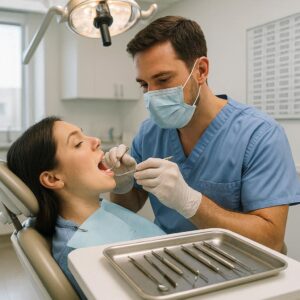
Dental Code for Office Visit
Why the “Dental Code for Office Visit” Matters to You
Before we dive into the list of codes, it is crucial to understand why this topic matters. When you visit a dentist, you aren’t just paying for “time.” You are paying for expertise, diagnosis, and a legally binding clinical record.
The dental code used determines three critical things:
-
What your insurance pays: If the wrong code is used, your insurance might deny a claim, leaving you with a full bill you didn’t expect.
-
Your out-of-pocket cost: Different codes have different fee structures. A “limited exam” (D0140) usually costs less than a “comprehensive exam” (D0150).
-
Your clinical history: These codes create a record of your oral health status. If you switch dentists, the new office looks at the codes used previously to understand what was done.
There is no single “catch-all” code for an office visit. Instead, dentists choose from a menu of codes based on what you came in for and what the dentist did during the appointment.
The Main Categories: Types of Dental Office Visits
When we talk about a dental code for office visit, we are usually referring to the Evaluation category. In the Current Dental Terminology (CDT) code set, evaluations are the codes that cover the dentist’s time spent examining your mouth, reviewing your medical history, and diagnosing your needs.
These are distinct from Preventive codes (like cleanings, D1110) and Diagnostic codes (like x-rays, D0210). The evaluation is the intellectual work of the dentist.
Let’s break down the most common codes you will encounter.
The Comprehensive Oral Evaluation: D0150
This is the “big one.” If you are a new patient to a practice, or if you haven’t been seen in three or more years, you will likely be billed a D0150.
-
What it is: A comprehensive oral evaluation is a thorough assessment of your entire oral cavity. This isn’t just a quick peek inside your mouth. It involves a detailed evaluation of the teeth, gums, soft tissues (cheeks, tongue, palate), and the head and neck area.
-
What the dentist does: During a D0150, the dentist will:
-
Review your comprehensive medical history (including medications, allergies, and conditions like diabetes or heart issues).
-
Perform an oral cancer screening (palpating lymph nodes and examining soft tissues).
-
Evaluate the periodontium (gums) for signs of disease.
-
Assess the condition of existing restorations (fillings, crowns, bridges).
-
Create a “dental map” of your current state.
-
Develop a preliminary treatment plan.
-
-
Why it matters: This code establishes a baseline. It is the foundation of your dental relationship with that office. Most insurance plans cover this once every three to five years for adults, though coverage varies.
The Periodic Oral Evaluation: D0120
This is the code you will see most often. If you are a regular patient going in for your six-month check-up, you will see D0120 on your bill.
-
What it is: A periodic oral evaluation is an established patient visit. It is performed to monitor your oral health between comprehensive exams.
-
What the dentist does:
-
Updates the medical history (asking if anything has changed since the last visit).
-
Performs a focused exam of the teeth and gums.
-
Reviews the condition of previous work.
-
Discusses any changes or concerns since the last visit.
-
-
The nuance: This code is usually paired with a cleaning (prophylaxis, D1110). Many patients assume the cleaning is the “visit,” but the D0120 is the actual doctor’s exam. If you have dental insurance, this is typically covered twice per calendar year (every six months).
Problem-Focused Evaluation: D0140
Sometimes, you don’t need a full check-up. Maybe you chipped a tooth on popcorn, or a crown fell out while you were flossing. When you call the dentist for a “specific” issue, they will likely use D0140.
-
What it is: A problem-focused evaluation is limited to a specific oral health problem. It is often referred to as an “emergency exam.”
-
What the dentist does:
-
Focuses exclusively on the area of complaint.
-
Does not perform a full exam of the rest of the mouth unless clinically necessary.
-
Determines the cause of the pain or damage.
-
Provides a diagnosis and immediate treatment plan (or refers for treatment).
-
-
Important Note: If you come in for a specific toothache, but the dentist finds issues elsewhere and decides to do a full exam, the code may change. Usually, if the appointment is only about the specific problem, D0140 is the correct code.
Detailed and Extensive Oral Evaluation: D0180
This code is less common but important for patients with gum disease. D0180 is a detailed evaluation of the periodontium.
-
What it is: This is a comprehensive evaluation focused specifically on the gums and the bone supporting the teeth.
-
When it is used:
-
Patients with active periodontal disease (gum disease).
-
Before and after periodontal surgery.
-
To monitor the progression of bone loss.
-
-
Why it’s different: While a regular exam (D0120) looks at gums generally, a D0180 involves probing depths (measuring the gum pockets) and a detailed charting of the bone levels. It is more time-intensive than a standard check-up exam.
Other Important Evaluation Codes
While the above are the “big four,” there are a few other codes you might see depending on the situation:
-
D0145: Oral evaluation for a patient under three years of age and counseling with primary caregiver. This is a specialized visit for toddlers.
-
D0160: Detailed and extensive oral evaluation—problem focused, by report. This is used when a patient has a complex history or needs a very specific, documented evaluation for a particular issue that goes beyond a standard problem-focused exam.
-
D0170: Re-evaluation—post-operative office visit. If you had a tooth pulled or an implant placed, and you come back a week later for the dentist to check how it’s healing, they will likely use D0170. It is not a new problem, nor a periodic exam; it is a follow-up.
A Comparative Table: Which Code Fits Your Visit?
To make this easier to digest, let’s look at a table that compares the most common dental code for office visit scenarios. This will help you visualize which code likely applies to your next appointment.
| CDT Code | Code Name | Patient Type | Purpose | Typical Frequency |
|---|---|---|---|---|
| D0120 | Periodic Oral Evaluation | Established | Routine check-up; monitoring health | Every 6 months |
| D0140 | Problem-Focused Evaluation | New or Established | Specific issue (toothache, broken tooth) | As needed (emergency) |
| D0150 | Comprehensive Oral Evaluation | New patient (or 3+ yrs absence) | Full baseline assessment of all hard/soft tissues | Once every 3-5 years |
| D0180 | Comprehensive Periodontal Evaluation | New or Established | Detailed assessment of gum health/bone levels | As needed (periodontal disease) |
| D0170 | Post-Operative Re-evaluation | Established | Follow-up to check healing after a procedure | As needed (after surgery) |
How Insurance Handles Dental Office Visit Codes
Understanding the code is one thing; understanding how your insurance pays for it is another. This is often where patients get frustrated, so let’s clear up the confusion.
Most dental insurance plans operate on a “100-80-50” structure, but evaluations usually fall into the “100%” category (preventive and diagnostic services). However, that doesn’t mean you won’t pay anything.
Frequency Limitations
Insurance companies are strict about frequency. They rely on the CDT codes to enforce their rules.
-
D0120 (Periodic): Usually covered twice in a 12-month rolling period. If you go in for a third check-up in a year, insurance will likely deny the claim, and you will owe the full office fee.
-
D0150 (Comprehensive): Usually covered once every 3 or 5 years. If you switch dentists within that time frame, the new dentist might want to do a comprehensive exam, but your old insurance might deny it, saying, “We paid for one in 2024; it’s now 2026, but our limit is 5 years.” You would then be responsible for the difference.
-
D0140 (Problem-Focused): Insurance coverage for emergencies varies wildly. Some plans cover these with a small copay. Others consider them diagnostic and cover them at 100% but only a limited number per year (e.g., 2 per year). Some plans do not cover emergency exams at all.
The “Missing Tooth” Clause
A realistic note for readers: Many insurance policies have a “missing tooth” clause. If you are missing a tooth before your policy started, they often will not pay for a replacement (like an implant or bridge). However, this affects treatment codes, not the exam code itself. However, it highlights why the exam code (D0150 or D0120) is so important—it establishes the baseline of what was missing before treatment started.
Common Billing Scenarios and What to Expect
Let’s put ourselves in three common scenarios to see how these codes play out in real life.
Scenario 1: The New Patient Visit
You schedule an appointment at a new dental office. You haven’t been to a dentist in four years.
-
What you expect: A cleaning and a look by the dentist.
-
What actually happens:
-
You sit down. The hygienist takes x-rays (likely a full series, D0210, or a panoramic, D0330).
-
The dentist comes in. They perform a D0150 (Comprehensive Exam) . This takes 15-20 minutes.
-
The hygienist performs a D1110 (Prophylaxis/Adult Cleaning) .
-
-
Your Bill: You will see separate line items for the x-rays, the D0150, and the D1110. Some insurance plans require a “comprehensive” exam to be done on the first visit before they will cover a cleaning. If your insurance denies the D0150 because you had one recently at a previous dentist, you may owe the fee for the exam.
Scenario 2: The Six-Month Recall
You have been going to the same dentist for three years. You arrive for your bi-annual cleaning.
-
What you expect: A cleaning.
-
What actually happens:
-
The hygienist cleans your teeth (D1110).
-
The dentist pops in at the end. They review the x-rays taken (usually bitewings, D0274). They ask if you have any concerns. They look in your mouth with a mirror for about 3-5 minutes.
-
The dentist bills a D0120 (Periodic Exam) .
-
-
Your Bill: You have two charges: D1110 and D0120. Many patients are surprised that the dentist bills separately for the exam, assuming it is “part of the cleaning.” In dental billing, they are separate services.
Scenario 3: The Saturday Emergency
You break a molar on a hard piece of candy on Friday night. You call the dentist on Saturday morning, and they squeeze you in.
-
What you expect: A quick fix.
-
What actually happens:
-
You are brought to a room. The dentist asks, “What hurts?”
-
You point to the broken tooth. The dentist taps on it, takes a small x-ray (periapical, D0220) of just that tooth, and examines the fracture.
-
The dentist gives you two options: fix it now with a filling or come back for a crown.
-
The dentist bills a D0140 (Problem-Focused Evaluation) .
-
-
Your Bill: The D0140 plus the x-ray. If you decide to get the filling that same day, you will also see a filling code (D2391, etc.). Note: Sometimes offices waive the D0140 if you proceed with the major treatment on the same day, but not always. It depends on the office policy.
Reading Your Dental Bill: A Step-by-Step Guide
Now that you know the codes, let’s look at how to read the actual paper (or screen). A dental bill or EOB typically has several columns. Here is what to look for:
-
Date of Service: When the visit happened.
-
Code (CDT): The five-character alphanumeric code (D0120, D0150, etc.).
-
Description: What the code translates to (e.g., “Periodic oral evaluation”).
-
Billed Amount: The office’s full fee for that service.
-
Allowed Amount: The negotiated rate between your insurance and the dentist. This is the amount that matters.
-
Insurance Paid: How much the insurance paid.
-
Patient Responsibility: What you owe (Allowed Amount minus Insurance Paid).
A Red Flag to Watch For:
If you see a D0140 (Problem-Focused) on the same day as a D0150 (Comprehensive) , that is generally a red flag. You cannot have two evaluations on the same day unless there is a specific circumstance (like a major trauma requiring a reassessment after x-rays), but usually, it is considered “unbundling” (billing for two exams when one comprehensive should cover it).
Why Accuracy in Coding Matters (For You and The Dentist)
You might be thinking, “Why should I care about the code? I just want to know what to pay.” It matters because the code dictates the dentist’s legal responsibility.
If a dentist uses a D0140 (problem-focused) but actually performed a D0150 (comprehensive), they are technically under-documenting their work. This could cause issues if you later have a malpractice claim. “The doctor only did a limited exam, so they missed this cancer,” a lawyer might argue, even if the dentist actually did a full screening.
Conversely, if a dentist uses a D0150 for a patient who just came in for a routine check-up after six months, that is upcoding. This is billing for a more expensive service than was performed. This is insurance fraud. Reputable offices will not do this.
As a patient, you have the right to ask: “Can you explain what code you are using for my exam today and why?” A good front office team will be happy to explain it to you.
The Difference Between “Exam” and “Consultation”
In the medical world, there is a distinct difference between an exam and a consultation. In dentistry, it is slightly different, but it can cause confusion.
-
D9310: Consultation – Diagnostic service provided by a dentist or specialist other than the referring dentist.
-
Example: Your general dentist sends you to an oral surgeon to see if you are a candidate for implants. The oral surgeon performs a D9310 (Consultation) . This is a specific code used when one dentist is asking another for a professional opinion. It is not the same as a routine office visit.
-
Note: Some patients confuse this with a standard new patient visit. If you are going to a specialist because your general dentist referred you for a specific opinion, the specialist should use D9310. If you just pick a specialist as your new general dentist, they will use D0150.
-
Special Considerations for Pediatric Patients
If you are a parent, you will likely see different codes on your child’s bill. Pediatric dentistry has specific codes that reflect the unique needs of growing children.
-
D0120 is still used for periodic exams for kids.
-
D0145 is the specific code for an oral evaluation for a patient under three years of age. This includes counseling with the caregiver about development, teething, and feeding habits.
-
D0150 is used for children who are new patients, just like adults, but the approach is often modified to include growth and development assessment.
Many parents are shocked to learn that their child’s “visit” might not include a cleaning (prophylaxis) until the child is able to tolerate it. The code for the exam (D0120 or D0145) covers the dentist’s evaluation of the child’s oral health and development, even if no cleaning is performed.
How to Use This Knowledge to Save Money
Understanding the dental code for office visit can actually save you money. Here is how:
-
Verify Frequency: Before scheduling an appointment, call your insurance company or check your online portal. Ask: “When was my last D0120 or D0150 billed?” If your insurance says you had a D0120 two months ago, and you go in for a routine check-up again, you will likely pay full price. You might want to wait until the six-month mark if there is no emergency.
-
Ask About Bundling: If you are going in for a specific problem (D0140) and you end up having a full exam (D0150), ask the front desk if they can bill the D0150 instead, as it is often a lower patient copay under some plans (since it is covered 100% vs. the D0140 being covered 80%).
-
Separate Emergency from Treatment: If you go in for an emergency (D0140) and the dentist fixes the issue the same day, ask if the exam fee is included in the treatment fee. Some offices have a policy that the “emergency exam fee” is waived if you proceed with the restorative work (filling, crown) during the same visit. It never hurts to ask.
Future Trends: Teledentistry and Virtual Visits
The landscape of dental office visits is changing. Since 2020, teledentistry has become a more common way to “visit” the dentist. There are now specific codes for these virtual encounters.
-
D9995: Teledentistry – synchronous; real-time encounter.
-
D9996: Teledentistry – asynchronous; information stored and forwarded.
If you have a consultation with a dentist via video call to assess a toothache or discuss orthodontic progress, they might use one of these codes. However, these are often not covered by traditional dental insurance yet, so you would likely pay out-of-pocket.
A Deeper Dive: What Does “By Report” Mean?
You may occasionally see a code with the modifier “by report,” such as D0160 – detailed and extensive oral evaluation – problem focused, by report.
This means the dentist must submit a written narrative (a “report”) along with the claim to the insurance company explaining why this particular exam was more complex than a standard one. This is usually reserved for patients with severe medical conditions (like head and neck radiation patients) or complex orofacial pain cases. If you see this code, it means your visit was medically complex enough that the dentist needed to document it extensively.
Understanding the “Office Visit” vs. “Operative” Codes
One final distinction to make is between evaluation codes (what we’ve been discussing) and operative codes.
Sometimes, patients assume that if they go in for a filling or a crown, the “office visit” is included. It is not.
If you have a D0150 on the first visit, and then you come back a week later for a D2740 (crown), the second appointment does not usually involve a separate evaluation code (unless the dentist is doing a pre-operative check or a post-operative check). The crown code covers the work done during that appointment.
However, if you have a crown placed (D2740), and you return two weeks later for a “fit” appointment, that is part of the crown procedure. If you return a month later because it hurts, that might be a D0170 (post-operative re-evaluation).
Common Myths About Dental Office Visit Codes
Let’s bust a few myths that circulate among patients.
-
Myth: “The cleaning includes the exam.”
-
Fact: In 99% of cases, the cleaning (prophylaxis) and the exam (periodic or comprehensive) are separate billable services. They are two different procedures performed by two different team members (hygienist vs. dentist).
-
-
Myth: “If I don’t get x-rays, I don’t have to pay for the exam.”
-
Fact: The exam is the dentist’s clinical evaluation. X-rays are diagnostic aids. You can have an exam without x-rays, but the dentist’s time and expertise still have a cost (the code).
-
-
Myth: “D0140 is free because it’s just a quick look.”
-
Fact: D0140 is often the same price as a D0120, or sometimes slightly more, because it disrupts the schedule. Emergency appointments are often charged at a premium due to the unscheduled nature of the visit.
-
A Helpful Checklist: Before You Leave the Dentist’s Office
To avoid billing surprises, adopt this habit. Before you check out at the front desk, ask these three simple questions:
-
“What evaluation code did the doctor use today?”
This opens the conversation. -
“Is that the correct code for my visit type (new patient, recall, or emergency)?”
This shows you are informed and ensures they double-check. -
“Have I met my frequency limitations for this code with my insurance?”
The front desk can often run a quick eligibility check to see if your insurance will cover it or if you will be paying out-of-pocket.
Conclusion
Navigating the world of dental billing doesn’t have to feel like deciphering a secret code. By understanding the basic differences between a D0120 (periodic exam), D0140 (problem-focused), and D0150 (comprehensive), you transform from a passive patient into an informed consumer.
Remember, the dental code for office visit is not just a random number on a bill. It is a reflection of the clinical work performed, the time spent by the dentist, and the legal record of your oral health. When you know what to look for, you can verify the accuracy of your bills, maximize your insurance benefits, and avoid paying for services that aren’t covered or weren’t performed.
Dentistry is a partnership between you and your oral health provider. The financial side of that partnership should be transparent. The next time you sit in the waiting room, take a deep breath. You now have the knowledge to understand exactly what is happening behind the scenes. Ask questions, review your EOBs, and take control of your dental health journey.
Frequently Asked Questions (FAQ)
1. What is the most common dental code for a routine check-up?
The most common code for a routine check-up (exam) is D0120 (Periodic Oral Evaluation). This is typically performed every six months for established patients.
2. Is the dental exam code the same as a cleaning?
No. The exam code (D0120, D0150, etc.) covers the dentist’s examination and diagnosis. The cleaning is a separate procedure billed under a preventive code, typically D1110 for adults or D1120 for children.
3. Why was I charged D0140 instead of D0120?
If you were seen for a specific complaint—like a toothache, a broken filling, or a dental emergency—the dentist will use D0140 (Problem-Focused Evaluation) because the visit was limited to addressing that specific issue rather than a full routine check-up.
4. How often does insurance cover D0150 (Comprehensive Exam)?
Most insurance plans cover a comprehensive exam (D0150) once every three to five years. This is usually reserved for new patients or patients who have not had a dental visit in several years.
5. Can a dentist bill me for an exam if I didn’t see the dentist?
If you only saw the hygienist for a cleaning and the dentist did not perform an exam, you should not be billed for an evaluation code. However, in most standard appointments, the dentist will perform a brief exam after the cleaning to check for issues.
Additional Resources
For further reading and to verify official dental codes, we recommend consulting the American Dental Association (ADA) resources.
-
Link: ADA Current Dental Terminology (CDT)
This is the official source for the CDT code set used by dentists across the United States. It provides the definitive definitions for every code mentioned in this article.
Disclaimer: This article is for informational and educational purposes only. Dental coding can vary by insurance provider, region, and specific practice policies. Always consult with your dental office’s billing specialist for precise cost estimates regarding your specific treatment plan.
Author: The Dental Clarity Team
Date: March 23, 2026