If you work in a dental practice—whether as a dentist, a dental hygienist, or a front office administrator—you know that efficiency and patient comfort are two sides of the same coin. One of the most significant innovations in recent years for periodontal maintenance and scaling and root planing has been Oraqix.
But when it comes to getting paid for the service, and ensuring that the patient experience is both comfortable and legally compliant, one question pops up constantly: What is the correct dental code for Oraqix?
Finding a straight answer can be frustrating. Is it a code for anesthesia? Is it a code for the medication itself? Does it get bundled into the procedure? The confusion often leads to lost revenue or, worse, denied insurance claims.
In this guide, we are going to strip away the confusion. We will look at the specific Current Dental Terminology (CDT) code used for Oraqix, how to apply it in real-world clinical scenarios, and how to ensure your billing is as smooth as the anesthetic application itself.
We will also cover why this particular anesthetic is unique, how to talk to patients about it, and the specific rules insurance companies use to determine whether they will pay for it—or if the patient is responsible for the fee.
Let’s get started.
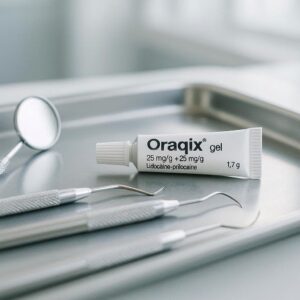
Dental Code for Oraqix
What Exactly is Oraqix?
Before we dive into the codes, it is essential to understand what Oraqix is and, just as importantly, what it is not. This understanding will help you defend your coding choices later.
Oraqix is a non-injectable anesthetic. It is a combination of lidocaine and prilocaine in a thermosetting gel. Unlike a traditional topical gel that just numbs the surface, Oraqix is designed to be placed into the periodontal pocket.
When the gel hits the warm environment of the pocket, it changes from a liquid to a solid gel, effectively numbing the tissue from the inside out. It provides anesthesia for about 20 to 30 minutes without the need for a needle.
Why is Oraqix a Game Changer?
For many patients, the sound of the syringe is worse than the sound of the drill. Dental anxiety is a massive barrier to care. Oraqix removes that barrier for scaling and root planing procedures.
-
Needle-Free: It eliminates the “sting” of the injection.
-
No Lingual/Nerve Block: Patients don’t leave the office with a droopy lip, which means they can talk, drink, and smile immediately after the appointment.
-
Targeted: It only works where it is placed, leaving surrounding tissue unaffected.
Because it is a “pharmaceutical” used during a procedure, the coding logic differs from how we code for a block or infiltration injection.
The Specific Dental Code for Oraqix
Let’s cut to the chase. The official dental code for the administration of Oraqix is D4999.
You might be looking at that code and thinking, “Wait, isn’t D4999 the ‘unspecified periodontal procedure’ code?”
Yes, it is. And that is where the nuance comes in.
Understanding Code D4999
In the CDT (Current Dental Terminology) code set published by the American Dental Association (ADA), there is no specific code that says “Administration of Oraqix.” Unlike an injection of anesthetic, which falls under D9210 through D9230 (local anesthesia administered by the dentist), Oraqix is considered a non-injected, site-specific delivery of medication.
Because it is a periodontal adjunct, it is most commonly billed using D4999 (Unspecified Periodontal Procedure, by report).
Why D4999?
When you use an unspecified code, it tells the insurance company, “This is a valid service, but it doesn’t have a specific category.” It requires a “narrative,” or a written explanation, to get paid.
In the case of Oraqix, you are essentially saying: “We performed a scaling and root planing procedure (D4341/D4342) or periodontal maintenance (D4910), and to ensure patient comfort and optimal debridement without the need for injectable anesthesia, we administered Oraqix.”
Alternative Codes: What NOT to Use
A common mistake in dental offices is trying to fit Oraqix into a code where it doesn’t belong. This leads to claim rejections and audits. Here are the codes you might be tempted to use, and why you should avoid them:
| Code | Description | Why it is incorrect for Oraqix |
|---|---|---|
| D9210 | Local anesthesia not in conjunction with operative or surgical procedures | This code is for anesthesia without a procedure. Oraqix is always used with a procedure. |
| D9211 | Regional block anesthesia | Oraqix is a topical gel placed in pockets, not a nerve block. |
| D9215 | Local anesthesia in conjunction with operative or surgical procedures | This code is intended for injected anesthetic administered by the dentist. Oraqix is applied by the hygienist or dentist, but it is a gel, not an injection. |
| D9910 | Application of desensitizing medicament | While Oraqix contains lidocaine, it is an anesthetic for procedural pain, not a desensitizer for hypersensitivity. |
Using any of these codes will almost certainly result in a denial. Insurance auditors look for these specific mis-matches. If you bill D9215 for Oraqix, the payer will assume you gave an injection. If they audit the chart and see no injection note, they will recoup the payment and flag your office for improper coding.
How to Bill D4999 Correctly
Billing an unspecified code requires a specific workflow. You cannot just type D4999 into the claim form and hit “send.” You must attach a narrative.
The Narrative Requirement
When submitting a claim with D4999, you must include a detailed description of the service. This is often done electronically via the “Comments” field in your practice management software or on the paper claim form (Box 35 for narrative).
Your narrative should include:
-
The specific product name: Oraqix (lidocaine 2.5%, prilocaine 2.5%).
-
The reason for use: e.g., “Needle-phobic patient” or “Patient declined injectable anesthesia.”
-
The procedure it was used in conjunction with: e.g., “Used during scaling and root planing, quadrants 1-3 (D4341).”
-
The benefit: To facilitate non-surgical periodontal therapy without the need for injectable local anesthetic.
Example Narrative:
“Oraqix (lidocaine 2.5%, prilocaine 2.5%) thermosetting gel was administered to the maxillary right quadrant to facilitate scaling and root planing (D4341). Injectable local anesthesia was refused by the patient. Oraqix provided adequate anesthesia for the procedure duration.”
Insurance Coverage and Reimbursement
This is the part where honesty is crucial. Insurance companies are businesses, and they view D4999 in different ways. There is no universal standard.
The Three Outcomes of Billing D4999
-
Full Reimbursement: Some PPO plans (particularly those with progressive periodontal benefits) will cover D4999 at a percentage, usually 50% to 80%, similar to a periodontal procedure. This is becoming more common but is still the minority.
-
Downcoding: The insurance company may accept the claim but pay it as if it were D9910 (desensitizing medicament) or deny it as “bundled” into the primary procedure. They will often send an EOB (Explanation of Benefits) stating, “This service is considered part of the primary procedure.”
-
Outright Denial: The claim is rejected with the note “Procedure code invalid for this patient” or “Service not covered.” In this case, the practice must either write off the amount or bill the patient.
Important Note for Practices
You must have a signed waiver or informed consent for Oraqix that clearly states the patient understands that this anesthetic may not be covered by insurance, and they are responsible for the fee.
Many practices have moved to charging Oraqix as a “non-covered service” or a “patient convenience fee” to avoid the administrative headache of chasing insurance companies for D4999. If you are going to charge the patient directly, you must inform them before the procedure.
Clinical Scenarios: When to Use Oraqix
To understand the value of the code, we need to look at the value of the clinical application. Oraqix isn’t suitable for every procedure, but for specific ones, it is the gold standard.
1. Scaling and Root Planing (D4341 / D4342)
This is the primary use case. Scaling and root planing is invasive. Traditionally, it requires multiple injections of Septocaine or Lidocaine to numb the entire quadrant.
-
Without Oraqix: Patient gets 3-4 injections per quadrant. They are numb for 2-3 hours.
-
With Oraqix: The hygienist isolates the pocket, expresses the gel, and within 30 seconds, the area is anesthetized. Anesthesia lasts just long enough to complete the quadrant.
2. Periodontal Maintenance (D4910)
Sometimes, a patient in maintenance develops a flare-up area—a single pocket that has gone from 3mm to 5mm with bleeding.
-
Scenario: Instead of rescheduling them for a “full quadrant” SRP, the clinician can use Oraqix to anesthetize just that specific pocket to perform a focused debridement.
-
Coding: You would bill D4910 for the maintenance, and D4999 (with narrative) for the Oraqix used.
3. Patients with Special Needs
Patients with severe anxiety, cognitive impairments, or a strong gag reflex often cannot tolerate injections. Oraqix offers a way to perform necessary periodontal therapy without the trauma of a needle.
Comparative Table: Oraqix vs. Traditional Injectable Anesthesia
For front office staff, having a quick way to explain the difference to patients is key. Here is a table you can use to guide the conversation.
| Feature | Oraqix (D4999) | Injectable Anesthesia (D9215) |
|---|---|---|
| Delivery Method | Gel inserted into pocket with blunt tip | Needle injection (infiltration/block) |
| Numbing Sensation | Numbing of gum tissue only | Numbness of lips, tongue, cheek, and gums |
| Duration | 20-30 minutes | 1-3 hours (or longer) |
| Post-Procedure | No drooling, no biting of lip, immediate return to normal activity | Risk of biting lip/tongue; numbness affects speech and eating |
| Insurance Code | D4999 (Unspecified Periodontal) | D9210, D9211, D9215 |
| Insurance Coverage | Often non-covered or partially covered | Typically covered if medically necessary |
The Cost Factor: What Should You Charge?
Since insurance coverage is inconsistent, many practices set a set fee for Oraqix. This fee is typically based on the cost of the product (which is higher than standard topical gel), the time required for application, and the clinical value.
On average, the fee for Oraqix ranges from $35 to $75 per application (per quadrant) .
Tips for Setting Your Fee
-
Cover Your Costs: Oraqix is a single-use product. The unit cost is significant compared to a vial of lidocaine. Ensure your fee covers the cost of the unit plus overhead.
-
Value-Based Pricing: If Oraqix allows you to complete a scaling and root planing quadrant in one visit without the patient stopping you because of pain, it is worth the fee.
-
Patient Communication: Be transparent. Train your front desk to say, “We recommend Oraqix for this procedure because it avoids the needles and the long numbness. There is a separate fee of $X for this medication, and we want to let you know that most insurances do not cover it.”
Charting and Documentation Best Practices
To protect your practice from audits and to justify the use of D4999, your clinical notes must be impeccable.
What to Document
-
Medical History Review: Note any allergies to lidocaine or prilocaine.
-
Informed Consent: Note that the patient was informed of the fee and insurance coverage, and they consented.
-
Application: Note the time, the specific teeth/areas, and the amount of gel used.
-
Clinical Assessment: Document the probing depths, bleeding points, and calculus presence before application.
-
Outcome: Document that adequate anesthesia was achieved to complete the procedure.
Sample Clinical Note:
“Patient presented for scaling and root planing LR quadrant. Probing depths 5-7mm with subgingival calculus. Oraqix (lidocaine/prilocaine) gel applied to pockets #28-31. Patient tolerated application well. After 1 minute, anesthesia confirmed with probe. SRP completed without patient discomfort. Patient tolerated procedure well.”
The Future of Needle-Free Anesthesia and Coding
The dental industry is moving towards minimally invasive dentistry. As technology evolves, we are seeing more products that fall into this “gray area” of coding—products that are not quite a standard injection and not quite a topical.
The ADA reviews the CDT code set annually. There has been discussion in coding committees about creating a more specific code for “Periodontal anesthetic gel administration.” However, as of March 2026, D4999 remains the accepted standard for Oraqix.
Until a specific code is created, dental offices must rely on the “by report” method. This means your narrative is your best friend. A well-written narrative is the difference between a paid claim and a denied claim.
Frequently Asked Questions (FAQ)
Q: Can a dental hygienist apply Oraqix?
A: Yes. In most states, Oraqix is considered a “topical” or “periodontal” anesthetic, not an injectable. Because it is applied with a blunt-tipped cannula into the pocket, it falls under the scope of practice for a licensed dental hygienist. However, you must check your specific state’s dental board regulations, as scope of practice varies.
Q: Is Oraqix considered “local anesthesia” for Medicaid or Medicare?
A: Generally, no. State Medicaid programs typically define local anesthesia as injectable. Oraqix is often categorized as a “non-covered service” under public insurance programs because it is viewed as an adjunct to a covered procedure rather than a mandatory component.
Q: My insurance denied D4999. Can I appeal?
A: You can, but success is limited. If you appeal, you must provide the narrative (as discussed above) and possibly a letter of medical necessity from the dentist explaining why injectable anesthesia was contraindicated (e.g., patient has a bleeding disorder, patient is on blood thinners, severe needle phobia, or allergy to preservatives in injectable anesthetics).
Q: Do I need to use D4999 for every patient, or can I just “eat the cost”?
A: While you are legally allowed to provide the service without billing the patient or insurance (as a complimentary service), you must still document it. If you choose to provide it free of charge, you do not need to bill D4999. However, given the cost of the product, most practices do charge for it.
Q: What if I use Oraqix for a simple restorative procedure like a filling?
A: Oraqix is FDA-cleared for periodontal pockets, not for restorative procedures like fillings. If you use it for a filling, you are using it off-label. In that case, the coding becomes even more complex. Typically, you would still use D4999, but the narrative would need to be very specific about the off-label use and the patient’s refusal of injectable anesthetic.
Additional Resources
For dental professionals looking to deepen their understanding of coding and periodontal therapy, the American Dental Association’s CDT 2026: Current Dental Terminology is the definitive resource. You can purchase it directly from the ADA store.
Additionally, the American Academy of Periodontology (AAP) offers guidelines on non-surgical periodontal therapy that frequently reference the use of local delivery systems and adjunctive anesthetics.
Link to ADA CDT Store: https://www.ada.org/en/publications/cdt (Note: Link for reference purposes)
Conclusion
Navigating the coding for Oraqix requires a blend of clinical knowledge and administrative savvy. The correct dental code is D4999, used with a detailed narrative. While insurance coverage remains inconsistent, the value to the patient—needle-free, targeted, and short-duration anesthesia—makes it a powerful tool in modern dentistry. By mastering the documentation and billing for this code, your practice can offer superior patient comfort while ensuring financial transparency and compliance.
Disclaimer: This article is intended for informational and educational purposes only. Dental coding and insurance policies vary by region, payer, and individual patient contract. Readers should verify all codes and policies with their local dental society, state board, and specific insurance payers before submitting claims. This information does not constitute legal or medical advice.