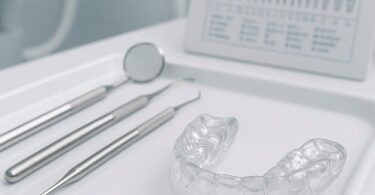
If you have recently been diagnosed with obstructive sleep apnea (OSA), you might be feeling a mix of emotions. Relief often comes with finally having a diagnosis, but it is quickly followed by questions about treatment. One of the most common paths forward is an oral appliance therapy—a custom-made device, similar to a mouthguard or retainer, that you wear while sleeping.
It is comfortable, effective, and quiet. But then comes the practical question that stops everyone in their tracks: How do I pay for this?
Unlike a standard dental crown or a filling, billing for a sleep apnea appliance sits at the intersection of dentistry and medicine. This is where the concept of a dental code becomes critical. Understanding these codes is not just for dental billers; it is for you, the patient. Knowing the difference between a simple night guard for teeth grinding and a medical device for sleep apnea can save you thousands of dollars.
In this guide, we will walk you through everything you need to know about the dental codes used for sleep apnea appliances. We will break down the jargon, explain why specific codes matter, and show you how to navigate the complex world of insurance to ensure you get the care you need without unnecessary financial stress.

Dental Code for Sleep Apnea Appliance
Table of Contents
ToggleWhy the Right Dental Code Matters
You might think that a dentist simply makes a device, hands it to you, and bills your insurance. In reality, the process is much more nuanced. The code that your dentist submits to your insurance company tells a story. It tells the insurer why you need the device, what type of device it is, and who is responsible for paying for it.
A common misconception is that all mouthguards are the same. If a dentist uses the wrong code—say, a code for bruxism (teeth grinding) when you actually have sleep apnea—your medical insurance will likely deny the claim. Conversely, if your dental insurance sees a code for a complex medical device, they might also deny it, assuming it should be covered by your medical plan.
The Medical vs. Dental Insurance Crossroad
This is the single most important concept to grasp. Sleep apnea is a medical condition. However, the treatment—the oral appliance—is fabricated and managed by a dental professional.
Because of this split, the billing process often involves two different types of insurance:
-
Medical Insurance (Health Plan): Typically covers the diagnosis (sleep study) and, increasingly, the oral appliance itself, as it is considered durable medical equipment (DME).
-
Dental Insurance: May cover the maintenance, adjustments, and repairs of the appliance after it is made, depending on the plan.
The dental code used acts as a traffic cop, directing the claim to the correct payer.
The Primary Dental Code: D9946
When we talk about the “dental code for sleep apnea appliance,” we are primarily referring to a specific code in the Current Dental Terminology (CDT) code set: D9946.
The American Dental Association (ADA) defines D9946 as: “Interim partial or complete removable dental prosthesis (for sleep apnea) or sleep apnea appliance.”
In simpler terms, this code is specifically designated for a removable device used to treat obstructive sleep apnea. It is the most accurate code for the oral appliances that dentists fabricate for this purpose.
What D9946 Covers
When a dentist uses this code, they are telling the insurance world that:
-
The patient has been diagnosed with obstructive sleep apnea (usually confirmed by a physician via a sleep study).
-
The device being fabricated is a custom-made, removable oral appliance intended to keep the airway open during sleep.
-
This is not a simple night guard for grinding teeth.
Types of Appliances Under D9946
Under the umbrella of code D9946, there are various types of appliances. While the code itself doesn’t differentiate between brands, it generally covers:
-
Mandibular Advancement Devices (MADs): These are the most common. They work by holding the lower jaw (mandible) slightly forward, which tightens the soft tissues in the throat to prevent airway collapse.
-
Tongue Retaining Devices (TRDs): Less common, these hold the tongue forward to prevent it from blocking the airway.
Some of the most popular commercial brands you might encounter that fall under this code include:
-
SomnoDent
-
Panthera
-
Herbst
-
EMA (Elastic Mandibular Advancement)
-
Prosomnus
Important Note: D9946 is typically used for the initial fabrication and delivery of the appliance. If you need a replacement appliance years down the line, or if you lose your device, this same code is usually used again for the new fabrication.
Other Relevant Dental Codes
While D9946 is the star of the show, it does not work alone. A complete treatment plan for sleep apnea involves several steps, each with its own code. These codes are used for the work leading up to the appliance and the care afterward.
Diagnostic Codes
Before an appliance can be made, the dentist needs to assess your mouth, teeth, and jaw structure. These are standard dental codes used in many procedures.
| Code | Description | Why It’s Used for Sleep Apnea |
|---|---|---|
| D0150 | Comprehensive Oral Evaluation | This is a detailed exam of the entire oral cavity. It is the dentist’s baseline to assess if you are a good candidate for an oral appliance. |
| D0210 | Intraoral – Complete Series of Radiographic Images | Full-mouth X-rays are often required to evaluate the health of the teeth and bone that will support the appliance. |
| D0470 | Diagnostic Casts | The dentist takes impressions (molds) of your teeth to create stone models. These are used to plan the design of the appliance. |
| D0340 | 2D Cephalometric Radiographic Image | Sometimes a specific head X-ray is taken to analyze the jaw and airway relationship. |
Maintenance and Adjustment Codes
Once you have your appliance, it is not a “set it and forget it” device. You will need follow-up visits to ensure it fits well and is effectively treating your apnea.
| Code | Description | Why It’s Used for Sleep Apnea |
|---|---|---|
| D9941 | Adjustment of Sleep Apnea Appliance | This is a common code used for periodic adjustments. As your jaw muscles adapt, the appliance may need fine-tuning to stay effective and comfortable. |
| D9910 | Application of Desensitizing Agent | Some patients experience temporary tooth sensitivity when starting therapy. This code covers the application of fluoride or other agents to alleviate that discomfort. |
| D9942 | Repair of Sleep Apnea Appliance | If a component of the appliance breaks (e.g., a clasp or a screw), this code covers the repair. It is distinct from a full replacement (D9946). |
| D9943 | Reline of Sleep Apnea Appliance | Over time, changes in your teeth or gums can cause the appliance to fit loosely. A reline involves adding new material to the inside of the appliance to make it fit snugly again. |
A Note on “Night Guards”
It is crucial to distinguish between D9946 and D9944 or D9945.
-
D9944 / D9945: These codes are for occlusal guards, also known as night guards. They are designed to protect teeth from grinding (bruxism).
-
D9946: This is strictly for sleep apnea.
If you have sleep apnea but your dentist mistakenly uses a night guard code, your medical insurance will almost certainly deny the claim because the code does not indicate a medical necessity for breathing. Always verify the code on your claim form.
The Insurance Billing Process Explained
Understanding the codes is one thing, but understanding how they flow through the insurance system is another. The process usually follows a specific sequence.
Step 1: The Medical Diagnosis
Insurance companies, whether medical or dental, will not pay for a sleep apnea appliance without proof of diagnosis. This proof is usually a sleep study (polysomnogram) interpreted by a physician. The physician will provide a prescription for an oral appliance. This prescription is the golden ticket. Without it, the dental codes D9946 will likely be rejected.
Step 2: The Dental Evaluation
You take your prescription to a dentist who specializes in dental sleep medicine. They will perform the comprehensive exam (D0150), take X-rays (D0210), and make diagnostic casts (D0470). At this stage, the dentist is evaluating your oral health to ensure it is safe to proceed.
Step 3: Pre-Authorization (The Most Important Step)
Before the dentist even orders the appliance, they should submit a pre-authorization (also called a pre-determination) to your insurance companies.
This is where you want to be proactive.
The dentist’s office will send the treatment plan, including code D9946, along with the sleep study results and the physician’s prescription, to both your medical and dental insurance. The pre-authorization will tell you exactly which plan will pay, how much they will pay, and what your out-of-pocket cost (co-pay or deductible) will be.
Step 4: Fabrication and Delivery
Once the pre-authorization is approved, the dentist will take a digital scan or a physical impression to fabricate the custom appliance. When it is ready, you will return for a delivery appointment. The dentist will seat the appliance, ensure it fits, and show you how to care for it.
Step 5: Follow-Up Care
This is often overlooked. After delivery, you will have a series of follow-up appointments (often using code D9941 for adjustments). Some insurance plans cover a set number of adjustments within the first year. You may also need a follow-up sleep study or home sleep test to ensure the appliance is actually working.
Comparing Medical vs. Dental Insurance Coverage
To truly understand your potential costs, you need to look at how medical and dental insurance differ when handling the D9946 code.
| Feature | Medical Insurance (Health Plan) | Dental Insurance |
|---|---|---|
| Coverage Focus | Usually covers the appliance itself (D9946) as Durable Medical Equipment (DME). | May cover diagnostics (X-rays, exams) and post-delivery adjustments (D9941, D9942). |
| Deductible | Often higher. You may need to meet an annual medical deductible before coverage kicks in. | Usually lower. Often a flat copay or percentage (e.g., 50% coinsurance) after a small deductible. |
| Coverage Percentage | Varies widely. Often 50% – 80% after deductible, but subject to medical policy. | Often 50% of the allowed amount for major services, but many plans exclude D9946. |
| Annual Maximum | Usually no annual maximum for DME, but it is subject to lifetime or per-device limits. | Strict annual maximum (often $1,000-$2,000). If D9946 is covered, it consumes a large portion of this. |
| Pre-Authorization | Almost always required. Strict medical necessity criteria (sleep study, prescription). | Often required. If they cover it, they want to ensure it is not a duplicate of medical coverage. |
The Trend: Medical Insurance is Taking Over
In the last five to ten years, there has been a significant shift. Historically, dentists billed dental insurance for sleep appliances. Today, because sleep apnea is a medical condition with serious health implications (heart disease, stroke, diabetes), most major medical insurers have started covering oral appliance therapy under their DME benefit.
This is good news for patients, as medical insurance often has higher annual limits and recognizes the long-term health benefits. However, it also means more paperwork and stricter requirements. You must ensure that your dentist is credentialed to bill medical insurance. Not all dental offices have the infrastructure to bill medical plans, which are vastly different from dental plans.
What to Expect: Out-of-Pocket Costs
Even with insurance, you will likely have some out-of-pocket costs. Let’s break down realistic scenarios.
Scenario A: Medical Insurance Covers the Appliance
If your medical plan covers DME and you have met your deductible, you might pay 20% to 50% coinsurance. For an appliance that costs between $1,800 and $3,000 (the typical dentist fee), your portion could be $360 to $1,500. Additionally, you may pay for dental diagnostic codes (X-rays, exam) out of pocket if your dental insurance does not cover them, or if you have a dental copay.
Scenario B: Dental Insurance Covers the Appliance
This is becoming rarer, but if your dental plan includes D9946 (often labeled as a “major service”), you might have a 50% coinsurance. However, if your annual maximum is $1,500 and the appliance costs $2,500, you will likely hit your maximum. You would pay the remaining $1,000 (the portion after the insurance pays its share up to the max) plus your deductible.
Scenario C: No Coverage
If neither insurance covers the appliance, you are responsible for the full fee. However, many dentists offer in-house payment plans or financing options (like CareCredit) to break the cost into manageable monthly payments.
Frequently Asked Questions (FAQ)
1. Is a sleep apnea appliance the same as a night guard?
No, absolutely not. A night guard (D9944) is designed to prevent tooth damage from grinding. A sleep apnea appliance (D9946) is designed to reposition the jaw to open the airway. Using the wrong code can lead to claim denials and improper treatment.
2. Can I bill my medical insurance myself?
Technically, yes, but it is complicated. Most medical insurance requires the claim to be submitted by a licensed provider with a National Provider Identifier (NPI). If your dentist does not bill medical insurance, you can ask for a “superbill” (a detailed invoice with the codes, including D9946) and submit it to your medical insurance for out-of-network reimbursement. Success rates vary.
3. How often can D9946 be billed?
Insurance typically covers a new appliance (D9946) every 3 to 5 years. However, if your device is damaged, lost, or if your dental condition changes (e.g., you get new dentures or implants), a new appliance may be approved sooner. A repair (D9942) is used for minor fixes in the interim.
4. Will Medicare cover a sleep apnea appliance?
Yes, but with strict conditions. Medicare Part B covers oral appliances for obstructive sleep apnea if:
-
You have a diagnosis of OSA from a sleep test.
-
You are intolerant to or refuse Positive Airway Pressure (PAP) therapy (like CPAP).
-
The appliance is fabricated by a dentist or physician.
-
The provider is enrolled in Medicare.
Medicare uses specific HCPCS codes (like E0486) for billing, but your dentist will translate this from the dental code D9946 for medical billing.
5. What if my insurance denies the claim?
Do not panic. Denials are common with sleep apnea appliances because they straddle two insurance systems. First, verify the denial reason. It is often due to:
-
Missing medical records: They need the sleep study.
-
Wrong payer: The claim went to dental instead of medical, or vice versa.
-
Lack of pre-authorization.
Your dentist’s billing team should be able to appeal the denial. If they cannot, you can request a peer-to-peer review with the insurance medical director.
How to Prepare for Your Appointment
Walking into a dentist’s office armed with knowledge makes the process smoother. Here is a checklist of what to bring or ask for during your consultation for a sleep apnea appliance.
-
Your Sleep Study Report: Do not just assume the sleep doctor sent it. Bring a copy.
-
Physician’s Prescription: A written order from your MD specifying “Oral Appliance for Obstructive Sleep Apnea.”
-
Insurance Cards (Both Medical and Dental): The front desk needs both to verify benefits.
-
List of Questions:
-
Do you bill medical insurance for the appliance?
-
Have you submitted a pre-authorization?
-
*What is my estimated out-of-pocket cost for D9946?*
-
What does the warranty cover?
-
Additional Resource
For further reading and to verify the credentials of a dentist specializing in sleep medicine, we recommend visiting the American Academy of Dental Sleep Medicine (AADSM) . Their website offers a “Find a Provider” tool, patient resources, and detailed information on the standards of care for oral appliance therapy.
Link to AADSM Patient Resources
Conclusion
Understanding the dental code for a sleep apnea appliance—specifically D9946—is your first step toward taking control of your treatment and your finances. This simple code represents a complex journey that involves medical diagnosis, dental expertise, and a careful navigation of insurance systems.
Remember that you are not just buying a device; you are investing in a therapy that can significantly improve your sleep quality, energy levels, and long-term health. By knowing the codes, asking the right questions, and ensuring your provider uses the correct billing pathways, you can maximize your insurance benefits and minimize out-of-pocket stress. Your path to better sleep is not just a medical journey; it is a partnership between you, your dentist, and your physician, guided by the clarity of proper coding.