You just left your dentist’s office. The doctor mentioned you might need a crown, but not the full kind. Something about “three-quarters.”
Now you are staring at a treatment plan full of numbers and abbreviations. One line catches your eye: a specific code you have never seen before.
Finding the right dental code for a 3/4 crown can feel like solving a puzzle. Is it the same as a full crown? Will your insurance pay for it? Did the receptionist write down the right number?
Let us clear up the confusion right now.
In the world of dental billing, precision matters. Using the wrong code can mean a denied claim or a larger bill for you. This guide walks you through everything you need to know about the specific code for a 3/4 crown, how it differs from other restorations, and what you should expect to pay.
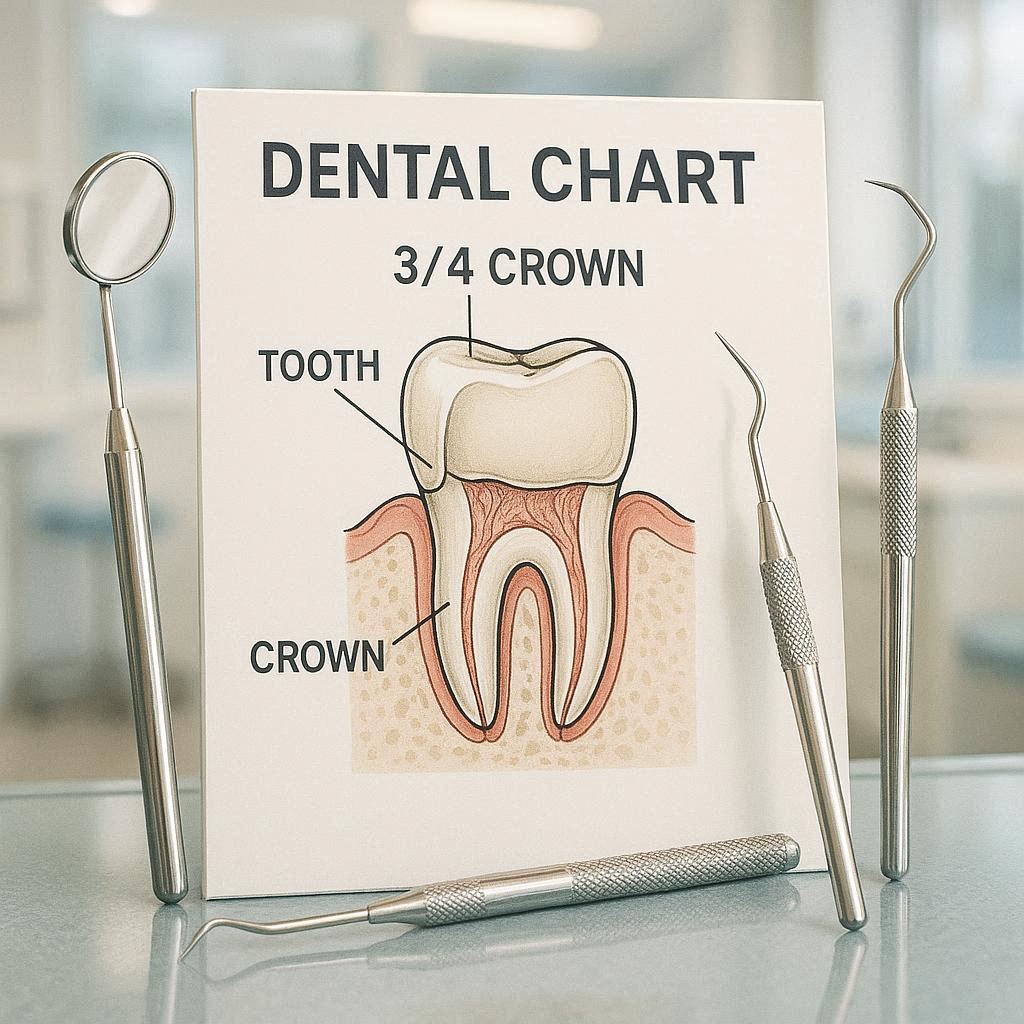
What Exactly Is a 3/4 Crown? (A Simple Explanation)
Before we talk numbers, let us talk teeth.
A full crown covers the entire visible part of your tooth. Think of it like a beanie hat covering your whole head.
A 3/4 crown is different. It covers most of the tooth but leaves one entire side—usually the cheek side (buccal) or tongue side (lingual)—completely uncovered.
Why would a dentist leave a side exposed? Two main reasons.
First, to save healthy tooth structure. Modern dentistry is conservative. Dentists want to remove as little natural enamel as possible. If the damage is only on three surfaces of the tooth, a full crown is overkill.
Second, for aesthetic reasons. Sometimes the “missing” side faces your cheek, where no one can see it. You get the strength of a crown without the full preparation.
When Dentists Actually Recommend a 3/4 Crown
You will rarely hear a dentist recommend this for a back molar that takes heavy chewing force. Full coverage is usually better there.
But for premolars or specific front teeth? A 3/4 crown shines in these situations:
- Teeth with large fillings on three sides but a healthy fourth side
- Teeth used as anchors for bridges where only specific surfaces need support
- Cracked tooth syndrome where the crack is limited to three surfaces
- When a full crown would require too much grinding of healthy enamel
Note for readers: A 3/4 crown is not “half a crown.” It is a highly precise restoration. Do not let the name fool you. It requires significant skill to fabricate and place.
The Exact Dental Code for 3/4 Crown (Dental Code DXXXX)
Here is the answer you came for.
The official dental code for 3/4 crown in the current CDT (Code on Dental Procedures and Nomenclature) manual is:
D2792
That is it. Four characters. One specific code.
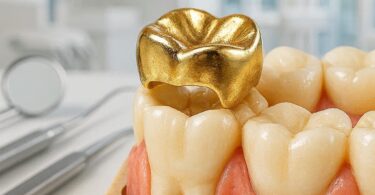
D2792 is defined as: *Crown, 3/4 cast high noble metal.*
But wait. That definition includes the words “high noble metal.” What if you want porcelain or a different material?
That is where things get tricky. The CDT code book does not have a separate code for “3/4 crown porcelain” or “3/4 crown base metal.”
The Material Breakdown for Code D2792
The code D2792 specifically implies a metal crown. However, in clinical practice, dentists adapt the code based on the material used. Here is how billing usually works:
| Material Type | Common Code Used | Is it a 3/4 Crown? |
|---|---|---|
| High Noble Metal (Gold) | D2792 | Yes (explicitly defined) |
| Base Metal Alloy | D2792 (modified) | Yes (same procedure, different metal) |
| Porcelain Fused to Metal | D2792 (sometimes D2740) | It depends. Many bill D2740 (full crown) |
| All-Ceramic | D2750 or D2792 | Rare. Most labs cannot do a 3/4 all-ceramic |
Important note: Many insurance companies do not recognize D2792 for porcelain. If your dentist uses porcelain for a 3/4 crown, they may be forced to bill a full crown code (D2740) even though they only prepared three surfaces. This can lead to billing discrepancies.
A Common Confusion: D2792 vs. D2799
Do not confuse D2792 (3/4 crown) with D2799 (provisional crown). A provisional crown is a temporary restoration. D2792 is the final, permanent crown.
Also, do not confuse it with D2642 (onlay – three surfaces). An onlay sits inside the cusps of the tooth. A 3/4 crown wraps around the outside. They are very different procedures.
How the 3/4 Crown Code Differs from Full Crown Codes
Let us put these codes side by side. This comparison helps you understand why your dentist picks one over the other.
| Procedure | Dental Code | Surfaces Covered | Typical Material | Insurance Coverage |
|---|---|---|---|---|
| Full Crown (Porcelain) | D2740 | All 4+ surfaces | Ceramic | Standard benefit |
| Full Crown (PFM) | D2750 | All 4+ surfaces | Porcelain fused to metal | Standard benefit |
| Full Crown (Gold) | D2790 | All 4+ surfaces | High noble metal | Standard benefit |
| 3/4 Crown (Metal) | D2792 | Three surfaces | High noble metal | Often lower benefit |
| 3/4 Crown (Other) | D2792 or D2740 | Three surfaces | Varies | Inconsistent |
Notice the inconsistency in the last row. That is the reality of dental billing today. The official code exists, but many offices avoid it because insurance companies process it poorly.
Why Insurance Companies Dislike D2792
Insurance companies are slow to update their systems. The code D2792 has been around for years, but many adjusters still scratch their heads when they see it.
Some common insurance reactions to D2792:
- Denial as “not a covered procedure” (even when your policy covers crowns)
- Downgrading to an onlay code (D2642) which pays less
- Requesting x-rays to prove only three surfaces were prepared
This creates friction. Some dental offices simply bill a full crown code to avoid the hassle. That is not fraud if the tooth functionally needs a full crown. But if the tooth truly only needs 3/4 coverage, billing a full crown is technically inaccurate.
Quote from a dental billing specialist: “I tell my clients to use D2792 only for gold 3/4 crowns. For anything else, document the hell out of the chart and pray the insurance doesn’t audit you.”
Step-by-Step: What to Expect During a 3/4 Crown Procedure
Understanding the code is one thing. Understanding the process helps you see why the code costs what it costs.
Appointment One: Preparation and Impression
Your dentist numbs the tooth. Then they reduce the chewing surface and three of the four vertical sides. One side remains untouched.
The dentist takes an impression (digital or physical). A temporary 3/4 crown is fabricated and cemented. You leave with a functional but temporary restoration.
Billing happens here: The office will likely pre-authorize D2792 with your insurance.
The Laboratory Phase (2-3 weeks)
A dental lab technician fabricates your permanent 3/4 crown. For a high noble metal crown, this involves:
- Casting a precise metal alloy (gold, palladium, platinum)
- Polishing the surfaces
- Quality checking the fit
This lab work is why the code D2792 costs more than a simple filling. Skilled labor and precious metals are expensive.
Appointment Two: Placement and Adjustment
Your dentist removes the temporary crown. They clean the tooth surface. The permanent 3/4 crown is tried in. Bite adjustments are made.
Once fit is perfect, the dentist cements the crown permanently.
Final billing happens here: The office submits the claim with D2792 and the date of service.
Cost Breakdown: How Much Should You Pay for Code D2792?
Let us talk money. No one likes surprises.
The cost for a 3/4 crown (D2792) varies wildly based on your location, dentist, and lab fees. But here are realistic ranges in the United States (2026 estimates).
Without Insurance (Cash Price)
| Geographic Area | Low Range | Average | High Range |
|---|---|---|---|
| Rural | $600 | $800 | $1,000 |
| Suburban | $800 | $1,100 | $1,400 |
| Urban (Major City) | $1,000 | $1,400 | $1,800 |
| High-end Cosmetic Practice | $1,500 | $2,000 | $2,500+ |
With Dental Insurance
Most PPO plans cover 50% of a crown after you meet your deductible. But here is the catch.
If your insurance “allows” $900 for code D2792, they will pay 50% of that ($450). You pay the other $450 plus any difference if your dentist charges above the allowed amount.
Example scenario:
- Dentist fee for D2792: $1,200
- Insurance allowed amount: $900
- Insurance pays 50% of allowed: $450
- You pay: $750 ($1,200 – $450)
Your out-of-pocket is not simply “50% of the bill.” It depends on whether your dentist is in-network.
Why a 3/4 Crown Might Cost the Same as a Full Crown
Here is a frustrating truth for patients.
Even though the dentist removes less tooth structure and uses less material, the dental code for a 3/4 crown often costs the same as a full crown.
Why? The labor is almost identical.
- The dentist still needs two appointments.
- The lab still fabricates a custom restoration.
- The cement and materials cost roughly the same.
- The skill required is actually higher (fitting a 3/4 crown is trickier).
Do not expect a discount just because it is “smaller.” You are paying for expertise, not volume of material.
Pros and Cons of Choosing a 3/4 Crown (D2792)
Before you agree to this procedure, weigh these factors honestly.
The Advantages
- Less tooth removal. Your dentist preserves more healthy enamel. This is always better for long-term tooth health.
- Easier to keep clean. The exposed side allows for better flossing and brushing access.
- Often less sensitivity. Because less tooth structure is removed, post-operative temperature sensitivity can be lower.
- Conservative preparation. If the crown fails years later, you still have tooth left for a full crown.
The Disadvantages
- Not for high-force teeth. Molars that grind and clench? A 3/4 crown may fracture or loosen over time.
- Aesthetic limitations. If the exposed side shows when you smile, you will see metal (unless you find a rare ceramic option).
- Insurance confusion. As noted above, claims for D2792 get denied more often than full crowns.
- Harder to find experienced dentists. Some younger dentists never learned to do proper 3/4 crown preparations.
Reader note: Ask your dentist how many 3/4 crowns they have placed in the last year. If they hesitate, that is a red flag. This is a niche procedure.
Alternatives to Code D2792 (What Are Your Other Options?)
You do not have to accept a 3/4 crown. Depending on your tooth’s condition, other codes might work better for you.
Alternative One: Full Crown (D2740 or D2790)
Best for: Heavily damaged teeth or molars.
Pros: Stronger, easier to bill, more widely understood.
Cons: Removes more tooth structure.
Alternative Two: Three-Surface Onlay (D2642)
Best for: Teeth with large cavities but intact cusps.
Pros: Even more conservative than a 3/4 crown. Usually cheaper.
Cons: Not as strong. Does not wrap around the tooth like a crown.
Alternative Three: Direct Composite Bonding (D2393)
Best for: Small to moderate damage on three surfaces.
Pros: One-visit procedure. Least expensive option ($200-$500).
Cons: Less durable (3-5 years). Stains over time.
Alternative Four: No Treatment (Monitoring)
Best for: Asymptomatic cracks with no pain.
Pros: Costs nothing today.
Cons: Risk of tooth fracture. Future treatment may be more extensive (root canal + crown).
Here is a quick decision flowchart to discuss with your dentist:
| If you have… | And you want… | Then ask about… |
|---|---|---|
| A cracked premolar | Maximum tooth preservation | D2792 (3/4 crown) |
| A cracked molar | Maximum strength | D2740 (full crown) |
| A large filling, no cracks | Lower cost | D2642 (onlay) |
| Minor damage, tight budget | Immediate fix | D2393 (bonding) |
How to Verify Your Dental Code Before Treatment
You have the power to check your treatment plan. Do not assume the front desk got it right.
Step one: Ask for a printed treatment plan with CDT codes.
Step two: Look for D2792. If you see D2740, ask: “Is this a full crown or a 3/4 crown?”
Step three: Call your insurance. Give them the code D2792. Ask two questions:
- “Is this a covered benefit under my plan?”
- “What is my patient responsibility for this specific code?”
Step four: Get pre-authorization in writing. This is not always required, but for a less common code like D2792, it is worth the wait.
Red Flags to Watch For
- The office refuses to give you the code before treatment.
- The insurance agent has never heard of D2792 (ask for a supervisor).
- The dentist says “just bill it as a full crown, it’s fine” without explaining why.
Transparency protects you. A good dental office will happily walk you through every number on that form.
Geographic Variations: Does the Code Change by State or Country?
The dental code for a 3/4 crown (D2792) is standardized across the United States through the CDT manual. But other countries use different systems.
United States & Canada (CDT)
Code: D2792
Notes: Standard code. Canada uses a similar but not identical schedule.
United Kingdom (NHS)
Code: Not applicable. The NHS bands treatments. A 3/4 crown falls under Band 3 (crowns, bridges, dentures). No specific 3/4 code exists.
Australia (ADA)
Code: 615
Notes: “Crown – 3/4 veneer crown” – different numbering system.
Europe (ISO/ICDAS)
Code: Varies by country. Most use a narrative description rather than a numeric code.
If you are reading this outside North America, ask your dentist for the local procedural terminology. Do not assume D2792 translates directly.
Frequently Asked Questions (FAQ)
1. Is a 3/4 crown the same as a veneer?
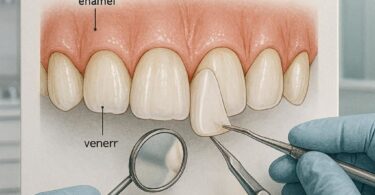
No. A veneer covers only the front surface of a tooth (like a false fingernail). A 3/4 crown covers three full surfaces. They are not interchangeable.
2. Will my insurance definitely cover D2792?
Not necessarily. Many plans cover it, but some exclude it specifically. Always verify before treatment.
3. Can I get a 3/4 crown in one day (same-day CAD/CAM)?
Rarely. Most same-day milling systems (like CEREC) are not programmed for 3/4 crown designs. You will likely need a traditional lab-fabricated crown.
4. How long does a 3/4 crown last?
With excellent hygiene, 10-15 years. With poor hygiene, 3-5 years. The exposed margin (edge) is vulnerable to decay if you do not floss.
5. Is D2792 cheaper than a full crown?
Sometimes yes (10-20% less). Often the same price. The code itself does not dictate price. Your dentist sets the fee.
6. What if my dentist uses D2792 but my tooth needs a full crown later?
That is fine. A 3/4 crown can be cut off and replaced with a full crown later. You lose nothing by starting conservatively.
7. Why did my dentist write D2792 but put porcelain on the lab slip?
That is a mismatch. Porcelain does not work well for 3/4 designs (it chips at the margin). Push back and ask for clarification. You may be getting a full crown mislabeled as a 3/4.
Additional Resources for Readers
For the most current CDT code manual and official definitions:
🔗 Link: American Dental Association – CDT Code on Dental Procedures and Nomenclature
(Search “ADA CDT D2792” for official language)
You can also check your state’s dental board website for consumer guides on treatment plan transparency.
Final Thoughts: Is the 3/4 Crown Right for You?
The dental code for a 3/4 crown—D2792—represents a specific, conservative approach to restoring damaged teeth. It is not a loophole or a discount code. It is a legitimate procedure that preserves healthy enamel while restoring strength.
But it comes with baggage. Insurance confusion. Material limitations. A learning curve for some dentists.
If your dentist recommends D2792, ask why. If they say “to save tooth structure,” that is a good answer. If they say “it’s easier for me,” that is a bad answer.
Your best move? Get the code. Call your insurance. Compare alternatives. Then decide.
A well-placed 3/4 crown can outlast a full crown simply because it leaves more natural tooth behind. And nothing beats natural tooth.
Conclusion (Three Lines)
The official dental code for a 3/4 crown is D2792, primarily for high noble metal restorations. Insurance coverage varies widely, and costs typically range from $800 to $1,800. Always verify coverage and ask your dentist why this conservative option is right for your specific tooth.
Disclaimer: This article is for informational purposes only and does not constitute medical or financial advice. Dental codes vary by region and insurance provider. Always consult your dentist and insurance carrier for verification.
Author: Dental Billing Team
Date: APRIL 15, 2026