If you have ever stood at a dentist’s front desk or browsed your insurance benefits, you might have asked yourself a very simple question: what is the correct dental code for an athletic mouth guard?
You are not alone.
Athletes of all ages — from kids playing youth soccer to adults in competitive martial arts or roller derby — need protection for their teeth and jaws. But finding the right billing code can feel confusing. Is it the same as a night guard? Does insurance cover it? Which code should your dentist use so you don’t get overcharged?
In this guide, we will walk through everything you need to know about the dental code for athletic mouth guards. We will keep things clear, practical, and honest. No fake codes. No fluff. Just useful information you can trust.
What Exactly Is an Athletic Mouth Guard?
Before we talk about codes, let us make sure we are on the same page about what an athletic mouth guard actually is.
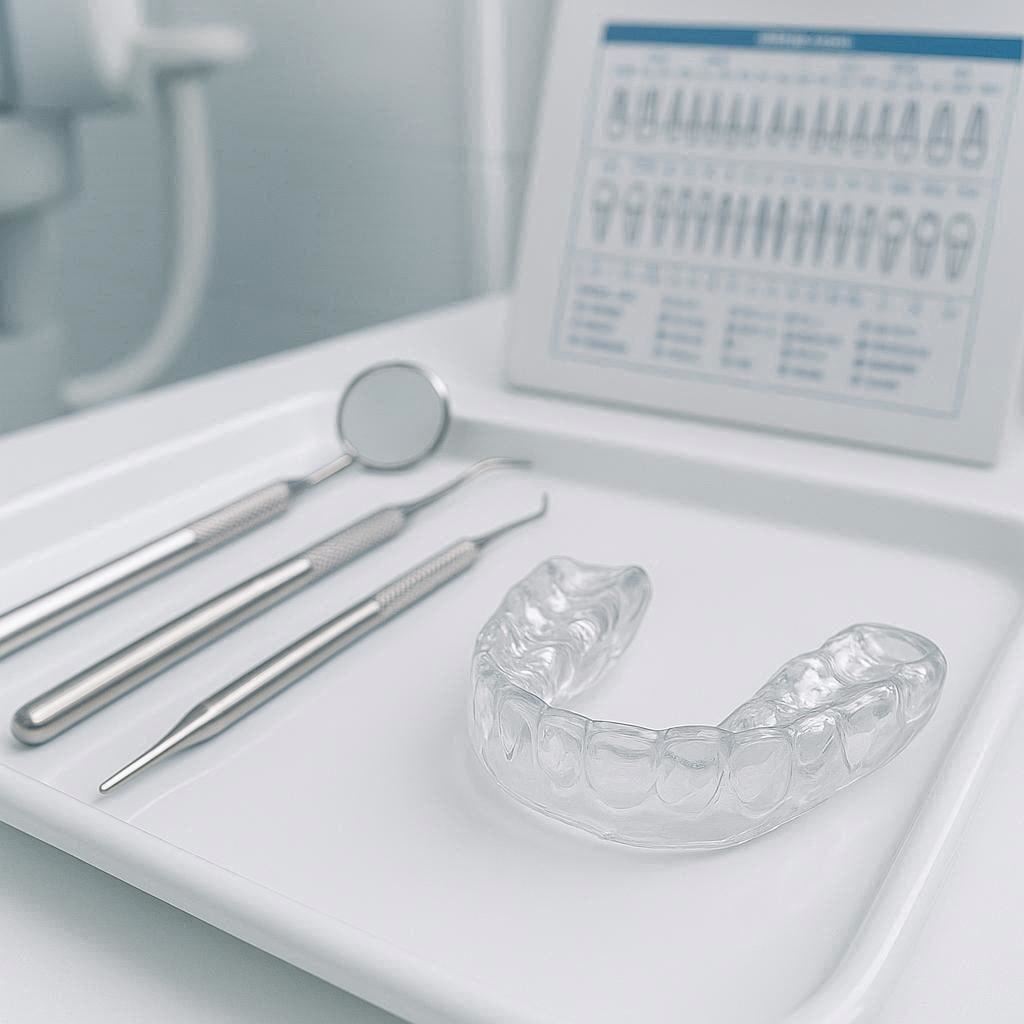
An athletic mouth guard is a flexible or semi-rigid dental appliance worn during sports and physical activities. Its main job is to protect your teeth, lips, cheeks, gums, and jaw from impact. It helps prevent:
- Chipped or knocked-out teeth
- Soft tissue cuts inside your mouth
- Jaw fractures
- Concussion risk reduction (in some cases)
These guards are different from night guards, which prevent teeth grinding (bruxism). They are also different from orthodontic retainers or snoring devices.
Three main types of athletic mouth guards:
- Stock mouth guards – Pre-formed, ready to wear. Cheap but often bulky and poorly fitting.
- Boil-and-bite mouth guards – Made from thermoplastic. You soften them in hot water, then bite down to shape them.
- Custom-fabricated mouth guards – Made by a dentist or a professional lab from an impression of your teeth. Best fit, comfort, and protection.
The dental code system in the United States (CDT codes) focuses mostly on the third type: custom-made guards provided by a dental office.
The Main Dental Code for Athletic Mouth Guard (D9945 and More)
Let us get straight to the point.
The most accurate and widely accepted dental code for an athletic mouth guard is:
D9945
This code is officially described as:
“Athletic mouthguard, including laboratory and materials.”
Yes, it is that simple. But there is more nuance to it.
D9945 in detail
- What it includes: Impressions, lab fabrication, materials, adjustments, and delivery of the final guard.
- Who uses it: General dentists, pediatric dentists, and sports dentists.
- When it applies: When the guard is custom-made from a dental impression. Boil-and-bite or stock guards bought at a pharmacy do not use this code.
What about D9944?
Some older or out-of-date code lists mention D9944. That code has been revised in recent CDT manuals. As of the last several editions, D9944 is no longer the preferred code for athletic mouth guards. Always use D9945 for a true custom athletic mouth guard provided by a dental professional.
Important Note: Do not let anyone bill an athletic mouth guard under a night guard code (D9940) or an occlusal guard code unless it is specifically for grinding. That is incorrect and could lead to claim denials or audits.
Comparing Dental Codes for Different Types of Oral Appliances
This table will help you see the difference between an athletic mouth guard and other common dental appliances.
| Code | Appliance Type | Main Purpose | Typical Patient |
|---|---|---|---|
| D9945 | Athletic mouth guard (custom) | Sports injury prevention | Athletes of all ages |
| D9940 | Occlusal guard (night guard) | Prevent bruxism (grinding) | Adults with tooth wear |
| D9941 | Adjustment of occlusal guard | Refit or adjust night guard | Any night guard user |
| D0460 | Pulp vitality test | Not an appliance | Diagnostic use |
| D5999 | Unspecified prosthesis | Catch-all (rarely used) | Varies |
| D9920 | Behavior management | Not an appliance | Anxious children |
Notice that D9945 is the only dedicated code for athletic mouth guards. No other code is a correct substitute.
Does Dental Insurance Cover an Athletic Mouth Guard?
This is where things get real.
Many people assume their dental insurance will cover a custom athletic mouth guard. The truth is more mixed. Most standard dental insurance plans classify D9945 as a non-covered benefit for adults. Why? Because insurance carriers often consider athletic mouth guards as “preventive for sports,” not medically necessary for dental health.
However, there are important exceptions.
When insurance might pay (partial or full):
- Medically necessary cases: If a child or adult has an existing orthodontic condition, a high-risk jaw alignment issue, or a disability that makes dental trauma more dangerous.
- Certain Medicaid plans: Some state Medicaid programs cover custom athletic mouth guards for children under preventive care.
- Employer-sponsored plans with sports coverage: Rare, but some large employers or union plans include sports dental benefits.
- Flexible spending accounts (FSA) or health savings accounts (HSA): You can often use these tax-advantaged accounts to pay for D9945, even if insurance denies it.
What to do before you schedule:
- Call your dental insurance company.
- Ask: “Is D9945 a covered benefit under my plan?”
- Ask: “If covered, what is my deductible and coinsurance?”
- Ask: “Do I need a referral from a primary dentist or a letter of medical necessity?”
A letter of medical necessity from your dentist can sometimes turn a denial into an approval, especially for young athletes with a history of dental trauma.
How Much Does a Custom Athletic Mouth Guard Cost Without Insurance?
Let us talk dollars and cents.
A generic boil-and-bite guard from a drugstore costs between $15 and $50. But a custom guard made by a dentist? That is a different story.
Average costs for D9945 (cash price):
| Region / Office Type | Typical Price Range |
|---|---|
| Small private practice (rural) | $200 – $400 |
| Urban general dentist | $350 – $600 |
| Pediatric dental specialist | $300 – $550 |
| Sports dentistry specialist | $450 – $800+ |
| Dental school clinic | $100 – $250 |
These prices usually include:
- Initial exam (if needed)
- Impressions or digital scan
- Lab fabrication
- One set of adjustments
- Delivery and fitting instructions
Some offices sell custom mouth guards as a flat fee package. Others bill the exam separately under a D0150 or D0140 code. Always ask for a full treatment plan before you agree to anything.
Pro tip: If you have two or more children needing guards, ask about sibling discounts. Many family dentists offer reduced rates for multiple custom guards.
Why You Should Not Use a Boil-and-Bite Code (There Isn’t One)
Here is a common myth: “My dentist can bill insurance for a boil-and-bite mouth guard.”
No, they cannot. There is no dental code for a non-custom, over-the-counter mouth guard. Why? Because the CDT code set is designed for professionally delivered services. A boil-and-bite device does not involve lab work, custom impressions, or professional fitting in the same way.
If a dentist tries to bill D9945 for a boil-and-bite guard, that is insurance fraud. Plain and simple.
Can you still buy a boil-and-bite guard?
Yes, absolutely. They are fine for recreational athletes on a tight budget. Just understand:
- They provide less protection.
- They wear out faster.
- They cannot be adjusted by a dentist.
- You cannot bill any dental insurance code for them.
Stick to D9945 if you want a professional, billable, custom-fitted appliance.
What About Pediatric Athletes and D9945?
Children and teenagers are among the most common users of athletic mouth guards. Youth football, basketball, hockey, lacrosse, and even gymnastics all present risks.
The same D9945 code applies to pediatric patients.
Special considerations for kids:
- Growth changes: A child’s mouth changes fast. A custom guard may need replacement every 12–18 months.
- Orthodontic braces: Children with braces can still use a custom mouth guard made over brackets. The dentist will take impressions carefully to avoid damaging wires.
- Medicaid coverage: Many state plans cover D9945 for children under Early and Periodic Screening, Diagnostic and Treatment (EPSDT) benefits. Check your local guidelines.
A pediatric dentist can often help you navigate insurance coverage more effectively than a general dentist when it comes to athletic guards for kids.
Step-by-Step: What Happens When You Get a D9945 Mouth Guard
If you decide to get a custom athletic mouth guard from a dentist, here is exactly what to expect.
Step 1: Dental exam (sometimes separate)
Your dentist checks your teeth, gums, and bite. They look for existing cavities, loose teeth, or orthodontic issues.
Possible codes: D0150 (comprehensive exam) or D0140 (limited exam).
Step 2: Impressions or digital scan
The dentist takes an impression of your upper teeth (sometimes both arches). They may use traditional putty or an intraoral digital scanner.
Step 3: Lab fabrication
The impressions go to a dental lab. The lab creates a model of your teeth and forms the mouth guard from medical-grade ethylene vinyl acetate (EVA) or similar material.
Step 4: Try-in and adjustment
You return to the office. The dentist checks the fit, makes small adjustments, and shows you how to clean and store the guard.
Note: The above steps are all covered under one D9945 code if the office includes lab and adjustments in one fee. However, some offices bill the exam separately. Always ask for clarity.
Common Billing Mistakes to Avoid (For Patients and Dentists)
Even experienced dental offices sometimes make mistakes with D9945.
Mistakes patients should watch for:
- Being billed for a night guard (D9940) instead of an athletic guard
- Being charged extra for “adjustments” when D9945 already includes them
- Being told insurance covers D9945 “fully” without getting a pre-authorization first
Mistakes dentists should avoid:
- Using D9945 for stock guards (fraud risk)
- Using an older code D9944 without updating systems
- Failing to document medical necessity for insurance claims
- Bundling the exam into D9945 without proper disclosure
If you see a billing error, politely ask the front desk to review the codes. Most offices will correct honest mistakes.
Frequently Asked Questions (FAQ)
1. Is D9945 the only dental code for athletic mouth guards?
Yes. As of the latest CDT codes, D9945 is the single correct code for a custom-fabricated athletic mouth guard.
2. Can I use my HSA or FSA for D9945?
Yes, in most cases. The IRS generally allows HSA and FSA funds for custom mouth guards to prevent injury. Keep the receipt and a letter of medical necessity if asked.
3. Does Medicare cover D9945?
No. Medicare does not cover dental services or athletic mouth guards.
4. What is the difference between D9945 and D9940?
D9945 is for sports protection. D9940 is for nighttime grinding (bruxism). They are not interchangeable.
5. Can a dental assistant bill D9945?
No. Only the supervising dentist or billing staff can submit the code. Assistants cannot bill independently.
6. How long does a D9945 mouth guard last?
With good care, 1–3 years. Athletes in contact sports should replace them every 12–18 months.
7. Do I need a prescription for D9945?
No, but you need a dentist to take impressions and fabricate the guard. You cannot buy a D9945 guard online without a prescription from a licensed dentist.
Additional Resource
For more official information on dental codes, visit the American Dental Association (ADA) CDT Code website:
https://www.ada.org/en/publications/cdt
You can also check your state’s dental board for specific Medicaid billing rules regarding D9945 for children.
Final Words: Should You Use the Dental Code D9945?
If you are an athlete serious about protecting your smile, a custom mouth guard is one of the best investments you can make. And the correct way to bill for it — through a dentist, with proper records — is D9945.
Yes, it costs more upfront than a drugstore version. But it fits better, protects better, and lasts longer. And in some cases, insurance or your FSA can help cover the cost.
Do not let confusion about dental codes stop you from protecting your teeth. Ask your dentist directly: “Are you using D9945 for my athletic mouth guard?” That one question can save you from billing errors and unexpected fees.
Stay safe. Play hard. And keep smiling.
Conclusion (Three Lines)
The correct dental code for an athletic mouth guard is D9945, which covers a custom-fabricated appliance made from dental impressions. Insurance coverage varies widely, but you can often use HSA/FSA funds, and Medicaid may cover it for children. Always avoid non-custom codes and ask your dentist for a clear treatment plan before any work begins.
Disclaimer: This article is for informational purposes only and does not constitute medical, dental, legal, or insurance advice. Dental codes and insurance policies change. Always consult a licensed dentist and your insurance provider before undergoing any treatment or billing procedure.