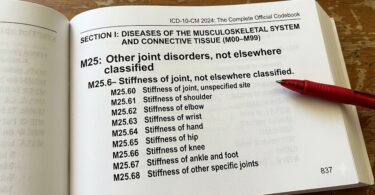
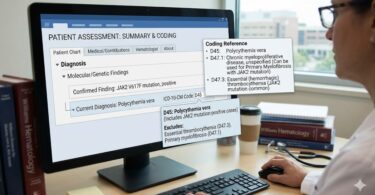
If you have ever stared at a billing form wondering which code correctly represents a dose of Stelara (ustekinumab), you are not alone. Biologic medications often carry complex coding rules, and Stelara is no exception.
Whether you are a medical coder, a billing specialist, or a patient trying to understand an invoice, getting the “Stelara HCPCS code” right is crucial. A single digit error can lead to denied claims, delayed payments, or even audits.
In this guide, we will break down everything you need to know. We will cover the specific codes, how to apply them correctly, and the key differences between the original formulation and newer biosimilar options.
Let us clear up the confusion so you can bill with confidence.
What Exactly is Stelara?
Before we jump into the codes, let us take a moment to understand the drug itself. Stelara is the brand name for ustekinumab. It is a biologic medication that targets specific proteins in the immune system.
Doctors primarily prescribe Stelara for moderate to severe plaque psoriasis, psoriatic arthritis, Crohn’s disease, and ulcerative colitis. The drug works by blocking interleukin-12 and interleukin-23, which are involved in inflammatory processes.
Because Stelara is administered by a healthcare professional, you will almost never bill it under a patient’s own pharmacy benefit. Instead, it falls under the medical benefit. This is where HCPCS Level II codes come into play.
Important note: Stelara is not an over-the-counter drug. It requires a prescription and is typically given as an intravenous infusion (for induction) or a subcutaneous injection (for maintenance).
Why the Correct Stelara HCPCS Code Matters
Using the wrong code does more than slow down your revenue cycle. It can trigger compliance alerts from Medicare and commercial payers. The Office of Inspector General (OIG) actively reviews claims for biologics because they are high-cost items.
A correct code achieves three things:
- It accurately describes the drug and dosage.
- It justifies the medical necessity of the treatment.
- It ensures proper reimbursement without clawbacks.
So, what is the correct code? The answer depends on which formulation of Stelara you are using and the date of service.
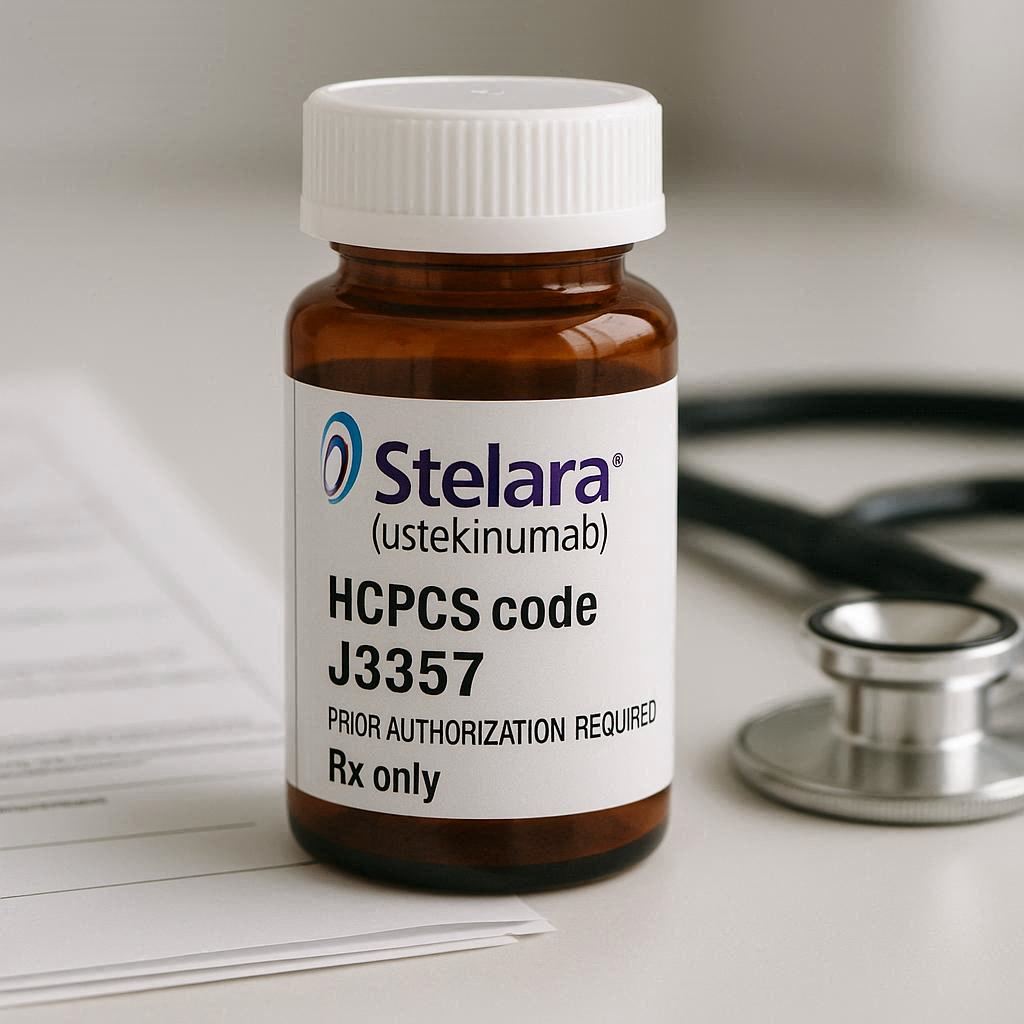
The Official Stelara HCPCS Code: J3357
For many years, the standard HCPCS code for Stelara was J3357. This code remains active and valid for specific circumstances.
J3357 describes: Injection, ustekinumab, 1 mg.
Let us clarify how this works. Stelara comes in two primary dosage forms:
- 45 mg/0.5 mL pre-filled syringe (subcutaneous).
- 90 mg/mL pre-filled syringe (subcutaneous).
- 130 mg/26 mL vial for intravenous infusion.
Because J3357 is billed per milligram, you must calculate the total number of milligrams administered. For example:
- A standard 45 mg subcutaneous injection = 45 units of J3357.
- A standard 90 mg subcutaneous injection = 90 units of J3357.
When to Use J3357
You should use J3357 for the original reference product (Stelara brand name) when the patient receives the subcutaneous maintenance dose. It also applies to the IV infusion dose used for induction therapy in Crohn’s disease or ulcerative colitis.
Here is a quick example. A patient with plaque psoriasis receives a 45 mg subcutaneous injection in your office. On your claim form, you would write:
- HCPCS Code: J3357
- Units: 45
- NDC: (We will cover NDC requirements later)
Does J3357 Work for All Payers?
Most commercial payers accept J3357 without issue. Medicare Part B also accepts it, but with a significant warning. As of recent years, Medicare has begun transitioning coverage toward biosimilar alternatives. You need to verify whether the specific plan requires you to bill for the biosimilar instead.
Do not assume J3357 is always the correct answer. Always check the specific product you physically administered.
The New Biosimilar Code: Q5126
In 2024 and beyond, the biologic landscape changed. Biosimilars to ustekinumab entered the market. The first notable biosimilar is Wezlana (ustekinumab-auub), approved by the FDA.
For these biosimilar products, the HCPCS code is different. The code Q5126 describes: *Ustekinumab-auub, biosimilar, 1 mg.*
This code is specific to the biosimilar version. It is not interchangeable with J3357.
Why Q5126 Exists
Medicare and private insurers want to track the utilization of biosimilars separately from the reference product. Using Q5126 tells the payer:
- You did not use the original Stelara brand.
- You used a therapeutically equivalent but distinct product.
- You are likely eligible for a different reimbursement rate (often lower but with fewer coverage restrictions).
When to Use Q5126
You should use Q5126 only if your clinic or hospital purchased and administered an FDA-approved ustekinumab biosimilar, such as Wezlana. Do not use Q5126 for the original Stelara.
A common mistake is using Q5126 because it “sounds similar.” Always verify the vial or syringe label before submitting the claim.
Comparison Table: J3357 vs. Q5126
Let us put these two codes side by side for clarity.
| Feature | J3357 | Q5126 |
|---|---|---|
| Drug type | Reference biologic (Stelara brand) | Biosimilar (e.g., Wezlana) |
| Billing unit | 1 mg | 1 mg |
| Medicare Part B status | Covered, but limited | Preferred in many regions |
| Reimbursement rate | Higher (typically 106% of ASP) | Lower (generally 94% of ASP + add-on) |
| NDC required | Yes | Yes |
| Administration routes | Subcutaneous + IV | Subcutaneous + IV |
Important note: Do not switch between these codes arbitrarily. You must bill the code that matches the product you purchased.
Step-by-Step: How to Bill Stelara Correctly
Billing a biologic is not just about picking a HCPCS code. You also need supporting details. Let us walk through a clean claim submission.
Step 1: Confirm the NDC
The National Drug Code (NDC) is an 11-digit identifier. Every vial or syringe of Stelara (or its biosimilar) has a unique NDC. You must report the NDC on the claim, typically in the 2410 loop for professional claims or the LIN segment for institutional claims.
For example:
- Stelara 45 mg/0.5 mL syringe NDC: 57894-060-01 (example, verify current).
- Wezlana NDC: Confirm with your supplier.
Step 2: Calculate Units Correctly
Both J3357 and Q5126 use a 1 mg billing unit. That means you cannot bill in fractions. Rounding rules apply.
Let us say you administer a 90 mg dose. You bill 90 units. If you administer a 45 mg dose, you bill 45 units.
Wrong example: Billing 1 unit for a 45 mg dose because “one syringe.” That is incorrect. The code is per milligram, not per syringe.
Correct example: Billing 45 units for a 45 mg injection.
Step 3: Add the Administration Code
You cannot bill a drug code alone. You also need an administration code that describes the work of injecting or infusing the drug.
For subcutaneous injections:
- 96372 – Therapeutic, prophylactic, or diagnostic injection (subcutaneous or intramuscular).
For intravenous infusions (induction dose for Crohn’s or colitis):
- 96365 – IV infusion, for therapy, prophylaxis, or diagnosis (first hour).
- +96366 – Each additional hour (add-on code).
Do not forget these administration codes. Without them, the payer may deny the entire claim.
Medicare and Stelara Reimbursement Rules
Medicare Part B covers Stelara (and its biosimilars) for FDA-approved indications. However, you must meet specific coverage requirements.
Prior Authorization
Many Medicare Advantage plans require prior authorization for Stelara. Original Medicare (Part B) generally does not require prior authorization for the drug itself, but it does require documentation of medical necessity. You must show that the patient has tried and failed or cannot tolerate conventional therapies.
For psoriasis, this often means documentation of phototherapy, methotrexate, or cyclosporine failure.
Average Sales Price (ASP)
Medicare reimbursement for J3357 is based on the Average Sales Price (ASP) plus 6% of the ASP (or 106% total). For biosimilars billed under Q5126, the reimbursement is typically 94% of the ASP of the reference product plus an add-on payment of 6% of the ASP of the reference product. This effectively equals 100%, but the calculation differs.
The Competitive Acquisition Program (CAP)
Most providers do not use CAP. Instead, you will buy the drug directly (buy and bill) and then seek reimbursement. This means you need to manage your inventory carefully. Do not stock too much Stelara if patient volumes are low. The drug has an expiration date, and wasted doses are generally not reimbursable.
Warning: Medicare does not pay for discarded amounts of single-dose vials if you could have used a smaller vial. Plan your dosing carefully.
Common Billing Errors and How to Avoid Them
Even experienced billers make mistakes with biologics. Here are the most frequent errors we see with Stelara claims.
Error 1: Using the Wrong Unit of Measurement
As mentioned earlier, some billers mistakenly use “1” unit for the entire syringe. This is the most common denial reason.
Fix: Always convert the milligrams to units. J3357 and Q5126 are per milligram.
Error 2: Mixing Reference and Biosimilar Codes
If you dispense Wezlana but bill J3357, the NDC and HCPCS will not match. Payers have automated systems that cross-check these fields. A mismatch triggers an automatic denial.
Fix: Train your staff to read the vial label every time. Document the lot number and NDC before administration.
Error 3: Missing the NDC on the Claim
Some small practices still omit the NDC on professional claims. As of 2026, most payers require the NDC for any drug billed under a HCPCS code with a per-milligram or per-unit basis.
Fix: Add the NDC field to your charge capture form. Do not skip it.
Error 4: Billing for Induction and Maintenance in One Line
The IV induction dose (usually 260 mg or 390 mg based on weight) is a single infusion event. The maintenance doses are subcutaneous injections. Never combine these on the same claim line. Separate the drug lines by date of service and route of administration.
Real-World Billing Scenarios (With Examples)
Let us look at three realistic patient cases to see how the Stelara HCPCS code applies.
Scenario 1: Psoriasis Patient – First Maintenance Dose
A 55-year-old male with plaque psoriasis receives his first subcutaneous maintenance dose of Stelara 45 mg after completing two IV induction doses. You use the original brand Stelara.
Your claim should show:
- Line 1: J3357 – 45 units
- Line 2: 96372 (administration)
- NDC: 57894-060-01 (example)
Scenario 2: Crohn’s Disease Induction with Biosimilar
A 32-year-old female with moderate to severe Crohn’s disease receives an IV infusion of Wezlana (ustekinumab-auub) 260 mg (6 mg/kg for a 43 kg patient). Weight-based dosing applies.
Your claim should show:
- Line 1: Q5126 – 260 units
- Line 2: 96365 (first hour infusion)
- Line 3: +96366 if infusion exceeds one hour
- NDC: (Insert correct Wezlana NDC for 130 mg/26 mL vial)
Scenario 3: Ulcerative Colitis – 90 mg Subcutaneous
A 47-year-old male with ulcerative colitis receives a 90 mg subcutaneous injection of Stelara brand after an initial IV induction.
Your claim should show:
- Line 1: J3357 – 90 units
- Line 2: 96372
- NDC: (Confirm the 90 mg/mL syringe NDC)
How Payers View Stelara Prior Authorization
You may submit a perfect claim with the correct Stelara HCPCS code only to receive a denial for “lack of prior authorization.” Do not let this frustrate you. It is common.
Most commercial insurers require a prior authorization (PA) for Stelara. The PA process typically asks for:
- Diagnosis and disease severity scores (e.g., PASI for psoriasis, Mayo score for colitis).
- Previous treatments tried and failed (step therapy).
- Baseline lab work (TB test, liver function).
- Prescribing physician’s specialty (often dermatology, gastroenterology, or rheumatology).
Medicare Advantage plans follow similar rules. Original Medicare Part B does not require PA for Stelara itself, but it does require that the service is reasonable and necessary.
Pro tip: Submit the PA before the patient arrives for their injection. Retrospective authorizations are rarely approved.
The Role of Patient Assistance Programs
Stelara is expensive. Even with insurance, patients may face high coinsurance. The Stelara withU program offers copay assistance for eligible commercial patients. However, this does not change the HCPCS code you bill.
You will still bill J3357 or Q5126. The assistance card processes after the claim pays, reducing the patient’s responsibility.
For Medicare patients, manufacturer copay assistance is not allowed. You may need to look at foundation assistance programs or charity care.
As a provider, you should warn patients about potential high out-of-pocket costs before administering the drug. No one likes a surprise bill for $3,000.
Documentation Requirements for Compliance
Payers and auditors love to review biologic claims. You need bulletproof documentation.
Your medical record must include:
- Signed physician order – Specifically stating Stelara (or biosimilar), dose, route, and frequency.
- Administration record – Showing date, time, lot number, expiration date, and the person who administered the drug.
- Weight documentation – Required for IV induction dosing (6 mg/kg).
- Progress note – Justifying medical necessity and linking the drug to the patient’s diagnosis.
Without these elements, an auditor could recoup every dollar you were paid for the drug and administration. That is a financial disaster.
Future Changes to Stelara Coding
The biologic market evolves fast. More biosimilars are likely to receive FDA approval for ustekinumab. When that happens, we may see new HCPCS codes starting with Q5 or Q6.
Stay updated by:
- Checking the CMS HCPCS quarterly updates.
- Reading your local MAC’s newsletter.
- Subscribing to a coding service like AAPC or AHA Coding Clinic.
Do not assume that today’s codes will be correct next year. Particularly for J3357, we may see a gradual shift where Medicare refuses to pay for the reference product unless there is a documented medical reason (like an allergic reaction to a biosimilar component).
Additional Resource for Billing Staff
For the most current list of HCPCS codes, NDC crosswalks, and Medicare payment limits, bookmark the CMS Drug Pricing File:
👉 CMS Average Sales Price (ASP) Data (Note: Link opens in a new tab. Always verify quarterly updates.)
This file updates every quarter. Download the Excel sheet and search for “ustekinumab” to see the current ASP for J3357 and Q5126.
Frequently Asked Questions (FAQ)
1. What is the HCPCS code for Stelara 90 mg?
There is no separate code for 90 mg. You use J3357 or Q5126 and bill 90 units. If you use the brand Stelara, it is J3357 x 90 units.
2. Can I bill J3357 for a biosimilar?
No. Biosimilars require Q5126 (or a future biosimilar-specific code). Billing J3357 for a biosimilar is fraudulent.
3. Does Medicare cover Stelara for psoriasis?
Yes, but only if the psoriasis is moderate to severe and other systemic therapies have failed. You need supporting documentation.
4. How many units of J3357 for a 45 mg injection?
45 units. Remember the code is per 1 mg, not per syringe.
5. Do I need an NDC on the claim?
Yes, for almost all payers. The NDC must match the HCPCS code. If you bill J3357, the NDC must trace back to brand Stelara.
6. What happens if I use the wrong code?
The claim may deny, or worse, you could face a recoupment during an audit. Always double-check the product label before billing.
7. Is Stelara the same as Skyrizi?
No. They are different drugs. Skyrizi (risankizumab) has its own HCPCS code (J3590 or eventually a dedicated Q code). Do not confuse them.
8. Can a patient self-inject Stelara at home?
Yes, for maintenance doses. However, the drug is still typically billed by the prescribing physician’s office under a patient’s medical benefit, not as a pharmacy fill. The home injection does not generate a separate HCPCS code for the administration.
Conclusion
To summarize, the correct Stelara HCPCS code depends entirely on which product you administer: use J3357 for the original reference product and Q5126 for biosimilars like Wezlana. Always bill per milligram (not per syringe), include the NDC, and pair the drug code with the appropriate administration code (96372 for subcutaneous or 96365 for IV). By following these guidelines and staying current with CMS updates, you can avoid denials and ensure clean, compliant claims