If you have ever stared at a patient’s chart after a thorough wound washout and wondered, “What is the right wound washout CPT code for this situation?”—you are not alone.
This is one of the most common gray areas in procedural coding. The term “washout” can mean different things to different providers. Sometimes it is a simple irrigation of a superficial cut. Other times, it involves opening a deep surgical site, exploring the wound, and removing infected material.
In this guide, we will walk through everything you need to know about wound washout CPT codes. You will learn the difference between simple irrigation and formal debridement, when to use exploration codes, and how to document correctly to avoid denials.
Let us clear up the confusion—once and for all.
What Is a Wound Washout in Medical Terms?
Before picking a code, we need to understand what providers actually do during a wound washout.
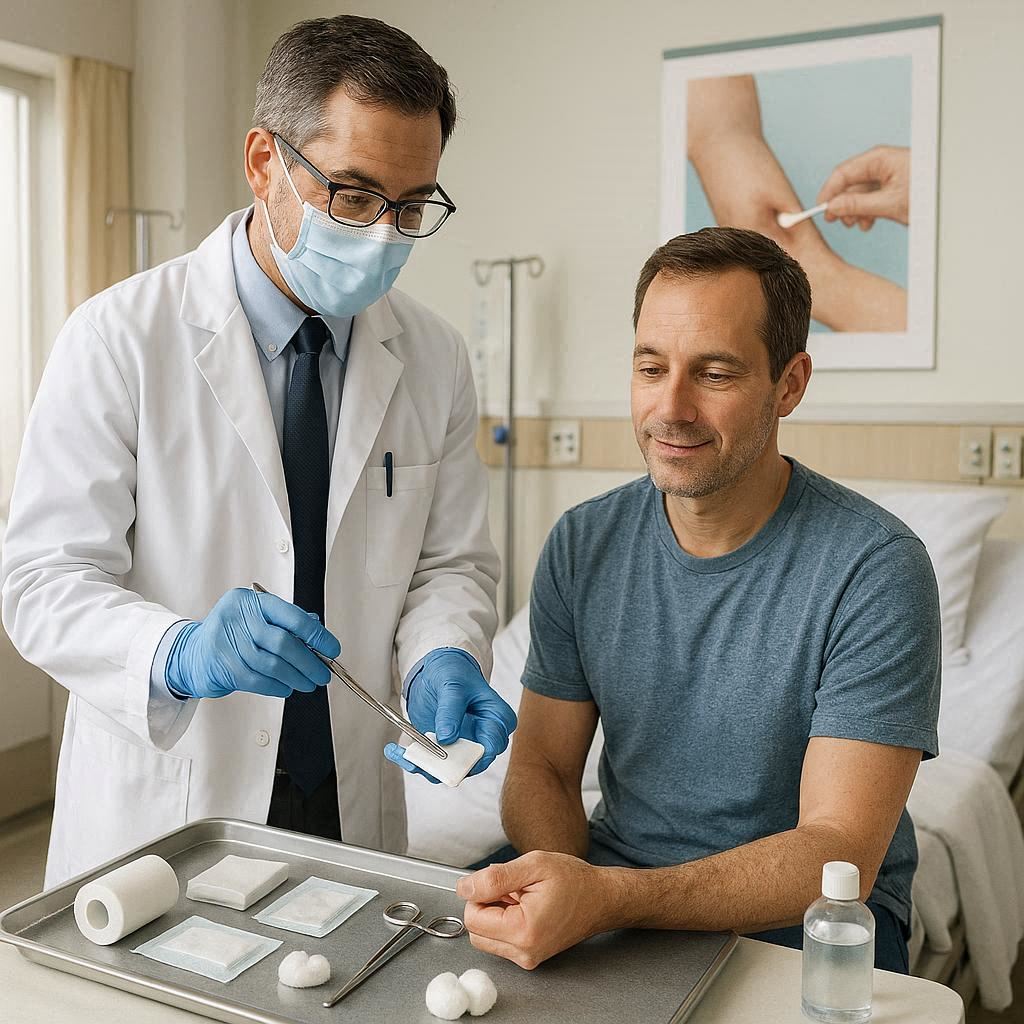
A wound washout is a procedure that cleans a wound to remove debris, bacteria, blood clots, and non-viable tissue. The goal is to reduce the risk of infection and promote healing.
Washouts are common after:
- Traumatic injuries (lacerations, crush injuries, open fractures)
- Infected surgical wounds
- Pressure ulcers or diabetic foot ulcers
- Postoperative wound breakdown
The procedure typically involves:
- Irrigation – flushing the wound with sterile fluid (normal saline)
- Debridement – cutting away dead or infected tissue
- Exploration – examining the depth of the wound for foreign bodies or hidden damage
Here is the important part: not every washout includes formal debridement. And not every washout is billable as a separate procedure.
Note for readers: Many payers consider a simple “flush and clean” as part of an evaluation and management (E/M) service. To bill separately for a wound washout, you usually need to perform a documented debridement or exploration.
The Most Common Wound Washout CPT Codes at a Glance
Let us start with a high-level overview. The table below lists the main CPT codes used for wound washout procedures.
| CPT Code | Procedure Description | Typical Use |
|---|---|---|
| 11042 | Debridement, subcutaneous tissue, 20 sq cm or less | Small infected wound, superficial ulcer |
| 11043 | Debridement, muscle and fascia, 20 sq cm or less | Deeper infection, surgical wound dehiscence |
| 11044 | Debridement, bone, 20 sq cm or less | Osteomyelitis, pressure ulcer with bone exposure |
| 11045 | Add-on for 11042 (each additional 20 sq cm) | Larger superficial wounds |
| 11046 | Add-on for 11043 (each additional 20 sq cm) | Larger muscle/fascia wounds |
| 11047 | Add-on for 11044 (each additional 20 sq cm) | Larger bone involvement |
| 10180 | Incision and drainage, complex, postoperative | Infected wound after prior surgery |
| 13160 | Secondary closure of surgical wound | Washout followed by delayed closure |
These codes are not interchangeable. Choosing the wrong one leads to payment delays or denials.
Debridement Codes (11042 – 11047) – The Core of Wound Washout Coding
Most wound washouts that qualify for separate reimbursement fall under the debridement code family. But there is a catch: you cannot bill debridement for simply wiping away loose debris or clots.
What Qualifies as “Debridement” for Coding?
Medicare and commercial payers define debridement as the active removal of necrotic or devitalized tissue using scissors, forceps, a scalpel, or a curette.
That means:
- ✔️ Cutting away dead tissue
- ✔️ Excising fibrin slough
- ✔️ Removing non-viable muscle or fascia
- ❌ Simply rinsing with saline does NOT count
- ❌ Gently wiping with gauze does NOT count
Think of it this way: if you did not use a sharp instrument to cut tissue, you probably did not perform a billable debridement.
Breaking Down the Depth of Debridement
The key difference between 11042, 11043, and 11044 is the depth of tissue removed.
| Code | Depth | Examples |
|---|---|---|
| 11042 | Subcutaneous tissue only (fat layer) | Pressure ulcer, diabetic ulcer without muscle involvement |
| 11043 | Muscle and/or fascia | Surgical site infection extending to muscle layer |
| 11044 | Bone | Chronic osteomyelitis, exposed bone with necrosis |
Remember: you code to the deepest level of debridement. If you remove bone, you do not also bill for muscle or fat in the same area.
Surface Area Rules – The 20 Square Centimeter Threshold
For initial debridement codes (11042, 11043, 11044), the first 20 sq cm is included. If the wound is larger, you add the corresponding add-on code (11045, 11046, 11047) for each additional 20 sq cm.
Here is a practical example:
- A wound with 30 sq cm of subcutaneous debridement = 11042 + 11045 (one additional unit)
- A wound with 60 sq cm of subcutaneous debridement = 11042 + 11045 x 2 units
Be careful: add-on codes cannot be billed alone. They must always follow a primary debridement code.
What About Simple Irrigation? When No Code Stands Alone
Not every wound washout justifies a separate CPT code.
If you flush a small laceration with saline, pick out a few visible dirt particles, and apply a bandage—that is typically considered part of the E/M service.
In that case, you do not use a wound washout CPT code at all. Instead, the work is included in the level of service (e.g., 99213 for an established patient).
So how do you know when to bill separately? Ask yourself three questions:
- Did I remove tissue with a sharp instrument?
- Did I explore the wound beyond the skin surface?
- Did I spend significant time beyond the office visit?
If the answer to all three is “no,” do not bill a separate washout code.
“We see many denials for 11042 when the documentation only describes ‘irrigated with saline.’ The provider truly must document sharp debridement of necrotic tissue.” – A real-world note from a coding auditor.
Postoperative Wound Washout – Using CPT 10180
Surgical site infections are common. When a patient returns to the operating room or procedure room for an infected wound washout after a prior surgery, you may use CPT 10180.
This code describes: “Incision and drainage, complex, postoperative.”
When to Choose 10180 Over Debridement Codes
CPT 10180 is specifically for postoperative wounds that require reopening of the surgical incision, drainage of purulent material, and exploration.
Key features of 10180:
- The wound was created by a previous surgery
- The provider opens the wound again (partially or fully)
- There is pus, hematoma, or seroma drainage
- The procedure is more complex than a simple I&D
Do not use 10180 for:
- Traumatic wounds (use debridement codes)
- Superficial abscesses (use 10060 or 10061)
- Clean, elective secondary closure (use 13160)
Documentation Requirements for 10180
To support 10180, your note must include:
- The date of the original surgery
- Evidence of postoperative infection (redness, fever, drainage)
- Description of opening the wound and exploring the depth
- Amount and character of fluid drained
- Whether a drain was placed
Without these details, the code will likely be downcoded to a simple I&D (10060), which pays significantly less.
Wound Exploration and Foreign Body Removal
Sometimes a wound washout includes looking for foreign material—glass, metal, wood, or retained surgical sponge.
If the exploration is minimal (looking with the naked eye without opening deeper planes), it is bundled into the debridement or E/M.
However, if you perform a formal wound exploration that requires dissection beyond the original wound margins, you may need a different code set.
For wound exploration without debridement, consider:
- CPT 20103 – Exploration of penetrating wound (chest)
- CPT 20100 – Exploration of penetrating wound (neck)
These codes are rarely used in outpatient clinics. They are more common in emergency departments or surgical suites.
In most routine wound washouts, exploration is not separately billable. It is considered part of the debridement or closure service.
Comparing Washout with Debridement: A Practical Decision Tree
Let us simplify your decision-making. Follow this logic flow when you perform a wound washout.
Step 1 – Did you use a sharp instrument to cut tissue?
- No → Do not bill a separate debridement code. The washout is part of E/M.
- Yes → Continue to Step 2.
Step 2 – What is the deepest tissue layer removed?
- Subcutaneous only → 11042
- Muscle or fascia → 11043
- Bone → 11044
Step 3 – What is the total surface area debrided?
- 20 sq cm or less → Primary code only
- More than 20 sq cm → Primary code + add-on(s)
Step 4 – Is this a postoperative wound infection?
- Yes, and you reopened the incision → Consider 10180
- No, traumatic wound → Use debridement codes above
This decision tree will catch 90% of wound washout scenarios.
Documentation Best Practices for Wound Washout Coding
Good documentation is the difference between paid claims and costly appeals. Payers are strict about wound care codes because of high rates of abuse.
Here is what your procedure note must include to support a wound washout CPT code.
Required Elements for Debridement Codes (11042-11047)
| Element | What to Write |
|---|---|
| Depth of debridement | “Debrided necrotic subcutaneous tissue” – not just “cleaned wound” |
| Instrument used | “Using a scalpel and curved scissors” |
| Tissue removed | “Removed 15 grams of non-viable fat and fibrin” |
| Surface area | “Debridement area measured 4cm x 5cm = 20 sq cm” |
| Appearance before/after | “Necrotic tissue removed; healthy bleeding base visible” |
Required Elements for Postoperative Washout (10180)
- Original surgery date and type
- Signs of infection (purulence, fever, elevated WBC)
- Method of opening the wound (e.g., “removed three sutures and opened fascial plane”)
- Exploration details (“probed to depth of 5cm, no retained foreign body”)
- Drain placement, if any
Common Documentation Mistakes
- ❌ “Performed washout” – too vague
- ❌ “Debrided wound” – no depth or method
- ❌ “Area approximately the size of a quarter” – not precise
- ❌ No mention of instrument used
Instead, write: “Using a #15 blade and tissue forceps, sharply debrided 15 sq cm of non-viable subcutaneous fat from the wound base until punctuate bleeding was observed.”
That single sentence supports 11042.
When to Bill Wound Washout with Closure (CPT 13160)
Sometimes after a washout, the wound is clean enough to close. But closing a wound after infection requires caution.
CPT 13160 – Secondary closure of a surgical wound or dehiscence.
This code is used when:
- A wound that was previously open (often after a washout) is now closed
- The closure is delayed (not at the time of original surgery)
- The wound was previously infected or dehisced
Important: you can bill debridement (11042-11044) and then on a different day bill 13160 for the closure. However, if the closure happens immediately after the washout in the same session, check payer guidelines. Some bundle closure into the debridement.
When in doubt, add modifier 59 (distinct procedural service) if the closure is truly separate from the washout.
Medicare and Payer-Specific Rules
Medicare has several local coverage determinations (LCDs) for wound debridement. These vary by region. Always check your local MAC’s policy.
However, some national rules apply everywhere:
The “Two-Week Rule” for Debridement
Medicare typically does not pay for debridement of the same wound site more than once every 14 days unless there is documented new necrosis or infection.
If you perform a washout on day 1 and again on day 5 without significant change, the second one will likely be denied.
Debridement in Nursing Facilities
For patients in skilled nursing facilities, debridement codes are often bundled into the daily nursing rate unless performed by a physician or qualified NPP in a separate session.
Wound Washout in the Emergency Department
In the ER, a simple wound irrigation is part of the E/M code. To bill a debridement separately, you must document sharp debridement of necrotic tissue. The same rules apply as in the office.
Billing Examples – Real Patient Scenarios
Let us put theory into practice with five common scenarios.
Scenario 1 – Simple Irrigation
A 32-year-old man comes in with a dirty abrasion on his forearm after a bike fall. You flush with saline, pick out two small gravel pieces with forceps, and apply a bandage. No cutting.
Correct coding: E/M service only (e.g., 99283 in ER or 99213 in office). No separate wound washout CPT code.
Scenario 2 – Diabetic Foot Ulcer
A 65-year-old with diabetes has a 12 sq cm plantar ulcer with yellow fibrin and non-viable fat. You use a curette and scissors to remove the fibrin and devitalized fat until bleeding tissue appears.
Correct coding: 11042 (subcutaneous debridement, ≤20 sq cm).
Scenario 3 – Large Surgical Wound Dehiscence
A postoperative patient has a 45 sq cm abdominal wound breakdown down to muscle fascia. You debride non-viable fascia and muscle over the entire area.
Correct coding: 11043 (first 20 sq cm) + 11046 x 2 (next 40 sq cm).
Scenario 4 – Infected Hip Incision
A patient returns 10 days after hip replacement with a red, draining incision. You open the wound, drain 30cc of pus, probe to the fascia, and place a drain.
Correct coding: 10180 (complex postoperative wound washout).
Scenario 5 – Pressure Ulcer with Bone Exposure
A nursing home patient has a sacral ulcer with exposed, necrotic bone. You remove a small piece of non-viable bone using a rongeur. The area is 8 sq cm.
Correct coding: 11044 (bone debridement, ≤20 sq cm). Do not also bill 11042 or 11043 for the same area.
Frequently Asked Questions (FAQ)
1. What is the CPT code for wound washout without debridement?
There is no specific CPT code for irrigation alone. It is included in the E/M service. You only bill separately when debridement or formal exploration is performed.
2. Can I bill an evaluation and management code on the same day as a wound washout?
Yes, but only if the E/M is for a separately identifiable problem. Append modifier 25 to the E/M code. The documentation must clearly show a distinct reason for the visit before deciding to perform the washout.
3. What is the difference between CPT 11042 and 10180?
11042 is for debridement of subcutaneous tissue, typically in chronic or traumatic wounds. 10180 is for reopening a postoperative wound due to infection or hematoma.
4. How do I measure surface area for debridement codes?
Measure the actual debrided area, not the entire wound. If the wound is 30 sq cm but only 15 sq cm of that required sharp debridement, you bill 11042 (no add-on). Document both the total wound size and the debrided size.
5. Does Medicare cover wound washout for pressure ulcers?
Yes, if it meets medical necessity. The ulcer must have necrotic tissue requiring sharp debridement. Routine cleaning does not qualify.
6. What modifier should I use for multiple wounds?
If you debride two separate wound sites (e.g., left leg and right foot), you may bill each site separately with modifier 59 (XU). However, some payers require a single code for the largest area. Check your specific payer policy.
7. Is a wound washout the same as “I&D”?
No. I&D (incision and drainage) typically refers to an abscess. A wound washout usually refers to an open wound or surgical site. They are coded differently.
Additional Resources for Wound Washout Coding
For the most up-to-date and authoritative guidance, refer to these trusted sources:
- CMS Debridement Services Guidelines – Search for “Medicare Claims Processing Manual, Chapter 12, Section 30.6”
- American Academy of Professional Coders (AAPC) – Free articles and forums on wound debridement
- CPT Assistant (AMA publication) – Monthly coding guidance with case examples
👉 Recommended external link:
Centers for Medicare & Medicaid Services – Debridement Services Payment Policy (Search for “debridement” in the Medicare Learning Network)
Key Takeaways – A Quick Summary
- A separate wound washout CPT code usually requires sharp debridement, not just irrigation.
- Use 11042, 11043, or 11044 based on the deepest tissue layer debrided.
- Add +11045, +11046, +11047 for each additional 20 sq cm beyond the first 20.
- Postoperative infected wound washouts often use 10180.
- Without tissue removal, the washout is included in the E/M service – do not bill extra.
- Document depth, instrument, area, and tissue type to support your code.
- Check your local Medicare LCD – rules vary by region.
Conclusion – Three Lines to Remember
Choosing the right wound washout CPT code comes down to depth, documentation, and intent. Without sharp debridement of non-viable tissue, you are looking at an E/M service, not a billable procedure. When in doubt, document exactly what you cut, how much, and how deep – the correct code will follow naturally.
Disclaimer: This article is for educational purposes only. Medical coding rules change frequently, and payer policies vary. Always consult your official CPT manual, local coverage determinations, and a certified medical coder before submitting claims.