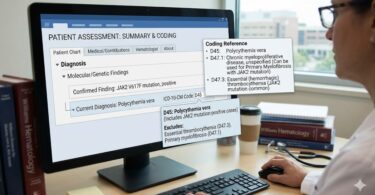
If you or a loved one has received a diagnosis involving a lack of B-cells, you might feel overwhelmed by medical terminology. You have probably heard the term “B-cell aplasia” and are now trying to find the correct medical code for insurance, records, or personal understanding.
Let us be honest: navigating medical coding is not fun. But getting the right code is essential for insurance approval, treatment plans, and even accessing specialized therapies.
In this guide, we will break down exactly what the ICD-10 code for B-cell aplasia is. We will explain what this condition means for your body, how doctors diagnose it, and why using the right code matters more than you think.
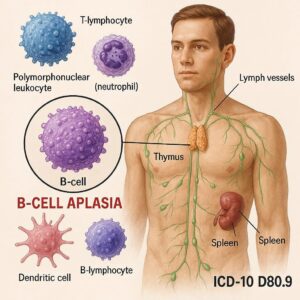
ICD-10 Code for B-Cell Aplasia
What Is B-Cell Aplasia? A Simple Explanation
Before we dive into codes, let us talk about the biology in plain English.
Your body has a powerful army to fight infections. That army includes different types of soldiers. B-cells are a specific type of white blood cell. Their main job is to produce antibodies—tiny proteins that remember invaders like viruses and bacteria.
Think of B-cells as the memory unit of your immune system. They remember the chickenpox you had as a child and keep you from getting it again.
B-cell aplasia means that your body is not producing these crucial B-cells. It is like your immune army has lost its intelligence unit. You might still have other immune cells (like T-cells), but without B-cells, you are highly vulnerable to repeated infections.
How Is This Different from Other Immune Issues?
It is easy to confuse B-cell aplasia with other conditions. Let us clarify:
-
B-cell aplasia: Extremely low or absent B-cells.
-
Hypogammaglobulinemia: Low levels of antibodies (often caused by low B-cells, but not always).
-
Agammaglobulinemia: No antibodies at all. This is often the clinical result of severe B-cell aplasia.
-
Neutropenia: Low neutrophils (a different type of white blood cell).
In short, B-cell aplasia is a cellular problem. The cells are missing. The other conditions are usually consequences of that missing population.
What Is the Exact ICD-10 Code for B-Cell Aplasia?
Now, let us answer the main question you came here for.
The primary ICD-10 code for B-cell aplasia is D80.1.
This code falls under the category “Certain disorders involving the immune mechanism.” More specifically, D80.1 describes “Non-familial hypogammaglobulinemia.”
When a coder uses D80.1, they are usually referring to a case where a patient has:
-
Severe reduction in all serum immunoglobulin classes (IgG, IgA, IgM).
-
A marked decrease or complete absence of B-cells in the blood.
-
An increased susceptibility to bacterial infections.
Important note: D80.1 is the closest and most specific code available for isolated B-cell aplasia in the current ICD-10-CM system. There is no single code labeled “B-cell aplasia” in the index, but D80.1 is the accepted standard for this presentation.
Other Codes That Might Apply
Depending on the cause of your B-cell aplasia, a doctor might use a different code. Do not be alarmed if you see a different number on your chart. Here is a quick reference:
| Clinical Scenario | Possible ICD-10 Code | Code Description |
|---|---|---|
| Inherited form (born with it) | D80.0 | Hereditary hypogammaglobulinemia |
| Drug-induced B-cell aplasia | D80.1 + T-code | Non-familial + Adverse effect code |
| Post-rituximab therapy | D80.1 | Non-familial hypogammaglobulinemia |
| Common Variable Immunodeficiency (CVID) | D83.9 | Common variable immunodeficiency |
| Transient low B-cells in infancy | D80.7 | Transient hypogammaglobulinemia of infancy |
Reader Note: Always ask your provider for the exact code. Do not assume D80.1 is correct for you without clinical confirmation.
Common Causes of B-Cell Aplasia
Why does this happen? Understanding the cause helps coders pick the right secondary codes. It also helps patients understand their prognosis.
1. Congenital (Inherited) Forms
Some people are born with genetic mutations that prevent B-cell development. The most famous example is X-linked agammaglobulinemia (XLA) , also known as Bruton’s agammaglobulinemia.
-
Who it affects: Almost exclusively males.
-
Genetic issue: Mutation in the BTK gene.
-
ICD-10 code: D80.0
2. Acquired (Non-Familial) Forms
This is where code D80.1 shines. Acquired B-cell aplasia can start at any age. The causes vary widely.
Medication-induced: This is becoming increasingly common. Certain drugs wipe out B-cells intentionally or as a side effect.
-
Rituximab (Rituxan): Used for lymphoma and autoimmune diseases. It specifically targets CD20 on B-cells.
-
Chemotherapy agents: Many chemo drugs suppress bone marrow.
-
Immunosuppressants: Used after organ transplants.
Post-infectious: Some viral infections can temporarily or permanently damage B-cell precursors.
Idiopathic: In many cases, doctors simply do not know the cause. The immune system seems to attack its own B-cell factories. This is frustrating, but it is also very real.
3. Secondary B-Cell Aplasia
This happens when another disease damages the bone marrow or immune system.
-
Thymoma (tumor in the thymus gland).
-
Leukemia or lymphoma.
-
Severe malnutrition.
Symptoms That Lead to a Diagnosis
How do doctors realize someone has B-cell aplasia? Patients usually do not wake up feeling “low on B-cells.” Instead, they notice a pattern of illness.
The classic symptoms include:
-
Recurrent sinus infections. Three or more per year.
-
Persistent bronchitis or pneumonia.
-
Chronic diarrhea caused by gut infections.
-
Unusual infections like meningitis or sepsis.
-
Failure to thrive in children (not gaining weight or growing properly).
A Typical Patient Story
*Sarah was 24 years old. She had taken antibiotics 11 times in the last two years. Her friends called her “the sick one.” When she developed pneumonia for the fourth time in 18 months, her doctor finally ordered immunoglobulin levels. Her IgG was 150 mg/dL (normal is 700-1600). A flow cytometry test showed almost zero B-cells in her blood. Her chart now carries the code D80.1.*
This is not a rare story. Thousands of adults live for years without a proper code or diagnosis.
How Doctors Diagnose B-Cell Aplasia (The Tests)
To assign the ICD-10 code D80.1 correctly, doctors must perform specific tests. Here is what the diagnostic process looks like.
Step 1: Serum Immunoglobulin Levels
This is a simple blood test. It measures IgG, IgA, and IgM.
-
IgG: The most important for long-term protection.
-
IgA: Protects mucosal surfaces (gut, lungs).
-
IgM: The first responder during new infections.
In B-cell aplasia, all three are usually very low. Total IgG is often below 300 mg/dL.
Step 2: Flow Cytometry (B-Cell Count)
This is the confirmatory test. A lab looks at your blood cells under a laser. They count how many cells have the CD19 or CD20 marker (these are B-cell identifiers).
-
Normal B-cell count: 100-500 cells/microliter.
-
B-cell aplasia: Less than 1% of lymphocytes are B-cells. Often zero B-cells detected.
Step 3: Vaccine Response Test
Doctors sometimes give you a vaccine (like tetanus or pneumococcal). Then they check if your body made antibodies.
Without B-cells, your body cannot respond. This confirms the functional problem.
Treatment Options for D80.1 (B-Cell Aplasia)
An ICD-10 code is not just a label. It dictates treatment. For D80.1, treatment is life-changing but effective.
Immunoglobulin Replacement Therapy (IRT)
This is the gold standard. Patients receive concentrated antibodies from healthy donors.
-
Intravenous (IVIG): Infusion every 3-4 weeks. Takes 2-4 hours.
-
Subcutaneous (SCIG): Weekly or bi-weekly injection at home. Takes 30-60 minutes.
What it does: IRT does not fix B-cell aplasia. It does not create new B-cells. Instead, it gives you the antibodies your body cannot make. Think of it like a blood transfusion, but for immunity.
Treating the Underlying Cause
If drugs caused the aplasia, stopping the drug might allow B-cells to return. This can take months.
-
Rituximab-induced aplasia: B-cells usually return in 6-12 months.
-
Chemotherapy-induced: Recovery varies. Some patients need permanent IRT.
Antibiotics
Many patients take daily preventive antibiotics (prophylaxis). This reduces the bacterial load while waiting for IRT to work.
Coding Nuances: When D80.1 Is Not Enough
Medical coding is rarely simple. Here are real-world situations that require extra codes.
Scenario 1: Drug-Induced B-Cell Aplasia
A 58-year-old with rheumatoid arthritis gets rituximab. Six months later, they have zero B-cells and recurrent pneumonia.
Correct coding:
-
D80.1 (Non-familial hypogammaglobulinemia)
-
T45.2X5A (Adverse effect of antineoplastic and immunosuppressive drugs, initial encounter)
-
M05.9 (Rheumatoid arthritis, unspecified)
Scenario 2: B-Cell Aplasia After a Stem Cell Transplant
A patient with leukemia receives a bone marrow transplant. Their new immune system fails to make B-cells.
Correct coding:
-
D89.811 (Graft-versus-host disease, acute)
-
D80.1 (Non-familial hypogammaglobulinemia)
-
Z94.81 (Bone marrow transplant status)
Scenario 3: Suspected but Unconfirmed
A child has recurrent ear infections and low IgG. But the flow cytometry shows some B-cells (2%).
Correct coding: Do not use D80.1 yet. Use D83.9 (Common variable immunodeficiency, unspecified) until more data is available.
Why Proper Coding Matters for Patients
You might think codes are just for billing. They are not. They affect your life in three critical ways.
1. Insurance Authorization for IVIG
Immunoglobulin therapy costs between 10,000and20,000 per month. Insurance will reject it without the right code. Code D80.1 is one of the few codes that triggers automatic approval for IRT in most US insurance plans.
2. Access to Specialty Centers
Many immunology clinics require a confirmed ICD-10 code for referral. Without D80.1 or D80.0, you might wait years to see a specialist.
3. Clinical Research and Orphan Drug Status
B-cell aplasia is rare. Accurate coding helps researchers track how many people have it. This drives funding for new treatments.
Common Coding Mistakes to Avoid
If you work in medical billing, avoid these errors.
| Mistake | Why It Is Wrong | Correct Action |
|---|---|---|
| Using D83.9 for zero B-cells | CVID usually implies some B-cells are present. | Use D80.1 for absolute deficiency. |
| Forgetting the cause code | D80.1 alone ignores why it happened. | Add T-codes or M-codes. |
| Coding D80.1 for low IgG only | Low IgG without B-cell confirmation is not aplasia. | Use D83.0 (Common variable with autoantibodies). |
| Using D80.0 for adult-onset | D80.0 is for inherited, usually pediatric. | Use D80.1 for new onset in adults. |
Living with B-Cell Aplasia: Realistic Expectations
Let me give you honest advice. A diagnosis coded as D80.1 is serious, but it is not a death sentence.
What You Can Expect
-
With IRT: Most patients live normal lives. They work, travel, and raise families. The risk of severe infection drops by over 80%.
-
Without IRT: Life expectancy is reduced. Chronic lung disease and recurrent sepsis are common.
Practical Daily Tips
Do:
-
Wash your hands frequently.
-
Stay up to date on vaccines (inactivated only—no live vaccines like MMR or yellow fever).
-
Wear a mask in crowded indoor spaces during flu season.
Do not:
-
Eat raw sushi or unpasteurized dairy (risk of gut bacteria).
-
Ignore a fever. It requires immediate medical evaluation.
-
Get live vaccines. They can cause the disease they are meant to prevent.
The Difference Between Pediatric and Adult Coding
Age matters when assigning codes for B-cell aplasia.
Children (Under 1 Year)
Newborns have transient low B-cells. This is normal. The immune system matures over months.
-
Do not code D80.1 in a healthy 3-month-old.
-
Use P61.2 (Anemia of prematurity) or observation codes if concerned.
Children (1-18 Years)
-
Suspect D80.0 (Hereditary) if male and recurrent infections start in infancy.
-
Suspect D80.7 (Transient) if B-cells are low but improving over time.
Adults (Over 18 Years)
-
Most adult cases are D80.1 (Acquired).
-
Always rule out thymoma with a chest CT.
Frequently Asked Questions (FAQ)
Q1: Is D80.1 the same as common variable immunodeficiency (CVID)?
No. CVID (D83.9) usually involves some B-cells that fail to mature properly. D80.1 means B-cells are almost completely absent. The treatment is similar, but the biology is different.
Q2: Can B-cell aplasia go away on its own?
Sometimes. If it is caused by a drug or infection, B-cells can return after 6-18 months. However, idiopathic and congenital forms are permanent.
Q3: What is the difference between D80.0 and D80.1?
D80.0 is hereditary (genetic, usually X-linked). D80.1 is non-familial (acquired or without known genetic cause). D80.0 is more common in boys. D80.1 can affect any gender at any age.
Q4: Do I need a special doctor for this?
Yes. You need a clinical immunologist. General practitioners often misdiagnose B-cell aplasia as “frequent colds.”
Q5: How often should I update my ICD-10 code?
Codes should be reviewed annually. If your B-cells return, your code should change to reflect recovery.
Q6: Will my insurance cover IVIG with D80.1?
Almost always, yes. D80.1 is on most insurance medical necessity lists for IVIG. However, you may need prior authorization.
Q7: Can I donate blood with B-cell aplasia?
No. People with D80.1 should not donate blood. Your blood lacks protective antibodies, and you are at higher risk of infection.
Q8: Is there a cure?
Not yet. Gene therapy for XLA (D80.0) is in clinical trials. For acquired D80.1, managing the underlying cause is the closest thing to a cure.
Additional Resources for Patients and Coders
You do not have to navigate this alone. Here are trustworthy sources for deeper information.
-
Immune Deficiency Foundation (IDF): The leading patient advocacy group. They offer free educational webinars and a nurse consult line. www.primaryimmune.org
-
ICD-10 Data for D80.1: Official coding guidelines and billable status. www.icd10data.com
-
Clinical Immunology Society (CIS): For medical professionals. They publish the latest research on B-cell disorders.
Link to official CDC vaccine guidelines for immunodeficient patients: CDC Altered Immunocompetence Guidelines
Final Thoughts: Why This Code Gives You Power
An ICD-10 code like D80.1 might seem like bureaucracy. But for the patient living with recurrent pneumonia and chronic fatigue, that code is a key. It unlocks the right treatment. It justifies the expensive immunoglobulin infusion. It tells the world, “This is a real medical condition, and it deserves real care.”
If you suspect you or your child has B-cell aplasia, push for the correct testing. Do not accept a vague code like “unspecified immune deficiency.” Get the flow cytometry. Get the precise diagnosis.
And once you have code D80.1 on your chart, find a good immunologist. Start treatment. Protect your lungs. You can live a full, rich life even without your own B-cells. You just need the right support.
Conclusion
In three lines: B-cell aplasia is coded primarily as D80.1 (non-familial hypogammaglobulinemia), characterized by absent B-cells and recurrent infections. Accurate coding is essential for accessing life-saving immunoglobulin therapy and avoiding insurance denials. Always document the underlying cause (drug, genetic, or idiopathic) to ensure complete and honest medical records.
Disclaimer: This article is for informational and educational purposes only. It does not constitute medical advice. ICD-10 coding guidelines change annually. Always consult a qualified medical coder or immunologist for your specific clinical situation. The author is not responsible for denied insurance claims or treatment errors based on this content.