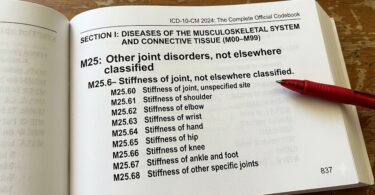
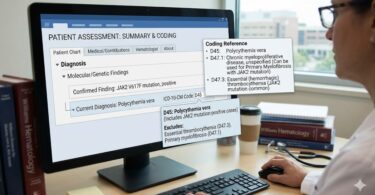
If you have recently received a diagnosis for yourself or a loved one, you might have seen a strange combination of letters and numbers on a medical report or insurance form: F84.0.
You are not alone if you feel confused. Medical codes can look like a secret language. But understanding them is important. This code helps doctors, therapists, and insurance companies communicate clearly. It ensures you get the right support, therapies, and financial coverage.
In this guide, we will break down everything you need to know about the ICD-10 code for autism. We will use simple words, clear examples, and honest advice.
Important Note: This article is for educational purposes only. Always consult a qualified healthcare professional for a formal diagnosis and treatment plan.
ICD-10 Code for Autism

What Exactly is an ICD-10 Code?
Before we dive into the specific code for autism, let us look at the bigger picture. What is an ICD-10 code?
The term “ICD-10” stands for the 10th revision of the International Classification of Diseases. It is a massive handbook published by the World Health Organization (WHO). In the United States, a modified version called ICD-10-CM (Clinical Modification) is used.
Think of it as a catalog. Every medical condition—from a common cold to a complex genetic disorder—has its own unique code. When a doctor types a code into your file, they are using a standardized language that every hospital and insurance company understands.
Why Does This Code Matter for Autism?
Here are three practical reasons why the specific code for autism is vital for you:
-
Insurance Reimbursement: Insurance companies will not pay for therapy (like ABA, speech, or occupational therapy) without a valid diagnosis code on the bill.
-
Access to Services: Schools and state support programs use this code to determine eligibility for special education or disability benefits.
-
Medical Communication: If you move to a new city or see a new specialist, the code tells them exactly what diagnosis you have without needing to repeat long reports.
The Primary ICD-10 Code for Autism: F84.0
Let us get straight to the answer you are looking for.
The primary ICD-10 code for Autism Spectrum Disorder is F84.0.
Specifically, the full title of this code is “Autistic disorder.”
However, this sometimes confuses people. Historically, there were several different diagnoses for autism-related conditions. The ICD-10 still reflects some of that old language, even though modern clinical practice (following the DSM-5) usually groups everything under “Autism Spectrum Disorder.”
A Quick Look at the “F84” Category
The code F84.0 lives under a larger family of codes. Here is a simple breakdown:
| Code Category | Condition Name | Simple Explanation |
|---|---|---|
| F84.0 | Autistic Disorder | Classic autism; significant social and communication challenges with restricted behaviors. |
| F84.1 | Atypical Autism | Similar to autism but starts later (after age 3) or does not meet all criteria. |
| F84.2 | Rett’s Syndrome | A genetic disorder mostly in girls; includes autism-like traits. |
| F84.3 | Other childhood disintegrative disorder | Late regression (after age 2) in language and social skills. |
| F84.5 | Asperger’s Syndrome | Autism without intellectual disability or language delay. |
| F84.8 | Other pervasive developmental disorders | Mixed or atypical presentations. |
| F84.9 | Pervasive developmental disorder, unspecified | Used when information is incomplete. |
Why is “Asperger’s” a different code (F84.5)?
This is a frequent point of confusion. In the ICD-10, Asperger’s Syndrome has its own code: F84.5.
In reality, many doctors today consider Asperger’s to be a form of autism level 1 (requiring support). However, for billing and historical record-keeping, you might still see F84.5 used. If you see F84.0 on your child’s chart, it generally indicates a broader or more classic presentation of autism.
Specific Diagnostic Criteria for F84.0 (Simplified)
Doctors do not assign the code F84.0 randomly. The patient must meet specific medical criteria. According to the ICD-10, for a diagnosis of F84.0 (Autistic disorder), the patient must show issues in three core areas before the age of 3.
Here is the human-friendly version of those criteria:
1. Social Interaction Problems (At least 2 of these)
-
Difficulty using eye contact, facial expressions, and body language.
-
Inability to make friends with peers (appropriate to their age).
-
Lack of emotional sharing (does not bring toys to show you; does not seek comfort).
-
Lack of social or emotional reciprocity (does not respond to smiles or conversations).
2. Communication Problems (At least 1 of these)
-
Delay or total lack of spoken language (without trying to use gestures as a substitute).
-
Trouble starting or sustaining a conversation.
-
Repetitive or odd use of language (repeating phrases like an echo).
-
Lack of imaginative or make-believe play appropriate to the child’s age.
3. Restricted and Repetitive Behaviors (At least 1 of these)
-
Intense preoccupation with one narrow interest (e.g., only spinning wheels or memorizing train schedules).
-
Rigid adherence to non-functional routines (e.g., tantrums if the furniture is moved).
-
Repetitive body movements (hand flapping, rocking, spinning).
-
Preoccupation with parts of objects (smelling everything, touching textures obsessively).
Realistic Warning: The ICD-10 is more rigid than the modern DSM-5. A patient might meet the criteria for Autism Spectrum Disorder in a modern clinic but still be coded as F84.9 (unspecified) under ICD-10 if they don’t fit the strict “classic” mold. This is a flaw in the system, not a flaw in the patient.
F84.0 vs. F84.5 (Asperger’s): A Detailed Comparison
Many parents ask: “Which code is better for my child?” There is no “better” code, only the code that fits the clinical picture. However, understanding the difference helps you read medical reports.
| Feature | F84.0 (Autistic Disorder) | F84.5 (Asperger’s Syndrome) |
|---|---|---|
| Language Delay | Yes. Significant delay in speaking. | No. Normal language development. |
| Cognitive Delay | Often present (intellectual disability). | Usually absent (average to above-average IQ). |
| Motor Skills | May be clumsy, but not required for diagnosis. | Often significant clumsiness or odd gait. |
| Social Interest | Usually withdrawn or aloof. | Often wants friends but fails due to odd social approach. |
| Age of Onset | Usually identified before age 3. | Usually identified after age 3 or later. |
A Quote from a Clinician
“When I use F84.0, I am documenting a patient who has significant language and learning delays alongside their social struggles. When I use F84.5, I am documenting a patient who speaks like an adult but cannot read a room. Both need support; they just need different types of support.” — Dr. A. Reyes, Developmental Pediatrician.
How to Use the Code for Insurance and Billing
This section is for parents and administrative staff. If you handle billing for a clinic or submit claims to insurance, accuracy is essential.
The “Medical Necessity” Link
Having the code F84.0 on a paper is not enough. Insurance companies require a medical necessity letter that links the code to the treatment.
For example:
-
Diagnosis: F84.0 (Autistic disorder)
-
Treatment Code: 97153 (ABA therapy, direct technician time)
-
Medical Necessity: “Due to the patient’s social impairment (F84.0), they require 10 hours of ABA to learn functional communication.”
Common Denial Reasons
If your claim for F84.0 gets denied, here are the likely reasons:
-
Invalid modifier: Sometimes you need a modifier (like -25 for a significant, separately identifiable service).
-
Missing treatment plan: The insurance company needs a copy of the diagnostic evaluation.
-
Outdated code: Ensure you are not using old ICD-9 codes (299.00).
Billing for Dual Diagnoses
Many autistic individuals have other conditions. You can (and should) bill for them using secondary codes.
Common secondary codes used with F84.0:
-
F70-F79: Intellectual disabilities (mild, moderate, severe).
-
F40.9: Specific phobia or anxiety.
-
F90.9: Attention-Deficit Hyperactivity Disorder (ADHD), unspecified type.
-
G40.909: Epilepsy (seizure disorder).
Important Note for Readers: Never bill for a code your doctor has not formally diagnosed. Adding an ADHD code to autism without an official evaluation is insurance fraud.
Transitioning from ICD-10 to ICD-11: What is Coming?
The medical world is slowly moving toward ICD-11. This is important because ICD-11 fixes many of the problems in the old system.
The Big Change for Autism
In the ICD-11, the old codes (F84.0, F84.5, F84.9) disappear. They are replaced by a single parent code:
6A02 – Autism spectrum disorder.
Under this new code, clinicians will add “qualifiers” to describe the patient. These qualifiers look like this:
-
6A02.0: Autism with no disorder of intellectual development (like old Asperger’s).
-
6A02.1: Autism with disorder of intellectual development (like old F84.0).
-
6A02.2: Autism with no loss of functional language.
-
6A02.3: Autism with loss of functional language (regressive autism).
When will the US switch?
The US healthcare system is famously slow to update. While ICD-11 was adopted globally in 2022, the US is still using ICD-10-CM. Expect a full transition to occur between 2025 and 2027.
What you should do now: Do not worry about changing your existing F84.0 diagnosis. It remains valid and billable today. When the switch happens, your doctor will automatically convert your records to the new 6A02 system.
Practical Resources for Parents Using Code F84.0
Once you have the code, what do you do with it? Here is a checklist of action steps.
Step 1: Verify the medical record
Call your doctor’s office. Ask the medical coder: “Can you please confirm that the primary diagnosis code on my child’s chart is F84.0?”
Step 2: Contact your insurance company
Ask these specific questions:
-
“Does my plan cover Autism Spectrum Disorder (F84.0) for ABA therapy?”
-
“Is there a maximum number of visits per year?”
-
“Do I need a pre-authorization before starting therapy?”
Step 3: Apply for state benefits
In many countries (including the US), an F84.0 diagnosis opens doors.
-
Medicaid: Usually covers autism services regardless of income in many states.
-
Developmental Disabilities Agency: Requires the F84.0 code to get on a waiting list for respite care or housing support.
-
School (IEP): While schools do their own evaluations, a medical F84.0 code is strong evidence to request an Independent Educational Evaluation (IEE).
Step 4: Build your therapy team
Use the code to get referrals. Show the code to:
-
A Board Certified Behavior Analyst (BCBA) for ABA therapy.
-
A Speech-Language Pathologist (SLP) for pragmatic language therapy.
-
An Occupational Therapist (OT) for sensory integration and motor skills.
Frequently Asked Questions (FAQ)
Q1: Is F84.0 the same as “severe autism”?
A: Not necessarily. F84.0 simply means you meet the criteria for “classic” autism. It does not automatically imply severity. Severity is usually noted separately (Level 1, 2, or 3) or with a specifier for intellectual disability. You can have F84.0 and be highly verbal.
Q2: My child has a diagnosis of PDD-NOS. What code is that?
A: In ICD-10, PDD-NOS (Pervasive Developmental Disorder-Not Otherwise Specified) falls under F84.8 (Other pervasive developmental disorders) or F84.9 (Unspecified). However, many clinics re-evaluate PDD-NOS cases to either F84.0 or F84.5 based on current symptoms.
Q3: Can an adult get a new diagnosis with code F84.0?
A: Yes, but it is rare. F84.0 requires onset before age 3. If an adult is seeking a new diagnosis and did not have clear language delays as a toddler, they are more likely to receive F84.5 (Asperger’s) or F84.9 (Unspecified). For adults, clinicians prefer F84.5 or the newer transitional codes.
Q4: Does the code F84.0 expire?
A: No. A diagnosis of autism is lifelong. Once F84.0 is in your medical chart, it stays there. You do not need to “renew” the code. However, insurance might require a re-evaluation every 3 years to confirm ongoing medical necessity for therapy.
Q5: Why does my doctor use F84.0 but the school uses “Autism Spectrum Disorder”?
A: That is very common. Doctors use medical codes (ICD-10). Schools use educational categories (IDEA – Individuals with Disabilities Education Act). The school’s term “Autism” is legally different from the medical term “Autistic disorder (F84.0).” You can qualify for school services under “Autism” even with a different medical code, and vice versa.
Common Errors to Avoid with ICD-10 Codes and Autism
To wrap up the technical section, let us look at the mistakes professionals make so you can catch them on your bills.
| Error | Why It Happens | The Fix |
|---|---|---|
| Using F84.9 (Unspecified) for years | The doctor is lazy or avoiding a formal diagnosis. | Request a re-evaluation. F84.9 may deny insurance coverage. |
| Using a mental health code (F99) instead | The clinician is not an autism specialist. | Find a developmental pediatrician or psychiatrist. |
| Billing F84.0 for genetic testing | Autism is a clinical diagnosis, not a genetic one. | Use a symptom code (R46.89 for odd behavior) for genetic testing. |
| No secondary code for anxiety | Many autistic people have untreated anxiety. | Add F41.1 (Generalized anxiety) to get therapy covered. |
Conclusion
To summarize this guide in three lines:
-
The primary ICD-10 code for classic autism is F84.0 (Autistic disorder), which requires proof of social, communication, and behavioral challenges starting before age three.
-
While modern medicine often uses the single term “Autism Spectrum Disorder,” F84.0 remains the current standard for medical billing, insurance approval, and accessing state support services.
-
The upcoming shift to ICD-11 (code 6A02) will simplify the system, but for now, ensure your medical records correctly use F84.0 or F84.5 to avoid claim denials.
Additional Resource
For the most reliable, up-to-date information on ICD-10 coding for developmental disorders, visit the Centers for Medicare & Medicaid Services (CMS) official ICD-10 webpage.
🔗 Resource Link: CMS.gov – ICD-10-CM Official Guidelines for Coding and Reporting (Copy and paste this link into your browser for the official government PDF guide).
Disclaimer: This content is provided for informational purposes only and does not constitute medical, legal, or billing advice. Coding regulations vary by payer, region, and time. Always verify codes with a certified medical coder or your healthcare provider. The author and publisher disclaim any liability for any adverse effects arising from the use or application of the information contained herein.