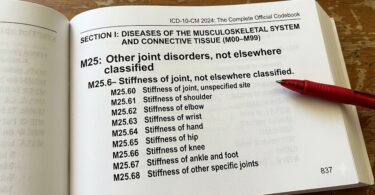
If you or someone you care for has been diagnosed with a skin condition caused by mites, you might have seen the code “B88.0” on a medical report or billing statement. Medical codes can look confusing at first glance. But they are simply a way for doctors, insurance companies, and researchers to speak the same language.
This guide is here to help you understand exactly what ICD-10 code B88.0 means. We will walk through the condition it represents, how doctors diagnose it, what treatment looks like, and why the correct code matters for your medical record.
Let us start with the basics and build your knowledge step by step.

ICD-10 Code B88.0
What Exactly Is ICD-10 Code B88.0?
ICD-10 code B88.0 falls under the category “Other acariasis.” Acariasis is a medical term for an infestation with mites or ticks. In simple words, it refers to skin problems caused by tiny parasites that are not lice or fleas.
The “B” in the code stands for certain infectious and parasitic diseases. The “88” group covers other infestations. The “.0” specifically points to other acariasis, meaning mite infestations that are not scabies (which has its own code, B86).
To put it plainly:
-
Scabies (caused by the human itch mite) → B86
-
Other mite infestations (like bird mites, chiggers, or dust mites causing skin reactions) → B88.0
This code helps doctors specify exactly what is happening on your skin. It also helps insurance companies understand why a certain treatment was necessary.
Important note: B88.0 is not for tick infestations alone. Ticks have different codes. This code focuses on mites and other similar arachnids that cause skin disease.
Who Uses ICD-10 Code B88.0 and Why?
Many different people in healthcare and administration use this code. Understanding who uses it can help you see why accuracy matters.
| User | Why they use B88.0 |
|---|---|
| Dermatologists | To document mite infestations other than scabies |
| Primary care doctors | To refer patients to specialists or prescribe treatment |
| Medical coders | To submit claims to insurance companies |
| Insurance adjusters | To approve or deny coverage for medications |
| Public health researchers | To track outbreaks of mite-related conditions |
| Hospital billing departments | To ensure correct reimbursement |
Without a proper code like B88.0, your medical record might not accurately reflect your condition. This could lead to denied claims, incorrect treatment plans, or confusion among your healthcare team.
What Conditions Are Included Under B88.0?
The term “other acariasis” covers several specific mite-related conditions. Let us look at the most common ones.
Chiggers (Trombiculiasis)
Chiggers are tiny red mite larvae found in grassy or wooded areas. They do not burrow into the skin. Instead, they attach to hair follicles and inject digestive enzymes. This causes intense itching and small red bumps.
Bird Mite Infestation
Bird mites normally live on pigeons, chickens, or other birds. When birds leave a nest near your home, the mites may migrate indoors and bite humans. These bites cause red, itchy welts.
Grain Mite Dermatitis
Grain mites live in stored grains, flour, or hay. People who work in agriculture, bakeries, or warehouses may develop contact dermatitis from these mites. The medical code for this condition is often B88.0.
Dust Mite Reactions (When Severe)
Technically, dust mites do not “infest” humans. They live in bedding and carpets. However, some individuals have such severe allergic reactions that doctors classify it under acariasis. This is less common but still possible.
Other Mite Types
-
Cheyletiella mites (walking dandruff from pets)
-
Rodent mites
-
Harvest mites
Each of these can cause a distinct skin rash, but they all share the same code umbrella under B88.0.
Symptoms You Might Experience with B88.0 Conditions
Symptoms vary depending on the type of mite. However, most people experience similar skin reactions. Recognizing these signs early can help you seek proper care.
Common Skin Signs
-
Intense itching – Often worse at night or after warm showers
-
Small red bumps – Usually on arms, legs, waist, or areas where clothing fits tightly
-
Pimple-like lesions – Sometimes with a tiny central dot
-
Linear scratch marks – From repeated scratching
-
Hives or wheals – Raised, red, swollen areas
-
Secondary infections – Caused by scratching open the skin
Where on the Body?
Unlike scabies (which prefers finger webs, wrists, and genitals), other acariasis tends to affect:
| Body Area | Reason |
|---|---|
| Legs and ankles | Chiggers climb from grass onto lower body |
| Arms | Contact with infested animals or bird nests |
| Waist and belt line | Mites get trapped under tight clothing |
| Neck and face | Bird mites may travel to exposed skin |
| Forearms | Handling infested grain or hay |
How Long Do Symptoms Last?
Most mite bites resolve on their own within one to three weeks, provided you stop being exposed to the mites. However, the itching can be so severe that patients scratch until they bleed. In those cases, healing takes longer.
Realistic warning: Some people continue to feel itching for weeks even after the mites are gone. This is called post-scabetic itch (even if it is not scabies). Your nerves remain sensitive. This does not mean the infestation is still active.
How Is a B88.0 Diagnosis Made?
Doctors do not rely on guessing. They follow a clear process to confirm that you have other acariasis and not another skin condition like eczema, bed bugs, or allergic reactions.
Step 1: Medical History
Your doctor will ask:
-
Have you been in contact with birds, rodents, or farm animals?
-
Do you work with grain, hay, or stored food products?
-
Have you recently walked in tall grass or woods?
-
Do any family members or pets have similar rashes?
-
Have you noticed tiny moving specks on your skin or furniture?
Step 2: Physical Examination
The doctor examines the pattern and location of your rash. They look for signs of burrows (usually absent in B88.0 cases, unlike scabies).
Step 3: Skin Scraping
This is the most reliable method. The doctor gently scrapes a small amount of skin from a bump or papule. They place the sample on a glass slide with mineral oil and look under a microscope.
For B88.0, the microscope may show:
-
Mite larvae (especially for chiggers)
-
Mite eggs or fecal pellets
-
In some cases, no mite is found because the mite has already left the skin
Step 4: Tape Test
For surface-dwelling mites like bird mites or Cheyletiella, the doctor may press a piece of clear tape against your skin and examine the tape under a microscope.
Step 5: Elimination of Other Conditions
Doctors often rule out:
-
Scabies (B86)
-
Insect bites (like fleas or bed bugs)
-
Contact dermatitis
-
Folliculitis
-
Urticaria (hives)
Only after this process will the doctor assign the B88.0 code to your chart.
Treatment Options for Conditions Under B88.0
Good news: most mite infestations are treatable. The key is to treat both your skin and your environment. If you only treat your skin, mites from your home or workplace will simply reinfest you.
Topical Medications
Doctors commonly prescribe or recommend:
| Medication | How it works | Typical use |
|---|---|---|
| Permethrin 5% cream | Kills mites on contact | First-line treatment |
| Crotamiton lotion | Reduces itching and kills mites | Alternative for sensitive skin |
| Sulfur ointment (5-10%) | Older but effective treatment | Used when other options fail |
| Antihistamine creams | Reduces itching only | Does not kill mites |
| Calamine lotion | Soothes skin | For symptom relief only |
Oral Medications
For severe itching or widespread infestations, doctors may prescribe:
-
Oral antihistamines (like cetirizine or hydroxyzine) for itching
-
Ivermectin (in rare, stubborn cases – more common for scabies than B88.0)
Important: Do not use livestock or pet ivermectin on yourself. Only take medication prescribed by your doctor.
Treating Secondary Infections
Scratching can introduce bacteria into the skin. If you notice:
-
Yellow crusting
-
Swollen, warm areas
-
Pus or oozing
-
Fever
Your doctor may add an antibiotic like cephalexin or topical mupirocin.
Environmental Control
This is often the most overlooked part of treatment. Without cleaning your surroundings, you will get reinfested.
For bird mites:
-
Remove bird nests from vents, attics, or eaves
-
Seal entry points to your home
-
Treat pets for mites if they carry them
For chiggers:
-
Wash clothing in hot water (at least 50°C / 120°F)
-
Shower immediately after being in grassy areas
-
Treat your lawn by keeping grass short
For grain mites:
-
Discard infested grain products
-
Clean pantry shelves with vinegar solution
-
Reduce humidity in storage areas
For general mite control:
-
Vacuum carpets and upholstery frequently
-
Wash bedding weekly in hot water
-
Use a dehumidifier (mites thrive in humidity over 50%)
-
Consider mite-proof covers for mattresses and pillows
Billing and Insurance: Why the Correct Code Matters
If you have ever received a surprise medical bill, you know how frustrating it can be. Using the right ICD-10 code from the start can prevent many billing issues.
What Happens with a Wrong Code?
Imagine your doctor accidentally uses the code for scabies (B86) instead of B88.0. Your insurance company might:
-
Deny coverage for your visit
-
Require prior authorization for treatment meant for scabies
-
Flag your record for a condition you do not have
In contrast, using B88.0 tells the insurance company that you have a different, often less aggressive, mite infestation. This can affect:
-
Which medications are approved
-
How many follow-up visits are covered
-
Whether environmental treatments (if provided by a health service) are reimbursed
Tips for Patients
-
Ask your doctor’s billing office to verify the code before submitting the claim.
-
If your claim is denied, request an itemized bill and check the ICD-10 code.
-
Appeal denials by providing documentation of your symptoms and mite exposure.
Tips for Medical Coders
-
Do not automatically default to B86 unless scabies is confirmed by scraping.
-
Use B88.0 for all mite infestations that are not Sarcoptes scabiei.
-
Add a secondary code from Chapter 20 if the infestation is work-related (e.g., grain handler).
-
Document the specific mite if known (e.g., “chigger infestation” in the notes).
Differences Between B88.0 and Similar Codes
It is easy to confuse medical codes. This table clarifies the differences.
| ICD-10 Code | Condition | Key difference from B88.0 |
|---|---|---|
| B86 | Scabies | Caused by human itch mite; burrows visible |
| B88.0 | Other acariasis | Mites other than human scabies mite |
| B88.1 | Tungiasis | Caused by sand fleas (not mites) |
| B88.2 | Other arthropod infestations | Includes ticks, spiders, etc. |
| B88.3 | External hirudiniasis | Caused by leeches |
| B88.8 | Other specified infestations | For very rare parasites |
| B88.9 | Infestation, unspecified | When the parasite is unknown |
| B87 | Myiasis | Caused by fly larvae (maggots) |
If you see B88.0 on your chart, you can be confident that your doctor has ruled out scabies and other parasitic skin diseases.
Realistic Scenarios: When You Might Receive a B88.0 Diagnosis
Sometimes it helps to see real-world examples. These are anonymized, common situations where patients receive this code.
Scenario 1: The Backyard Gardener
A 45-year-old woman develops an intensely itchy rash on her ankles and lower legs after weeding her garden. She sees tiny red dots moving on her skin. Her doctor performs a tape test and finds chigger larvae. Diagnosis: Trombiculiasis. Code: B88.0.
Scenario 2: The Pigeon Problem
An elderly man living in an apartment hears scratching in his attic. Soon after, he develops red welts on his neck and arms. His doctor finds no burrows but discovers through questioning that pigeons nest on the roof. Diagnosis: Bird mite infestation. Code: B88.0.
Scenario 3: The Flour Mill Worker
A 30-year-old man who works in a grain processing facility has recurring episodes of itching and small bumps on his forearms. His coworker has the same problem. Microscopic examination of skin scrapings reveals grain mite parts. Diagnosis: Grain mite dermatitis. Code: B88.0.
In all three cases, the correct code leads to proper treatment: topical permethrin for the patient and environmental cleaning for the source.
Frequently Asked Questions (FAQ)
1. Is B88.0 the same as scabies?
No. Scabies has its own code, B86. B88.0 is for other mite infestations that are not caused by the human scabies mite.
2. Can I be diagnosed with B88.0 without seeing a mite?
Yes. Sometimes the mite has already left your skin by the time you see a doctor. In that case, the diagnosis is made based on your history and the pattern of your rash.
3. Do I need a prescription to treat conditions under B88.0?
Many over-the-counter anti-itch creams can help with symptoms. However, to kill the mites, you usually need a prescription medication like permethrin cream.
4. Are conditions under B88.0 contagious between humans?
Most are not directly contagious from person to person because the mites prefer bird, rodent, or grain hosts. However, if mites are in your clothing or bedding, they can move to another person in the same environment.
5. How long does it take for B88.0-related itching to go away after treatment?
Itching often improves within 24 to 48 hours after effective treatment. However, some people continue to feel itching for two to four weeks as the skin heals. This does not mean the mites are still there.
6. Can children get B88.0 conditions?
Yes. Children can be infested with chiggers, bird mites, or other mites, especially if they play in grassy areas or near bird nests. Treatment is similar but requires adjusted medication doses.
7. Will my insurance cover the visit if the code is B88.0?
In most cases, yes. B88.0 is a valid medical diagnosis. However, coverage depends on your specific plan. Call your insurer if you are unsure.
8. What should I do if my doctor does not know B88.0?
Politely ask if they are familiar with “other acariasis.” If not, consider seeking a dermatologist. Skin parasite infestations are not always well understood in primary care.
9. Is there a vaccine or prevention for B88.0 conditions?
No vaccine exists. Prevention focuses on avoiding mite habitats: wear long pants in tall grass, remove bird nests near your home, and store grains in sealed containers.
10. Can my pet give me a B88.0 infestation?
Yes. Cheyletiella mites (walking dandruff) on dogs or cats can temporarily infest humans. The condition resolves when the pet is treated and the environment is cleaned.
Additional Resources
For more reliable, medically reviewed information on mite infestations and skin parasites, visit:
Centers for Disease Control and Prevention – Parasites Home Page
https://www.cdc.gov/parasites/
This resource offers free, accurate guides on scabies, mite infestations, prevention tips, and images to help you identify different types of skin reactions. It is updated regularly and trusted by healthcare providers worldwide.
Conclusion
ICD-10 code B88.0 represents a group of mite infestations known as other acariasis. This includes chiggers, bird mites, grain mites, and similar parasites that cause itchy skin reactions. Correct diagnosis and coding ensure proper treatment with topical medications and environmental cleaning, while also preventing insurance denials and medical confusion.
Disclaimer: This article is for informational purposes only and does not constitute medical advice. Always consult a qualified healthcare professional for diagnosis and treatment of any medical condition. Do not change your treatment plan based solely on information read here.