If you have been scanning your latest batch of remittance advices and spotted denial code PR 227, you are not alone.
This particular code has become increasingly common over the last few years. It can be confusing, frustrating, and sometimes expensive if you do not handle it correctly.
The good news is that once you understand what this code actually means, fixing the issue is often simpler than you think.
In this guide, we will walk through everything you need to know about denial code PR 227. You will learn why it happens, how to prevent it, and the exact steps to appeal when you disagree with the denial.

What Is Denial Code PR 227?
Denial code PR 227 is an adjustment code that appears on a payer’s Explanation of Benefits (EOB) or Remittance Advice (RA). The “PR” stands for Patient Responsibility.
The full meaning of code PR 227 is:
“This is a patient responsibility denial. The service was not covered due to a waiting period or affiliation period under the patient’s benefit plan.”
In simpler terms, the insurance company is telling you that the patient’s plan has an active waiting period or an affiliation period that has not yet been satisfied. Because that period is still running, the insurance company will not pay for the service. They are shifting the financial responsibility to the patient.
Key Points to Understand Right Away
- Not a billing error: In many cases, you did nothing wrong with your coding or documentation.
- Patient responsibility: You can bill the patient for the service, provided you follow your state laws and your patient contract.
- Time-sensitive: This denial often resolves automatically once the waiting or affiliation period ends.
How PR 227 Differs from Other Common Denial Codes
To really understand PR 227, it helps to see how it compares to similar denial codes. Below is a simple comparison table.
| Denial Code | Meaning | Who Is Responsible? | Can You Appeal? |
|---|---|---|---|
| PR 227 | Waiting period or affiliation period not met | Patient | Sometimes (if date is incorrect) |
| CO 227 | Coordination of benefits waiting period | Another insurance plan | Yes |
| PR 1 | Deductible not met | Patient | No (standard plan design) |
| CO 45 | Service exceeds maximum frequency | Payer | Yes, with medical records |
| PR 204 | Service not covered by patient’s plan | Patient | Yes, but rarely approved |
Notice that PR 227 is unique because it is time-based. It does not mean the service is never covered. It simply means the coverage has not started yet due to a contractual waiting period.
Why Do Insurance Plans Have Waiting Periods and Affiliation Periods?
Insurance companies do not add waiting periods to be difficult. There are legitimate reasons for these time-based restrictions.
Common Reasons for Waiting Periods
- Pre-existing condition exclusions (grandfathered plans): Some older plans still use waiting periods for specific conditions.
- Employer plan affiliation periods: New employees may have to wait 30, 60, or 90 days before coverage begins.
- Medicare waiting periods: Patients with End-Stage Renal Disease (ESRD) may have a waiting period before full benefits apply.
- Affordable Care Act (ACA) plans: Most ACA plans have eliminated waiting periods, but some exceptions exist for late enrollees.
Real-World Example
Imagine a patient starts a new job on January 15th. Their health insurance through the employer has a 60-day affiliation period. They visit your office on February 20th. Even though they are technically enrolled, the affiliation period has not ended. The insurance company will deny your claim with PR 227.
The patient should not have been seen yet, according to their plan’s rules. You can still treat them, but the patient is financially responsible.
Step-by-Step: How to Read a PR 227 Denial on Your RA
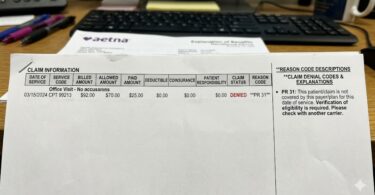
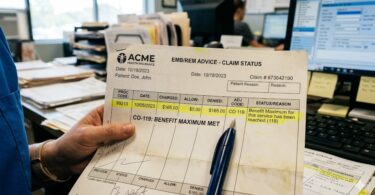
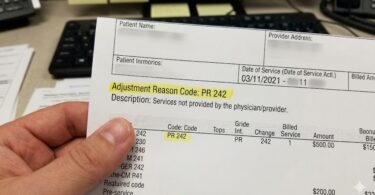
When you receive a remittance advice with denial code PR 227, it will typically look like this:
Example EOB Line Item:
| Field | Information |
|---|---|
| Service Date | 02/20/2026 |
| Procedure Code | 99214 |
| Billed Amount | $180.00 |
| Allowed Amount | $0.00 |
| Denial Code | PR 227 |
| Patient Responsibility | $180.00 |
What this tells you:
- The insurance company allowed $0.00.
- The patient owes the full billed amount (or your contracted rate, depending on your agreement).
- The denial is not a provider error. It is a patient eligibility timing issue.
Is PR 227 Always a Final Denial? (When You Can and Cannot Appeal)
This is where many medical billers get confused. PR 227 is not always a hard stop. There are situations where you can successfully appeal.
When You Cannot Appeal
- The waiting period is correctly calculated and still active.
- The patient confirmed they knew about the waiting period.
- The service is not urgent or emergency care (emergency services may be covered differently).
When You Can Appeal
- The insurance company miscalculated the waiting period end date.
- The patient’s employer provided incorrect effective dates.
- The service was an emergency or urgent care (some states require coverage even during waiting periods).
- The patient’s plan documents do not actually contain a waiting period for that specific service.
Important Note: Always verify the patient’s eligibility and benefit effective dates before you appeal. A quick call to the payer can save you weeks of wasted effort.
The Financial Impact of PR 227 on Your Practice
Ignoring PR 227 denials can hurt your bottom line. Let us look at a realistic scenario.
Scenario: Family Medicine Practice
| Month | Number of PR 227 Denials | Average Charge per Claim | Total Revenue at Risk |
|---|---|---|---|
| January | 8 | $150 | $1,200 |
| February | 12 | $150 | $1,800 |
| March | 6 | $150 | $900 |
| Quarter Total | 26 | $150 | $3,900 |
If you write off all PR 227 denials as uncollectible, you lose nearly $4,000 per quarter. Over a full year, that is $15,600.
However, if you properly bill the patient and have a clear financial policy, you can recover 40–60% of that amount.
Potential recovery: $6,240 to $9,360 per year.
That is real money for any practice.
How to Prevent PR 227 Denials Before You Submit a Claim
Prevention is always better than appeal. Here are five practical steps to reduce PR 227 denials.
1. Verify Eligibility in Real-Time
Do not rely on old eligibility data. Use real-time verification tools from your clearinghouse or practice management system. Always check:
- Plan effective date
- Plan termination date
- Waiting period status
- Affiliation period status
2. Ask Patients the Right Questions
Train your front desk staff to ask:
- “When did your coverage begin with this plan?”
- “Are you still in a waiting period for any services?”
- “Did you just start a new job recently?”
3. Use Payer Portals Directly
Clearinghouse eligibility responses are not always complete. For high-risk payers, log directly into their provider portal to see full waiting period details.
4. Collect a Signed Financial Responsibility Form
Before providing non-urgent services to a patient with a waiting period, have them sign an agreement that they understand they may be fully responsible for charges if the claim denies.
5. Document Everything
If a patient insists they have active coverage but you later receive a PR 227 denial, your documentation of their confirmation can support patient billing.
The Correct Way to Appeal a PR 227 Denial
If you believe the denial was made in error, follow this appeal process.
Step 1: Gather Your Evidence
You will need:
- Copy of the patient’s insurance ID card (front and back)
- Eligibility verification showing the correct effective date
- Plan documents (if available from the patient or employer)
- Your medical records for the date of service
Step 2: Write a Clear Appeal Letter
Keep it short and factual. Here is a template you can adapt.
Subject: Appeal of Denial Code PR 227 – Patient [Patient Name] – DOS [Date] – Claim [Claim Number]
Dear [Payer Name] Appeals Department,
We are appealing the denial of claim [Claim Number] for patient [Patient Name] on [Date of Service]. The claim was denied with code PR 227, citing a waiting period or affiliation period.
Attached you will find:
- Eligibility verification from [Date] showing the patient’s plan effective date as [Date].
- A copy of the patient’s insurance card.
- Medical records for the date of service.
Based on the attached evidence, the patient’s waiting period ended on [Date], which is before the date of service. Therefore, the denial should be reversed, and the claim should be processed for payment.
Please review this appeal and reprocess the claim within 30 days.
Thank you for your attention.
Sincerely,
[Your Name, Title, Practice Name, NPI]
Step 3: Submit Through the Correct Channel
Most payers accept appeals:
- Via their provider portal
- By fax (keep confirmation)
- By certified mail (best for important appeals)
Step 4: Follow Up
If you do not hear back within 45 days, call the payer’s appeals department. Have your appeal reference number ready.
How to Bill the Patient After a PR 227 Denial
Once the denial is final (or if you choose not to appeal), you can bill the patient. But you must do this carefully to stay compliant with state and federal laws.
Acceptable Patient Billing Process
- Send a notice of denial: Inform the patient that their insurance denied the claim.
- Provide a copy of the EOB: Show them the PR 227 code and the patient responsibility amount.
- Bill at your contracted rate: If you are in-network, you generally cannot bill more than your allowed amount. Even if the payer allowed $0, your contract may limit what you can charge the patient.
- Offer a payment plan: Many patients cannot pay large sums upfront. Offer a reasonable payment arrangement.
Do Not Do These Things
- Do not balance bill Medicare or Medicaid patients for PR 227 denials unless permitted by law.
- Do not send the patient to collections without first giving them 120 days’ notice (in most states).
- Do not refuse future treatment solely because of an unpaid PR 227 balance, unless your state allows this.
Important Note: Some states have laws protecting patients from surprise bills related to waiting period denials. Check your local regulations before aggressively collecting.
Real-Life Examples of PR 227 Denials
Let us look at three common scenarios you might encounter.
Example 1: New Employee Waiting Period
Situation: A patient starts a new job on March 1st. The employer’s plan has a 30-day waiting period. The patient sees you on March 20th. The claim denies with PR 227.
Correct action: Bill the patient. The patient should have waited until April 1st to seek non-urgent care.
Example 2: Insurance Company Error
Situation: A patient’s coverage effective date is January 1st. You verify eligibility on January 15th, and the system shows active coverage. You provide a service on January 20th. The claim denies PR 227, but the payer’s effective date in their system is incorrectly listed as February 1st.
Correct action: Appeal. Provide proof of the correct effective date from the patient’s ID card and employer.
Example 3: Medicare ESRD Waiting Period
Situation: A patient with End-Stage Renal Disease has Medicare coverage but is still in the 30-month coordination period. You bill Medicare, and they deny with PR 227 because the patient’s primary insurance should pay first.
Correct action: Bill the primary insurance. Then resubmit to Medicare with the primary EOB.
Common Mistakes Providers Make with PR 227
Avoid these errors to save time and money.
Mistake #1: Writing Off the Balance Immediately
Many practices assume PR 227 means “never get paid.” That is not true. Always check if the patient can and should be billed.
Mistake #2: Appealing Without Evidence
Submitting a generic appeal with no documentation is a waste of time. Payers reject these immediately.
Mistake #3: Ignoring State Laws
Some states prohibit billing patients for waiting period denials if the provider verified eligibility in good faith. Know your state’s rules.
Mistake #4: Not Updating Your Eligibility System
If your clearinghouse or PM system does not show waiting periods, switch to a better tool. Outdated software costs you money.
Frequently Asked Questions (FAQ)
Q1: Can I write off a PR 227 denial as a bad debt?
Yes, if after reasonable collection efforts the patient does not pay, you can write it off as bad debt. Consult your accountant for tax treatment.
Q2: Does PR 227 apply to Medicare Advantage plans?
Yes, Medicare Advantage plans can also have waiting periods for certain benefits, though they are less common.
Q3: How long do I have to appeal a PR 227 denial?
Most payers allow 120 to 180 days from the date of the original denial. Check your specific payer contract.
Q4: Can I collect payment upfront from a patient in a waiting period?
Yes, for non-urgent services, you can require upfront payment. For emergency services, you cannot delay care based on ability to pay.
Q5: What is the difference between PR 227 and CO 227?
PR 227 means the patient is responsible. CO 227 (Coordination of Benefits) means another insurance plan is responsible.
Q6: Does the No Surprises Act affect PR 227 denials?
Generally no. The No Surprises Act applies to out-of-network emergency services and surprise bills from out-of-network providers at in-network facilities. PR 227 is a patient responsibility denial based on plan waiting periods.
Q7: Can a patient appeal a PR 227 denial themselves?
Yes, the patient can appeal directly with their insurance company. Often, a call from the patient to their HR department or insurance company resolves the issue faster than a provider appeal.
Q8: What should I do if a patient refuses to pay a PR 227 balance?
Send three statements, then consider small claims court if the amount is significant. For small balances, it is often better to write it off and preserve the patient relationship.
Additional Resources
For more detailed information on denial management and patient responsibility codes, visit the Washington Publishing Company website. They publish the official code sets used by all major insurance payers in the United States.
👉 Resource link: https://www.wpc-edi.com/reference/codelists/healthcare/claim-adjustment-group-codes/
This site contains the official descriptions for all PR, CO, and OA denial codes. It is an essential bookmark for any medical billing professional.
Final Checklist: What to Do When You See PR 227
Use this quick checklist to handle every PR 227 denial efficiently.
- Verify the patient’s plan effective date again.
- Confirm whether a waiting period or affiliation period applies.
- Check if the denial is an error (wrong date in payer’s system).
- Decide: appeal or bill patient?
- If appealing, gather evidence and send within 30 days.
- If billing patient, send EOB copy and itemized bill.
- Document everything in your practice management system.
- Set a follow-up reminder for 60 days.
Conclusion
Denial code PR 227 means a patient’s waiting period or affiliation period has not been met. It shifts financial responsibility from the insurance company to the patient. While frustrating, this denial is often not a billing error on your part. You can either appeal if the payer miscalculated dates, or bill the patient following your state laws and contract terms. With proper eligibility verification and clear patient communication, you can reduce PR 227 denials and recover a significant portion of otherwise lost revenue.
Disclaimer: This article is for informational purposes only and does not constitute legal or financial advice. Medical billing laws, payer contracts, and state regulations vary. Always consult with a qualified billing compliance specialist or attorney for your specific situation.