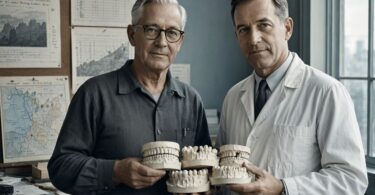
When you are missing several teeth in a row, your dentist will present you with options to restore your smile and your ability to chew. One of the most common and time-tested solutions is a fixed partial denture, more commonly known as a bridge. Specifically, a “five-unit fixed partial denture” is a bridge that replaces three missing teeth and is supported by the two healthy teeth on either side of the gap.
This is a significant dental restoration. It is called “fixed” because, unlike a removable partial denture, you cannot take it out. It is cemented permanently in your mouth. It is a popular choice because it feels more stable and natural than a removable appliance.
But with complexity comes cost. A five-unit bridge is a substantial investment. This guide will break down exactly how much a five-unit fixed partial denture costs, what factors influence the price, and how it compares to other tooth replacement options. If you are facing this treatment, understanding the numbers is your first step toward making an informed decision.

A Five-Unit Fixed Partial Denture Costs How Much?
What is a Five-Unit Bridge?
To understand the cost, you must understand the anatomy of the bridge.
A “unit” in dental terminology refers to a single crown. A five-unit bridge consists of:
-
Two Abutment Crowns: These are the anchors. They are the crowns that fit over the two healthy teeth on either side of the gap. These teeth must be filed down (prepared) to make room for the crowns.
-
Three Pontics: These are the “fake teeth.” They are the units that fill the space of the three missing teeth. The pontics are suspended between the two abutment crowns, creating a single, solid bridge.
The entire structure is made in a dental laboratory as one solid piece and is then cemented onto your prepared teeth. This provides a strong, durable, and aesthetic replacement for your missing teeth.
The Cost Breakdown: How the Price is Calculated
The cost of a bridge is typically calculated “per unit.” This means the dentist or the dental lab sets a price for each individual crown component. The total cost of the bridge is the per-unit cost multiplied by the number of units (five, in this case).
The average cost per unit in the United States ranges from $800 to $1,500 or more, depending on the materials and the dentist’s expertise.
Here is a realistic breakdown of the total cost for a five-unit bridge.
| Component | Description | Average Cost Per Unit | Estimated Total Cost (for 5 units) |
|---|---|---|---|
| Porcelain-Fused-to-Metal (PFM) | A metal base covered with tooth-colored porcelain. Very strong, but the metal may show as a dark line at the gum line over time. | $800 – $1,200 | $4,000 – $6,000 |
| All-Ceramic (Zirconia or E-max) | A metal-free, highly aesthetic material that matches the translucency of natural teeth very well. Excellent for front teeth. | $1,000 – $1,500 | $5,000 – $7,500 |
| Gold Alloy | The most traditional and durable material. Gold is very gentle on the opposing teeth. Not tooth-colored. | $1,000 – $1,500 | $5,000 – $7,500 |
Important Note: These figures are for the bridge itself. The total treatment plan will include other fees.
Additional Costs Beyond the Bridge
When you receive a quote for a five-unit bridge, the price of the bridge is not the only line item. You must budget for the preparatory and diagnostic work.
1. Diagnostic Records and Examination
Before the bridge is made, the dentist must perform a thorough exam, take X-rays, and often take impressions or digital scans of your mouth. This helps them plan the bridge and ensure the supporting teeth are healthy enough. This cost can range from $100 to $300.
2. Tooth Preparation (The “Prep” Fee)
The abutment teeth must be carefully shaved down to accommodate the crowns. This is a precise and skilled procedure. Some dentists have a separate fee for this preparation, while others include it in the per-unit cost. If it is separate, it can add $200 to $500 per tooth.
3. Temporaries
While your permanent bridge is being fabricated in the lab (which takes 2-3 weeks), you will need a temporary bridge to protect your prepared teeth and maintain your appearance. The cost of the temporary bridge is often included in the total fee, but you should always ask.
4. The Cementation Appointment
This is the visit where the permanent bridge is tried in, adjusted, and cemented into place. This is usually included in the overall fee.
The total “global” fee for a five-unit bridge, including all appointments and records, will typically fall in the range of $4,500 to $8,500.
The Hidden Cost: What You Are Paying For
A five-unit bridge is a marvel of dental engineering. You are not paying for a lump of ceramic. You are paying for a highly complex, custom-made medical device.
-
The Dental Lab Technician’s Skill: A bridge of this size must be fabricated with extreme precision. It must fit your mouth perfectly. If the fit is even slightly off, it can cause pain, decay, or failure of the bridge. The lab technician is an artisan, and their fee for a five-unit bridge can be $500 to $1,500 or more.
-
The Dentist’s Time and Skill: Preparing two teeth for crowns and taking accurate impressions is a time-consuming and demanding process. The dentist must ensure the bridge fits perfectly, the color matches your natural teeth, and your bite is correct.
-
The Materials: The porcelain or zirconia used in your bridge is not the same material as your dinner plates. It is a high-strength, biocompatible ceramic designed to withstand years of chewing.
How a Five-Unit Bridge Compares to Other Options
A five-unit bridge is a major procedure. It is important to compare its cost and value to the alternatives. The most common alternative for this situation (three missing teeth) is a partial denture or three individual dental implants.
| Feature | Five-Unit Fixed Bridge | Removable Partial Denture | Three Individual Implants |
|---|---|---|---|
| Average Total Cost | $4,500 – $8,500 | $1,500 – $3,000 | $9,000 – $18,000+ |
| Stability | Excellent (Fixed) | Poor to Fair (Removable) | Excellent (Fixed) |
| Aesthetics | Very Good | Good | Excellent |
| Longevity | 10-15 years (may need replacement) | 5-10 years (may need relining) | Lifetime (with proper care) |
| Impact on Adjacent Teeth | Requires grinding down healthy teeth | Clasps may stress other teeth | None (preserves all teeth) |
| Impact on Jawbone | Does not prevent bone loss | Does not prevent bone loss | Prevents bone loss |
Important Note: While the bridge is significantly cheaper than three implants, it requires the destruction of healthy tooth structure on the abutment teeth. This is the main drawback of a bridge. If the abutment teeth are already heavily filled or have crowns, this is less of a concern. If they are perfectly healthy, you are sacrificing them.
Strategies to Manage the Cost
A $7,000 quote for a five-unit bridge can be daunting. Here is how you can approach the financial side.
1. Choose Your Material Wisely
The choice of material has a direct impact on cost.
-
For Back Teeth: A Porcelain-Fused-to-Metal (PFM) bridge is an excellent, cost-effective choice. The metal provides strength for chewing, and the porcelain provides a good aesthetic match. Since the teeth are in the back, the potential for a dark metal line at the gum is less of a cosmetic concern.
-
For Front Teeth: This is where you want the best aesthetics. All-ceramic (Zirconia or E-max) is worth the extra cost. A PFM on a front tooth can look dull or opaque compared to the translucency of a natural tooth.
2. Ask About a “Discount for Cash”
This cannot be stressed enough. For a $6,000 bridge, a 5% cash discount saves you $300. A 10% discount saves you $600. It is always worth asking.
3. Negotiate the Lab Fee
When you get your itemized treatment plan, look for the lab fee. This is the cost the dentist pays to the lab. You can sometimes negotiate this component. You can ask, “Is there any flexibility on the lab fee?” or “Can we use a different, less expensive lab?”
4. Check with Dental Schools
Dental schools are an excellent option for this type of work. The cost of a five-unit bridge at a dental school can be 30-50% less than in private practice. The work is done by students under the strict supervision of experienced prosthodontists (specialists in crowns and bridges). You will trade time for savings, but the quality is closely monitored.
The Importance of Protecting Your Investment
Once you have invested thousands of dollars in a five-unit bridge, you must protect it. The bridge itself cannot get cavities, but the teeth underneath the abutment crowns can.
The most common cause of bridge failure is decay at the margin where the bridge meets the natural tooth. This happens when plaque is not properly cleaned away. You must:
-
Floss Under the Bridge: You will need to use a special floss threader or a water flosser to clean under the pontics (fake teeth) and around the abutment crowns.
-
Use a Fluoride Rinse: This helps strengthen the tooth structure under the crowns.
-
See Your Dentist Regularly: Professional cleanings and checkups are essential to catch problems early.
A well-maintained five-unit bridge can last 10-15 years or longer. A neglected one may fail in just a few years.
Conclusion
A five-unit fixed partial denture is a substantial investment, costing anywhere from $4,500 to $8,500 or more. The price is driven by the cost of materials, the skilled labor of the dentist and lab technician, and the complexity of the restoration. While it is more affordable than three dental implants, it requires the sacrifice of healthy tooth structure. By understanding the costs and committing to excellent oral hygiene, you can make this restoration a lasting and valuable part of your smile.
Frequently Asked Questions (FAQ)
Q: Is a five-unit bridge better than three implants?
A: It depends on your priorities. A bridge is cheaper and faster. Implants are more expensive but do not damage the adjacent teeth and help preserve the jawbone. For some patients, the adjacent teeth are already damaged and need crowns anyway, making a bridge a very logical choice. For patients with perfectly healthy adjacent teeth, implants are often recommended to preserve them.
Q: How long will a five-unit bridge last?
A: With excellent oral hygiene and regular dental visits, a five-unit bridge can last 10-15 years or even longer. The limiting factor is usually the health of the abutment teeth underneath the crowns. If they develop decay, the entire bridge may need to be removed and replaced.
Q: Will a five-unit bridge look fake?
A: A high-quality bridge made by a skilled lab should be virtually indistinguishable from your natural teeth. The color, shape, and translucency are all custom-matched. This is especially true for modern all-ceramic materials.
Q: Can I get a five-unit bridge on the NHS in the UK?
A: The NHS provides bridges if it is clinically necessary. There is a standard band charge for NHS dental treatment. However, the NHS will typically only provide a bridge if it is deemed the best clinical option. For cosmetic reasons, you would need to seek private treatment.
Q: What is the difference between a fixed bridge and a removable partial denture?
A: A fixed bridge is cemented into your mouth and cannot be removed. It feels like your own teeth. A removable partial denture has a metal or plastic framework with fake teeth attached. You can take it out to clean it. A bridge is more stable and comfortable, but it is also more expensive and requires the preparation of the adjacent teeth.
Additional Resource:
To learn more about the different types of dental bridges and what to expect, visit the American College of Prosthodontists (ACP) patient information page: https://www.gotoapro.org/