If your doctor has recommended a testicular ultrasound, you probably have two main questions on your mind. First, what will the procedure show? Second, and just as important, how will it be billed to your insurance?
Medical billing can feel like learning a foreign language. But understanding the basics—starting with the right CPT code—can save you from surprise bills and confusion later.
In this guide, we will walk you through everything you need to know about the standard CPT code for an ultrasound of the testicles. You will learn what the code covers, when it applies, what factors can change the price, and how to make sure your billing is accurate. No confusing medical jargon. Just clear, helpful information.
Let us begin.
CPT Code for Ultrasound of Testicles
What Is a Testicular Ultrasound?
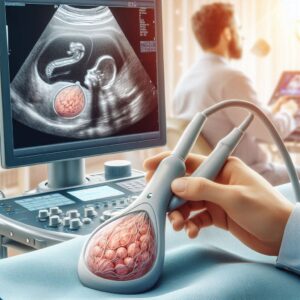
A testicular ultrasound is a painless imaging test. It uses high-frequency sound waves to create real-time pictures of your testicles and the surrounding tissues. Unlike an X-ray or CT scan, an ultrasound does not use any radiation. This makes it a very safe choice for evaluating scrotal pain, swelling, or lumps.
During the exam, a trained sonographer will apply a warm gel to your scrotum. Then, they will gently move a small handheld device called a transducer over the area. The transducer sends sound waves into your body. Those waves bounce back to create images on a computer screen.
The entire procedure usually takes between 15 and 30 minutes. Most patients feel no pain at all. Some might experience mild discomfort if the area is already tender, but the sonographer will work carefully to keep you comfortable.
Why Would a Doctor Order This Exam?
Doctors order testicular ultrasounds for several common reasons. Here are the most frequent situations:
-
A lump or mass that you or your doctor can feel
-
Unexplained testicular pain or a feeling of heaviness
-
Swelling or enlargement of one or both testicles
-
Suspected testicular torsion (a medical emergency where the spermatic cord twists)
-
Evaluation of a hydrocele (fluid around the testicle), varicocele (enlarged veins), or epididymitis (inflammation)
-
Follow-up after trauma or injury to the groin area
-
Monitoring a known condition over time
The ultrasound helps your doctor tell the difference between benign (non-cancerous) issues and more serious problems. In most cases, the findings are reassuring.
The Primary CPT Code: 76870
When it comes to billing for this exam, one code stands out as the standard.
The most common CPT code for an ultrasound of the testicles is 76870.
The official description of this code is: Ultrasound, scrotum and contents.
That simple description covers a lot of ground. It includes the testicles, the epididymis (the tube that stores sperm), and the surrounding tissues. The exam is typically performed as a complete diagnostic study, meaning the sonographer looks at both sides and documents the findings.
What Does Code 76870 Include?
When your provider bills using CPT 76870, it generally includes the following elements:
| Component | What It Means |
|---|---|
| Real-time imaging | Live images are captured and reviewed during the exam |
| Grayscale ultrasound | Standard black-and-white images showing tissue structure |
| Color Doppler | A special mode that shows blood flow in the testicles |
| Spectral Doppler (often included) | Measures the speed and direction of blood flow |
| Documentation | The radiologist’s written report and saved images |
| Comparison to prior studies | If previous images exist, they are reviewed for changes |
The inclusion of Doppler imaging is important. Blood flow information helps doctors identify torsion (where flow is absent or reduced) and inflammation (where flow is increased).
Is 76870 Always the Right Code?
For a routine scrotal ultrasound on an adult male, yes—76870 is the correct code in almost every case. However, there are a few specific situations where a different code might be used. We will cover those exceptions later in this guide.
When Is a Different Code Used?
No single code fits every scenario perfectly. While 76870 is the standard for a testicular ultrasound, there are related codes that you might see on a bill for certain circumstances.
Ultrasound for Testicular Torsion
If a doctor suspects testicular torsion, the exam is often performed urgently. The sonographer will focus heavily on blood flow using color and spectral Doppler. Even in this emergency setting, the appropriate code is still 76870 as long as the entire scrotum and its contents are evaluated.
The urgent nature of the exam does not change the CPT code. What changes is the interpretation. The radiologist will note the presence or absence of blood flow in their report.
Limited or Follow-Up Exams
Sometimes a doctor only wants to look at one specific area. For example, a patient might return for a quick check of a known cyst. In this case, a limited ultrasound might be performed. However, limited scrotal ultrasounds are rare. Most insurers expect the complete exam described by 76870.
If a limited exam is truly performed, you might see 76870-52 (with modifier 52 indicating reduced services). But honestly, this is uncommon. Most facilities will simply perform the full exam to avoid billing problems.
Ultrasound Guidance for Biopsy or Aspiration
Sometimes an ultrasound is not the main test. Instead, it is used to guide a needle for a biopsy (taking a tissue sample) or aspiration (draining fluid). In these cases, you will see a different code for the guidance portion.
For ultrasound guidance for a needle procedure on the testicle, the code is often 76942 (Ultrasonic guidance for needle placement). This code is billed separately from the biopsy or aspiration code. It is not a replacement for 76870.
Scrotal Ultrasound in Children
For pediatric patients, the same anatomy is being evaluated. The standard code remains 76870. There is no separate pediatric code for scrotal ultrasound. The child’s age does not change the billing code, though it may affect how the exam is performed (the sonographer will use smaller equipment and adjust their technique).
What Modifiers Might You See?
In medical billing, modifiers are two-character codes added to a CPT code. They tell the insurance company that something about the procedure was different from a standard case. For testicular ultrasounds, you might encounter these modifiers.
Modifier 26: Professional Component
This modifier separates the work of the radiologist (the doctor who reads the images) from the work of the facility (where the machine and staff are).
-
76870-26 = Only the professional interpretation and report. The facility bills this if you had the exam done at a hospital or imaging center but the radiologist is employed by a separate group.
-
No modifier = Global service, meaning the facility owns the equipment, employs the sonographer, and provides the radiologist’s reading.
If you receive two separate bills for one ultrasound, check for modifier 26 on one of them. That is usually normal.
Modifier TC: Technical Component
This is the counterpart to modifier 26. 76870-TC represents the use of the equipment, the sonographer’s time, and the facility overhead. This modifier is less common now because most insurers prefer global billing. But you may still see it in certain hospital outpatient settings.
Modifier 50: Bilateral Procedure
The testicles are paired organs. Some CPT codes allow modifier 50 to indicate that a procedure was performed on both sides. However, for code 76870, modifier 50 is generally not needed. The code itself describes the scrotum and contents as a single anatomic region. Both sides are automatically included.
If you see modifier 50 on a bill for 76870, it might be redundant. But it is not necessarily wrong. Different billing systems handle this differently. The important thing is that you are not billed double for a bilateral exam.
Modifier 59: Distinct Procedural Service
This modifier is used when two procedures are performed during the same visit but are separate and distinct. For example, if a patient has a scrotal ultrasound (76870) and also a pelvic ultrasound for a different reason during the same appointment, modifier 59 might be added to one of the codes to show they are not the same service.
For a straightforward testicular ultrasound alone, you will not see modifier 59.
How Much Does a Testicular Ultrasound Cost?
This is the question on most people’s minds. The honest answer: it varies widely. The final price depends on where you live, where you have the exam done, and what kind of insurance you have.
National Average Prices
Based on recent data from insurance claims and healthcare cost transparency tools, here is what you can expect.
| Setting | Cash Price (No Insurance) | Insurance Negotiated Rate | Medicare Rate |
|---|---|---|---|
| Hospital Outpatient | $800 – $2,500 | $300 – $700 | $120 – $180 |
| Independent Imaging Center | $350 – $900 | $200 – $500 | $110 – $160 |
| Physician’s Office | $250 – $600 | $150 – $400 | $100 – $150 |
These are estimates. Actual prices vary by state and even by city. For example, a testicular ultrasound in Manhattan will almost always cost more than one in rural Ohio.
Factors That Influence Price
Several factors explain why prices differ so much:
-
Facility type: Hospitals charge more because they have higher overhead costs (emergency rooms, operating rooms, 24-hour staffing). Independent imaging centers are almost always cheaper.
-
Geographic location: Healthcare costs are higher in major metropolitan areas.
-
Whether Doppler is included: Some very basic ultrasounds might skip Doppler, but most include it. Always confirm that color Doppler is part of the exam you are being quoted.
-
Professional vs. technical fees: Remember the modifier 26 discussion? If you receive separate bills, the total combined amount may be higher than a global fee from a single provider.
-
Urgent or after-hours exam: If you have the ultrasound done in an emergency room at 2 AM, you will pay more than a scheduled outpatient exam.
How to Get an Accurate Price Estimate
Before you schedule your testicular ultrasound, take these steps:
-
Call the facility and ask for their self-pay cash price. Tell them you want the global price (technical + professional).
-
Ask if color Doppler is included in that price. If not, ask for the price with Doppler.
-
If you have insurance, call your member services number. Ask for the negotiated rate for CPT 76870 at the specific facility you plan to use.
-
Ask about your deductible. If you have not met your deductible yet, you may pay the full negotiated rate out of pocket.
-
Ask about co-insurance. After your deductible, you might still owe 10% to 30% of the negotiated rate.
Do not be shy about asking for prices. In many states, healthcare facilities are legally required to provide a good faith estimate upon request.
Does Insurance Cover This Exam?
For medically necessary reasons, yes—most insurance plans cover a testicular ultrasound. But “cover” does not always mean “free.” It means the insurance company will apply your benefits to the bill.
When Insurance Will Pay
Insurance is designed to cover diagnostic tests when there is a clear medical reason. Common covered reasons include:
-
A palpable lump or mass
-
Acute or chronic testicular pain
-
Swelling after trauma
-
Suspected torsion
-
Follow-up for a known condition like a varicocele or hydrocele
-
Evaluation of infertility (though some plans have specific fertility coverage limits)
If your doctor documents one of these reasons in your medical record, the claim should be approved.
When Insurance Might Deny
Insurance companies look for medical necessity. They may deny coverage if:
-
The ultrasound was performed as a “screening” without any symptoms (this is very rare for testicular ultrasound)
-
The doctor’s notes do not clearly explain why the test was needed
-
The exam is considered experimental or investigational (ultrasound is not experimental)
-
The patient is being evaluated for something that is explicitly excluded from their policy (like some cosmetic or gender-affirming procedures, depending on the plan)
If your insurance denies the claim, do not panic. You have the right to appeal. Your doctor’s office can help submit additional documentation to prove medical necessity.
Medicare and Testicular Ultrasound
Medicare covers diagnostic testicular ultrasounds when ordered by a physician for a medically necessary reason. Medicare uses CPT 76870 and pays according to the Physician Fee Schedule. In most regions, Medicare pays around $100 to $150 for the global service. The patient is responsible for the 20% coinsurance (about $20 to $30) after the Part B deductible is met.
Medicare does not cover screening ultrasounds for testicular cancer. There must be a specific sign or symptom documented.
What to Expect Before, During, and After the Exam
Understanding the process can reduce anxiety and help you prepare properly.
Before the Exam: Preparation
Good news: There is almost no preparation needed for a testicular ultrasound.
-
You do not need to fast or change your diet.
-
You do not need a full bladder (unlike a pelvic ultrasound for women).
-
You can take all your regular medications.
-
Wear comfortable, loose-fitting clothing. You will be asked to undress from the waist down and put on a gown or drape.
The only specific instruction: Shower beforehand if possible. Clean skin helps the transducer make good contact. You do not need to shave.
If the exam is being done to evaluate for torsion or acute pain, go to the emergency room or imaging center immediately. Do not delay for preparation.
During the Exam: What Happens
You will lie on your back on an exam table. The sonographer will place a small towel or drape over your thighs. They will lift your penis and tape it gently to your lower abdomen or ask you to hold it out of the way. This is a standard step to allow clear access to the scrotum.
Then:
-
Warm gel is applied to your scrotum.
-
The sonographer places the transducer against your skin.
-
They will examine each testicle from several angles.
-
They may ask you to turn your head or breathe normally.
-
Color Doppler will be used to check blood flow. You may hear a “whooshing” sound from the machine.
-
The entire exam takes 15 to 30 minutes.
The sonographer may press a little firmer in some areas. Tell them immediately if you feel sharp pain. They can adjust their technique.
After the Exam: What Comes Next
Once the exam is complete, the sonographer will wipe off the gel. You can get dressed and go back to your normal activities immediately. There are no restrictions.
The images are sent to a radiologist. That doctor will interpret the findings and write a report. The report is sent to the doctor who ordered the ultrasound.
Timeline for results:
-
Routine exam: Report usually ready in 24 to 48 hours.
-
Urgent exam (suspected torsion): Report is read within minutes to hours. The radiologist may call your doctor directly.
-
Same-day results: Some imaging centers offer preliminary results the same day, but the official report takes longer.
Do not expect the sonographer to tell you results. By law and by professional ethics, they cannot diagnose or share findings. Only the radiologist and your doctor can do that.
Understanding Your Results: A Simple Guide
You do not need to be a doctor to understand the main findings of a testicular ultrasound. Here is a plain-language breakdown.
Normal Findings
A normal report will describe:
-
Both testicles present, normal in size and shape
-
Homogeneous (even) texture without masses or cysts
-
Normal blood flow on color Doppler
-
No significant hydrocele or varicocele
This is a reassuring result. It means the ultrasound did not find any structural problems.
Common Abnormal Findings and What They Mean
| Finding | What It Means | Typical Next Step |
|---|---|---|
| Epididymitis | Inflammation of the epididymis (often from infection) | Antibiotics, possibly urine tests |
| Orchitis | Inflammation of the testicle itself | Antibiotics, rest |
| Hydrocele | Fluid around the testicle | Usually none; surgery if large or painful |
| Varicocele | Enlarged veins in the scrotum (like varicose veins) | Monitoring; surgery if causing pain or infertility |
| Spermatocele | Benign cyst in the epididymis | None needed |
| Testicular microlithiasis | Tiny calcium deposits inside the testicle | Monitoring; low cancer risk but follow-up often recommended |
| Solid mass | A lump that is not fluid-filled | Further imaging or urology referral; possible biopsy or surgery |
| No blood flow (torsion) | Twisted spermatic cord cutting off circulation | Emergency surgery |
If your report shows something abnormal, do not assume the worst. Most testicular abnormalities are benign. Your urologist will explain what the finding means for your specific situation.
Common Billing Mistakes and How to Avoid Them
Even when everything goes smoothly with your health, billing errors can happen. Here are the most common mistakes with CPT code 76870 and how to protect yourself.
Mistake 1: Billing for a Bilateral Procedure Twice
Some billing systems incorrectly submit two units of 76870 for one exam (one for the right testicle, one for the left). This is wrong. The code describes the entire scrotum. If you see two charges for the same date of service with the same code, call your insurer.
Mistake 2: Upcoding to a More Expensive Code
Upcoding means billing for a more complex service than was actually performed. For testicular ultrasound, this is rare because 76870 is already the standard. But sometimes facilities add unlisted codes or miscellaneous codes to increase reimbursement. If you see a code like 76999 (unlisted ultrasound procedure), ask why 76870 was not used.
Mistake 3: Missing Modifier 26 Leading to Overcharge
If you have your ultrasound at a hospital, you may receive two bills: one from the hospital (technical) and one from the radiology group (professional). Both should add up to roughly the global price. If the hospital bills the global code (no modifier) and the radiology group also bills the global code, that is double-billing. Call your insurer immediately.
Mistake 4: Billing for Services Not Provided
Occasionally, a facility will bill for color Doppler as an add-on code even when it was not performed. Code 76870 already includes color Doppler. If you see a separate charge for Doppler, ask for documentation that it was performed separately. In most cases, it should not be separate.
How to Check Your Bill
Follow these steps when you receive an Explanation of Benefits (EOB) or a bill:
-
Verify the date of service is correct.
-
Confirm only one charge for CPT 76870 (unless modifiers are properly applied).
-
Check that the charge amount matches what you were quoted.
-
Look for modifiers 26 or TC. If you see both on separate lines from the same facility, that is correct. If you see both on separate lines from two different facilities, that is also correct. If you see only one line with no modifier, that is global billing.
-
Call your insurance company if anything looks wrong. Do not pay a bill you do not understand.
Frequently Asked Questions (FAQ)
Can I use CPT 76870 for a pediatric patient?
Yes. The same code applies to children and adults. There is no separate pediatric code for scrotal ultrasound.
Does CPT 76870 include a transrectal ultrasound?
No. Transrectal ultrasound of the prostate uses a different code family (usually 76872). That is a completely different exam.
What if only one testicle is examined?
The code is still 76870. The code describes the scrotum and its contents. Even if one testicle is absent (due to prior surgery or undescended testicle), the code remains the same. You do not use a modifier for a single testicle.
How often can this code be billed?
For a medical necessity, there is no strict limit. Some patients with chronic conditions (like ongoing testicular pain or follow-up for microlithiasis) may have yearly or even more frequent ultrasounds. The doctor must document why each exam is needed.
What is the difference between 76870 and 76700?
Code 76700 is for a complete abdominal ultrasound. That is a very different exam looking at your liver, kidneys, pancreas, and other organs. Do not confuse the two.
Will my insurance require prior authorization?
Many insurance plans require prior authorization for outpatient imaging. Your doctor’s office usually handles this. Call your insurer before your exam to ask if prior auth is needed for CPT 76870. If it is required and not obtained, the claim will be denied.
Can I get a testicular ultrasound without a doctor’s order?
In most states, you cannot. Ultrasound is a medical procedure that requires a licensed provider’s order. Some direct-access imaging centers exist, but they are rare for scrotal ultrasound. Always check with your insurance first, as they will not pay without an order.
What if my ultrasound shows nothing but I still have pain?
That is not uncommon. Testicular pain can come from muscles, nerves, or referred pain from other organs (like the kidney or spine). A normal ultrasound rules out many serious causes. Your doctor will then look for other explanations.
Additional Resources
For more information about testicular health and ultrasound billing, these trusted sources are excellent starting points:
-
American College of Radiology (ACR) Appropriateness Criteria – Provides evidence-based guidelines on when imaging tests like scrotal ultrasound are appropriate.
Link: https://www.acr.org/Clinical-Resources/ACR-Appropriateness-Criteria -
American Urological Association (AUA) Patient Resources – Plain-language guides on testicular conditions, including when an ultrasound is needed.
Link: https://www.auanet.org/patient-education -
Medicare Physician Fee Schedule Lookup – Search for the exact Medicare payment rate for CPT 76870 in your area.
Link: https://www.cms.gov/medicare/physician-fee-schedule/search
Important Notes for Readers
Note 1: This article is for educational purposes only. Medical coding and insurance policies change frequently. Always verify current codes and coverage with your provider and insurer before scheduling a procedure.
Note 2: The CPT code 76870 is the standard for a complete scrotal ultrasound including color Doppler. If your order or bill shows a different code, ask why. Do not assume an error, but do not assume it is correct either. Ask questions.
Note 3: If you are uninsured or underinsured, ask about financial assistance programs. Many hospitals offer sliding fee scales based on your income. Do not skip a necessary ultrasound because of cost concerns. Speak with the facility’s billing office first.
Final Thoughts and Conclusion
Understanding the billing side of a testicular ultrasound does not have to be stressful. The standard CPT code 76870 covers the entire exam, including both testicles and blood flow evaluation. Costs vary by facility, but you can get an estimate beforehand. Insurance usually covers medically necessary exams, but always confirm your specific benefits.
In summary: The correct code is almost always 76870. Price depends on where you go. Ask questions before your exam, review your bill carefully, and never hesitate to call your insurer if something looks wrong. Your health comes first, but understanding the process makes the experience smoother for everyone.