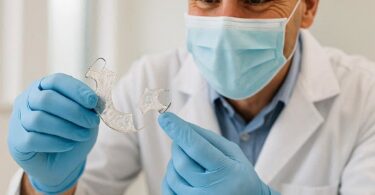
If you have ever sat in a dental chair and heard your dentist say, “We should do a diagnostic wax up first,” you probably had two immediate questions. First: what exactly is that? Second: how much is it going to cost—and will my insurance help?
You are not alone. The term “diagnostic wax up” sounds clinical and mysterious. But in reality, it is one of the most valuable tools in modern dentistry. It helps you see your future smile before any drilling happens.
However, when it comes to billing and finding the right dental code for diagnostic wax up, things can get tricky. Unlike a simple filling or a routine cleaning, a wax up does not fit neatly into one single category.
In this guide, we will walk through everything you need to know. We will cover the correct codes, when to use them, how insurance views this service, and why understanding this process saves you time, money, and stress.

What Is a Diagnostic Wax Up? A Simple Explanation
Imagine you want to remodel your kitchen. Would you let a contractor start knocking down walls without showing you a drawing first? Probably not. You would want to see a plan.
A diagnostic wax up is that plan—but for your teeth.
Your dentist takes molds (impressions) of your teeth and sends them to a dental lab. A skilled technician then sculpts wax directly on those models. They build up teeth that are too short, fill in gaps, and reshape worn or broken teeth.
The final result is a physical, three-dimensional model of your future smile.
You can hold it in your hands. You can see exactly how your new crowns, veneers, or bridges will look and fit. It is not a computer simulation (though those exist too). It is a real, tactile model made of wax.
Why Do Dentists Recommend a Diagnostic Wax Up?
There are three main reasons.
First, it improves communication. You and your dentist look at the same physical object. You point to what you like or dislike. There is no guesswork.
Second, it guides the actual treatment. The dentist uses the wax up to create temporary restorations or even as a roadmap for cutting your teeth. It removes the “maybe” from complex cases.
Third, it saves money in the long run. Making mistakes on wax is cheap. Making mistakes on your real teeth is expensive and painful. A wax up catches problems early.
Note: A diagnostic wax up is different from a smile design or a digital mock-up. While digital tools are great, many dentists still prefer wax because it shows contour and bite contact in a way a screen cannot.
The Main Question: What Is the Dental Code for Diagnostic Wax Up?
Here is the honest truth. There is not one single, universal CDT code that says “diagnostic wax up” on every insurance claim.
That surprises many people. But do not worry. Dentists and billing coordinators have standard, accepted ways to bill for this service. You just need to know which code fits your specific situation.
Let us break down the most common codes used.
The Primary Code: D8090 – Comprehensive Orthodontic Treatment
Wait—orthodontic? That sounds like braces. Why would that code apply?
Here is the logic. In many complex restorative cases (for example, full mouth reconstruction), the dentist needs to move teeth into better positions before placing crowns or veneers. The wax up helps plan that movement. Some offices bill D8090 when the wax up is part of a comprehensive orthodontic phase.
However, this code is not for a simple cosmetic wax up. Use it only when orthodontic movement is truly part of the plan.
The Most Honest Code: D8999 – Unspecified Procedure
This is the code you will see most often for a standalone diagnostic wax up.
D8999 means “unspecified orthodontic procedure, by report.” In plain English: this service does not have its own specific code, so we use this placeholder and attach a detailed written explanation.
When your dentist uses D8999, they must send a narrative report to the insurance company. That report explains what the wax up is, why you need it, how much lab time it required, and how it benefits your treatment.
Insurance companies do not love unspecified codes, but they accept them when no other code fits. And for a pure diagnostic wax up (no other treatment started yet), this is the most accurate choice.
Alternative Codes Sometimes Used
| CDT Code | Description | When It Might Apply |
|---|---|---|
| D0470 | Diagnostic cast (study model) | If the lab only pours models but does not sculpt wax |
| D9951 | Occlusal adjustment – limited | If the wax up is used to adjust bite on existing restorations |
| D8010-D8080 | Various orthodontic codes | If the wax up is part of interceptive or limited orthodontics |
| D9610 | Therapeutic drug injection – NOT relevant | Included only to show an example of an unrelated code |
Important note: Some offices try to bill a wax up under “consultation” codes. That is incorrect and can lead to claim denials or even audits. A consultation is a conversation. A wax up is a physical lab product.
What About Cosmetic Wax Ups?
If you want a wax up purely for cosmetic reasons (you just want to see how veneers will look), most insurance plans will not pay anything. In that case, the dental code for diagnostic wax up matters less for insurance and more for your own records.
Your dentist will likely use D8999 and charge you directly. That is legal and common. Many cosmetic dentists list this as a separate line item on their fee schedule.
A Realistic Look at Insurance Coverage
Let me be direct with you. Most dental insurance plans do not cover diagnostic wax ups.
I know that is not what you wanted to hear. But understanding this upfront saves you from surprise bills later.
Why Insurance Denies Wax Ups
Insurance companies define their role as paying for “medically necessary” treatment. A diagnostic wax up is not treatment. It is a planning tool.
Think of it like an architect’s blueprint. Your homeowner’s insurance does not pay for the blueprint before you build an addition. You pay the architect directly.
The same logic applies here. The wax up helps your dentist plan excellent care, but it does not fix a cavity, treat gum disease, or replace a missing tooth. Therefore, most medical and dental plans exclude it.
When Will Insurance Pay?
There are exceptions. Rare ones.
- Severe trauma cases. If you were in an accident and your jaw is broken, some medical plans will cover diagnostic planning, including wax ups, as part of reconstructive surgery.
- Orthognathic surgery (jaw surgery). When a surgeon needs to plan cutting and repositioning your jaw, a wax up is often medically necessary. In these cases, your medical insurance (not dental) may pay.
- Full-mouth reconstruction due to disease. If you have lost tooth structure from acid erosion or a genetic condition, some dental plans make an exception. But you need pre-authorization first.
How to Check Your Coverage
Do not just call your dentist’s front desk and ask, “Is a wax up covered?” They will not know without seeing your specific plan.
Instead, follow these steps:
- Call the customer service number on the back of your dental insurance card.
- Ask: “What is my coverage for code D8999 with a narrative report?”
- Ask: “Is there any specific diagnosis code that would make a diagnostic wax up a covered benefit?”
- Write down the representative’s name and the date of the call.
If they say no, at least you know going in. If they say yes (rare but possible), get it in writing.
How Much Does a Diagnostic Wax Up Cost Without Insurance?
Since insurance rarely pays, the real question is out-of-pocket cost.
Prices vary widely depending on where you live and the complexity of your case. But here is a realistic range.
| Type of Wax Up | Typical Cost Range | What You Get |
|---|---|---|
| Single tooth wax up | $50 – $150 | One tooth sculpted, usually for a crown preview |
| Anterior (front) 6-8 teeth | $200 – $400 | Cosmetic preview for veneers or bonding |
| Full arch diagnostic wax up | $400 – $800 | One entire arch (upper or lower) |
| Full mouth (both arches) | $700 – $1,500 | Complete reconstruction planning |
These fees usually include:
- Taking impressions or digital scans
- Lab work (the actual wax sculpting)
- A chairside review with you
They usually do not include:
- Any permanent restorations (crowns, veneers, bridges)
- Additional changes after you request modifications
A Smart Question to Ask Your Dentist
Before you agree to a wax up, ask this exactly:
“Does the wax up fee apply toward my final treatment if I move forward with crowns or veneers?”
Some dentists credit the wax up fee toward your final bill. Others do not. Neither is right or wrong, but you want to know upfront. A $500 wax up feels very different if that $500 comes off your $10,000 smile makeover.
Step-by-Step: What Happens During a Diagnostic Wax Up Appointment
If you have never done this before, the process can feel mysterious. Let me walk you through it appointment by appointment.
Appointment 1: Impressions and Records
Your dentist or hygienist takes impressions of your teeth. Traditionally, this meant goopy trays in your mouth. Today, many offices use a digital scanner (like an intraoral camera). The scanner is faster and more comfortable.
They also take:
- Photographs of your smile from different angles
- Bite registrations (how your upper and lower teeth touch)
- Sometimes a CBCT (3D x-ray) for complex cases
Then they send all this to a dental lab.
The Lab Phase (You Are Not There)
A technician pours dental stone into your impressions to create exact replicas of your teeth. Then the artistry begins. Using softened wax, they build up teeth millimeter by millimeter.
This takes time. A simple case might take two hours of lab work. A full mouth reconstruction can take eight hours or more. That is why the fee varies.
Appointment 2: The Wax Up Review
You return to the dental office. The dentist places the wax model next to your actual teeth or holds it up for you to see. You look in a mirror. You compare.
This is your chance to say:
- “I want the front teeth a little longer.”
- “That gap is still too wide for me.”
- “Can you show me what a more natural shape looks like?”
The dentist notes your feedback. If changes are small, they may do them right there. Larger changes mean sending the model back to the lab.
Appointment 3 (If Needed): Final Approval
Once you love the wax up, the dentist uses it to create a “putty matrix” – a silicone key that captures the ideal shape. That matrix guides the actual temporaries or final restorations.
Now you are ready to start treatment.
Diagnostic Wax Up vs. Digital Smile Design (DSD)
Many patients ask: is wax old-fashioned? Do I really need a physical model when I can see a computer simulation?
Both tools have strengths. Here is an honest comparison.
| Feature | Diagnostic Wax Up | Digital Smile Design |
|---|---|---|
| Format | Physical wax model | 2D or 3D on a screen |
| Can you touch it? | Yes | No |
| Shows bite contacts | Excellent | Limited |
| Shows gum contours | Yes | Yes, but less accurate |
| Easy to modify | Moderate (lab changes) | Very easy (click and drag) |
| Cost | $200 – $1,500 | $0 – $500 (software dependent) |
| Preferred by | Prosthodontists, lab techs | Cosmetic dentists, marketing-focused offices |
Which One Should You Choose?
If you are doing a few veneers on front teeth, a digital design is probably fine. It is quick, cheap, and gives you a good idea.
But if you are rebuilding your entire bite, or if you have missing teeth, or if you grind your teeth at night, a physical wax up is better. You cannot fake the way wax feels when your teeth slide across it. That tactile feedback matters.
Many high-end dentists actually use both. They do a digital design first for patient approval, then a wax up for lab fabrication.
Common Mistakes Patients Make (And How to Avoid Them)
Over the years, I have seen patients make the same mistakes over and over when it comes to diagnostic wax ups. Learn from them.
Mistake 1: Assuming Insurance Will Pay
We already covered this. But it bears repeating. Do not assume. Check first. And if your dentist says, “We’ll bill your insurance and see what happens,” that is a red flag. You want a clear answer before you say yes.
Mistake 2: Not Asking About the Credit Policy
Remember the question I gave you earlier? Ask it. Some patients pay $800 for a wax up, then later pay another $10,000 for crowns. They never knew the $800 could have been deducted. Do not be that person.
Mistake 3: Rushing the Review Appointment
You sit in the dental chair. The lights are bright. The dentist is busy. You feel pressure to say, “Looks great!” even if you have doubts.
Stop. Take your time. Ask to see the wax up in natural light. Take a photo of it with your phone. Go home and sleep on it. A good dentist will never rush this decision.
Mistake 4: Confusing a Wax Up with a Commitment
Some patients worry: if I approve the wax up, am I locked into treatment?
No. Absolutely not. The wax up is just a plan. You can walk away at any time. You might lose the fee you paid for the wax up itself, but you are never obligated to get crowns, veneers, or any other procedure.
Think of it like paying for a blueprint. You can choose to never build the house.
How to Find a Dentist Who Does High-Quality Diagnostic Wax Ups
Not all wax ups are created equal. A beautiful wax up requires an artistic lab technician. Here is how to find the best.
Questions to Ask Before Booking
- “Do you use an in-house lab or an outside lab?” (Outside labs are often better because they specialize.)
- “Can you show me before-and-after photos of wax ups you have done for other patients?”
- “How many wax ups do you perform per month?” (You want someone who does this regularly, not once a year.)
- “Do you work with a ceramist who also does the wax up?” (The same person who sculpts the wax often later builds your final porcelain restorations. Continuity matters.)
Red Flags to Watch For
- The dentist says you do not need a wax up for a complex case (run away).
- The dentist charges a very low fee (under $100 for a full arch) – this usually means they are rushing or skipping steps.
- The dentist cannot explain which dental code for diagnostic wax up they will use on your insurance claim. If they are confused, your claim will be denied.
Real Patient Scenarios: Which Code and When?
Let me give you four real-world examples. These will help you see which code applies to your situation.
Scenario 1: Sarah – Six Front Veneers for Cosmetic Reasons
Sarah hates her small, worn front teeth. She wants veneers. No orthodontic issues. No medical necessity. Just cosmetics.
- Code used: D8999
- Insurance payment: $0
- Out-of-pocket cost: $350
- Was it worth it? Yes. Sarah loved seeing the wax version before committing $12,000 to veneers.
Scenario 2: Mike – Full Mouth Reconstruction After Acid Reflux
Mike’s stomach acid has eroded all his back teeth. He needs crowns on 14 teeth. His dentist says a wax up is essential to re-establish his bite height.
- Code used: D8999 with a detailed narrative
- Insurance payment: $0 (medical plan also denied)
- Out-of-pocket cost: $1,200 for full mouth wax up
- Was it worth it? Yes. Without the wax up, the crowns would have been the wrong height. Mike would have had jaw pain.
Scenario 3: Teenage Jordan – Severe Overbite
Jordan needs orthognathic surgery. The oral surgeon requires a wax up to plan jaw movement.
- Code used: D8090 (as part of comprehensive orthodontic/surgical planning)
- Insurance payment: Medical plan paid 80% after deductible
- Out-of-pocket cost: $160 of $800 fee
- Was it worth it? Absolutely. The surgery was successful with no bite surprises.
Scenario 4: Linda – One Broken Front Tooth
Linda broke one front tooth. She just wants a single crown. Her dentist offers to do a wax up of that one tooth.
- Code used: D0470 (diagnostic cast, because no complex bite change)
- Insurance payment: $0
- Out-of-pocket cost: $75
- Was it worth it? Probably not. For one tooth, most dentists can match shape and color without a full wax up.
Frequently Asked Questions (FAQ)
Q1: Is a diagnostic wax up the same as a “mock-up”?
No. A mock-up is when the dentist takes the wax up and creates a temporary version in your mouth using clear aligner material or composite. The wax up is the model. The mock-up is the in-mouth trial.
Q2: Can I keep my wax up model?
Usually yes. Ask before you pay. Many dentists let you take it home. Some charge a small deposit to ensure you return it if they need it for lab work.
Q3: How long does a wax up last?
Indefinitely if you store it carefully. But wax is soft. Do not leave it in a hot car. Do not let children play with it. Keep it in a cool, dry place.
Q4: My dentist says I need a wax up for a nightguard. Is that true?
No. A nightguard (occlusal guard) is made from a simple impression, not a diagnostic wax up. If your dentist insists on a wax up for a basic nightguard, get a second opinion.
Q5: What if I do not like the wax up?
Then you do not proceed. That is the entire point. You say, “I do not like this shape.” The dentist modifies it until you do like it. If you never like it, you walk away. You are only out the wax up fee, not the cost of failed restorations.
Q6: Does Medicaid ever cover a diagnostic wax up?
Extremely rarely. Only in cases of severe congenital deformities or trauma requiring reconstructive surgery. And even then, prior authorization is mandatory.
Q7: Can I bill my FSA or HSA for a wax up?
Yes, in most cases. Flexible Spending Accounts (FSA) and Health Savings Accounts (HSA) cover diagnostic services related to dental treatment. Save your itemized receipt. The wax up qualifies as a “dental diagnostic procedure.”
Additional Resource
For the official current CDT (Current Dental Terminology) code set, always refer to the American Dental Association’s official code book. You can find it here:
👉 ADA.org/en/publications/cdt (external link, opens in new tab)
This is the only authoritative source. Do not trust random online forums for code updates. Codes change every year.
Important Notes for Readers
📌 Note 1: Codes vary by insurance plan. Just because your friend’s dentist used D8090 does not mean your dentist can use the same code for your situation. Each claim depends on medical necessity and plan language.
📌 Note 2: If a dentist tells you they have a “special code” that guarantees insurance payment for a cosmetic wax up, be skeptical. There is no secret code. Honest billing uses D8999 with a narrative.
📌 Note 3: Always get a written treatment plan before the wax up begins. That plan should state the exact code, the fee, and whether the fee applies to future treatment.
📌 Note 4: Diagnostic wax ups are not urgent. Take your time. If a dentist pressures you to approve a wax up during a consultation, that is a red flag. Walk away.
Conclusion: Three Key Takeaways
Finding the right dental code for diagnostic wax up comes down to three things: most often you will see D8999 (unspecified procedure) with a narrative report. Insurance rarely pays unless the case involves trauma or surgery. And a wax up is an investment in getting your smile right the first time, not an extra expense to avoid.