When you sit in the dentist’s chair, you expect a cleaning, a check for cavities, and perhaps a quick polish. But your dentist is doing something far more critical. Every time they ask you to stick out your tongue, tilt your head back, or describe a sore that won’t heal, they are performing a life-saving service: an oral cancer screening.
For many patients, this screening happens seamlessly. But behind the scenes, there is a specific language used to document this service—a code that ensures the procedure is recorded, billed, and communicated accurately.
If you have ever looked at a dental insurance explanation of benefits (EOB) and wondered what “D0431” means, you are not alone. Understanding the dental code for oral cancer screening is the first step in becoming an empowered patient.
This guide will walk you through everything you need to know about D0431. We will explore what the code actually covers, why it exists, how it differs from a standard exam, and what you can expect to pay. Whether you are a patient trying to understand a bill or simply someone who values proactive health care, this article is your comprehensive resource.
Dental Code for Oral Cancer Screening
What is an Oral Cancer Screening?
Before we dive into the specifics of codes and billing, it is essential to understand the procedure itself. An oral cancer screening is a visual and physical examination performed by a dentist or dental hygienist to look for signs of cancer or precancerous conditions in your mouth.
The goal is simple: to identify abnormalities early. When oral cancer is detected in its early stages, treatment is often more effective, and survival rates are significantly higher.
Why This Screening Matters
Oral cancer is a serious health concern. According to the Oral Cancer Foundation, approximately one person dies from oral cancer every hour of every day in the United States alone. The challenge is that early-stage oral cancer is often painless and invisible to the untrained eye.
Your dentist is trained to spot the subtle signs. During a screening, they are looking for:
-
Red or white patches (erythroplakia or leukoplakia) on the gums, tongue, tonsils, or lining of the mouth.
-
Sores that bleed easily or do not heal within two weeks.
-
Hard lumps or thickened areas inside the mouth or on the neck.
-
Changes in the texture of the oral tissues.
The Role of the Dentist in Early Detection
Your dentist is often the first line of defense against oral cancer. While you might visit your primary care physician once a year for a physical, you likely visit your dentist twice a year for cleanings. This frequency puts dental professionals in a unique position to monitor changes in your oral cavity over time.
During your routine check-up, the dentist doesn’t just look for cavities. They are systematically evaluating the health of every tissue in your mouth. This is why skipping dental appointments doesn’t just risk your teeth; it risks your overall health.
The Standardized Language: Understanding Dental Codes
In the world of dentistry, communication between the dental office, insurance companies, and regulatory bodies relies on a standardized system known as the Current Dental Terminology (CDT) code set. These codes, maintained by the American Dental Association (ADA), are updated annually to reflect new procedures and technologies.
Think of CDT codes as a universal language. When a dentist uses a specific code, it tells the insurance company exactly what service was performed, why it was necessary, and how complex it was. Without these codes, billing would be chaotic, and tracking patient care trends would be nearly impossible.
The Importance of Accurate Coding
Accuracy in coding is crucial for several reasons:
-
Insurance Reimbursement: Insurance companies rely on codes to determine if a procedure is covered under a patient’s plan.
-
Patient Records: Codes create a clear history of a patient’s care, which is vital for long-term health monitoring.
-
Legal Compliance: Proper coding ensures that the dental practice is compliant with healthcare regulations and billing laws.
When it comes to preventive care, one specific code stands out for oral cancer detection: D0431.
D0431: The Definitive Dental Code for Oral Cancer Screening
If you are searching for the specific code that represents a dedicated oral cancer screening, D0431 is the answer.
The ADA defines D0431 as: “Screening for a malignant lesion, including evaluation of the lips and oral cavity, by visual inspection and physical palpation of the lymph nodes, tongue, and floor of the mouth.”
This code is used when the dentist performs a focused, distinct screening for oral cancer. It is important to understand that D0431 represents a specific service that goes beyond a standard check-up.
What D0431 Specifically Covers
When a dentist bills using D0431, they are documenting a thorough and systematic evaluation. This is not just a quick glance in your mouth. The procedure typically involves:
-
Visual Inspection: A meticulous look at all surfaces of the oral cavity, including the lips, cheek lining, gums, tongue (top, bottom, and sides), the floor of the mouth, the hard and soft palate, and the tonsil area.
-
Palpation (Physical Touch): The dentist will use their fingers to feel for lumps, bumps, or texture changes. This includes palpating the floor of the mouth (under the tongue) and the neck to feel the lymph nodes. Swollen or hard lymph nodes can be a sign that the body is fighting a serious issue.
-
Extracoral Examination: The screening extends beyond the mouth. The dentist may also examine the jaw, neck, and even the ears and nose for any signs that could indicate a deeper issue.
The Distinction: D0431 vs. D0120 (Periodic Oral Exam)
One of the most common points of confusion is the difference between D0431 and the code for a routine exam (D0120). Many patients assume the screening is just part of the exam. While a dentist is always observant, the billing codes differentiate the scope of work.
| Feature | D0120 (Periodic Oral Exam) | D0431 (Oral Cancer Screening) |
|---|---|---|
| Primary Focus | Evaluating teeth, gums, and existing restorations for disease and decay. | Specific and dedicated screening for malignant (cancerous) or premalignant lesions. |
| Scope | Comprehensive assessment of oral health, often including an oral cancer check as a component. | Focused, systematic evaluation of soft tissues for signs of cancer. |
| Components | Visual inspection of teeth, periodontal charting, review of X-rays, and a general oral cancer check. | Dedicated visual inspection and palpation of lymph nodes, tongue, and floor of the mouth. |
| Billing | Typically included in a standard “check-up” and covered by most insurance plans twice a year. | Often a separate, additional service that may or may not be covered by insurance. |
Important Note: Just because a dentist performs an oral cancer screening does not automatically mean they will bill D0431. If the screening is a quick, integrated part of the D0120 exam, it is often considered part of that service. D0431 is used when the dentist performs a separate, more detailed, and documented screening procedure.
Beyond the Visual: Adjunctive Screening Technologies
While the traditional visual and tactile screening (D0431) is highly effective, modern dentistry has introduced advanced technologies to aid in early detection. These are often referred to as adjunctive screening tools.
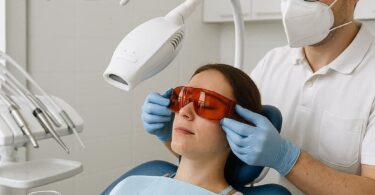
These technologies do not replace the need for a clinical exam, but they can help the dentist see things that the naked eye might miss. They use special light-based technology to highlight abnormalities in the oral mucosa.
Common Adjunctive Technologies
-
ViziLite Plus: Uses a chemiluminescent light source. After the patient rinses with a special solution, the dentist uses a disposable light stick to examine the mouth. Normal tissue absorbs the light, while abnormal tissue may appear white.
-
VELscope: Uses a blue light to excite the natural fluorescence of oral tissues. Healthy tissue fluoresces differently than diseased tissue. Under the VELscope light, healthy tissue appears bright green, while suspicious areas may appear dark.
-
OralCDx BrushTest: This is a brush biopsy. If a dentist sees a suspicious spot, they can use a small brush to collect cells from the lesion. These cells are sent to a lab for analysis. This is not a screening tool but rather a diagnostic tool used after a suspicious finding during a D0431 screening.
Coding for Adjunctive Screenings
It is crucial to understand that these technologies are typically billed separately from D0431. If your dentist uses a VELscope or ViziLite, they may bill using codes such as D0432 (which is often designated for screening using a chemiluminescent light) or other specific codes depending on the device and the insurance plan.
Always ask your dental office upfront about the use of these technologies and whether they are included in the screening fee or if they are an additional charge.
Insurance Coverage and Reimbursement for D0431
This is where things can get a little tricky. The coverage for D0431 varies widely depending on your insurance plan.
The Reality of Coverage
Many traditional dental insurance plans are designed primarily to cover preventive services like cleanings, X-rays, and exams (D0120). Because D0431 is often considered a screening rather than a diagnostic service, some plans do not cover it at all. Others may cover it once a year, while some might only cover it for patients who are considered “high-risk.”
Factors that influence coverage:
-
Your specific plan: PPO plans, HMO plans, and indemnity plans all have different rules.
-
Frequency limitations: Some plans limit the coverage to once every 12 or 36 months.
-
Medical necessity: If you have a history of oral cancer, use tobacco, or have other risk factors, your dentist can often provide documentation to support medical necessity, which may increase the likelihood of coverage.
-
Medical vs. Dental Insurance: In some cases, if the screening is deemed medically necessary, it may be billed to your medical insurance rather than your dental insurance. This is a complex area, and the dental office’s billing coordinator is the best person to guide you.
What to Expect to Pay
If your insurance does not cover D0431, or if you have not met your deductible, you will be responsible for the out-of-pocket cost. The fee for an oral cancer screening can vary based on geographic location and the specific practice.
-
Average Cost for D0431 (Visual and Palpation): Typically ranges from $25 to $75.
-
Cost with Adjunctive Technology: If a VELscope or ViziLite is added, the total cost can range from $50 to $150, depending on whether it is bundled with the exam.
Given the life-saving potential of early detection, this is generally considered a low-cost, high-value investment in your health.
The Patient Experience: What to Expect During a D0431 Screening
Knowing what to expect can ease any anxiety you might have about the procedure. A screening using D0431 is non-invasive, painless, and takes only a few minutes.
Step-by-Step Breakdown
-
Medical History Update: The appointment will likely begin with a review of your medical history. Be honest about any risk factors, such as tobacco use, alcohol consumption, or a family history of cancer.
-
Visual Examination: The dentist or hygienist will ask you to open wide. They will use a light and a mirror to look at every corner of your mouth. They may ask you to stick out your tongue and move it from side to side. They are looking for any asymmetry, swelling, or color changes.
-
Palpation: This is the part where the dentist uses their fingers. They will gently but firmly press on the floor of your mouth under your tongue. They will also feel along your jawline and down your neck to check your lymph nodes. You might feel slight pressure, but it should not be painful.
-
The “Ah” Moment: The dentist will ask you to say “Ah” to extend your soft palate, allowing them to see the back of your throat and the tonsillar area.
-
Discussion: If the dentist finds nothing suspicious, they will tell you everything looks healthy. If they find an area they want to monitor, they will discuss it with you. This does not mean you have cancer. It often means they want to take a “wait and see” approach or possibly refer you to an oral surgeon for a biopsy if the area looks concerning.
Patient Quotations
“I never really thought about oral cancer until my dentist found a small white patch on the side of my tongue during a routine screening. He billed it as D0431, and my insurance didn’t cover it, but that $45 was the best money I ever spent. It turned out to be nothing, but the peace of mind was worth it.”
— Sarah M., Dental Patient
“As a former smoker, I appreciate that my dental office takes the time to do a thorough neck and mouth check every six months. They always explain the code to me on my statement so I know exactly what I’m paying for. It makes me feel like a partner in my health.”
— David L., Dental Patient
Risk Factors and the Importance of Regular Screenings
Understanding your personal risk for oral cancer can help you understand why D0431 is so important.
Key Risk Factors
-
Tobacco Use: This includes cigarettes, cigars, pipes, chewing tobacco, and snuff. Tobacco use is the single largest risk factor for oral cancer.
-
Heavy Alcohol Consumption: People who consume alcohol heavily are at increased risk. The combination of tobacco and alcohol use significantly multiplies the risk.
-
Human Papillomavirus (HPV): HPV, specifically the HPV-16 strain, is a leading cause of oropharyngeal cancers (cancers of the back of the throat, including the base of the tongue and tonsils). This type of oral cancer is becoming more common in younger, non-smoking individuals.
-
Age: The risk increases with age. Most cases are diagnosed in adults over 55.
-
Sun Exposure: Prolonged, unprotected sun exposure increases the risk of lip cancer.
-
Gender: Historically, men are twice as likely as women to develop oral cancer, though the gap is narrowing.
-
Poor Nutrition: A diet lacking in fruits and vegetables may increase the risk.
If You Are High-Risk
If you fall into one or more of these categories, you should consider yourself high-risk. In these cases, an annual screening using D0431 is not just a good idea; it is a medical necessity. Talk to your dentist about the frequency of your screenings. Some high-risk patients benefit from screenings every 3-6 months.
Navigating Billing and Asking the Right Questions
You are the most important advocate for your own health. To avoid surprises and ensure you receive the best care, it helps to be proactive about the financial and procedural aspects of your dental visit.
Questions to Ask Your Dental Office
Before your appointment, do not hesitate to call the front desk or ask your hygienist directly. Here are a few helpful questions:
-
“Does my routine exam (D0120) include an oral cancer screening, or is that billed separately?”
-
“If a separate screening is performed, will you be using code D0431, and does my insurance typically cover this?”
-
“Do you use any adjunctive screening technologies like VELscope or ViziLite? If so, are these included in the screening fee or billed separately?”
-
“If I have a history of tobacco use, would my insurance be more likely to cover the screening under medical necessity?”
Understanding Your Explanation of Benefits (EOB)
When you receive your EOB from your insurance company, look for the code D0431. You will likely see columns for:
-
Amount Billed: The dentist’s fee for the service.
-
Plan Allowance: The amount your insurance company has negotiated for that service.
-
Patient Responsibility: The amount you owe. This could be your copay or the full amount if the service was denied.
If the service is denied with a code like “Not a covered benefit,” you are responsible for the full fee. Understanding this upfront prevents confusion later.
The Future of Oral Cancer Screening and Coding
The field of dental oncology is evolving rapidly. As we move further into 2026 and beyond, we can expect to see shifts in how screenings are performed and coded.
Potential Trends
-
Salivary Diagnostics: Research into using saliva to detect biomarkers for oral cancer is advancing. In the future, a simple saliva test could become a standard part of a screening. This would likely warrant its own CDT code.
-
Artificial Intelligence (AI): AI-powered imaging analysis is being developed to help dentists identify suspicious lesions with greater accuracy. AI can analyze images of the oral cavity and flag areas that have a high probability of being dysplastic or malignant.
-
Increased Medical Integration: As the link between oral health and overall health becomes more recognized, we may see a shift where oral cancer screenings are covered more frequently by medical insurance, particularly for high-risk populations.
Coding Updates
The ADA updates the CDT code set annually. While D0431 remains the standard code for a dedicated visual and tactile screening, it is wise to stay informed. In recent years, codes like D0432 have been introduced to cover specific adjunctive screening methods. Your dental provider should always use the most current and accurate code for the service they perform.
Conclusion
Understanding the dental code for oral cancer screening—D0431—empowers you to take control of your health. It represents more than just a billing number; it symbolizes a vital, life-saving procedure that should be a cornerstone of your preventive healthcare routine. While insurance coverage can vary, the value of early detection far outweighs the modest out-of-pocket cost for most patients. By asking questions, knowing your risk factors, and prioritizing this simple, painless exam, you are making a powerful investment in your long-term well-being.
Frequently Asked Questions (FAQ)
Q1: Is an oral cancer screening painful?
A: No, it is not painful. The visual exam is completely painless. The physical palpation (feeling of the neck and floor of the mouth) involves gentle pressure but should not cause pain. If you have any tender areas, be sure to mention them to your dentist.
Q2: How often should I get an oral cancer screening?
A: For most patients with average risk, once a year is sufficient. However, your dentist may recommend a screening at every recall appointment (every six months) if you are at high risk due to factors like tobacco use, heavy alcohol consumption, or a history of oral cancer.
Q3: Will my insurance always pay for D0431?
A: Not always. Many dental insurance plans do not cover D0431 as a separate benefit. It is essential to check your specific plan details. If it is not covered, you will be responsible for the fee, which is typically affordable.
Q4: What is the difference between a screening (D0431) and a biopsy?
A: A screening (D0431) is a non-invasive examination to look for signs of cancer. A biopsy is a diagnostic procedure where a small sample of tissue is removed from a suspicious area and sent to a lab for analysis to determine if cancer cells are present. A biopsy has its own set of CDT codes (such as D7280, D7281, D7282, D7283).
Q5: Can I refuse an oral cancer screening?
A: Yes, you have the right to refuse any part of a dental examination. However, it is highly recommended that you do not. Dentists are required to document if a patient declines a screening. Given the risks of undiagnosed oral cancer, it is a service worth accepting.
Additional Resource
For more information about oral cancer, risk factors, and support, we highly recommend visiting the Oral Cancer Foundation (OCF). The OCF is a national public service, non-profit organization designed to reduce suffering and save lives through prevention, education, research, advocacy, and support.
Link: https://www.oralcancer.org
Disclaimer: This article is for informational purposes only and does not constitute medical, dental, or legal advice. Dental coding practices can vary by region and insurance carrier. Always consult with your dental provider and insurance company for specific information regarding your treatment and coverage.
Author: A seasoned dental health writer with over a decade of experience in clinical dentistry and practice management.
Date: March 24, 2026