If you’ve ever sat in the dentist’s chair and heard a hygienist call out a series of numbers like “three, three, two, four,” you’ve witnessed a dental probing in action. It’s a routine part of most checkups, but what exactly is it, and more importantly, how does it translate to the paperwork behind the scenes?
In the world of dental billing and insurance, that simple act of measuring the gums has a specific code. It’s a number that determines whether a procedure is preventive, diagnostic, or a sign of a more serious issue. If you’re a patient trying to understand your bill, a student learning the ropes, or a new team member in a dental office, getting a grip on this code is essential.
Let’s dive deep into everything you need to know about the dental code for probing, officially known as D0180.
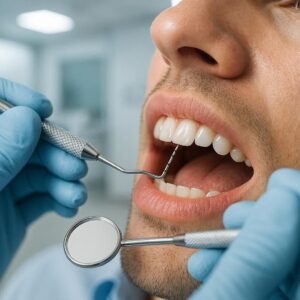
Dental Code for Probing
What Exactly Is a Dental Probing?
Before we get into the code itself, it helps to understand the procedure. Dental probing, often called periodontal probing, is not just a “poke around” in your mouth. It is a precise diagnostic measurement.
A dentist or dental hygienist uses a small, ruler-like instrument called a periodontal probe. They gently insert this probe between your tooth and the gum tissue (the gingiva) to measure the depth of the “sulcus” or “pocket.”
-
Healthy gums: Usually measure between 1 and 3 millimeters.
-
Warning zone: 4 millimeters often indicates inflammation or gingivitis.
-
Concern zone: 5 millimeters or more is typically a sign of periodontitis (gum disease), where bone loss may be occurring.
This process isn’t just about getting numbers. It’s about building a map of your oral health. It helps identify areas where you might be losing bone, where inflammation is hiding, and whether your home care routine is effective.
The Official Code: D0180 – Comprehensive Periodontal Evaluation
So, what is the official dental code for probing? When a dentist or hygienist performs a full-mouth, six-point probing (measuring six specific spots around each tooth) and evaluates the overall health of your gums, the code they use is D0180.
The American Dental Association (ADA) defines D0180 as: “Comprehensive periodontal evaluation – This is an evaluation of the periodontal tissues (gums) including probing, charting, and assessment of the condition of the periodontium.”
It is important to note that D0180 is more than just the act of probing. It is a comprehensive evaluation. It includes:
-
Full-mouth periodontal charting (the probing depths).
-
Assessment of bleeding points.
-
Evaluation of gum recession.
-
Assessment of furcation involvement (where roots separate in molars).
-
Evaluation of tooth mobility.
-
Review of the patient’s medical history as it relates to gum disease.
When Is D0180 Used?
You won’t see this code used at every six-month cleaning appointment. D0180 is typically used in specific scenarios:
-
New Patients: When a patient is new to a practice, a comprehensive periodontal evaluation helps establish a baseline for their gum health.
-
Patients with a History of Gum Disease: If a patient has been treated for periodontitis in the past, this code is used during their ongoing maintenance visits to monitor stability.
-
Patients Showing Signs of Disease: If a patient who usually gets a standard cleaning suddenly shows signs of inflammation, the dentist may upgrade the exam to a D0180 to properly document the condition.
-
Before Major Treatment: Before placing implants, crowns, or performing oral surgery, a dentist needs to know the health of the supporting gums and bone.
D0180 vs. Other Common Exam Codes: A Comparison
One of the biggest sources of confusion for patients is seeing a charge for an “exam” but not understanding why one exam code was used instead of another. D0180 is a specific type of exam. It is not a “cleaning,” nor is it a routine checkup.
To help clarify, here is a comparison of D0180 with other frequently used codes.
| ADA Code | Procedure Name | What It Includes | Probing Required? |
|---|---|---|---|
| D0120 | Periodic Oral Evaluation | A checkup for an established patient of record. Focuses on existing conditions, changes since last visit, and limited oral cancer screening. | Usually, no. May involve spot-checking if an issue is suspected. |
| D0140 | Limited Oral Evaluation | A problem-focused exam. Used for emergencies like toothaches or broken teeth. | Rarely. Only the specific problem area is assessed. |
| D0150 | Comprehensive Oral Evaluation | A detailed exam for new patients or patients with significant changes. Includes full oral cavity evaluation, TMJ assessment, and hard/soft tissue exam. | Often includes some probing, but not the full 6-point periodontal charting required for D0180. |
| D0180 | Comprehensive Periodontal Evaluation | Focused specifically on the gums and supporting structures. Full-mouth, 6-point probing, bleeding assessment, mobility, and recession. | Yes. Full-mouth, detailed probing is mandatory. |
Why Does Probing Matter? The Patient’s Perspective
If you’re looking up the dental code for probing, there’s a good chance you saw it on a bill and wondered, “Why did they charge me for this? I just came in for a cleaning.”
Here is the honest truth: A standard teeth cleaning (prophylaxis, code D1110) is meant for healthy mouths. If your gums are bleeding, swollen, or showing signs of disease, a standard cleaning is not enough. In fact, cleaning a mouth with active gum disease without properly diagnosing it first is like washing a car with a broken engine—it looks clean on the outside, but the underlying problem remains.
When a dentist performs a D0180, they are doing a few things for you:
-
Protecting Your Health: They are identifying a chronic inflammatory disease (periodontitis) that affects not just your mouth, but has been linked to heart disease, diabetes, and other systemic conditions.
-
Creating a Legal Record: Medical and dental records are legal documents. If a dentist treats a patient for gum disease without properly documenting the baseline severity (using probing depths), they could face liability issues. The probing provides the proof.
-
Ensuring Proper Insurance Coverage: If you have periodontal disease, your insurance plan often covers different treatments (like scaling and root planing, D4341) than it does for routine cleanings. Without the D0180 documentation, insurance companies may deny the more complex treatment.
A Note for Patients
If your dentist recommends a D0180, it is not an upsell or a way to charge you more for a cleaning. It is a diagnostic necessity. If your dentist has diagnosed you with gum disease, you genuinely need this comprehensive evaluation. Without it, they cannot ethically treat you.
The Probing Process: What Happens During D0180?
For those who feel a bit of anxiety about the “poking” part of a dental visit, understanding the process can help. It’s not random; it’s systematic.
The process typically follows this flow:
-
Medical History Review: The hygienist or dentist reviews your health history for risk factors like smoking, diabetes, or medications that cause gum enlargement.
-
Visual Inspection: They look for signs of inflammation, recession, and tartar buildup below the gumline.
-
The Probing: Using a probe, they will measure six specific points around each tooth:
-
Distofacial: The back corner of the tooth facing the cheek.
-
Facial: The middle of the tooth facing the cheek.
-
Mesiofacial: The front corner of the tooth facing the cheek.
-
Distolingual: The back corner of the tooth facing the tongue.
-
Lingual: The middle of the tooth facing the tongue.
-
Mesiolingual: The front corner of the tooth facing the tongue.
-
-
Recording: These numbers are called out to a dental assistant or entered into a computer. You’ll hear a series of numbers like “3, 3, 2, 4, 3, 3.”
-
Assessment: The clinician notes any bleeding. Bleeding on probing (BOP) is a key indicator of active inflammation, even if the numbers are low.
-
Mobility and Furcation: They will check to see if any teeth are loose (mobility) and use a special probe to see if the bone between the roots of molars has been lost (furcation involvement).
The Different Types of Probing: Not All Are D0180
It’s worth noting that a dentist or hygienist probes in almost every appointment. However, the type of probing dictates the code.
-
Full-Mouth, Six-Point Probing: This is D0180. It is comprehensive, time-consuming, and diagnostic. It is usually done annually for periodontal patients or at the new patient appointment.
-
Spot Probing: If a patient comes in for a D0120 (routine checkup) and the hygienist sees a red area on one tooth, they might probe that single area to check for a localized problem. This is not billed as D0180. It is considered part of the routine exam.
-
Re-Evaluation Probing: After a patient has undergone scaling and root planing (deep cleaning), the dentist will re-probe the mouth 4-6 weeks later to see if the pockets have shrunk and healed. This is often coded with the treatment code (like D4341) or a re-evaluation code (D0170 or D0180 depending on the extent), rather than a separate comprehensive evaluation.
Dental Probing and Insurance: What to Expect
Insurance can be tricky. While D0180 is a standard ADA code, not all insurance plans cover it the same way.
-
Frequency Limitations: Many insurance plans limit D0180 to once every 12, 24, or even 36 months. Some plans consider it part of the “comprehensive exam” (D0150) and won’t pay for both on the same day.
-
Medical vs. Dental: In some cases, if a patient has a medical condition like diabetes or is pregnant, the periodontal evaluation may be considered medically necessary. However, most claims go through dental insurance.
-
Deductibles and Co-pays: Like most exams, D0180 is subject to your plan’s deductible and co-insurance. If you haven’t met your deductible, you may pay the full fee for the service.
Important Note for Readers
Do not assume a code is “covered” just because it was performed. Always ask your dental office to submit a pre-determination of benefits to your insurance company before undergoing a comprehensive periodontal evaluation if you are concerned about the cost. This gives you a written estimate of what the insurance will pay.
The Link Between Probing and Gum Disease Treatment
The dental code for probing is almost always the first step in a journey. If the numbers from D0180 reveal pockets of 5mm or more, you are likely moving into the realm of periodontal therapy.
Here’s how the codes connect:
-
D0180 (Comprehensive Periodontal Evaluation): This is the discovery phase. It identifies the problem.
-
D4341 or D4342 (Periodontal Scaling and Root Planing): This is the active treatment phase. This is the “deep cleaning” that removes bacteria and calculus from those deep pockets.
-
D4910 (Periodontal Maintenance): This is the ongoing care phase. After treatment, patients return every 3-4 months for maintenance. During these visits, a full-mouth probing (D0180) is often performed once a year to ensure the disease is stable.
Tips for Dental Professionals: Documenting D0180
For dental professionals reading this, accurate documentation is your best friend. An audit can be stressful, but proper records make it painless.
When you perform a D0180, ensure your chart includes:
-
A full-mouth periodontal chart with six measurements per tooth.
-
Notation of bleeding points (percentage of bleeding sites).
-
Notation of suppuration (pus) if present.
-
Notation of recession measurements (how far the gum has pulled away from the crown).
-
Mobility scores (0-3).
-
Furcation involvement scores.
-
A narrative note describing the overall condition of the periodontium (e.g., “Generalized moderate chronic periodontitis with localized areas of 5-6mm probing depths on the mandibular molars.”).
If you don’t have these elements in the chart, you technically did not perform a comprehensive periodontal evaluation. In the eyes of an auditor, it’s just a cleaning with a probe.
The Future of Probing: Technology and Automation
The manual probe with a ruler is still the gold standard, but technology is changing how we code for probing.
-
Electronic Probing: Many offices now use computerized probes that automatically record the depths and bleeding points. This reduces transcription errors and creates a digital record that is hard to dispute.
-
3D Imaging: While CBCT (Cone Beam CT) scans are not a replacement for probing, they provide a 3D view of the bone level. This supports the findings of D0180 and provides a more complete picture for complex surgical cases.
Why “Probing” Might Be the Most Important Part of Your Visit
It’s easy to dismiss the probing as a minor annoyance. But from a medical and financial perspective, it is arguably the most critical 5-10 minutes of your dental visit.
“Periodontal disease is a silent disease. You can have no pain and no visible symptoms until the damage is severe. The periodontal probe is our radar. It tells us what the eye cannot see. The code D0180 exists because this level of diagnostic work is not simple—it is the foundation of all periodontal care.” – Dr. Sarah Jensen, DDS, Periodontist
If you are a patient, next time you hear those numbers being called out, think of them less as “pokes” and more as a vital sign for your body, just like blood pressure or heart rate.
Conclusion: More Than Just a Code
The dental code for probing, D0180, is far more than a number on a billing statement. It represents a commitment to thorough, evidence-based care. It is the gateway to diagnosing one of the most common chronic diseases in the world: periodontitis.
For patients, understanding this code helps you advocate for your own health. It explains why sometimes a “cleaning” isn’t just a cleaning, and why a detailed evaluation of your gums is a non-negotiable part of a healthy future.
For dental professionals, mastering the use of D0180 ensures accurate documentation, ethical billing, and the best possible outcomes for patients. When in doubt, probe it out, and always ensure your documentation matches the code.
Frequently Asked Questions (FAQ)
1. Is the dental code D0180 the same as a regular checkup?
No. A regular checkup is usually D0120 (Periodic Oral Evaluation). D0180 is a comprehensive periodontal evaluation, meaning it focuses specifically on the gums and the bone supporting the teeth, requiring full-mouth probing.
2. How often can D0180 be billed to insurance?
It depends on your plan. Many dental insurance plans cover it once every 12 to 36 months. Some plans combine it with the comprehensive exam (D0150) and only allow one or the other per enrollment period. It’s best to check your specific plan details.
3. Does D0180 include the cleaning?
No. D0180 is a diagnostic exam code. It does not include the cleaning (prophylaxis D1110) or periodontal treatment (scaling and root planing D4341). These are separate procedures billed under their own codes.
4. Why did my dentist bill D0180 when I only had a few deep pockets?
If a dentist finds evidence of generalized inflammation or localized deep pockets, they are ethically and legally required to properly diagnose the condition. A standard exam is not sufficient to diagnose periodontitis. The D0180 allows them to document the severity and location of the disease to create a proper treatment plan.
5. Does probing hurt?
It can be uncomfortable, especially if your gums are inflamed. In healthy mouths, it should feel like pressure. If you have significant gum disease, the probing may be tender. You can always ask your hygienist to use a topical anesthetic gel to numb the area before probing.
6. What is the difference between D0180 and D0150?
D0150 is a comprehensive oral evaluation. It looks at the whole mouth: teeth, soft tissue (cheeks, tongue), TMJ (jaw joint), and the gums. D0180 is a comprehensive periodontal evaluation. It goes deeper into the gums, focusing on probing depths, recession, mobility, and furcations. A D0150 may be done on a new patient with healthy gums, while a D0180 is done on a patient with suspected or confirmed gum disease.
Disclaimer: This article is for informational purposes only and does not constitute medical or billing advice. Dental coding can vary by insurance plan and region. Always consult with your dental provider or insurance carrier for specific guidance.
Author: Senior Dental Health Writer
Date: March 24, 2026