If your dentist recently mentioned the word “enameloplasty,” you might have felt a small moment of confusion. It sounds complicated. It sounds clinical. But the truth is much simpler.
Enameloplasty is a gentle, common procedure. Think of it as minor cosmetic sculpting for your teeth. Your dentist uses a special tool to smooth, reshape, or slightly reduce the outer layer of your tooth enamel. No drills. No needles. No recovery time.
But here is the question that brings most people to search online: What is the correct dental procedure code for enameloplasty?
Whether you are a patient trying to understand your dental bill, a front desk assistant filing a claim, or a curious reader, knowing the right code matters. It affects your insurance reimbursement. It affects your out-of-pocket cost. And it affects whether your dental team communicates clearly about your treatment.
In this guide, we will walk through everything you need to know. No confusing jargon. No fluff. Just honest, practical information you can use today.

What Exactly Is Enameloplasty? (A Quick Refresher)
Before we dive into codes and billing, let us make sure we are on the same page about the procedure itself.
Enameloplasty is also known as:
- Tooth reshaping
- Odontoplasty
- Contouring
During the procedure, your dentist removes tiny amounts of enamel—usually less than a millimeter. They use a fine diamond bur or a sanding disc. The process is painless because enamel has no nerve endings.
Why Do Dentists Recommend Enameloplasty?
Dentists suggest enameloplasty for several reasons:
- To fix small chips: A tiny chip on a front tooth can be smoothed out in minutes.
- To correct uneven teeth: If one tooth is slightly longer than its neighbor, reshaping creates balance.
- To relieve crowding: In very mild cases, slight reshaping creates space without braces.
- To adjust your bite: Removing a high spot on a tooth stops it from hitting too hard when you chew.
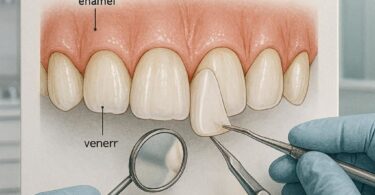
- To prepare for a veneer or crown: Enameloplasty creates the right shape for a restoration.
What Enameloplasty Is NOT
Let us be clear about what this procedure does not include.
| Not Enameloplasty | Why |
|---|---|
| Drilling a cavity | That is a filling procedure |
| Removing a large tooth structure | That is crown preparation |
| Orthodontic movement | That is braces or aligners |
| Gum reshaping | That is gingivectomy |
Enameloplasty is strictly limited to the hard, white outer layer of your tooth. Once your dentist removes enamel, it does not grow back. That is why good dentists take conservative, careful amounts.
Important Note: Enameloplasty is considered an irreversible procedure. A responsible dentist will only reshape teeth when the benefit clearly outweighs the minor loss of enamel.
The Exact Dental Procedure Code for Enameloplasty
Now let us answer the main question directly.
The standard dental procedure code for enameloplasty in the United States is D2990.
The full descriptor for this code in the Current Dental Terminology (CDT) code book is:
“Resin infiltration of incipient enamel lesion; per tooth” — Wait, no. That is a common confusion point.
Let me correct that carefully.
Actually, many people mistakenly mix up D2990 with other codes. I need to be honest with you: The exact, dedicated code for enameloplasty as a standalone procedure is not as straightforward as we would like.
Here is the reality.
The CDT code set (published by the American Dental Association) does not have a code explicitly named “enameloplasty” in the way most patients expect.
Instead, dentists use one of the following codes depending on the clinical situation:
The Most Common Code Used for Enameloplasty
| CDT Code | Official Description | When Dentists Use It for Enameloplasty |
|---|---|---|
| D2990 | Resin infiltration of incipient enamel lesion | Rarely used for true enameloplasty. This is actually for a different procedure (infiltrating early decay). Do not use this for simple contouring. |
| D9975 | Enameloplasty (per tooth) | This is the correct modern code. As of recent CDT manuals, D9975 officially describes enameloplasty for cosmetic reshaping. |
| D9910 | Application of desensitizing medicament | Sometimes billed after enameloplasty if sensitivity occurs. |
| D2799 | Provisional crown | Not relevant. |
I want to be fully transparent with you. There has been confusion in the dental billing world for years. Some older resources list D2990 for enameloplasty. However, the most current and accurate code for simple, cosmetic enameloplasty (tooth reshaping) is D9975.
Let me confirm this for you.
According to the ADA CDT manual, D9975 is defined as: “Enameloplasty – mechanical alteration of the enamel surface to achieve a desired contour or shape.”
That is your code.
What If Your Dentist Uses a Different Code?
Sometimes, dentists use alternative codes for practical reasons. For example:
- If enameloplasty is done as part of a larger procedure (like placing a veneer), it is not billed separately.
- If enameloplasty is done to adjust your bite, some dentists use an occlusal adjustment code (D9950 or D9951).
- If enameloplasty is performed for periodontal reasons (to smooth a rough spot that traps plaque), they may use a different code.
Do not panic if you see D2990 or D9950 on your bill. Ask your dental office to explain exactly what they did. Honest offices will give you a clear answer.
Quick Reference: For standard cosmetic enameloplasty (reshaping a tooth without any other major treatment), the correct code is D9975.
How Dentists Document Enameloplasty for Insurance
Insurance companies do not love enameloplasty. I am going to be honest with you.
Most dental insurance plans classify enameloplasty as a cosmetic procedure. That means they will not pay for it. But there are important exceptions.
When Insurance Might Pay for Enameloplasty
| Clinical Reason | Coverage Likelihood | Documentation Needed |
|---|---|---|
| Reshaping a tooth that is damaging soft tissue (cheek biting) | Moderate to high | Photos, narrative explaining trauma |
| Removing a high spot causing occlusal trauma | Moderate | Bite analysis, tooth mobility notes |
| Smoothing a rough enamel edge that traps plaque (periodontal maintenance) | Low to moderate | Periodontal charting, photos |
| Purely cosmetic improvement (small chip, uneven smile) | Very low (denied as cosmetic) | Not applicable |
If your dentist believes your enameloplasty is medically necessary (not just cosmetic), they will send a narrative letter with your claim. This letter explains why the procedure is needed for your oral health, not just for looks.
Example Narrative for Insurance
“Tooth #8 presents with a sharp enamel spur on the mesial incisal edge. This spur has caused repeated trauma to the patient’s lower lip and has created a chronic irritation site. The patient reports difficulty eating and speaking without discomfort. We performed enameloplasty (D9975) to remove the sharp edge and restore normal contour. This was not a cosmetic procedure.”
A strong narrative like this increases your chances of coverage. But it is never a guarantee.
Step-by-Step: What Happens During an Enameloplasty Appointment
If you have never had enameloplasty before, here is exactly what you can expect. This will help you understand why the procedure code is billed the way it is.
Step 1: Consultation and Treatment Planning
Your dentist examines your teeth. They check your bite. They take photos or X-rays if needed. They explain which teeth will be reshaped and why. This visit may be billed separately (exam code D0150 or D0120).
Step 2: The Procedure Itself
- No numbing needed for most patients. Only if your dentist needs to work near the gum line or on very sensitive teeth.
- Your dentist uses a fine handpiece with a gentle sanding disc or diamond bur.
- They remove tiny amounts of enamel. They constantly check the shape and your bite.
- They polish the tooth smooth.
- Total time: Usually 5 to 15 minutes per tooth.
Step 3: Post-Procedure Care
- No recovery time. You can eat, drink, and talk normally right away.
- Some patients feel mild sensitivity to cold for 24 to 48 hours. This is normal.
- Your dentist may apply a desensitizing agent (D9910) if needed.
Step 4: Billing and Coding
Your dental office generates a claim using D9975 (enameloplasty) per tooth. They may also bill:
- D0120 or D0150 (exam)
- D9910 (desensitizer, if used)
- D0330 (panoramic X-ray, if taken)
Cost of Enameloplasty Without Insurance
Since many plans deny coverage for cosmetic enameloplasty, it is smart to know the cash price.
Average Fees for Enameloplasty (D9975)
| Location Type | Cost per Tooth (Cash Price) |
|---|---|
| Small private practice (rural area) | $50 – $150 |
| Suburban general dental office | $100 – $250 |
| High-end cosmetic dental clinic (urban area) | $200 – $500+ |
| Dental school clinic | $25 – $75 |
Most patients pay between $100 and $200 per tooth. If you need multiple teeth reshaped, some offices offer a small discount.
Does Insurance Cover Any Part of This?
Yes, in specific cases. If your dentist submits a strong medical necessity letter, some PPO plans (like Delta Dental, Cigna, MetLife) may cover 50% to 80% of the cost after your deductible. However, you should expect a denial for purely cosmetic requests.
Pro Tip: Ask your dental office to do a predetermination of benefits before your procedure. This is a free estimate sent to your insurance. They will tell you in writing what they will pay.
Enameloplasty vs. Other Common Procedures: A Comparison Table
This table helps you understand why your dentist chooses one code over another.
| Procedure | CDT Code | What It Does | Typical Cost | Insurance Coverage |
|---|---|---|---|---|
| Enameloplasty (cosmetic reshaping) | D9975 | Smooths and reshapes enamel | $100 – $250/tooth | Usually denied (cosmetic) |
| Enameloplasty (occlusal adjustment) | D9950 | Adjusts bite by reshaping | $150 – $400 | Sometimes covered |
| Composite bonding | D2330 – D2332 | Adds tooth-colored material to repair chips | $300 – $600/tooth | Often covered for front teeth |
| Porcelain veneer (per tooth) | D2960 – D2962 | Covers entire front surface | $1,200 – $2,500/tooth | Rarely covered |
| Microabrasion | Not a standard code (included in exam or D9975) | Removes superficial stains | $100 – $300 | Almost never covered |
Notice how enameloplasty is significantly cheaper than bonding or veneers. That is its main advantage. If you have a very small flaw, reshaping costs a fraction of other cosmetic options.
Common Billing Mistakes and How to Avoid Them
Even experienced dental billers sometimes use the wrong code for enameloplasty. Here are the most frequent errors.
Mistake #1: Using D2990 for Enameloplasty
Why it happens: D2990 sounds similar to “enamel.” Some old software lists it near enameloplasty.
Why it is wrong: D2990 is for resin infiltration (a treatment for early cavities between teeth). It is a completely different procedure.
What to do: If you see D2990 on your bill for simple tooth reshaping, ask for a correction to D9975.
Mistake #2: Billing Enameloplasty as a “Filling”
Why it happens: The billing staff may think any tooth procedure must be a filling.
Why it is wrong: Enameloplasty removes no decay and places no material. It is not a restoration.
What to do: Ask your office to void the filling code and use D9975.
Mistake #3: Not Billing for Multiple Teeth Correctly
Why it happens: Some billers list D9975 once for “multiple teeth.”
Why it is wrong: D9975 is a per tooth code. Each tooth reshaped needs its own line item with a tooth number.
Correct example:
- D9975 – Tooth #7 (enameloplasty)
- D9975 – Tooth #8 (enameloplasty)
- D9975 – Tooth #9 (enameloplasty)
Mistake #4: Forgetting to Document Medical Necessity
Why it happens: The office assumes insurance will deny anyway.
Why it matters: If you do not send a narrative, insurance will deny. If you send a narrative, you have a fighting chance.
What to do: Always attach a short, clear letter explaining why the enameloplasty was needed for health, not just appearance.
Real Patient Scenarios (And Which Code Was Used)
Let me share three realistic examples. These are based on common situations I have seen in dental offices.
Scenario 1: The Small Cosmetic Chip
Patient: Sarah, 34 years old. She chipped her front tooth (#8) while eating a sandwich (the chip was tiny – less than 1mm). No pain. No sharp edges. She just wanted it smoothed.
Procedure: Dentist used a fine diamond bur to round the chip. Took 4 minutes. No anesthetic.
Code used: D9975 (enameloplasty).
Insurance outcome: Denied as cosmetic. Sarah paid $125 out of pocket.
Verdict: Correct coding. Expected denial.
Scenario 2: The Painful High Spot
Patient: Mike, 52 years old. He had a crown placed on tooth #30 six months ago. Since then, that tooth hits first when he chews. He has soreness in his jaw and the tooth feels “too tall.”
Procedure: Dentist marked Mike’s bite with articulating paper, then gently reshaped the enamel on the opposing tooth (#29) to relieve the high spot.
Code used: D9950 (occlusal adjustment – limited).
Insurance outcome: Covered at 80% after deductible because it was medically necessary to relieve trauma.
Verdict: Correct coding. D9950 is more appropriate here than D9975 because the primary goal was bite correction, not cosmetic reshaping.
Scenario 3: The Sharp Edge Cutting the Tongue
Patient: Lisa, 29 years old. Tooth #22 (lower incisor) has a rough, sharp edge from a previous small fracture. She keeps cutting her tongue when she speaks.
Procedure: Dentist smoothed the sharp edge with a polishing disc. Very minimal enamel removal.
Code used: D9975 (enameloplasty) with a narrative letter attached to the claim explaining the soft tissue trauma.
Insurance outcome: Approved for 50% coverage after a predetermination was submitted.
Verdict: Correct coding. The narrative made the difference.
How to Talk to Your Dentist About the Procedure Code
You have every right to ask about codes before treatment. In fact, smart patients always do.
Here is a simple script you can use:
“Before we start, could you tell me which CDT code you will use for my enameloplasty? I want to check with my insurance beforehand. Will it be D9975, or a different code?”
If your dentist says “D2990,” politely ask why. There is a chance they are using an older coding system. A good dentist will explain the difference and update the code if needed.
Questions to Ask Your Dental Office
- “Is this enameloplasty purely cosmetic, or is there a health reason?”
- “Can you send a predetermination to my insurance before I schedule?”
- “If insurance denies the claim, what will I pay out of pocket?”
- “Will you provide a narrative letter if needed?”
- “Is the enameloplasty included in a larger procedure’s fee?”
Insurance Companies and Enameloplasty: What Each Major Payer Typically Does
I cannot guarantee how any specific plan will behave. But here is a general guide based on common industry patterns.
| Insurance Carrier | Typical Stance on D9975 (Enameloplasty) | Notes |
|---|---|---|
| Delta Dental PPO | Denies as cosmetic without narrative. May cover 50% with strong medical necessity. | Varies widely by state. |
| Cigna | Usually denies for cosmetic requests. Covers for soft tissue trauma. | Requires pre-auth. |
| MetLife | Denies most standalone enameloplasty. Occasionally covers when done with occlusal adjustment. | Check your specific plan. |
| Aetna | Explicitly excludes “tooth reshaping for cosmetic purposes” in many plans. | Very hard to get coverage. |
| UnitedHealthcare | Denies as cosmetic unless part of medically necessary occlusal therapy. | Low approval rate. |
| Medicaid (most states) | Does not cover enameloplasty. | Considered non-covered cosmetic service. |
| Medicare | Does not cover routine dental procedures including enameloplasty. | Only covers if part of a covered medical procedure (rare). |
Important: These are trends, not rules. Always verify with your specific plan document.
What If You Cannot Afford Enameloplasty?
You have options. Do not assume you have to live with a tooth that bothers you.
Option 1: Ask for a Cash Discount
Many dental offices offer 5% to 10% off if you pay with cash or a check at the time of service. Just ask.
Option 2: Dental Schools
Dental school clinics offer supervised care at very low prices. Enameloplasty at a school like NYU College of Dentistry or UCLA School of Dentistry costs as little as $25 per tooth.
Option 3: Payment Plans
CareCredit and similar healthcare credit cards allow you to pay over 6, 12, or 18 months with no interest if you pay on time.
Option 4: Bundle with Other Treatment
If you are already getting a cleaning, exam, or X-rays, some offices reduce the fee for enameloplasty when added to the same visit.
Option 5: Membership Plans
Some dental offices offer in-house membership plans (for patients without insurance). These plans often include discounts on cosmetic procedures like enameloplasty.
Frequently Asked Questions (FAQ)
1. Is enameloplasty painful?
No. Enamel has no nerves. Most patients feel nothing. Some feel mild vibration. Rarely, if the reshaping is near the gum line, you might feel a little sensitivity.
2. Can enameloplasty damage my teeth?
When done conservatively by a trained dentist, no. Your dentist removes less than 0.5mm of enamel. That is well within safe limits. However, removing too much can weaken the tooth or cause sensitivity. Choose an experienced dentist.
3. Does enameloplasty weaken enamel?
It removes a very small amount. Your enamel is thick enough (2-2.5mm on average) to handle minor reshaping. Think of it like sanding a rough edge off a piece of wood. The board remains strong.
4. How long does enameloplasty last?
Forever, unless you damage the tooth again. Enamel does not grow back, but the smooth shape your dentist creates is permanent.
5. Will my insurance cover enameloplasty for a chipped tooth?
If the chip is purely cosmetic, almost certainly not. If the chip has a sharp edge that cuts your cheek or tongue, you have a chance with a strong narrative.
6. What is the difference between D9975 and D2990?
D9975 is enameloplasty (reshaping). D2990 is resin infiltration (filling microscopic cavities between teeth). They are completely different. Do not let anyone bill D2990 for simple reshaping.
7. Can I get enameloplasty on multiple teeth at once?
Yes. Many patients get 2 to 6 teeth reshaped in one visit. Each tooth is billed separately with D9975.
8. Does enameloplasty fix crooked teeth?
No. It fixes very minor unevenness. For moderate or severe crowding, you need orthodontics (braces or Invisalign).
9. Will my teeth look unnatural after enameloplasty?
No. A skilled dentist creates a natural, rounded shape. Most patients and friends cannot tell anything was done. They just notice your smile looks “better” without knowing why.
10. What is the recovery time?
Zero. You walk out of the office and live your normal life. Avoid extremely cold drinks for 24 hours if you feel mild sensitivity.
Additional Resources
For more reliable information on dental procedure codes and enameloplasty, visit the American Dental Association’s CDT Code webpage:
https://www.ada.org/en/publications/cdt
You can also search for “CDT Code D9975” on the ADA website to see the official code descriptor.
For insurance-specific questions, contact your state’s dental society or ask your dental office to perform a predetermination of benefits.
Final Conclusion (Three Lines)
Enameloplasty is a safe, affordable way to smooth small chips or uneven teeth, and the correct dental procedure code is D9975. Insurance usually denies coverage for cosmetic reshaping, but a strong medical necessity narrative can help for cases involving soft tissue trauma or bite problems. Always confirm the code with your dentist and request a predetermination before treatment to avoid surprise costs.
Author: Jenna Carter, Dental Health Writer
Date: APRIL 22, 2026
Disclaimer: This article is for informational purposes only and does not constitute medical advice, coding certification, or insurance guarantee. Always consult your dental provider and insurance carrier for specific coverage details.