Navigating the world of medical coding often feels overwhelming. The manuals grow thicker each year, and the rules seem to shift beneath your feet. Among these thousands of codes, one product raises consistent questions: the abdominal binder. This simple elastic support wrap, used by countless patients after surgery or to support weakened muscles, sits at a curious crossroads in medical billing. You reach for the code book, ready to submit a claim, and suddenly find yourself staring at a wall of options, modifier rules, and payer policy exceptions.
This guide cuts through that confusion. Whether you work in a durable medical equipment supply company, a physician’s office, or a hospital billing department, you need clear answers. We will walk through the primary code, explore coverage limitations, discuss when you can and cannot bill, and provide the documentation tools necessary to get claims paid. By the time you finish reading, you will handle abdominal binder claims with confidence and precision.
Understanding Abdominal Binders in a Clinical Setting
Clinicians use abdominal binders for a wide range of therapeutic purposes. These elastic belts wrap around the patient’s midsection and provide gentle, consistent compression. Their value extends far beyond simple post-operative comfort.
What Purpose Does an Abdominal Binder Serve?
Physicians prescribe abdominal binders to stabilize the trunk, support weakened abdominal walls, reduce pain, and promote healing. After major abdominal surgery, a patient’s core muscles temporarily lose their full function. A binder steps in as an external support system, reducing tension on the incision site, limiting fluid accumulation, and making deep breathing and coughing less painful. In cases of large ventral hernias, a binder helps keep the abdominal contents supported, preventing further protrusion while the patient awaits surgical repair. For individuals with spinal cord injuries affecting their trunk control, binders assist with sitting balance and blood pressure regulation.
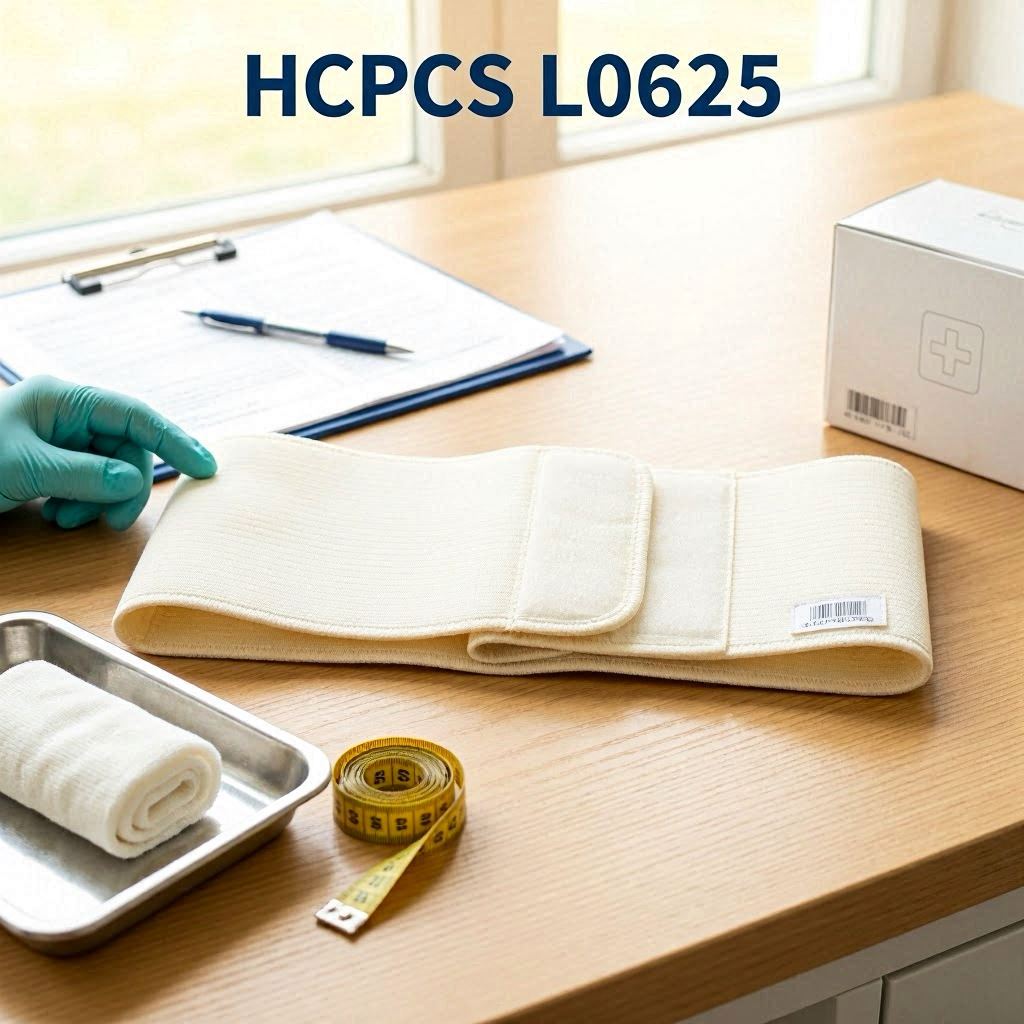
The binder’s design typically features a wide elastic panel that wraps around the body, secured by hook-and-loop fasteners. Some models include stays for additional rigidity, while others offer panels that allow for wound drainage tubes. The choice of binder depends entirely on the patient’s clinical presentation and the physician’s therapeutic goal.
Clinical Indications That Guide a Prescription
Documentation drives successful billing. A physician’s prescription and chart notes must clearly establish medical necessity. Generally accepted indications include support after abdominal surgery, management of an abdominal hernia, post-partum support for separated abdominal muscles known as diastasis recti, assistance with stoma and ostomy appliance security, and support in cases of neuromuscular weakness leading to poor trunk control. An abdominal binder provided solely for aesthetic body shaping or weight loss contouring does not meet the bar for medical necessity. A clear diagnosis and a specific functional goal must appear in the medical record.
The Primary HCPCS Code for an Abdominal Binder
The search for the correct Healthcare Common Procedure Coding System (HCPCS) code leads directly to one primary entry. Knowing this code eliminates guesswork and gets your claim started on the right path.
Breaking Down Code L0500
The most applicable and widely used code for an abdominal binder is L0500. The official short description labels it as a “lumbar-sacral orthosis, elastic, non-molded, prefabricated.” Wait — read that carefully. The descriptor references the lumbar-sacral area, not the abdomen. This mismatch between the clinical name and the official code terminology causes significant confusion. Yet within the Durable Medical Equipment Medicare Administrative Contractor (DME MAC) coding framework, L0500 stands as the designated code for a standard elastic abdominal binder that lacks rigid panels or custom molding.
This code falls under the Orthotic Procedures and Devices section of HCPCS Level II. Payers recognize it as a supply item, meaning it typically falls under a rental or purchase category depending on the insurer’s policy. The expectation is that the item is prefabricated, requires minimal self-adjustment, and fits a wide range of patient body types without custom fabrication.
Other Codes You Might Mistakenly Consider
A quick flip through the code book might draw your attention to other lumbar-sacral orthosis codes. Perhaps you notice L0625 for a lumbar-sacral orthosis with a rigid anterior panel, or L0630 for a custom-molded version. These codes demand a degree of fabrication, molding, and rigidity that a simple elastic abdominal binder does not possess. Using them for a standard stretch binder invites claim denials and potential audit scrutiny.
You might also encounter codes for surgical dressings, such as A4461, which represents a surgical dressing holder. A binder used to hold abdominal dressings in place without adhesive tape could theoretically fall here, but payers generally direct providers to L0500 for a reusable supportive garment. Likewise, A9270 represents non-covered items and supplies, a code to avoid unless a payer explicitly states that a binder falls outside all benefit categories.
Always remember: L0500 remains the targeted, correct code for the standard elastic abdominal binder. Any deviation requires explicit payer instruction or a clinical scenario involving rigid structural components.
Important Coverage Considerations: Who Pays and When?
Obtaining the right code solves only part of the puzzle. Coverage for L0500 varies dramatically across insurers, plans, and clinical settings. You must approach each claim with a clear understanding of the payer’s rules.
Traditional Medicare Fee-for-Service
Original Medicare relies on Local Coverage Determinations (LCDs) established by the DME MACs for each geographic region. These LCDs lay out specific coverage criteria for lumbar-sacral orthoses, including L0500. You need to review the current LCD and related Policy Article for your jurisdiction. Typically, Medicare covers an abdominal binder when the patient’s medical record documents a condition requiring trunk support, such as post-surgical management or neuromuscular compromise. The binder must serve a therapeutic purpose beyond simple comfort.
A significant point of friction arises when a patient requires a binder after a surgical procedure performed in a hospital outpatient department or an ambulatory surgery center. In many cases, Medicare bundles the cost of supplies like abdominal binders into the facility’s payment for the surgical service. The facility cannot bill Medicare separately for an item that the payment system already covers under its packaged rate. However, if the patient receives the binder outside the perioperative bundled window, perhaps through a DME supplier with a valid prescription and proof of medical necessity, separate billing becomes possible.
Medicare Advantage Plans
Medicare Advantage plans follow their own nuanced coverage rules, often modeled loosely on Original Medicare but subject to modification. Some plans designate the abdominal binder as a restricted or excluded item. Prior authorization frequently becomes mandatory. Your billing team must verify benefits before dispensing the device. Never assume that a Medicare Advantage plan mirrors traditional Medicare coverage. A phone call to the plan’s provider services line, along with a documented authorization number, protects against unexpected denials.
State Medicaid Programs
Medicaid coverage for abdominal binders represents a patchwork of varying state policies. Some state Medicaid programs provide generous coverage for orthotic supplies. Others severely restrict them or relegate them to a non-covered comfort category. You must consult the specific state’s DME provider manual or fee schedule. Often, a state will require that an enrolled Medicaid provider, such as a home health agency or a DME supplier, dispense the item. Written prior authorization remains the standard expectation.
Commercial and Private Insurers
Commercial carriers, including large national payers and regional Blue Cross Blue Shield plans, publish their own medical policies. Many align with Medicare guidelines, but some introduce additional hurdles. A common exclusion involves post-partum abdominal binders. Insurers often classify these as comfort or personal care items rather than medically necessary orthoses, even in cases of documented diastasis recti. A robust letter of medical necessity, citing functional deficits and measurable treatment goals, becomes your most powerful tool when appealing such denials.
Modifiers That Impact Reimbursement for L0500
Modifiers add crucial detail to your HCPCS code. These two-character additions tell the payer about the item’s rental status, the side of the body involved, and whether the service falls under a specific program. Applying the correct modifier prevents processing delays and costly rejections.
When to Use the KX Modifier
Medicare policies frequently demand the addition of the KX modifier. This modifier serves as a certification that you have on file all required documentation proving medical necessity, and that you are following all coverage criteria outlined in the applicable LCD. By appending KX to the L0500 line, you tell the DME MAC, “I have checked the rules, and this claim meets every requirement.” Failure to include the KX modifier when mandated results in an automatic denial. Keep the supporting documentation organized and easily retrievable. In an audit, the presence of the KX modifier signals that you stand behind the medical necessity of the binder.
Billing for Rental Versus Purchase
The DME MACs typically consider an abdominal binder a routinely purchased item, not a rental. You bill L0500 with a single purchase line, including the new purchase modifier if required by your jurisdiction. Some private payers may prefer a monthly rental model for ongoing management, but this remains rare for a simple elastic support. Always verify the purchase versus rental expectation stated in the payer’s fee schedule or provider manual.
Modifiers for Specific Clinical Circumstances
Certain situations call for additional modifier clarity. If the patient receives the binder as part of a competitive bidding program, you might append a specific modifier indicating your contract status. If the binder replaces a lost, stolen, or irreparably damaged item, you could use the RA modifier to signal a replacement of durable medical equipment. The left and right modifiers, such as LT and RT, rarely apply to an abdominal binder, as this device wraps around the entire trunk rather than targeting a single limb. Always review the current year’s HCPCS manual and any jurisdiction-specific modifier requirements before filing your claim.
A Deep Dive into Comparative Coding Options
A careful comparison of available codes clarifies why L0500 stands out as the correct choice for a standard abdominal binder. Yet understanding the adjacent codes helps you spot scenarios that demand a different approach.
Code Comparison Table
| HCPCS Code | Official Description | Typical Use Case | Key Distinction |
|---|---|---|---|
| L0500 | LSO, elastic, non-molded, prefabricated | Standard abdominal binder | Standard elastic binder code |
| L0625 | LSO, sagittal control, rigid panel(s) | Post-surgical spinal stabilization | Includes rigid anterior or posterior panels |
| L0630 | LSO, custom fabricated | Complex spinal deformity | Custom molded to patient’s anatomy |
| A4461 | Surgical dressing holder, each | Holding abdominal dressings | Intended for wound care, not orthopedic support |
| A9270 | Non-covered item, no service | Item denied as non-medical necessity | Used when patient demands non-covered supply |
This table demonstrates that L0500 aligns precisely with the prefabricated, non-rigid, elastic abdominal binder that surgeons, obstetricians, and physiatrists prescribe daily. You avoid codes designed for rigid, custom-fabricated, or strictly wound-care-intended devices.
Documentation That Supports a Clean Claim
The success or failure of an abdominal binder claim rarely hinges on code selection alone. Documentation makes the difference. When an auditor reviews your records, they search for evidence that the binder was reasonable, necessary, and properly prescribed.
Elements of a Compliant Prescription
A valid, detailed written order stands as your first line of defense. The prescribing physician must include the patient’s full name, the date of the order, a clear description of the item — specifying an elastic abdominal binder — the diagnosis code linked to the medical need, the expected duration of need, and the physician’s signature with date. A vague order reading “abdominal binder, as needed” invites suspicion. A clear, dated order that states “Elastic abdominal binder (HCPCS L0500) for post-surgical abdominal support following ventral hernia repair, duration 8 weeks” gives the payer confidence.
Physician Notes and Medical Necessity
The medical record must tell the story of necessity. Progress notes should document reduced trunk stability, incisional pain with movement, or the presence of a large hernia requiring external support. If a physical therapist or occupational therapist assesses the patient and recommends the binder, include that evaluation in your file. The documentation should demonstrate that the binder serves a clear therapeutic goal, such as enabling safe ambulation or preventing wound dehiscence. Without this narrative, even a perfectly coded claim faces denial upon review.
The Delivery Slip and Patient Confirmation
A delivery slip signed by the patient or caregiver confirms that the item reached its intended recipient. This slip should list the item’s description, the HCPCS code, the date of delivery, and the patient’s acknowledgment of receipt. Store this document with your billing records. Payers conducting pre- or post-payment reviews routinely request proof-of-delivery documentation.
Common Audit Risks and How to Avoid Them
Auditors scrutinize orthotic claims with considerable intensity. Understanding where billing teams typically stumble helps you sidestep costly mistakes.
Diagnoses That Raise Red Flags
Auditors tend to flag claims where the diagnosis code does not logically connect to an abdominal binder. A diagnosis of uncomplicated obesity, for instance, rarely justifies the binder. A diagnosis of acute low back strain might pull the claim toward a lumbar support orthosis rather than an abdominal binder. Ensure the ICD-10-CM code reflects a condition for which external abdominal compression provides a recognized therapeutic benefit.
Missing KX Modifier on Medicare Claims
One of the most common, easily preventable denial reasons remains the absent KX modifier. A compliant provider knows the local coverage determination, confirms that the patient meets the criteria, adds KX to the claim line, and stores the supporting documentation. Auditors immediately reject claims that lack this modifier when policy requires it. Include a checklist item in your billing process: “Is KX required per LCD? If yes, has documentation been reviewed and the modifier appended?”
Double Billing in a Bundled Surgical Package
An abdominal binder dispensed in the operating room, the post-anesthesia care unit, or directly during a global surgical period often falls into the surgical package. Billing separately for that same binder generates an overpayment that auditors readily recover. Educate your clinical staff that if the hospital provides the binder at the time of surgery, a separate DME claim is inappropriate. If the patient needs a replacement binder after the global period ends, a fresh prescription and a separately billable event can occur.
Step-by-Step Guide to Submitting a Successful Claim
A methodical approach reduces errors and promotes consistent reimbursement. Follow this sequence each time you initiate a claim for an abdominal binder.
- Verify Patient Insurance and Coverage: Contact the payer or use an online portal to confirm that L0500 is a covered benefit under the patient’s specific plan.
- Obtain a Detailed Prescription: Ensure the physician’s order meets all required elements outlined previously.
- Collect Clinical Documentation: Secure progress notes, therapy evaluations, or hospital discharge summaries that support medical necessity.
- Determine if Prior Authorization Is Required: Medicare Advantage and many commercial plans demand authorization before dispensing. Submit your request with supporting records.
- Dispense the Binder and Obtain Proof of Delivery: Have the patient sign and date a detailed delivery slip.
- Build the Claim Accurately: Enter the HCPCS code L0500, the correct ICD-10-CM diagnosis pointer, the KX modifier if required, and any other necessary modifiers.
- Submit the Claim Timely: Adhere to the payer’s filing deadline, typically 12 months from the date of service for Medicare.
- Track the Claim and Respond to Requests: Monitor your remittance advice. If the payer requests additional documentation, respond promptly and completely.
Navigating Denials and Writing Effective Appeals
Even the most careful billing operation encounters denials. When a payer rejects your L0500 claim, a structured appeal process offers a clear path to reversal.
Understanding the Denial Reason
Start by deciphering the remittance advice reason code. Is the denial based on medical necessity? Does the payer consider the binder bundled or included in another service? Did you miss a deadline or omit a required modifier? Each scenario demands a tailored response. A denial for missing documentation requires you to submit what you already should have on file. A denial based on medical necessity requires a persuasive argument grounded in clinical evidence.
Crafting a Strong Appeal Letter
Your appeal must tell a compelling story. Open with a clear statement of what you are appealing: “We respectfully request reconsideration of the denial of HCPCS L0500 for patient [Name], date of service [Date].” Summarize the clinical history that supports the binder’s necessity. Quote the payer’s own coverage policy language and explain how the patient’s condition meets each criterion. Attach the prescription, the relevant progress notes, the delivery slip, and any peer-reviewed literature that supports the use of an abdominal binder for the patient’s diagnosis. State the desired outcome explicitly: “We request that the claim be reprocessed and paid at the contracted allowable amount.” Keep the tone professional, factual, and respectful. An emotional plea carries less weight than a logic-driven argument tied directly to the payer’s published rules.
Realistic Billing Scenario: An Inpatient, Outpatient, and DME Crossover
Consider a typical patient journey to see how coding decisions play out in real time. A 68-year-old Medicare patient undergoes a large incisional hernia repair with mesh. The surgeon applies a standard elastic abdominal binder in the operating room for post-operative support. The hospital inpatient billing team correctly excludes separate billing for the binder, knowing that the inpatient Diagnosis-Related Group (DRG) payment covers all supplies during the stay. The patient discharges to home, wearing the binder.
Two weeks later, the binder’s Velcro becomes worn and loses its grip. The patient contacts the surgeon’s office, and the surgeon provides a new written order for a replacement abdominal binder, specifying HCPCS L0500, duration of need six additional weeks. The patient takes the prescription to a contracted DME supplier. The supplier verifies Original Medicare coverage, ensures the LCD criteria are met, appends the KX modifier, and submits a claim using L0500 with the appropriate ICD-10-CM code for the aftercare following hernia repair. Medicare processes the claim and issues payment because the supplier correctly operated outside the surgical bundle and provided thorough documentation.
This scenario shows the critical distinction between the bundled inpatient setting and the separately billable post-discharge replacement. Mastering this nuance allows your organization to capture legitimate reimbursement while avoiding compliance pitfalls.
A Look at Commercial Payer Variation: Post-Partum and Cosmetic Exclusions
Younger female patients frequently ask about abdominal binders after childbirth. The marketing of post-partum wraps creates significant patient demand. Yet payers often draw a firm line. A 32-year-old mother of two delivers via cesarean section and seeks coverage for an abdominal binder to aid recovery and support her separated rectus muscles. Her commercial insurance plan’s medical policy explicitly lists “post-partum support garments” as a non-covered comfort item. Despite a supportive note from her obstetrician, the insurer denies the claim.
In this situation, the billing team must inform the patient ahead of time that her plan likely will not pay. Offering a transparent self-pay option, with a clearly stated price, preserves the patient relationship and avoids a surprise bill. If the patient and physician believe extraordinary circumstances exist, such as a severe diastasis recti causing functional impairment beyond typical post-partum recovery, a robust appeal citing functional limitations and mobility deficits may occasionally succeed. But realistic expectations remain essential.
Table of Common ICD-10-CM Codes Linked to Abdominal Binder Claims
Pairing the correct diagnosis code with L0500 builds a clinically coherent claim. The following table lists frequently used codes that support the medical necessity narrative.
| ICD-10-CM Code | Description | Clinical Note |
|---|---|---|
| Z48.811 | Encounter for surgical aftercare following surgery on the abdominal wall | Use for post-operative support |
| K43.9 | Ventral hernia without obstruction or gangrene | Binder provides external support |
| M62.81 | Muscle weakness, generalized | Supports trunk stability |
| O99.89 | Other specified diseases and conditions complicating pregnancy, childbirth, and the puerperium | For severe diastasis recti cases with functional deficit |
| Z98.890 | Other postprocedural states | Capture post-surgical support when no specific aftercare code fits |
| G82.20 | Paraplegia, unspecified | Binder assists with trunk control |
When a Patient Requests an Upgraded or Specialty Binder
Some patients want a binder with extra features: silicone grip strips, multiple adjustment panels, cooling fabric, or integrated back support rods. If the upgraded item still functions as a non-rigid, prefabricated abdominal binder, L0500 remains the correct code. The payer’s allowable amount will reflect the standard L0500 fee schedule rate. The supplier may not upcode to a more expensive orthosis code simply because the binder contains premium materials.
If the patient insists on these features and the payer’s allowance does not cover the supplier’s cost, the supplier can offer the patient an Advance Beneficiary Notice of Noncoverage (ABN) if Medicare is the payer, or a similar waiver form for commercial insurers. The patient then accepts financial responsibility for the difference between the allowable amount and the supplier’s retail price. Transparency protects the provider while honoring patient choice.
Telemedicine Prescribing and Documentation Challenges
The rise of telehealth introduces new billing complexities. A physician evaluating a post-operative patient via video might prescribe an abdominal binder without an in-person abdominal exam. Payers accept telemedicine prescriptions when the medical record documents a clinically appropriate evaluation. The provider must describe the patient’s reported symptoms, observed movement limitations on camera, and the clinical rationale for prescribing the binder. The same documentation standards apply. Weak or vague telehealth notes lead to claim rejections. Strong telemedicine documentation captures objective observations — visible guarding, verbal reports of incisional strain during movement — and ties them directly to the therapeutic need for external abdominal support.
The Role of Physical and Occupational Therapists
Therapists often identify the need for an abdominal binder during rehabilitation sessions. A physical therapist working with a patient recovering from a spinal cord injury may note poor sitting balance and recommend a binder for trunk support. The therapist documents the functional deficit, the trial of the binder during therapy, and the observed improvement in sitting tolerance or safety. The physician reviews the therapist’s note and co-signs the binder prescription. This collaborative documentation strengthens the medical necessity argument immeasurably.
Inventory Management and Code Assignment for DME Suppliers
For DME suppliers, accurate code assignment directly affects inventory tracking, pricing, and claim submission. Each abdominal binder in stock should carry a clear internal designation linking it to HCPCS L0500. The supplier’s billing system must auto-populate L0500 when the warehouse dispenses a standard elastic binder. If the supplier carries multiple binder styles — some with rigid panels, some without — the system must prevent the accidental billing of L0500 for a rigid model that actually requires L0625. Periodic staff training reinforces the distinction and reduces coding error rates.
Audit Self-Checks for Compliance Officers
Compliance officers should conduct regular, random audits of L0500 claims. The audit checklist includes verifying the presence of a valid prescription, confirming that the clinical record supports medical necessity, checking that the claim includes any required KX or other modifiers, and ensuring no duplicate billing during a global surgical period. Auditors should also confirm that the diagnosis code on the claim matches the documentation. A quarterly audit cycle, with feedback to the billing team, creates a culture of continuous improvement and reduces financial risk.
Looking Ahead: Potential Coding Changes and Policy Shifts
The HCPCS code set undergoes annual updates. Stakeholders can submit requests for new codes, code revisions, or clarifications. If enough providers document consistent confusion around L0500’s lumbar-sacral description versus its real-world use as an abdominal binder, a future HCPCS cycle could introduce a dedicated abdominal binder code. Staying informed through CMS HCPCS public meetings and DME MAC publications allows your organization to anticipate changes rather than react to them after denials pile up.
Policy shifts also occur at the payer level. As evidence accumulates around the clinical benefits and cost-effectiveness of post-operative abdominal binding, some commercial insurers may relax their non-coverage rules. Others may tighten restrictions in response to perceived overutilization. Constant vigilance and regular payer communication remain non-negotiable.
Additional Quick-Tip List for Billing Success
- Always check the payer’s LCD or medical policy before submitting the claim.
- Obtain a new prescription if the original order lacks required elements.
- Educate surgical staff that binders dispensed in the OR are typically bundled.
- Use the KX modifier on Medicare claims only after confirming full compliance.
- Keep signed delivery slips accessible for audit requests.
- Train front-desk staff to recognize non-covered scenarios and offer clear self-pay options.
- Document the functional deficit, not just the diagnosis.
- Re-evaluate the patient’s need when requesting replacement binders beyond the initial period of medical necessity.
Real Patient Stories That Reinforce Proper Billing Practices
*Robert, a 72-year-old Medicare beneficiary, underwent emergency laparotomy for a small bowel obstruction. His post-operative course was complicated by a large, painful wound seroma. His surgeon prescribed an elastic abdominal binder to provide gentle compression and reduce fluid accumulation. The DME supplier dispensed L0500 with the KX modifier and supporting documentation showing the seroma diagnosis and the surgeon’s clinical note describing the binder’s role in fluid management. Medicare paid the claim without delay.*
*Maria, a 45-year-old commercial insurance member, requested an abdominal binder three months after a tummy tuck performed for cosmetic reasons. Her insurer denied the claim, citing the cosmetic nature of the original surgery and the absence of a functional medical indication. The supplier had informed Maria of the likely denial before dispensing and offered a cash price. Maria paid out of pocket and appreciated the honest upfront communication.*
These stories underscore a simple truth: clear medical necessity, paired with correct coding and transparent patient communication, leads to predictable outcomes.
Mastering L0500 and Creating a Reliable Revenue Stream
The HCPCS code L0500 for a standard elastic abdominal binder appears deceptively simple. Yet the layers of payer policy, modifier requirements, documentation expectations, and audit scrutiny demand a sophisticated approach. Your team succeeds when it treats each claim as a coordinated effort between the prescriber, the clinical documenter, the biller, and the patient.
Build workflows that pre-verify coverage, capture robust clinical evidence, and submit clean claims the first time. Train staff to spot red flags before they become denials. Develop appeal templates that reference specific payer language and clinical literature. Over time, these investments produce a steady, compliant revenue stream and a reputation for billing integrity that protects your organization in an increasingly rigorous regulatory environment.
Key Takeaways and Next Steps
Organizations that excel in abdominal binder billing share common habits. They stay current on HCPCS code changes and payer policy updates. They prioritize documentation quality over quantity. They treat denials as learning opportunities rather than administrative nuisances. They communicate openly with patients about coverage limitations and financial responsibility.
Your next step is simple: audit a sample of your own L0500 claims. Look for missing KX modifiers, weak diagnosis links, and documentation gaps. Fix what you find, train your team, and monitor your results. The path to billing excellence runs through daily discipline, not occasional heroics.
Conclusion
This article delivered a complete roadmap to the HCPCS code for an abdominal binder, centering on L0500 as the primary billing code. It explored coverage rules across Medicare, Medicaid, and commercial payers, highlighted the critical role of the KX modifier, and provided documentation strategies to withstand audits. Readers now possess the practical tools needed to submit accurate claims, avoid common denials, and secure appropriate reimbursement for this clinically valuable orthotic device.
Frequently Asked Questions
Is L0500 the only HCPCS code for an abdominal binder?
No, but L0500 is the correct code for a standard, prefabricated elastic binder without rigid components. Rigid binders may require codes like L0625.
Do I need a prescription to bill Medicare for an abdominal binder?
Yes. A detailed written order signed by the treating physician is mandatory. The order must demonstrate medical necessity.
What is the KX modifier, and when must I use it?
The KX modifier certifies that you have documentation meeting all coverage criteria in the applicable LCD. Medicare often requires it for L0500 claims, and omitting it triggers a denial.
Will Medicare cover an abdominal binder after surgery?
Medicare may cover a separately billed binder if dispensed outside the surgical bundled payment period and with appropriate documentation. A binder provided during the global surgical package is usually not separately billable.
Can I bill an abdominal binder for a post-partum patient?
Many commercial insurers classify post-partum binders as non-covered comfort items. Check the specific plan policy. A strong appeal may succeed in cases of documented functional impairment.
What documentation should I keep on file for an audit?
Retain the physician’s prescription, clinical notes supporting medical necessity, the signed delivery slip, proof of any prior authorization, and evidence of the KX modifier justification if used.
Additional Resource
For the most current coverage determinations affecting orthotic devices, visit the CMS DME Center page:
https://www.cms.gov/medicare/durable-medical-equipment