The desire for a perfect smile often focuses on the teeth people see first: the front two teeth, known as the central incisors. If you have a gap, slight crowding, or a minor rotation affecting just these teeth, the thought of a full set of braces for a year or more can seem like overkill. You might find yourself wondering, “Can I get braces just for my front two teeth, and what would that cost?”
This is a common and reasonable question. The answer, however, requires a deeper understanding of orthodontics. While the aesthetic concern may be with just two teeth, treating them in isolation is rarely simple or advisable. This guide will break down the concept of limited orthodontic treatment, its costs, and why your orthodontist might recommend a more comprehensive approach.
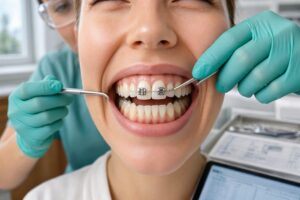
How Much Does It Cost To Have Braces For Just The Front Two Teeth?
The Concept of “Limited” or “Partial” Orthodontic Treatment
In orthodontics, there is a term for focusing on a small area of the mouth: Limited Treatment. This is a legitimate approach, but it is used for very specific types of problems. Limited treatment is designed to correct a single issue, such as a minor tooth movement, over a short period.
It is important to understand that treating just two teeth is not like painting just one wall in a room. Your teeth are a complex system. They work together, and they are held in place by a delicate balance of forces from your lips, tongue, and opposing teeth. Moving one or two teeth without considering the rest of the mouth can have unintended consequences for your bite and overall oral health.
Is It Possible to Move Just Two Teeth?
The short answer is yes, it is technically possible. An orthodontist can place braces or a clear aligner on just your upper front teeth and move them. However, the real question is whether it is a wise clinical decision.
In many cases, the issue you see in the front is a symptom of a larger problem. A gap between the two front teeth (a condition called a diastema) can be caused by:
-
An oversized labial frenum: The piece of tissue connecting your upper lip to your gum.
-
Missing or small lateral incisors: The teeth on either side of the front teeth.
-
Other teeth pushing from behind: Crowding in the jaw can apply pressure that pushes the front teeth apart.
If you straighten the front two teeth without addressing the underlying cause, they will often drift back to their original position once the braces are removed. This is why a consultation with a qualified orthodontist is critical.
What Are Your Options for Treating Front Teeth?
Depending on the diagnosis, you might have several options, ranging from a short, targeted orthodontic fix to a full treatment plan. Here is a look at the possible paths and their associated costs.
1. Limited Orthodontic Treatment (Braces or Aligners)
This is the closest option to “getting braces for just two teeth.” It involves placing a small number of brackets on the teeth or using a limited series of clear aligners to make a minor correction.
-
Duration: Typically 3 to 6 months.
-
Best For: Very minor rotations, closing a very small gap, or making a tiny adjustment before a cosmetic procedure.
-
Estimated Cost: $1,000 to $3,000.
This cost is significantly less than comprehensive treatment, but it is important to note that it often does not include retainers, which are essential for maintaining the result. You would need to budget for a retainer, which can cost an additional $200 to $600.
2. Comprehensive Orthodontic Treatment
This is the standard route for most patients. It involves treating the entire upper and lower jaw. While this sounds like more than you need, it ensures that your bite is healthy, and all your teeth are in their correct positions. Fixing just the front teeth can sometimes make the other teeth look worse or create bite issues.
-
Duration: Typically 12 to 24 months.
-
Best For: Issues caused by underlying bite problems, crowding, or jaw alignment. This is also the best choice for ensuring a stable, long-lasting result.
-
Estimated Cost: $3,500 to $8,000+ for traditional braces. Clear aligner systems like Invisalign often cost $4,000 to $8,500.
3. Cosmetic Alternatives (The “No-Braces” Option)
If the issue is purely aesthetic and the teeth are otherwise healthy and well-positioned, you might be a candidate for cosmetic dentistry instead of orthodontics. These are often faster but come with their own drawbacks.
-
Dental Bonding: This involves applying a tooth-colored resin to the teeth to close a gap or change their shape. It is a quick, non-invasive procedure.
-
Estimated Cost: $300 to $600 per tooth.
-
Pros: Done in one visit, relatively inexpensive.
-
Cons: The resin can stain and chip over time and will need to be replaced every 5-10 years.
-
-
Porcelain Veneers: These are thin, custom-made shells of porcelain that cover the front surface of the teeth. They can completely transform the look of your smile.
-
Estimated Cost: $950 to $2,500 per tooth.
-
Pros: Dramatic, long-lasting results (10-15 years).
-
Cons: Very expensive. The process requires removing a small amount of enamel from your natural teeth, which is irreversible.
-
A Cost Comparison Table
To help you visualize these options, here is a side-by-side comparison.
| Treatment Type | Est. Duration | Best For | Average Cost (Without Insurance) | Pros & Cons |
|---|---|---|---|---|
| Limited Braces/Aligners | 3-6 months | Very minor movement of 1-2 teeth. | $1,000 – $3,000 | Pros: Cheaper, faster. Cons: May not address root cause, result may be unstable. |
| Comprehensive Braces | 12-24 months | Most alignment and bite issues. | $3,500 – $8,000+ | Pros: Addresses all issues, stable result. Cons: More expensive and time-consuming. |
| Dental Bonding | 1 visit | Small gaps or minor shape issues. | $300 – $600/tooth | Pros: Fast, affordable. Cons: Not permanent, can stain. |
| Porcelain Veneers | 2-3 visits | Cosmetic issues (gaps, shape, color). | $950 – $2,500/tooth | Pros: Dramatic, durable. Cons: Expensive, irreversible. |
Important Note for Readers: These are estimated national averages. Orthodontic fees vary widely by region and the experience of the provider. An orthodontist in a major city will typically charge more than one in a rural area. Always get a consultation and a written quote before proceeding.
What Your Orthodontist Will Consider
When you go for a consultation and ask about treating just your front teeth, a good orthodontist will perform a thorough examination. They will be looking at several critical factors.
-
Your Bite (Occlusion): How do your upper and lower teeth fit together? If you have a deep bite, your lower teeth might be hiding behind your upper teeth, which can cause wear and tear. Moving only the front teeth could make this worse.
-
Space and Crowding: Is there enough room in your jaw for all your teeth? If the front teeth are crowded, it’s often because the jaw is too small. Moving two teeth without addressing the crowding elsewhere is like trying to fit a puzzle piece in the wrong spot.
-
The Root Cause: Why are the teeth crooked or gapped? As mentioned, if a muscle (the frenum) is causing the gap, orthodontics alone won’t fix it permanently. You might need a minor surgery (a frenectomy) as well.
-
Stability: Can the new position of the teeth be maintained? Your orthodontist is an expert in the long-term stability of tooth movement. They will recommend a treatment that gives you a result that will last for decades, not just a few months.
A Realistic Example
Let’s say Sarah, a 28-year-old, wants to fix a small gap between her front two teeth. She visits an orthodontist.
-
Option A: The orthodontist determines the gap is small and self-contained. He agrees to a limited treatment plan. She will wear a series of 10 clear aligners for 5 months to close the gap, followed by a bonded retainer on the back of her teeth. The cost is $2,500.
-
Option B: The orthodontist examines Sarah and finds that her gap is caused by her two lateral incisors being peg-shaped (very small). This leaves extra space in her mouth. He explains that moving only the front teeth would create new gaps on the sides. He recommends either comprehensive orthodontics to close all the space or braces on the front teeth followed by cosmetic bonding on the lateral incisors to make them larger. The comprehensive treatment plan costs $5,800.
In Sarah’s case, Option A is the perfect “front two teeth” solution. In Option B, what she thought was a problem with two teeth is actually a problem with four. This illustrates the importance of a professional diagnosis.
How to Save Money on Braces
Whether you choose limited or comprehensive treatment, there are ways to manage the cost.
-
Dental Insurance: If you have dental insurance, check if it includes orthodontic benefits. Many plans with “major dental” cover a percentage of orthodontics (often 50%) up to a lifetime maximum (e.g., $2,000).
-
Payment Plans: Almost all orthodontic offices offer in-house payment plans. These typically involve a down payment followed by monthly installments over the course of your treatment. This spreads the cost out, making it more manageable.
-
Health Savings Account (HSA) or Flexible Spending Account (FSA): If you have access to one of these through your employer, you can use pre-tax dollars to pay for orthodontic treatment. This can effectively save you 20-30% on the cost.
-
Dental Schools: Similar to other dental procedures, orthodontic programs at dental schools offer treatment at a reduced cost. Residents perform the work under the supervision of experienced orthodontists. You can expect to pay 40-50% less than private practice fees.
The Bottom Line
The cost of “braces for just the front two teeth” can range from $1,000 to $3,000 if you are a candidate for limited orthodontic treatment. However, in many cases, the best and most stable solution involves treating the entire mouth, which comes with a higher cost of $3,500 to $8,000+.
The decision should never be based on cost alone. A quick fix that creates a bite problem or that doesn’t last is not a bargain. The best next step is to schedule a consultation with a board-certified orthodontist. They can explain your diagnosis, outline all your options, and provide you with a clear, written estimate for each one.
Additional Resource: The American Association of Orthodontists (AAO)
For reliable information on orthodontic treatment and to find a certified orthodontist in your area, visit the official AAO website.
Link: https://www.aaoinfo.org/
Frequently Asked Questions
Q1: Can I just get a retainer to close a gap in my front teeth?
A: A retainer is designed to hold teeth in place, not to move them. However, a specific type of retainer called a “spring retainer” can sometimes close a very small gap. This is still considered a form of active treatment and should be overseen by a dentist or orthodontist.
Q2: Will dental insurance pay for braces on just two teeth?
A: If your dental plan includes orthodontic coverage, it may cover a portion of the cost, regardless of whether the treatment is limited or comprehensive. However, most orthodontic benefits have a lifetime maximum, and the coverage applies to the total cost of your treatment.
Q3: How long will a limited treatment result last?
A: The stability of the result depends on the cause of the original problem and your commitment to wearing your retainer. If the root cause was not addressed, the teeth will likely shift back. Wearing a bonded retainer (a wire glued to the back of the teeth) is the most effective way to prevent this.
Q4: What is cheaper, bonding or braces for a front tooth gap?
A: Dental bonding is significantly cheaper upfront. Bonding two teeth might cost $600-$1,200, while even limited braces will often cost $2,000+. However, braces are a permanent solution, while bonding will need to be repaired or replaced every 5-10 years, making the long-term cost potentially higher.
Q5: Can clear aligners like Invisalign fix just the front teeth?
A: Yes. Many orthodontists offer a limited Invisalign treatment (often called “Invisalign Express” or “Lite”) for minor corrections involving just a few teeth. This is a popular choice for adults who want a nearly invisible option for fixing their front teeth. It typically costs between $1,500 and $3,500.
Conclusion:
The cost to address your front two teeth can range from a few hundred dollars for cosmetic bonding to several thousand for limited or comprehensive orthodontic treatment. The right choice depends on the underlying cause of the issue, which only a professional orthodontist can diagnose. While limited treatment offers a lower upfront cost, comprehensive care often provides the most stable and long-lasting solution for your smile.