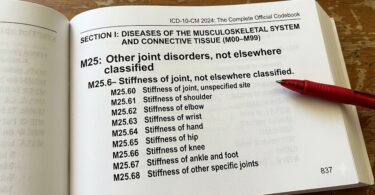
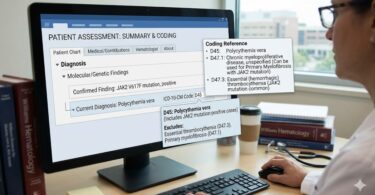
Let’s be honest. You did not become a physical therapist because you love flipping through pages of a coding manual. You became a PT to help people move better, feel stronger, and live without pain.
But here is the reality. If you want to get paid for that great work, you need to understand the ICD 10 code for physical therapy evaluation and treatment. Without the right code, your claim gets denied. Your patient waits longer for care. And you waste precious time.
The good news? You do not need to be a medical coder to master this. You just need a clear, honest guide.
This article gives you exactly that. No fluff. No fake shortcuts. Just practical knowledge you can use today.
Why Correct ICD-10 Coding Matters for Physical Therapy
Physical therapy is unique. You treat movement dysfunction, not diseases in the traditional sense. But insurance companies still need a diagnosis to justify your services.
Here is what happens when you use the wrong code.
- Claim denials: The insurance company does not see a medical reason for therapy.
- Audits: Too many mismatched codes can trigger a payer audit.
- Delayed payments: Your clinic’s cash flow suffers.
- Patient frustration: They receive unexpected bills.
Using the correct ICD-10 code protects your practice and your patients. It shows the medical necessity for both the evaluation (figuring out the problem) and the treatment (fixing the problem).
Important Note: You cannot bill for treatment without a valid, specific ICD-10 code that supports why that treatment was needed. The code must come from the referring physician or be determined by you within your scope of practice.
The Difference Between Evaluation and Treatment Codes
Many new PTs confuse these two concepts. They are related but completely different in the eyes of payers.
| Aspect | Evaluation Codes (97001-97004) | Treatment Codes (97110-97535) |
|---|---|---|
| Purpose | Assess the patient’s condition | Improve the patient’s function |
| Frequency | Once per episode of care (sometimes re-eval) | Multiple times per week |
| Time-based | Usually timed by complexity levels | Typically billed in 15-minute units |
| ICD-10 role | Justifies why evaluation was needed | Justifies each specific treatment |
The same ICD-10 code often supports both. For example, if your patient has low back pain (M54.5), that code justifies both the initial evaluation and the therapeutic exercises you do afterward.
Understanding the ICD-10 Structure for PT
Before we dive into specific codes, let us look at how these codes are built. It is simpler than you think.
Most PT-related codes start with a letter (M for musculoskeletal, G for nervous system, S for injuries).
Example: M54.5 – Low back pain
- M = Chapter (Diseases of the musculoskeletal system)
- 54 = Category (Dorsalgia)
- .5 = Specific location (Low back)
The more digits you add, the more specific you become. Specificity is your friend in physical therapy coding. It tells a clear story about your patient.
Common ICD-10 Codes for Physical Therapy Evaluations
When you first see a patient, you need a diagnosis that matches their symptoms and history. These are some of the most frequent codes used in outpatient PT.
Musculoskeletal Pain Codes (Most Common)
These codes justify the need for an evaluation because pain limits movement.
- M54.5 – Low back pain
- M54.6 – Pain in thoracic spine (upper back)
- M54.2 – Cervicalgia (neck pain)
- M25.561 – Pain in right knee
- M25.562 – Pain in left knee
- M25.571 – Pain in right ankle
- M25.572 – Pain in left ankle
- M79.10 – Myalgia, unspecified site
- M79.601 – Pain in right arm
- M79.602 – Pain in left arm
Osteoarthritis and Joint Disorders
These codes support evaluation when the patient has known joint degeneration.
- M17.0 – Bilateral primary osteoarthritis of knee
- M17.11 – Unilateral primary osteoarthritis, right knee
- M17.12 – Unilateral primary osteoarthritis, left knee
- M16.11 – Unilateral primary osteoarthritis, right hip
- M16.12 – Unilateral primary osteoarthritis, left hip
- M19.071 – Primary osteoarthritis, right ankle
- M19.072 – Primary osteoarthritis, left ankle
Post-Surgical Codes
Therapy after surgery is almost always justified. These codes tell the payer exactly why the patient needs evaluation before starting post-op rehab.
- Z47.1 – Aftercare following joint replacement surgery
- Z47.89 – Aftercare following other specified orthopedic surgery (rotator cuff repair, ACL reconstruction, etc.)
- Z96.641 – Presence of right artificial knee joint
- Z96.642 – Presence of left artificial knee joint
Neurological Codes
These patients often need an extended evaluation due to complex movement disorders.
- G81.90 – Hemiplegia, unspecified side
- G81.91 – Hemiplegia affecting right dominant side
- G35 – Multiple sclerosis
- G20 – Parkinson’s disease
- G31.84 – Mild cognitive impairment due to neurodegenerative disease
ICD-10 Codes That Justify Physical Therapy Treatment
Once the evaluation is done, you will treat the patient over multiple visits. The same ICD-10 code you used for the evaluation also supports treatment. However, sometimes you need to update the code as the patient progresses.
Here is a quick list grouped by the reason for treatment.
Treatment for Strength and Mobility Deficits (Therapeutic Exercise)
When your treatment plan includes exercises (CPT 97110), these codes work well.
- M62.81 – Muscle weakness (generalized)
- R26.2 – Difficulty walking, not elsewhere classified
- R26.81 – Unsteadiness on feet
- M25.60 – Stiffness of unspecified joint
Treatment for Gait and Balance Training
If you are working on walking or balance (CPT 97116 or 97530), use these.
- R26.0 – Ataxic gait (uncoordinated walking)
- R26.1 – Paralytic gait
- R26.89 – Other abnormalities of gait and mobility
- M48.06 – Spinal stenosis, lumbar region
- R27.0 – Ataxia, unspecified
Treatment for Manual Therapy
Codes like joint mobilizations or soft tissue work (CPT 97140) require a code showing joint dysfunction or muscle tightness.
- M25.50 – Pain in unspecified joint
- M24.2 – Disorder of ligament
- M24.6 – Ankylosis (joint stiffness)
- M79.1 – Myalgia (muscle pain)
How to Choose the Correct ICD-10 Code for Evaluation vs. Treatment
This is where many therapists overthink things. Let me simplify it.
Ask yourself one question: What is the primary reason this person cannot move normally?
- If the answer is pain → Use a pain code (M54.5, M25.56, etc.)
- If the answer is weakness → Use a weakness code (M62.81)
- If the answer is post-surgery stiffness → Use aftercare code (Z47.89)
- If the answer is neurological condition → Use the specific neuro code (G81.90, G35, etc.)
You do not need a different code for evaluation day versus treatment day. The same underlying diagnosis works for both. However, if the patient’s condition changes significantly (e.g., post-surgery pain turns into post-surgery weakness), you may update the primary code.
Pro Tip: Always list the most specific code first. If your patient has low back pain with sciatica, use M54.40 (lumbago with sciatica) instead of just M54.5. Payers appreciate specificity.
Real-World Examples: Evaluation + Treatment Coding Scenarios
Let us walk through three common patient cases. Each example shows you the correct ICD-10 code for the evaluation and for ongoing treatment.
Case 1: Post-ACL Reconstruction (Male, 24 years old)
- Reason for therapy: Surgery 2 weeks ago. Needs to regain range of motion and strength.
- Evaluation code: 97001 (PT evaluation)
- Treatment codes (first week): 97110 (therapeutic exercise) + 97140 (manual therapy)
- ICD-10 code for both: Z47.89 (aftercare following orthopedic surgery) + M17.11 (osteoarthritis right knee – if pre-existing)
Why this works: The aftercare code clearly says “this patient is recovering from surgery and needs therapy.” No confusion for the payer.
Case 2: Chronic Neck Pain (Female, 52 years old)
- Reason for therapy: Desk job. Reports neck stiffness and headaches for 6 months.
- Evaluation code: 97001
- Treatment codes: 97110 (exercise) + 97140 (mobilization) + 97112 (neuromuscular re-ed)
- ICD-10 code: M54.2 (cervicalgia)
Important note: You could also use M50.00 (cervical disc disorder with myelopathy) if imaging confirms a disc issue. But do not guess. Use only what is documented.
Case 3: Stroke Rehabilitation (Male, 68 years old)
- Reason for therapy: Left-sided weakness after stroke 3 months ago. Needs gait training.
- Evaluation code: 97002 (PT re-evaluation – patient was previously seen in acute care)
- Treatment codes: 97116 (gait training) + 97530 (therapeutic activity)
- ICD-10 code: G81.94 (hemiplegia affecting left nondominant side)
How to Avoid Common ICD-10 Mistakes in PT
Even experienced therapists make coding errors. Here are the most frequent ones and how to sidestep them.
Mistake #1: Using “Unspecified” Codes Too Often
Codes like M79.10 (myalgia, unspecified site) or M25.50 (pain in unspecified joint) are vague. Payers see them as red flags.
Solution: Be as specific as the documentation allows. If the patient points to their right shoulder, use M25.511 (pain in right shoulder).
Mistake #2: Failing to Link the ICD-10 Code to the Specific Treatment
Your documentation must show why you did each treatment.
Bad note: “Patient did 15 minutes of therex. ICD-10 M54.5.”
Good note: “Patient performed lumbar stabilization exercises (97110) to address low back pain (M54.5) causing inability to sit for more than 10 minutes without discomfort.”
Mistake #3: Not Updating the Primary Code After a Change in Status
If a patient comes in for knee pain (M25.561) but then falls and develops shoulder pain two weeks later, you cannot keep using only the knee code for shoulder treatments.
Solution: Add a secondary code. List both M25.561 (knee) and M25.511 (shoulder pain) as separate diagnoses.
The Relationship Between Evaluation Codes and Medical Necessity
Medical necessity is not a buzzword. It is the legal reason you are treating someone.
Every ICD-10 code you use must answer this question: Does this patient’s condition require skilled physical therapy?
A simple code like M54.5 (low back pain) justifies evaluation and treatment because pain limits function. But if you use a code like Z72.0 (tobacco use), that will never justify physical therapy. It is not related to movement.
How Payers Review Medical Necessity
| Payer Question | Your Answer (via ICD-10 & Documentation) |
|---|---|
| Does the patient have a diagnosed condition? | Yes. Code M54.5 – Low back pain. |
| Does this condition affect function? | Yes. Patient cannot bend to tie shoes. |
| Can PT improve this condition? | Yes. Evidence supports exercise for low back pain. |
| Is the treatment skilled? | Yes. Cannot be done independently by patient. |
If you cannot answer “yes” to all four, you need a different ICD-10 code or a different treatment plan.
Frequently Asked Questions (FAQ)
1. Can I use the same ICD-10 code for the initial evaluation and all subsequent treatments?
Yes. In most cases, the diagnosis that justified the evaluation also justifies the treatment plan. The exception is when the patient’s primary condition changes (e.g., they develop a new injury or complication).
2. Do I need a physician’s order for the ICD-10 code?
Yes. In virtually all insurance settings, you need a referral or prescription from a qualified healthcare provider (MD, DO, NP, PA) that includes a diagnosis code. Some states allow direct access, but payers still often require a physician’s code for reimbursement.
3. What is the most common ICD-10 code used in outpatient PT?
M54.5 (low back pain) is consistently one of the most frequently used codes in outpatient physical therapy settings. M54.2 (cervicalgia) and M25.561 (right knee pain) are also very common.
4. Can I bill for an evaluation using a “Z” code (aftercare)?
Yes. Codes like Z47.1 (aftercare following joint replacement surgery) or Z47.89 (other orthopedic aftercare) are perfectly acceptable for evaluations. They tell the payer the patient had a surgery and now needs skilled therapy for recovery.
5. What happens if I accidentally use the wrong ICD-10 code?
The claim will likely be denied. You can resubmit with the correct code within the payer’s timely filing limit (often 90 to 180 days). If you discover the error after denial, file a corrected claim.
6. Do Medicare and private insurance use the same ICD-10 codes?
Yes. All payers in the United States follow the same ICD-10-CM code set. However, Medicare has additional local coverage determinations (LCDs) that may require specific codes for certain conditions.
7. How often should I re-evaluate the ICD-10 code for a long-term patient?
At minimum, review the primary diagnosis every 30 days or every 10 visits. Some payers require a re-evaluation code (97002) at these intervals. Check your specific payer contracts.
Additional Resources for PT Coding
For the most up-to-date and official guidance, always refer to the American Physical Therapy Association (APTA) coding and billing resources.
Link: https://www.apta.org/patient-care/payment/coding-and-billing
This resource includes webinars, articles, and downloadable guides specific to physical therapy ICD-10 coding. It is updated regularly to reflect changes from CMS and private payers.
A Note on Documentation Best Practices
Your ICD-10 code is only as strong as your documentation. Insurance auditors look for three things.
- The diagnosis code (what the patient has).
- The functional limitation (what the patient cannot do).
- The skilled intervention (what you did to fix it).
Here is a simple documentation template you can adapt.
Patient: Jane Doe
ICD-10: M54.5 (Low back pain)
Functional limitation: Unable to flex trunk more than 30 degrees without pain.
Skilled intervention: 15 minutes of lumbar mobility exercises (97110) to increase trunk flexion range of motion. 10 minutes of manual therapy (97140) to reduce paravertebral muscle spasm.
Response: Patient tolerated well. Flexion increased to 45 degrees with pain reduced from 6/10 to 3/10.
Notice how the ICD-10 code flows naturally into the rest of the note. That is what auditors want to see.
Final Thoughts on ICD-10 for Physical Therapy
You do not need to memorize every code. That is impossible. What you need is a reliable process.
- Start with the patient’s primary movement problem.
- Match it to the most specific code available.
- Use that same code for evaluation and treatment unless the condition changes.
- Document the link between the code and your interventions.
- Review codes every 30 days or after any significant change in status.
The ICD-10 code for physical therapy evaluation and treatment is not a burden. It is a communication tool. It tells the payer, the patient, and other healthcare providers exactly why therapy is necessary.
When you choose the right code, everyone wins. The claim gets paid. The patient gets better. And you get to do what you love.
Conclusion
Finding the right ICD-10 code for PT evaluation and treatment does not have to be stressful. Focus on the patient’s primary movement-related diagnosis, use specific codes whenever possible, and always link your documentation to the chosen code. With the common codes and real examples in this guide, you can confidently bill for both evaluations and ongoing treatments while reducing denials.