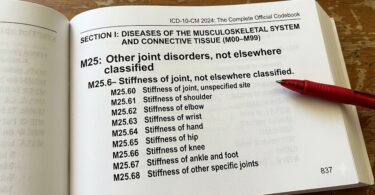
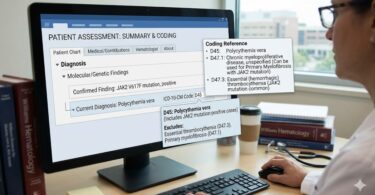
If you have ever looked at an ICD-10-PCS code book for the first time, you might have felt a little overwhelmed. I remember that feeling. There are tables, letters, numbers, and a logic that seems complex at first glance.
But here is the good news. Once you understand how the system thinks, the book becomes a powerful tool.
This guide is here to help you navigate that journey. We will open up the ICD-10-PCS code book together, page by page. You will learn what makes it different from other coding books, how to build codes, and how to avoid common mistakes.
Let us start from the very beginning.

What Is the ICD-10-PCS Code Book?
The ICD-10-PCS code book is a reference manual. The letters stand for the International Classification of Diseases, Tenth Revision, Procedure Coding System.
That is a long name. In simple terms, it is the standard system used in the United States to code procedures performed on hospital inpatients.
When a patient stays overnight in a hospital, every surgical or medical procedure must be translated into a specific PCS code. These codes go on insurance claims. They help determine how much the hospital gets paid.
Who Uses This Book?
You will find this book on the desks of:
- Inpatient hospital coders
- Medical billing specialists
- Health information management students
- Clinical documentation improvement (CDI) specialists
- Auditors and compliance officers
If you code for outpatient clinics, doctor offices, or emergency rooms, you likely use CPT codes instead. But for inpatient hospital stays, the ICD-10-PCS code book is your official guide.
What Makes It Different From ICD-10-CM?
Many people confuse the two. Let me clarify this.
| Feature | ICD-10-CM | ICD-10-PCS |
|---|---|---|
| Purpose | Diagnoses (diseases, injuries) | Procedures (surgeries, interventions) |
| User | All healthcare settings | Inpatient hospital only |
| Code length | 3–7 characters | 7 characters always |
| Characters used | Numbers and letters (except U) | Numbers and letters (except I, O) |
Think of it this way. ICD-10-CM answers what is wrong with the patient. ICD-10-PCS answers what did we do to fix it.
Why You Need a Physical or Digital ICD-10-PCS Code Book
You might be wondering: can I just look up codes online? Yes and no.
Free online tools help for quick lookups. But for accuracy, consistency, and passing certification exams, you need a proper code book. Here is why.
1. The Official Tables Are Only in the Book Format
The official ICD-10-PCS coding system is organized into tables. These tables are not just lists of codes. They show you how to build a code step by step. Most free websites skip the tables and just show final codes. That can lead to mistakes.
2. You Need the Index and Tables Together
Experience shows that using the book forces you to follow the correct process. You look up a procedure in the index first. Then you verify it in the tables. That double-check saves lives and money.
3. Guidelines and Appendices Are Critical
The front of the ICD-10-PCS code book contains official coding guidelines. The back contains appendices for root operations, devices, and qualifiers. Serious coders use these every single day.
Important Note: Always use the most current year’s code book. ICD-10-PCS codes change every October 1st. A 2025 book will be missing codes for 2026.
The Seven Characters: The Heart of the ICD-10-PCS Code Book
Every single code in the ICD-10-PCS code book has exactly seven characters. No exceptions.
Each character means something specific. If you change one character, you change the meaning of the entire procedure.
Let me walk you through them.
| Character | Name | What It Tells You | Example |
|---|---|---|---|
| 1 | Section | Type of procedure (Medical, Surgical, etc.) | 0 = Medical and Surgical |
| 2 | Body System | General system involved | G = Endocrine system |
| 3 | Root Operation | What the surgeon did (removal, bypass, etc.) | F = Bypass |
| 4 | Body Part | Specific anatomical location | 1 = Adrenal gland |
| 5 | Approach | How the surgeon reached the site | 4 = Percutaneous endoscopic |
| 6 | Device | Any hardware left behind | J = Synthetic substitute |
| 7 | Qualifier | Additional details (diagnostic vs. treatment) | Z = No qualifier |
A full code looks like this: 0GB14ZJ
That string of characters tells a complete surgical story.
Why Seven Characters Matter for Accuracy
Think of a shipping address. If you miss the street number, the package does not arrive. If a coder misses one character, the claim does not process correctly. Or worse, the hospital loses thousands of dollars.
The ICD-10-PCS code book forces you to be precise. And precision is what hospitals pay for.
How the ICD-10-PCS Code Book Is Organized
Opening the book for the first time can feel like opening a car engine manual. But it has a logical flow. Let me show you.
1. Introduction and Official Guidelines
The first section contains the official coding guidelines. Do not skip this part. These rules come from CMS (Centers for Medicare & Medicaid Services) and AHIMA.
The guidelines explain:
- How to use the index versus the tables
- How to code procedures that are stopped early
- How to document multiple procedures during one surgery
- How to handle biopsy followed by removal
2. The Index
The index is alphabetical. You look up the type of procedure.
For example, you look for “Bypass, Coronary Artery.” The index will give you a reference like see table 021.
The index does not give you final codes. It points you to the correct table. This is a critical point. Many beginners try to code just from the index. That leads to errors.
3. The Tables
This is the largest part of the ICD-10-PCS code book. The tables are the engine of the system.
Each table covers one root operation in one body system. For example, Table 0F for the hepatobiliary system and root operation resection.
Inside the table, you will see rows and columns. You choose one value from each column to build your code.
Here is a simplified example of how a table appears:
| Body Part | Approach | Device | Qualifier |
|---|---|---|---|
| 0 = Liver | 0 = Open | Z = None | Z = None |
| 1 = Gallbladder | 3 = Percutaneous | 0 = Drainage device | 1 = Diagnostic |
| 4 = Cystic duct | 4 = Percutaneous endoscopic |
You read across the row. One code reads: Liver, open, no device, no qualifier = 0F00ZZ.
The ICD-10-PCS code book does not just list codes. It teaches you how to construct them.
4. Appendices
Do not ignore the back of the book. Appendices include:
- Appendix A: Root operation definitions (very important)
- Appendix B: Device classification
- Appendix C: Approach definitions
- Appendix D: Body part key
I keep a sticky note on Appendix A. I check root operation definitions during almost every coding session.
Root Operations: The Third Character Explained
The third character is the root operation. It answers the question: what did the surgeon do?
Many coders make mistakes here because two root operations can sound similar. The ICD-10-PCS code book provides strict definitions.
Here are the most common root operations you will use.
| Root Operation | Definition | Real-World Example |
|---|---|---|
| Resection | Cutting out all of a body part | Complete appendix removal |
| Excision | Cutting out part of a body part | Liver biopsy |
| Bypass | Altering the route of passage | Heart bypass surgery |
| Drainage | Taking fluids out | Abscess drainage |
| Insertion | Putting a device in | Placing a central line |
| Removal | Taking a device out | Removing a chest tube |
| Replacement | Putting a new body part in | Hip replacement |
| Repair | Fixing a defect without replacement | Suturing a laceration |
A Common Trap
New coders often confuse excision and resection. You are not alone if this feels tricky.
- Excision = part of an organ (for a biopsy or partial removal)
- Resection = the entire organ or body part
The ICD-10-PCS code book defines these clearly. Always check the definition before you assign a code.
Approaches: How Did the Surgeon Get In?
Character five is the approach. This tells us the method used to reach the procedure site.
Approaches matter for reimbursement. An open procedure is more resource-intensive than a percutaneous one.
Here are the main approaches you will see in your ICD-10-PCS code book.
Note: “Approach” is not the same as “incision.” It describes the full technique.
| Approach | Code | Definition |
|---|---|---|
| Open | 0 | Cutting through the skin and deeper layers to see the site directly |
| Percutaneous | 3 | A needle puncture through the skin (no large cut) |
| Percutaneous endoscopic | 4 | Small incision for a camera and tools |
| Via natural or artificial opening | 7 | Through the mouth, nose, anus, or stoma |
| Via natural or artificial opening endoscopic | 8 | Scope through mouth, anus, or stoma |
If a surgeon places a stent through an artery in the groin to reach the heart, that is percutaneous (character 3). If they open the chest, that is open (character 0).
Devices and Qualifiers: The Last Two Characters
Most people worry about the first four characters. But the last two can change everything.
Device (Character 6)
A device is something left inside the patient after the procedure. If nothing is left behind, you use Z (no device).
Examples of devices include:
- C = Extraluminal device (outside a vessel)
- D = Intraluminal device (inside a vessel)
- J = Synthetic substitute (mesh)
- K = Nonautologous tissue substitute (donor graft)
Qualifier (Character 7)
The qualifier adds one more detail. It might indicate:
- Diagnostic versus treatment
- High osmolar versus low osmolar
- Transfusion of autologous blood versus non-autologous
- The specific kind of bypass graft (aorta-coronary versus internal mammary)
Sometimes the qualifier is Z for no additional information.
Together, the device and qualifier turn a general procedure into a very specific one.
Step-by-Step: How to Find a Code in Your ICD-10-PCS Code Book
Let me walk you through a real example. You need to code a laparoscopic cholecystectomy (gallbladder removal using a camera).
Step 1: Identify the Root Operation
Are we removing part or all of the gallbladder? All of it. That means the root operation is Resection (character value T for the Medical and Surgical section).
Step 2: Go to the Index
Turn to the alphabetical index in your ICD-10-PCS code book. Look for “Cholecystectomy” or “Gallbladder” then “Resection.” The index will reference a table. Usually, this leads to Table 0F.
Step 3: Turn to the Correct Table
Find Table 0F. Look for the root operation T (Resection). Now you see all possible body parts, approaches, devices, and qualifiers for gallbladder resection.
Step 4: Select the Correct Row
Find the row for Body Part Gallbladder (code 4).
Read across.
- Body Part: 4 (Gallbladder)
- Approach: We used a camera and small incisions. That is percutaneous endoscopic (code 4).
- Device: We left nothing behind. That is Z.
- Qualifier: No extra info needed. That is Z.
Step 5: Build the Code
String the characters together:
Section (0) + Body System (F) + Root Operation (T) + Body Part (4) + Approach (4) + Device (Z) + Qualifier (Z) = 0FT44ZZ
That is a clean, valid ICD-10-PCS code.
Important Note: Always verify in the official coding guidelines that you selected the correct root operation. If the surgery was converted from laparoscopic to open, you must code the open approach.
Common Mistakes When Using the ICD-10-PCS Code Book
Even experienced coders make errors. Here are the most frequent problems I have seen in audits.
Mistake 1: Coding from the Index Only
The index is a map. The tables are the territory. Always verify your code in the tables.
Mistake 2: Confusing Biopsy and Excision
A biopsy removes a sample for examination (root operation Excision). Removal of the entire tumor (Resection) is different. The ICD-10-PCS code book separates these clearly.
Mistake 3: Using the Wrong Device Character
If a surgeon places a temporary device like a drain, but it is removed before the patient leaves the hospital, do not code it as a device. Device means left in place after the procedure ends.
Mistake 4: Ignoring the Approach
An open approach costs more than a percutaneous one. Using the wrong approach leads to incorrect hospital payment.
Mistake 5: Using an Outdated Code Book
CMS updates ICD-10-PCS every year. New devices, new procedures, and new qualifiers appear. Using a book from 2024 in 2026 means your codes will be invalid.
ICD-10-PCS Coding Guidelines You Must Follow
The front of your code book contains official guidelines. Here are three that cause the most confusion.
The “Separate Procedure” Rule
If a procedure is routinely performed as part of a larger surgery, do not code it separately. For example, a simple incision to access a deeper organ is not coded as its own procedure.
The “Multiple Procedures” Rule
If a surgeon performs three different procedures during the same operation, you code each one. But you must follow a hierarchy. Resections are coded before excisions. Repairs are coded last.
The “Procedure Stopped Early” Rule
If a procedure is started but not completed due to patient instability, you code what was done. You do not code what was planned.
A patient goes into surgery for a bypass. The surgeon opens the chest but cannot proceed due to low blood pressure. You code the open approach and the exploration. You do not code the bypass.
Digital vs. Print: Which ICD-10-PCS Code Book Should You Buy?
You have two main options. Both are valid, but they serve different needs.
Print Code Books
Pros:
- No screen fatigue
- Easier to flip back and forth between index and tables
- Allowed during many certification exams (AAPC, AHIMA)
- No subscription fees after purchase
Cons:
- Heavy to carry
- No search function
- Must buy a new one every year
- No hyperlinks
Digital Code Books (Electronic)
Pros:
- Instant search
- Hyperlinks from index to tables
- Often includes coding software assistance
- Updates may be included in subscription
- Lighter (if on a tablet)
Cons:
- Requires device and battery
- Often subscription-based (yearly fee)
- Not allowed in most certification exams
- Screen strain for long sessions
My personal advice: If you are a student or taking an exam, buy the print book. Learn to use it manually. Once you are working, a digital version saves time.
How to Study the ICD-10-PCS Code Book for Certification Exams
Passing the CIC (Certified Inpatient Coder) or CCS (Certified Coding Specialist) requires deep knowledge of the ICD-10-PCS code book.
Here is a study plan that works.
1. Memorize the Root Operations First
Make flashcards for all 31 root operations in the Medical and Surgical section. Focus especially on the confusing pairs:
- Excision vs. Resection
- Bypass vs. Reattachment
- Drainage vs. Extirpation
- Repair vs. Replacement
2. Practice Building Codes Backwards
Take a completed code like 0DB98ZX. Break it into characters. Explain what each character means without looking. Then verify in the book.
3. Use the Appendix Every Session
Keep Appendix A (root operation definitions) open while you practice. After one month, you will need it less often.
4. Time Yourself
In a real exam, you have about two minutes per code. Practice with a timer. Use sticky notes to mark your index, tables, and appendix for speed.
5. Take Practice Exams
Many coding education websites offer inpatient coding exams. They force you to use the book correctly.
Quote from a certified coder: “The day I stopped trying to memorize codes and started learning how to use the tables was the day I passed my exam. The ICD-10-PCS book tells you everything. You just need to listen to it.”
Real-World Example: Coding a Complex Procedure
Let us work through a more complex example together. This will show you the power of the ICD-10-PCS code book.
Clinical scenario: A patient has a blocked coronary artery. The surgeon performs a percutaneous coronary intervention (PCI) with a drug-eluting stent placed in the left anterior descending (LAD) artery. The approach is through the femoral artery.
Step 1 – Determine the section. This is a heart procedure in the Medical and Surgical section (0).
Step 2 – Body system. The heart is body system 2.
Step 3 – Root operation. The surgeon is creating a new pathway using a stent. This is a Bypass (character 1).
Step 4 – Body part. The LAD artery is a specific body part. In the tables, body part value is 8 for LAD.
Step 5 – Approach. Through the femoral artery. That is percutaneous (3).
Step 6 – Device. Drug-eluting stent is an intraluminal device (D).
Step 7 – Qualifier. The stent is placed into the LAD. The qualifier value is 8 (LAD).
Final code: 02138D8
Now verify in your ICD-10-PCS code book. Table 021 will confirm each character.
Frequently Asked Questions (FAQ)
Q1: How is ICD-10-PCS different from CPT?
ICD-10-PCS is used only for inpatient hospital procedures. CPT is used for outpatient, doctor offices, and emergency rooms. PCS has seven characters with a standardized logic. CPT has five characters with no built-in logic.
Q2: Do I need a new ICD-10-PCS code book every year?
Yes. CMS releases updates every October 1st. New codes are added, some are revised, and guidelines change. Using an old book will lead to denials.
Q3: Can I code outpatient surgery with the ICD-10-PCS code book?
No. Outpatient hospital and ambulatory surgery centers use CPT. Using PCS for outpatient claims will cause automatic rejections.
Q4: What is the hardest part of learning ICD-10-PCS?
For most coders, the root operations are the hardest. There are 31 distinct definitions, and some are very similar. The second hardest is the approach, especially distinguishing percutaneous and percutaneous endoscopic.
Q5: Why does the ICD-10-PCS code book have no codes for office visits?
Because office visits are not procedures. They are evaluation and management (E/M) services. Those are coded using CPT, not PCS.
Q6: Are there ICD-10-PCS codes for lab tests or X-rays?
No. Lab and radiology procedures are also coded with CPT in outpatient settings. Inpatient labs and X-rays are not coded separately as procedures. They are included in the diagnosis-related group (DRG) payment.
Q7: How do I code a procedure that is not in the book?
Every valid inpatient procedure has a code in ICD-10-PCS. If you cannot find it, re-evaluate the root operation, body part, or approach. You might be looking in the wrong table. Unlisted procedures do not exist in PCS.
Q8: What is a “dummy” code in ICD-10-PCS?
There are no dummy or placeholder codes like in ICD-10-CM (where you use X). Every character in PCS has a valid value or Z for “none.”
Additional Resources to Master ICD-10-PCS
You do not have to learn alone. Here are trusted resources I recommend.
Free Resources
- CMS ICD-10-PCS website – Official files, guidelines, and updates
- AHIMA Body of Knowledge – Articles and white papers on coding
- YouTube: CodingwithKate – Free walkthroughs of PCS tables
Paid Resources
- AAPC ICD-10-PCS training course – Structured learning with exams
- Optum 360 Coding Book – A popular print edition with helpful color tabs
- CodeRyte (now 3M 360) – Computer-assisted coding software
Official Link
For the most current official ICD-10-PCS files, visit:www.cms.gov/medicare/coding-billing/icd-10-pcs/2026-icd-10-pcs
Final Tips for Success with Your ICD-10-PCS Code Book
Let me leave you with three practical tips.
Tip 1: Tab Your Book
Use color-coded sticky tabs for:
- The Index (yellow)
- The Tables (blue)
- Appendix A (root operations) (green)
- Official Guidelines (red)
This simple step cuts lookup time in half.
Tip 2: Write in Your Book
High-quality coding books are meant to be annotated. Add notes in the margins. Circle common device values. Star frequently used body parts.
Tip 3: Practice Every Week
Coding is a skill, not just knowledge. Spend 15 minutes each day building codes from real operative reports. Consistency builds speed.
Conclusion
The ICD-10-PCS code book is more than a list of codes. It is a logical system for translating inpatient procedures into precise, seven-character alphanumeric codes. Master the 31 root operations, understand the seven characters, and always verify your codes in the tables. With practice and the right study habits, the book transforms from intimidating to indispensable.
FAQ (Summary Box)
| Question | Short Answer |
|---|---|
| Who uses PCS? | Inpatient hospital coders |
| How many characters? | 7 exactly |
| Where do I find the official rules? | Front of the code book |
| Can I use a digital version? | Yes, but not in certification exams |
| How often do codes change? | Every October 1st |
Additional Resource
Link: CMS Official ICD-10-PCS Reference Materials
Bookmark this page. It contains the official code files, guidelines, and quarterly updates. Do not rely on third-party sites for primary source information.
Author: Technical Writing Team
Date: April 24, 2026
Disclaimer: This content is for informational purposes only and does not constitute legal, medical, or billing advice. Always consult official coding manuals and payerspecific guidelines before submitting claims.
Author: Technical Writing Team
Date: April 24, 2026
Disclaimer: This article is for educational and reference purposes only. Always refer to the official CMS or AHIMA guidelines for authoritative coding advice.