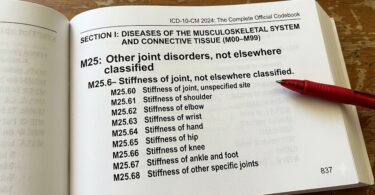
Rectal bleeding, known medically as hematochezia, is a common clinical presentation that sends hundreds of thousands of patients to physicians’ offices and emergency departments each year. For the patient, it is an alarming event, often fraught with anxiety and fear of a serious underlying condition like cancer. For the clinician, it is a diagnostic puzzle, a symptom that can point to a vast spectrum of pathologies, ranging from the benign and self-limiting, such as a minor anal fissure, to the life-threatening, such as a rapidly bleeding colonic diverticulum or an advanced colorectal carcinoma. The sight of blood, whether on the toilet paper, in the toilet bowl, or mixed with stool, demands a systematic and thorough evaluation.
But in the modern healthcare ecosystem, there is another critical audience for this clinical information: the medical coder. For the coder, rectal bleeding is not just a symptom; it is a data point that must be accurately translated into the universal language of healthcare data—the International Classification of Diseases, Tenth Revision, Clinical Modification (ICD-10-CM). This alphanumeric code, typically five to seven characters long, carries immense weight. It is the cornerstone of patient records, public health statistics, clinical research, and, perhaps most pressingly, the healthcare revenue cycle. An inaccurate code can lead to claim denials, delayed reimbursements, audits, and a distorted picture of a patient’s health and a population’s disease burden.
This article aims to bridge the gap between the clinical reality of rectal bleeding and the precise world of ICD-10 coding. We will embark on a detailed exploration of the K62.5 code, its appropriate applications, and its significant limitations. We will delve deep into the myriad of underlying conditions that cause rectal bleeding, providing the correct codes for each scenario. Through an emphasis on the critical importance of detailed clinical documentation, practical case studies, and a discussion of the financial and operational implications of coding accuracy, this guide will serve as an exhaustive resource for medical coders, healthcare providers, students, and administrators alike. Our goal is to transform the complex challenge of coding for rectal bleeding from a potential source of error into a mastered skill.
ICD-10 Code for Rectal Bleeding
2. Understanding the ICD-10-CM System: A Primer for Healthcare Professionals
Before diving into the specifics of rectal bleeding, it is essential to understand the structure and logic of the ICD-10-CM system itself. Adopted in the United States in 2015, ICD-10-CM represents a significant expansion over its predecessor, ICD-9-CM, with over 70,000 codes compared to approximately 14,000. This increased granularity allows for a much more detailed description of a patient’s condition, including laterality, severity, etiology, and anatomic specificity.
The system is organized into 22 chapters, based primarily on etiology or body system. For conditions related to the digestive system, including most causes of rectal bleeding, we primarily operate within Chapter 11: Diseases of the Digestive System (K00-K95).
An ICD-10-CM code’s structure is hierarchical:
-
Category: The first three characters (e.g., K62) represent the general category of disease (e.g., “Other diseases of anus and rectum”).
-
Subcategory: Characters four through six provide further clinical detail (e.g., K62.5 for “Hemorrhage of anus and rectum”).
-
Extension: The seventh character, when required, is an extension that adds information about the encounter (e.g., initial, subsequent, sequela) or, in other chapters, specifics like trimester of pregnancy or fracture type.
The ICD-10-CM Official Guidelines for Coding and Reporting, published by the Centers for Disease Control and Prevention (CDC) and the Centers for Medicare & Medicaid Services (CMS), are the definitive rules that must be followed. One of the most fundamental guidelines is the ICD-10-CM Coding Convention I.B.4: “Signs and Symptoms.” This convention states that “Codes that describe symptoms and signs, as opposed to diagnoses, are acceptable for reporting purposes when a related definitive diagnosis has not been established (confirmed) by the provider.” However, it further clarifies that “if a symptom code is reported, it should not be used if the underlying, definitive diagnosis is known.”
This principle is the absolute cornerstone of coding for rectal bleeding. The symptom code K62.5 is a placeholder, a code of last resort when the cause of the bleeding remains unknown after a provider’s assessment. As soon as a definitive diagnosis is established, that diagnosis code takes precedence.
3. The Central Code: K62.5 – Hemorrhage of Anus and Rectum
At the heart of our discussion lies code K62.5. Nestled within the “Other diseases of anus and rectum” category, this code is specifically designated for “Hemorrhage of anus and rectum.”
3.1. When is K62.5 the Correct and Exclusive Code?
Code K62.5 is appropriately used in a limited set of circumstances:
-
Initial Encounter with Undetermined Cause: A patient presents to the emergency department or a primary care provider with a chief complaint of rectal bleeding. The physician performs a history and physical examination but does not perform a diagnostic procedure (like anoscopy or colonoscopy) during that encounter. The physician’s final diagnosis is documented as “rectal bleeding, etiology unknown” or “hematochezia, to be ruled out.” In this scenario, K62.5 accurately reflects the medical uncertainty at that point in time.
-
Ruling Out Serious Pathology: A patient is being worked up for rectal bleeding. The clinician may suspect hemorrhoids but wants to rule out more serious conditions like cancer or inflammatory bowel disease. Until the definitive diagnostic testing (e.g., colonoscopy) is completed and a final diagnosis is made, K62.5 may be the most accurate code for the encounter.
-
Post-Procedural Bleeding (when not otherwise specified): If a patient experiences bleeding after a procedure on the anus or rectum (e.g., a biopsy) and the provider simply documents “post-procedural rectal bleeding” without linking it to a more specific complication code, K62.5 might be used. However, coders must always check for more specific codes for complications of procedures.
3.2. The Pitfalls of Assuming K62.5
The most common and significant error in coding for rectal bleeding is the reflexive use of K62.5. This code is often overused due to habit or a lack of detailed documentation. The consequences are multifaceted:
-
Clinical Inaccuracy: It paints an incomplete picture of the patient’s health record. A history of “K62.5” is far less informative than a history of “K64.1 – Grade II hemorrhoids” or “K57.31 – Diverticulosis of colon with bleeding.”
-
Reimbursement Issues: Payers may view K62.5 as a sign of an incomplete workup. Codes for definitive diagnoses are often linked to higher-weighted Diagnosis-Related Groups (DRGs) for inpatients or justify more complex Evaluation and Management (E/M) services for outpatients. Using a symptom code can lead to under-reimbursement.
-
Denials and Audits: If a claim is submitted with K62.5, but the provider’s documentation elsewhere in the record (e.g., progress notes, procedure reports) clearly identifies a definitive cause like bleeding internal hemorrhoids, the claim is vulnerable to denial during an audit for “coding not supported by documentation.”
In essence, K62.5 should be seen as a temporary code, a flag that signals an ongoing diagnostic process. Its use should be the exception, not the rule.
4. When the Cause is Known: Coding the Underlying Condition
This is the most critical section for achieving coding accuracy. In the vast majority of cases, rectal bleeding is a symptom of a specific, diagnosable condition. When that condition is known and documented by the provider, it must be coded instead of K62.5.
4.1. Hemorrhoids (K64.-): The Most Common Culprit
Hemorrhoids are the leading cause of rectal bleeding, characterized by bright red blood that coats the stool or is seen on toilet paper.
-
ICD-10-CM Category: K64
-
Specificity Required: ICD-10 requires specification of the grade and type of hemorrhoids.
-
K64.0: First degree hemorrhoids (bleeding without prolapse)
-
K64.1: Second degree hemorrhoids (prolapse with straining, reduce spontaneously)
-
K64.2: Third degree hemorrhoids (prolapse requiring manual reduction)
-
K64.3: Fourth degree hemorrhoids (irreducible, permanently prolapsed)
-
K64.4: Residual hemorrhoidal skin tags
-
K64.5: Perianal venous thrombosis (not a true hemorrhoid, but often presents similarly)
-
K64.8: Other specified hemorrhoids
-
K64.9: Unspecified hemorrhoids (should be used sparingly, only when documentation is poor)
-
Coding Tip: If a patient has both internal and external hemorrhoids, code both. ICD-10 does not have a single code for “mixed hemorrhoids,” so you would assign, for example, K64.1 and K64.3 if documented.
4.2. Diverticular Disease (K57.-): A Significant Source of Bleeding
Diverticulosis, the presence of small pouches in the colon wall, is a major cause of significant, often painless, lower GI bleeding in older adults. The bleeding can range from mild to massive.
-
ICD-10-CM Category: K57
-
Specificity Required: This category is highly specific, requiring knowledge of the location (small intestine, large intestine, or both) and the presence of bleeding or perforation/abscess.
-
K57.30: Diverticulosis of large intestine without perforation or abscess without bleeding
-
K57.31: Diverticulosis of large intestine without perforation or abscess with bleeding
-
K57.40: Diverticulitis of large intestine without perforation or abscess without bleeding
-
K57.41: Diverticulitis of large intestine without perforation or abscess with bleeding
-
(Similar codes exist for small intestine [K57.50-, K57.51-] and both small and large intestine [K57.80-, K57.81-]).
-
Coding Tip: The “with bleeding” designation is crucial. If a patient with known diverticulosis presents with a GI bleed and the provider attributes it to the diverticulosis, you must use a code from the K57.31, K57.41, K57.51, or K57.81 series, not K62.5 and not the code without bleeding.
4.3. Anal Fissures (K60.-) and Fistulas (K60.3-, K60.5)
An anal fissure is a small tear in the anal lining, causing sharp pain and bright red bleeding during and after bowel movements.
-
ICD-10-CM Category: K60
-
Codes:
-
K60.0: Acute anal fissure
-
K60.1: Chronic anal fissure
-
K60.2: Anal fissure, unspecified
-
K60.3: Anal fistula (a tunnel connecting the anal canal to the skin near the anus, which can also bleed and discharge).
-
4.4. Inflammatory Bowel Disease (IBD): K50.- (Crohn’s) and K51.- (Ulcerative Colitis)
Both Crohn’s disease and Ulcerative Colitis are chronic inflammatory conditions of the GI tract that commonly cause rectal bleeding, diarrhea, and abdominal pain.
-
Crohn’s Disease (K50.-): Requires a fifth digit to specify location.
-
K50.00: Crohn’s disease of small intestine without complications
-
K50.011: Crohn’s disease of small intestine with rectal bleeding
-
K50.10: Crohn’s disease of large intestine without complications
-
K50.111: Crohn’s disease of large intestine with rectal bleeding
-
-
Ulcerative Colitis (K51.-): Also requires a fifth digit for specifics.
-
K51.00: Ulcerative pancolitis without complications
-
K51.01: Ulcerative pancolitis with rectal bleeding
-
K51.20: Ulcerative proctitis without complications
-
K51.21: Ulcerative proctitis with rectal bleeding
-
Coding Tip: The “with rectal bleeding” subcodes are a perfect example of ICD-10’s granularity. If the provider documents that the patient’s active IBD flare includes rectal bleeding, you must use the specific code that includes the bleeding.
4.5. Colonic Polyps (K63.5, D12.-) and Malignancy (C18.-, C19, C20, C21.-)
Bleeding can be a presenting sign of pre-cancerous polyps or colorectal cancer.
-
Benign Polyps: Code from category D12 (Benign neoplasm of colon, rectum, and anus). For example, D12.6 for a benign colon polyp. The presence of a polyp itself does not automatically mean it’s bleeding, but if it is identified as the source, this is the code.
-
Adenomatous Polyps: Historically coded as benign neoplasms under D12.-.
-
Colorectal Cancer: Code from category C18 (Malignant neoplasm of colon), C19 (Malignant neoplasm of rectosigmoid junction), C20 (Malignant neoplasm of rectum), or C21 (Malignant neoplasm of anus and anal canal). The code requires a fourth or fifth digit to specify the exact anatomic site.
4.6. Gastroenteritis and Colitis (A09, K52.-)
Infectious or non-infectious inflammation of the stomach and intestines can cause bloody diarrhea.
-
Infectious Gastroenteritis and Colitis: A09 is used for presumed infectious origin. For a specific organism, codes from A00-A08 are used (e.g., A04.7 for Enterocolitis due to Clostridium difficile).
-
Non-infective Gastroenteritis and Colitis: K52.- This category includes codes for radiation colitis (K52.0), other and unspecified noninfective gastroenteritis and colitis (K52.89, K52.9).
4.7. Angiodysplasia (K55.21)
Angiodysplasia is a vascular malformation in the colon wall that can be a source of chronic, occult bleeding or acute, massive bleeding, especially in the elderly.
-
ICD-10-CM Code: K55.21 – Angiodysplasia of colon with hemorrhage
4.8. Radiation Proctitis (K62.7)
Patients who have had pelvic radiation therapy (e.g., for prostate or cervical cancer) can develop chronic inflammation and friable blood vessels in the rectum, leading to bleeding.
-
ICD-10-CM Code: K62.7 – Radiation proctitis
5. The Critical Role of Documentation: From Clinician to Coder
The accuracy of medical coding is entirely dependent on the quality of clinical documentation. A coder can only assign codes based on what the provider has documented in the patient’s medical record. Vague or nonspecific documentation forces the coder to use unspecified codes, which can impact patient care and reimbursement.
5.1. Specificity is King: Documenting the Etiology
Instead of writing “rectal bleeding,” the provider should document the definitive diagnosis.
-
Poor: “Patient c/o rectal bleeding.”
-
Good: “Diagnosis: Bleeding internal hemorrhoids, Grade II.”
-
Excellent: “The source of bleeding was identified on colonoscopy as a bleeding diverticulum in the sigmoid colon. Diagnosis: Diverticulosis of colon with hemorrhage.”
5.2. Describing the Bleeding: A Crucial Clue
While the description alone is not enough for a final code, it provides critical context that supports the diagnosis.
-
Color: Bright red (hematochezia, typically lower GI source) vs. maroon or melena (black, tarry stool, typically upper GI source, though a rapid upper GI bleed can cause hematochezia).
-
Quantity & Frequency: “A few spots on toilet paper” vs. “filling the toilet bowl.”
-
Temporal Relationship: “Blood drips after bowel movement” (suggests fissure or hemorrhoids) vs. “blood mixed with stool” (suggests colitis, proctitis, or malignancy).
5.3. The Importance of Laterality and Status
For conditions where it applies (e.g., Crohn’s disease), documenting the location is essential for selecting the correct fifth digit. Additionally, specifying if a condition is “acute,” “chronic,” or “in active flare” provides necessary clinical detail.
6. Navigating the Alphabet: Other Relevant ICD-10 Chapters
While Chapter 11 (K00-K95) covers most causes, rectal bleeding can sometimes be linked to conditions in other chapters.
6.1. Chapter II: Neoplasms (C00-D49)
As discussed in section 4.5, malignant and benign neoplasms of the lower GI tract are coded here.
6.2. Chapter I: Infectious and Parasitic Diseases (A00-B99)
Dysentery (A03.9, A06.0) and other specific infectious causes of colitis are found here.
6.3. Chapter IX: Circulatory System Diseases (I00-I99)
While rare, aortoenteric fistula (I76.8) can present with catastrophic GI bleeding. Portal hypertensive gastropathy/colopathy (K76.6) is in Chapter 11 but is directly related to circulatory issues from liver disease.
6.4. Chapter XIX: Injury, Poisoning, and External Causes (S00-T88)
Trauma to the rectum or anus, or a foreign body insertion, would be coded from this chapter (e.g., S36.69- Injury of rectum). An external cause code (Y92-Y99) would also be required to indicate how the injury occurred.
6.5. Chapter XXI: Factors Influencing Health Status (Z00-Z99)
This chapter is used for screening encounters. For example, Z12.11 is used for an encounter for screening for colon cancer. If a screening colonoscopy finds and removes a bleeding polyp, you would code Z12.11 as the first-listed diagnosis (reason for the encounter), followed by the code for the polyp (D12.6) or the finding of blood in stool (R19.5).
7. Case Studies: Applying Knowledge to Real-World Scenarios
Let’s solidify these concepts with practical examples.
7.1. Case Study 1: The Young Adult with Bright Red Blood
-
Presentation: A 28-year-old female presents to her PCP with complaints of bright red blood on the toilet paper for one week. She reports constipation and pain with defecation. No weight loss or family history of CRC.
-
Physical Exam: External skin tag noted. Digital rectal exam reveals a tender posterior anal tear.
-
Provider’s Final Diagnosis: Acute anal fissure.
-
Correct ICD-10-CM Code: K60.0 (Acute anal fissure). K62.5 is incorrect because a definitive diagnosis was made.
7.2. Case Study 2: The Middle-Aged Patient with Maroon Stool
-
Presentation: A 65-year-old male is admitted through the ER with a history of maroon-colored stools and lightheadedness. His hemoglobin is 7.8 g/dL.
-
Procedure: An urgent colonoscopy is performed.
-
Colonoscopy Report: “Revealed extensive diverticulosis in the sigmoid colon. A single diverticulum was identified with a visible vessel and active oozing. No other source of bleeding found.”
-
Provider’s Final Diagnosis: Acute lower GI hemorrhage secondary to bleeding diverticulosis.
-
Correct ICD-10-CM Code: K57.31 (Diverticulosis of large intestine with bleeding). K62.5 is incorrect.
7.3. Case Study 3: The Elderly Patient with Chronic Anemia
-
Presentation: A 78-year-old female is seen by a gastroenterologist for workup of iron deficiency anemia. She denies any visible rectal bleeding.
-
Procedure: A colonoscopy is performed.
-
Colonoscopy Report: “Found several vascular ectasias (angiodysplasias) in the cecum and ascending colon. One was oozing slightly.”
-
Provider’s Final Diagnosis: Angiodysplasia of the colon with chronic occult bleeding.
-
Correct ICD-10-CM Code: K55.21 (Angiodysplasia of colon with hemorrhage). The bleeding is confirmed as the cause of her anemia.
7.4. Case Study 4: The Post-Colonoscopy Encounter
-
Presentation: A patient had a screening colonoscopy (Z12.11) two days ago where a benign polyp was removed. He now calls the office reporting a small amount of bright red blood with his bowel movement.
-
Provider’s Assessment: “Mild post-polypectomy bleeding, expected and self-limiting.”
-
Correct ICD-10-CM Code: This is a complication of a procedure. The appropriate code would be from the T81.- series. T81.710A (Hemorrhage complicating a procedure on the digestive system, initial encounter) would be the most accurate, not K62.5.
8. Coding and Reimbursement: The Financial Impact of Accuracy
The translation of a diagnosis into an ICD-10 code has direct financial consequences. In the inpatient setting, codes determine the patient’s Diagnosis-Related Group (DRG), which dictates a fixed payment to the hospital. A claim for a patient with “K57.31 – Diverticulosis with bleeding” will typically group to a higher-weighted, more complex DRG than a claim with “K62.5 – Rectal hemorrhage,” resulting in significantly higher reimbursement that reflects the greater resource utilization.
In the outpatient and professional fee setting, ICD-10 codes justify the medical necessity of the services rendered. A colonoscopy for a patient with “K62.5” may be seen as investigatory, while a colonoscopy for a patient with “K57.31” is clearly necessary to diagnose and potentially treat the source of a significant bleed. Accurate coding prevents claim denials for “lack of medical necessity,” ensuring providers are paid for the complex care they deliver.
9. The Future of Coding: A Glimpse into ICD-11
The World Health Organization (WHO) has already released the International Classification of Diseases, Eleventh Revision (ICD-11), which came into effect in January 2022. The United States is years away from implementing a clinical modification of ICD-11, but it’s useful to understand its direction.
ICD-11 uses a more flexible, digital-friendly “foundation” structure with clustering capabilities. For rectal bleeding, the code would be ME24.0 (Haematochezia). However, the power of ICD-11 lies in its ability to easily link this symptom to an underlying cause using “post-coordination.” A coder could create a cluster linking hematochezia (ME24.0) to its cause, such as hemorrhoids (DB90.2). This logical structure may reduce ambiguity and further enhance the richness of health data.
Quick Reference Guide for Common Rectal Bleeding Diagnoses
| Definitive Diagnosis | ICD-10-CM Code | Notes |
|---|---|---|
| Hemorrhoids, Unspecified | K64.9 | Use only if documentation is poor; query for specificity. |
| Grade II Internal Hemorrhoids | K64.1 | Requires documentation of grade. |
| Diverticulosis with Bleeding | K57.31 | For large intestine; confirm location. |
| Diverticulitis with Bleeding | K57.41 | Indicates inflammation is present. |
| Acute Anal Fissure | K60.0 | Distinguish from chronic (K60.1). |
| Crohn’s Disease with Rectal Bleeding | K50.111 | Example for large intestine; code varies by location. |
| Ulcerative Colitis with Rectal Bleeding | K51.21 | Example for proctitis; code varies by extent. |
| Angiodysplasia with Hemorrhage | K55.21 | A common cause of bleeding in the elderly. |
| Radiation Proctitis | K62.7 | For history of pelvic radiation. |
| Benign Colon Polyp | D12.6 | If identified as the bleeding source. |
| Malignant Neoplasm of Rectum | C20 | Requires confirmation and specific site documentation. |
| Infectious Gastroenteritis | A09 | For presumed infectious cause. |
| Post-polypectomy Bleeding | T81.710A | Complication of procedure, not a disease code. |
| Rectal Bleeding, Unspecified | K62.5 | Use only when no definitive cause is document |
10. Conclusion: Mastering the Nuances
Accurate ICD-10 coding for rectal bleeding hinges on a fundamental principle: code the definitive diagnosis, not the symptom. The code K62.5 serves a limited purpose for encounters where the etiology remains truly unknown. A deep understanding of the common underlying conditions—from hemorrhoids and diverticulosis to IBD and malignancy—and their specific, granular codes is essential for every medical coder. This expertise, combined with a collaborative relationship with clinical providers to ensure detailed documentation, ensures coding accuracy, supports optimal patient care, and secures appropriate reimbursement in a complex healthcare landscape.
11. Frequently Asked Questions (FAQs)
Q1: A provider documents “likely hemorrhoidal bleeding.” Is it appropriate to code K64.9 (Unspecified hemorrhoids)?
A1: While “likely” indicates some uncertainty, the provider has still stated a clinical diagnosis. You should code K64.9, as it is more specific than K62.5. The best practice would be to query the provider for a more definitive statement or specification of the grade of hemorrhoids.
Q2: How do I code a patient who has both diverticulosis and hemorrhoids, and the provider cannot determine which is bleeding?
A2: In this scenario, where the provider cannot definitively link the bleeding to one condition over the other, you would code both conditions. You would list both K57.30 (diverticulosis without bleeding) and the appropriate hemorrhoids code (e.g., K64.1). Since neither is confirmed as the bleeding source, you cannot use the “with bleeding” codes. K62.5 would generally not be used in addition, as the symptom is inherent in the presentation.
Q3: What is the code for occult rectal bleeding (positive Fecal Occult Blood Test – FOBT)?
A3: Occult bleeding is not the same as hematochezia. The code for a positive FOBT or Fecal Immunochemical Test (FIT) is R19.5 (Other fecal abnormalities). This code is often used as the reason for a screening or diagnostic colonoscopy.
Q4: A patient has a history of colon cancer (C18.7) and now presents with rectal bleeding. A colonoscopy confirms the bleeding is from radiation proctitis, not tumor recurrence. What do I code?
A4: You code the active, treated condition: K62.7 (Radiation proctitis). The personal history of colon cancer (Z85.038) may be listed as a secondary code to provide a complete clinical picture, but it is not the cause of the current bleeding.
Q5: When is the external cause code used for rectal bleeding?
A5: External cause codes (from Chapter 20) are used to describe the cause of an injury. They are required when the rectal bleeding is the result of a trauma, such as a foreign body insertion (e.g., from an accident or assault) or an iatrogenic injury during a procedure.
12. Additional Resources
-
CDC ICD-10-CM Official Guidelines: The definitive source for coding rules. https://www.cdc.gov/nchs/icd/icd-10-cm.htm
-
American Health Information Management Association (AHIMA): Provides professional education, tools, and advocacy for medical coders. https://www.ahima.org/
-
American Academy of Professional Coders (AAPC): A leading organization for medical coding certification and education. https://www.aapc.com/
-
American College of Gastroenterology (ACG): Provides clinical guidelines on the management of GI conditions, including GI bleeding, which can inform coding contexts. https://gi.org/
Disclaimer: This article is intended for informational and educational purposes only. It is not a substitute for professional medical advice, diagnosis, or treatment. The ICD-10 codes and clinical information presented here are for illustrative purposes and should not be used for final coding or billing decisions. Always consult with a qualified healthcare provider for any health concerns and a certified medical coder for accurate coding. The author and publisher are not liable for any errors, omissions, or consequences arising from the use of this information.
Date: October 24, 2025
Author: Dr. Eleanor Vance, MD, MPH, CIC