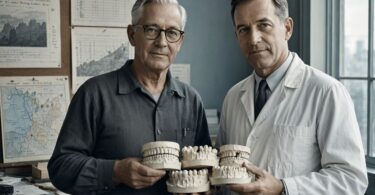
A visit to the dentist often triggers two very different kinds of pain. One is physical, fleeting, and managed with modern anesthesia. The other is financial, lingering, and can leave a patient staring at a treatment plan in disbelief. A single crown costs more than a high-end smartphone. A dental implant rivals a used car. Full mouth rehabilitation can approach the price of a college education. This reality prompts a question asked in every city and town: why does sitting in a dental chair demand such a significant financial sacrifice? The answer lives in a world most patients never see—a complex ecosystem of clinical overhead, skilled labor, precision materials, regulatory mandates, and business imperatives. This guide illuminates every corner of that world.

Why Does Dentistry Cost So Much?
Table of Contents
ToggleThe Invisible Factory: What a Dental Practice Actually Is
Patients experience the dental office from the perspective of the chair. They see the ceiling tiles, the overhead light, the tray of instruments. What they rarely grasp is that a dental practice is a functioning medical facility, a small hospital, operating under some of the strictest infection control standards in healthcare. The monthly overhead of a general dental practice is relentless and unforgiving.
The Real Estate Reality
A dental clinic cannot operate from a cheap basement suite. It requires a professional, accessible location with appropriate plumbing, electrical capacity for compressors and suction units, reinforced flooring for heavy equipment, and compliance with the Americans with Disabilities Act. Commercial lease rates for medical-grade spaces in urban and suburban areas are substantial. A 1,800-square-foot dental office in a medium-sized American city can carry a monthly base rent of $6,000 to $15,000, before property taxes, common area maintenance charges, and utilities. This fixed cost exists whether the schedule is full or empty.
The Price of Safety: Infection Control
Infection control in dentistry is not a suggestion. It is a legal and ethical obligation enforced by state dental boards, the Occupational Safety and Health Administration, and the Centers for Disease Control and Prevention. The cost of compliance is staggering.
Every patient encounter consumes single-use disposable items: gloves, masks, surgical drapes, saliva ejectors, high-volume suction tips, anesthetic needles, syringe cartridges, cotton rolls, gauze, and surface barriers. A single restorative procedure can generate a cubic foot of medical waste. This waste must be segregated, stored, and collected by a licensed biomedical waste disposal service that charges by weight or container volume.
Instrument sterilization is a multi-step process involving ultrasonic cleaning, inspection, packaging, and sterilization in a steam autoclave. Autoclaves are tested weekly, if not daily, with biological indicators to ensure spore destruction. Chemical indicators run in every cycle. Equipment maintenance and repair are ongoing. These costs are invisible to the patient but present in every dollar of every fee.
The People Who Make It Work
A dentist does not work alone. The typical general practice employs a team of skilled professionals whose salaries and benefits constitute 25% to 30% of gross revenue.
Dental Assistants are the dentist’s extra hands. They manage the clinical environment, prepare treatment rooms, sterilize instruments, take radiographs, and provide direct chairside assistance. In many states, they hold certification and maintain continuing education. Their hourly wage reflects this professional standing.
Dental Hygienists are licensed preventive care providers. They hold associate or bachelor’s degrees, pass national and state board examinations, and maintain licensure through continuing education. They assess periodontal health, perform scaling and root planing, apply preventive agents, and educate patients. A full-time hygienist in a busy practice earns a salary that reflects their status as a primary oral healthcare provider.
Administrative Staff manage the front desk, answer phones, schedule the complex choreography of provider and treatment room availability, submit insurance claims, process payments, and handle the emotional labor of calming anxious patients. They are the nervous system of the practice.
Beyond wages, the practice pays payroll taxes, workers’ compensation insurance, and often contributes to health insurance and retirement plans. Labor is not an expense to be minimized; it is the practice’s most valuable asset and must be compensated accordingly.
The Laboratory: The Other Dental Professional
When a dentist provides a crown, bridge, implant restoration, or denture, they almost never make it themselves. They work in partnership with a dental laboratory. This laboratory is an independent business staffed by dental technicians who are artisans and engineers. They take an impression or digital scan of a prepared tooth and, through a sequence of exacting steps, create a custom medical device that fits that specific patient and no one else.
The Labor Behind a Crown
A single porcelain crown requires the technician to pour and trim a stone model, section and pin the individual tooth die, apply die spacer, create a wax pattern to the exact contours required, invest the pattern in a high-temperature mold, burn out the wax in a furnace, cast molten metal or press ceramic into the resulting void, divest the casting, finish the metal margins, apply layers of porcelain with a tiny brush, fire the ceramic in a furnace at precise temperatures multiple times, characterize the surface with stains, and glaze the final product. This is not factory assembly. It is custom artistry. The laboratory fee for this single crown, billed to the dentist, ranges from $250 to $500 depending on the materials and complexity involved. The dentist’s fee to the patient must cover this lab cost plus the clinical procedures of preparation, provisionalization, and cementation.
A Comparison of Lab Work for Common Restorations
| Restoration | Laboratory Steps | Typical Lab Fee Range | Key Variables |
|---|---|---|---|
| Single Molar Crown (Zirconia) | Digital design, milling, sintering, staining, glazing | $250 – $400 | Monolithic vs. layered; shade complexity |
| 3-Unit Bridge (PFM) | Multiple dies, wax-up of three connected units, casting, porcelain layering | $600 – $1,000 | Metal type; pontic design |
| Custom Implant Abutment | CAD design from scan, precision milling from titanium or zirconia | $350 – $550 | Angulation correction; emergence profile |
| Full Upper Denture | Custom tray fabrication, wax rim, tooth setup, processing, finishing | $700 – $1,200 | Premium teeth; characterization |
| All-on-4 Hybrid Prosthesis | Framework design, verification jig, multiple try-ins, final processing | $3,500 – $6,000 | Material choice; bar design complexity |
The laboratory relationship is a hidden driver of dental costs, but it is also a guarantor of quality. Cheap laboratory work often results in poor marginal fit, premature failure, and recurrent decay. The dentist who selects a high-quality lab is making a clinical decision that protects the patient’s long-term health.
The Material Science: What Goes Into Your Mouth
The substances used in dental treatment are not household materials. They are regulated medical devices and pharmaceutical-grade products subject to rigorous manufacturing standards.
Direct Restorative Materials
Composite resin, the tooth-colored filling material, is a sophisticated blend of methacrylate monomers, glass fillers, and photoinitiators. It bonds to tooth structure through a multi-step process involving acid etching, priming, and adhesive application. Each of these components is packaged in single-dose units to prevent cross-contamination and maintain chemical stability. The per-procedure material cost for a two-surface posterior composite is several times that of an equivalent amalgam filling. Composite also demands more clinical time, as the material must be placed in increments and light-cured layer by layer.
Amalgam remains a lower-cost alternative for posterior teeth. It is durable, technique-forgiving, and quick to place. Its declining use is driven more by aesthetic preference and environmental concerns about mercury than by clinical inferiority. From a pure cost perspective, amalgam is the most economical direct restorative material.
Indirect Restorative Materials
The evolution of ceramics has transformed fixed prosthodontics. Lithium disilicate offers excellent aesthetics and adequate strength for anterior and premolar crowns. Monolithic zirconia delivers extreme durability for posterior applications. Layered zirconia provides the best of both worlds but at a higher lab cost. Full gold restorations, long the gold standard for longevity, carry material costs tied to precious metal markets. A high-noble gold alloy with significant gold content can add $150 to $300 in metal cost alone to a single crown.
Dental Implant Components
Dental implants are precision medical devices manufactured to micron-level tolerances. Major implant companies invest heavily in research and development, surface technology studies, and long-term clinical trials to document survival rates. The cost of the implant fixture, cover screw, healing abutment, and restorative components to the dental office is substantial. These are not generic screws; they are engineered systems with proprietary connections and instrument interfaces. The dentist pays for the science, the manufacturing precision, and the corporate support that backs the product.
The Education Debt Factor
The dentist standing at the chair did not arrive there without significant financial sacrifice. Dental education in the United States is one of the most expensive academic pathways a person can pursue.
A student attending a private dental school or a public school as an out-of-state resident can easily accumulate $350,000 to $500,000 in educational debt by graduation day. Even residents of states with public dental schools often graduate with $200,000 to $300,000 in loans. These are not subsidized, low-interest loans in many cases; they include Grad PLUS loans with origination fees and interest that accrues during school. A new graduate entering practice may face monthly loan payments of $2,500 to $4,500. This debt service continues for twenty to twenty-five years.
This burden shapes professional decision-making. A dentist with crushing monthly loan obligations cannot afford to charge fees that merely cover practice overhead. The practice must generate sufficient income to service personal educational debt, pay for ongoing continuing education, fund retirement savings, and provide a living wage. The public sometimes perceives dentists as wealthy; the reality for a recent graduate in an era of high debt and rising practice acquisition costs is far more financially precarious.
The Regulatory and Insurance Overhead
Every dental practice operates within a dense web of regulation and administrative obligation. These costs are indirect but deeply embedded in the fee structure.
Licensing, Permits, and Continuing Education
Dentists hold state licenses that require renewal, often biennially, with associated fees. They must complete continuing education hours—commonly 30 to 50 hours per cycle—covering clinical topics, ethics, and infection control. These courses cost money to attend and represent time away from patient care. Practices also maintain business licenses, radiation machine registrations, X-ray equipment inspections, and hazardous waste generator permits. Each of these involves a fee and administrative labor.
Professional Liability Insurance
Malpractice insurance is a non-negotiable annual expense. Premiums vary by procedure mix and claims history. A general dentist performing surgical extractions and implant placement will pay more than one focusing on basic restorative care. Annual premiums of $5,000 to $15,000 are typical.
Dental Insurance Administration
Dental insurance, paradoxically, adds cost to the system even as it helps patients pay for care. The administrative burden of submitting claims, processing predeterminations, appealing denials, and reconciling payments consumes significant staff time. A practice may employ a dedicated insurance coordinator whose entire job revolves around interacting with third-party payers. This labor cost is part of the practice’s overhead and is reflected in fees charged to all patients, insured and uninsured alike.
The Insurance Illusion
The presence of dental insurance in the United States creates a complex psychological and economic dynamic. Dental insurance is not true insurance in the way that health or auto insurance functions. It is a defined-benefit plan with strict annual limits.
The Annual Maximum Problem
The typical dental insurance plan has an annual maximum benefit of $1,000 to $2,000. This ceiling was established decades ago and has not kept pace with healthcare inflation. If the maximum had been indexed to the actual increase in dental costs, it would be many times higher today. Instead, a patient who needs a root canal, build-up, and crown—a treatment sequence that can cost $3,000 to $4,000—will exhaust their annual maximum with that single tooth and remain responsible for the balance. For a patient who needs work on multiple teeth, the insurance benefit is quickly depleted.
The Fee Schedule Disconnect
Insurance companies negotiate fee schedules with in-network dentists. These contracted rates are lower than the dentist’s usual and customary fees. In exchange for accepting lower reimbursement, the dentist gains access to the insurer’s patient pool. Out-of-network dentists charge their full fee, and the patient is responsible for the difference between the insurance reimbursement and the charged amount. This system creates significant variation in what different patients pay for the identical procedure at the same office, depending on their specific plan and network status.
The Moral Hazard of Reduced Price Sensitivity
When insurance covers a significant portion of preventive and basic services, patients often focus exclusively on their copayment. This reduces price sensitivity and, some health economists argue, allows fees to rise at rates that would be unsustainable in a purely cash-based market. The insured patient who pays a $40 copayment for a $250 procedure may not question the total fee. The uninsured patient confronted with the full $250 feels the weight of the entire amount and may seek alternatives.
The Specialist Premium
General dentists manage a wide range of procedures, but complex cases often warrant referral to a specialist. Dental specialists—oral surgeons, endodontists, periodontists, prosthodontists, orthodontists, pediatric dentists—complete additional years of rigorous residency training after dental school.
A prosthodontist managing a full-mouth reconstruction has three additional years of training focused specifically on complex restorative challenges. An endodontist uses a surgical operating microscope to locate calcified canals that are invisible to the naked eye. These specialists have invested additional years of tuition and forgone income. They have acquired equipment unique to their disciplines. Their fees, which are higher than those of a general dentist for the same procedure code, reflect this concentration of expertise. The patient is not merely paying for the procedure; they are paying for the specialist’s ability to manage the unexpected, to rescue the difficult case, and to deliver a predictable outcome where a less experienced provider might struggle.
The Technology Treadmill
Dentistry has undergone a technological revolution in the past two decades, and the price tag for staying current is immense. Digital radiography has replaced film, reducing radiation exposure and eliminating chemical processing but requiring sensors that cost $6,000 to $12,000 each. Intraoral scanners now capture digital impressions, improving patient comfort and eliminating the cost of physical impression material, but the scanner hardware and software represent an investment of $25,000 to $45,000.
Cone Beam Computed Tomography (CBCT) has become the standard of care for implant planning and impacted tooth assessment. A CBCT unit costs $80,000 to $150,000 to acquire and requires a lead-lined room, annual physicist inspections, and software licensing. Chairside milling units, such as CEREC, allow same-day crowns without a laboratory, but the machine, milling burs, and ceramic blocks carry a steep capital and consumable cost.
Patients benefit from these technologies through improved diagnostics, less invasive treatment, and shorter appointment times. But the financial outlay for the technology must be recovered through treatment fees. The practice does not receive a government grant to purchase a CBCT; it finances the equipment and pays it down over years of use.
Preventable Disease and Delayed Care
The cost of dentistry is partly a function of the disease burden patients carry into the office. Oral diseases—dental caries and periodontal disease—are largely preventable. Yet they remain among the most prevalent chronic conditions globally.
When a patient attends regular preventive visits, disease is intercepted early. A small, incipient carious lesion can be remineralized with fluoride or sealed. A developing periodontal pocket can be managed with non-surgical therapy. The cost of prevention is modest relative to the cost of neglect.
The patient who avoids the dentist for five years due to cost, fear, or lack of access does not remain static. Decay progresses into dentin and then pulp. Periodontal attachment loss advances. What could have been treated with a small filling now requires a root canal, post and core, and crown. What could have been managed with scaling and root planing now requires surgical intervention and tooth extraction. The catastrophic treatment plan with its catastrophic price tag is the end result of a long chain of deferred maintenance. The high cost is partly a function of high disease severity at the point of presentation.
The Economics of a Single Crown: A Worked Example
To make the abstract concrete, consider the financial anatomy of a single posterior crown. The patient is charged $1,400. Where does that money go?
| Expense Category | Estimated Amount | Notes |
|---|---|---|
| Dental Laboratory Fee | $350 | Milled zirconia crown from a quality lab |
| Clinical Supplies (impression material, temporary cement, anesthetic, disposables) | $60 | Single-use items consumed during prep and seat |
| Assistant Labor (2 hours total between prep and seat appointments) | $50 | Hourly wage plus payroll burden |
| Hygienist and Admin Staff Allocation | $40 | Distributed overhead of non-clinical team |
| Occupancy Cost (rent, utilities, insurance for clinical hours used) | $80 | Proportional share of fixed facility costs |
| Equipment and Technology Amortization | $50 | Handpiece, curing light, scanner or X-ray, software |
| Regulatory and Administrative Compliance | $30 | Licensing, waste disposal, insurance billing costs |
| Dentist’s Clinical Labor and Expertise | $200 | Compensation for skill, diagnosis, and responsibility |
| Practice Profit Margin | $40 | Cushion for unforeseen costs, reinvestment |
| Dentist’s Educational Debt Service | $100 | Student loan payment allocated per procedure |
| Total | $1,000 | Remaining $400 covers uncollected fees, discounts, and write-offs |
This breakdown is illustrative but grounded in real-world practice economics. The numbers reveal that the dentist’s personal take-home income from a single crown is a fraction of the total fee, and that fraction is further reduced by debt service and taxes. The bulk of the fee disappears into the machinery that makes the procedure possible at all.
The Value Proposition: What Dentistry Actually Delivers
It is easy to focus exclusively on cost and forget value. A well-done dental restoration delivers something remarkable. It restores function to a body part that has been damaged by disease. It enables comfortable chewing, clear speech, and a smile that permits confident social interaction. A properly executed crown on a molar can last fifteen, twenty, or thirty years. Spread over that lifespan, the annual cost of the restoration is modest.
Contrast this with other consumer expenditures. A smartphone that costs $1,200 may last three years before obsolescence or failure. A crown that costs $1,400 may last two decades. The daily cost of the crown is pennies. The challenge for patients is not the long-term value proposition but the immediate, lump-sum nature of the payment. The system asks for twenty years of value upfront, and that is a difficult ask for any household budget.
Strategies for Managing Dental Costs
While the structure of dental economics is not easily changed by an individual patient, practical strategies can meaningfully reduce financial burden.
The Preventive Priority
Nothing reduces lifetime dental expenditure like consistent prevention. Biannual check-ups and cleanings, daily brushing and flossing, fluoride exposure, and a diet low in frequency of sugar exposure are interventions with extraordinary return on investment. The patient who treats dental maintenance as non-negotiable will encounter far fewer expensive surprises.
Phased Treatment Planning
When a comprehensive treatment plan is presented, patients should feel empowered to ask about clinical prioritization. What must be done immediately to address active infection and pain? What can be addressed in six months? What can wait a year? A phased plan allows the patient to budget, to use multiple years of insurance benefits, and to avoid financing charges.
Dental Schools and Residency Programs
Dental schools and hospital-based general practice residencies offer care at reduced fees. Treatment is provided by students or residents under direct faculty supervision. The appointments are longer, and the process is slower, but the cost savings are substantial. This option is available in most states and is particularly valuable for patients needing extensive care.
Community Health Centers
Federally Qualified Health Centers offer sliding-fee dental services based on income. These centers are a vital safety net for low-income and uninsured patients. Wait times can be significant, and the scope of services may be limited to basic care, but they provide an entry point to affordable treatment.
Direct Payment and Membership Plans
Some private practices offer discounts for cash payment at the time of service or in-house membership plans that bundle preventive care with a percentage discount on restorative treatment. For an uninsured patient, these arrangements can provide meaningful savings compared to standard fee-for-service billing.
Honest Financial Conversations
A patient who is transparent with their dentist about financial limitations is more likely to find a workable path forward than one who nods silently at the treatment plan and never returns. Dentists are business owners who would prefer to treat a patient within their means than lose them entirely. Asking “Is there a less expensive material option that would still be functional?” or “Can we do the essential work now and plan the rest for next year?” are reasonable and professional questions.
Conclusion
Dentistry costs what it does because it operates at the intersection of medicine, artistry, and business. The fees reflect the expense of maintaining a regulated healthcare facility, compensating skilled professionals, sourcing precision materials and laboratory craftsmanship, and managing the administrative burden of insurance and compliance. The dentist’s own educational debt and the technology investments of the modern practice add further layers. The cost is experienced as a painful lump sum, but it purchases durable, custom medical care that delivers value over decades. Understanding the machinery behind the fee does not make the bill smaller, but it replaces bewilderment with clarity and empowers patients to navigate the system with confidence.
Frequently Asked Questions
Why doesn’t health insurance cover dental care the same way it covers medical care?
Historically, dentistry and medicine developed as separate professions with separate insurance models. Dental insurance evolved as a defined-benefit plan with annual maximums, not as comprehensive health coverage. Policy and industry tradition have maintained this separation, though there is growing recognition of the medical importance of oral health.
Are dental fees negotiable?
Direct negotiation of fees is uncommon and may not be well-received. Asking about alternative materials, phased treatment, or any available discounts for prompt payment is a more productive and professional approach.
Why do different dentists charge different fees for the same procedure?
Fees vary based on practice location, overhead costs, the dentist’s experience and specialization, the quality of the laboratory used, the materials selected, and whether the practice is in-network with insurance plans.
Is dental tourism a safe way to save money?
Dental tourism can offer significant savings, but it carries risks related to variable regulatory standards, difficulty managing complications from a distance, and the potential use of implant systems or materials that are not supported by dentists in the patient’s home country. The decision should be made with full awareness of these risks.
How can I afford major dental work if I don’t have insurance?
Explore dental school clinics, community health centers with sliding fee scales, in-house practice membership plans, healthcare-specific financing companies, and phased treatment planning that spreads costs over time.
Does a higher fee mean better quality?
Not necessarily. A higher fee often reflects higher practice overhead in an expensive urban location, specialist expertise, or the use of a premium laboratory. A moderate fee from an experienced dentist who uses a quality lab can deliver excellent outcomes. The dentist’s clinical judgment and skill matter more than the fee amount.
Additional Resource:
American Dental Association – MouthHealthy Oral Health Information
https://www.mouthhealthy.org