Dental billing codes are essential for accurate documentation, insurance claims, and patient care. Among these codes, D0479 plays a crucial role in diagnostic procedures. However, many dental professionals struggle with understanding its exact application, leading to claim denials or underutilization.
This comprehensive guide explores D0479 in depth—what it means, when to use it, how to bill for it, and common pitfalls to avoid. Whether you’re a dentist, hygienist, or billing specialist, this article will clarify the nuances of D0479 and help optimize its usage in your practice.
D0479 Dental Code
2. Understanding Dental Codes: An Overview
Dental codes, established by the American Dental Association (ADA), standardize procedures for billing and insurance purposes. They fall under the Code on Dental Procedures and Nomenclature (CDT Code) and are updated annually.
Categories of Dental Codes
| Category | Description | Example Codes |
|---|---|---|
| Diagnostic | Exams, tests, and imaging | D0120, D0479 |
| Preventive | Cleanings, fluoride | D1110, D1206 |
| Restorative | Fillings, crowns | D2391, D2740 |
| Endodontics | Root canals | D3310, D3348 |
| Periodontics | Gum treatments | D4341, D4910 |
D0479 falls under diagnostic codes, specifically for advanced diagnostic tests.
3. What Is the D0479 Dental Code?
D0479 is defined as:
“Diagnostic casts, when indicated (in addition to oral evaluation)”
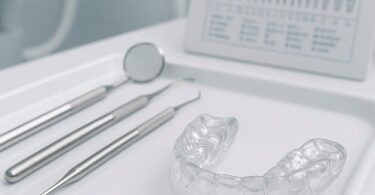
This means it is used when a dentist creates physical or digital models of a patient’s teeth to assess:
-
Malocclusion (misalignment)
-
Treatment planning for orthodontics or prosthodontics
-
Pre-surgical evaluations (e.g., implants, crowns)
Key Features of D0479
-
Not a standalone code – Must be used in addition to an oral evaluation (D0120-D0180).
-
Requires medical necessity – Must document why diagnostic casts were needed.
-
Different from D0470 (occlusal analysis) – D0479 is for physical/digital models, while D0470 analyzes bite function.
4. When Is the D0479 Code Used?
D0479 is applicable in multiple scenarios:
A. Orthodontic Assessments
-
Evaluating jaw alignment before braces or Invisalign.
-
Planning for expanders or retainers.
B. Prosthodontic Cases
-
Designing crowns, bridges, or dentures.
-
Assessing implant placement.
C. TMJ & Occlusal Disorders
-
Diagnosing bite-related issues.
-
Comparing pre- and post-treatment models.
D. Legal & Forensic Dentistry
-
Providing evidence in dental injury cases.
5. Clinical Applications of D0479
Step-by-Step Usage in Practice
-
Patient Consultation – Identify the need for diagnostic casts.
-
Impressions or Digital Scans – Take molds or 3D scans.
-
Model Fabrication – Create plaster or digital models.
-
Analysis & Documentation – Use models for treatment planning.
-
Billing with D0479 – Attach supporting notes to the claim.
Example Case Study
A 35-year-old patient requires full-mouth rehabilitation. The dentist uses D0479 to create diagnostic casts for:
-
Assessing tooth wear.
-
Planning crown lengthening.
-
Designing provisional prosthetics.
Without casts, treatment accuracy would decrease, leading to potential complications.
6. D0479 vs. Other Diagnostic Dental Codes
| Code | Description | Key Difference |
|---|---|---|
| D0479 | Diagnostic casts | Physical/digital models |
| D0470 | Occlusal analysis | Bite function study |
| D0330 | Panoramic X-ray | Imaging, not models |
| D0460 | Pulp vitality test | Nerve response check |
Misusing D0479 for occlusal analysis (D0470) can lead to claim denials.
7. Billing and Reimbursement for D0479
Insurance Coverage
-
Medical necessity must be proven.
-
Some insurers bundle D0479 with other procedures (e.g., D2950 for core buildup).
-
Medicare & Medicaid may have different policies.
Tips for Successful Claims
✔ Attach clinical notes explaining why casts were needed.
✔ Use modifiers (if applicable) – e.g., -22 (unusual procedural services).
✔ Verify payer policies before submission.
8. Common Challenges with D0479 Claims
-
Denial Reason: “Not medically necessary.”
-
Solution: Provide detailed documentation.
-
-
Denial Reason: “Bundled with another procedure.”
-
Solution: Appeal with a letter of medical necessity.
-
9. Best Practices for Dentists Using D0479
-
Train staff on proper documentation.
-
Use digital models for easier storage and sharing.
-
Audit claims regularly to avoid errors.
10. Case Studies: Real-World Applications
Case 1: Orthodontic Treatment Planning
A teen patient needed braces. D0479 casts revealed severe crowding, leading to an extraction-based treatment plan.
Case 2: Full-Arch Implant Planning
A 60-year-old required implants. D0479 models helped simulate bone grafting needs.
11. Future Trends in Dental Diagnostic Coding
-
AI-assisted model analysis may integrate with D0479.
-
More insurers may require pre-authorization.
12. Conclusion
The D0479 dental code is essential for precise diagnostics in orthodontics, prosthodontics, and occlusal analysis. Proper documentation and billing practices ensure claim approvals. By understanding its applications, dentists can improve treatment accuracy and revenue cycle efficiency.
13. FAQs
Q1: Can D0479 be billed with a periodic exam (D0120)?
Yes, but only if diagnostic casts are medically necessary beyond the standard exam.
Q2: Does D0479 cover digital impressions?
Yes, digital scans used for diagnostic models qualify.
Q3: Why was my D0479 claim denied?
Common reasons:
-
Lack of documentation.
-
Payer considers it bundled.