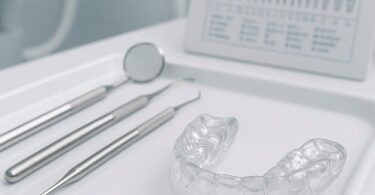
If you have ever woken up with a sore jaw, a dull headache, or the unsettling realization that you have been grinding your teeth all night, you have likely visited your dentist to discuss a night guard. Also known as an occlusal guard or bruxism splint, this custom-made appliance is a lifesaver for protecting your teeth from the damaging effects of clenching and grinding.
But what happens when that guard starts to feel a little off? Perhaps it feels tighter than it used to, or maybe it is starting to irritate a spot on your gum. You call your dentist to get it adjusted, and then you receive a bill. Suddenly, you are staring at a line item that reads “adjustment,” followed by a confusing string of numbers and a charge.
This is where the dental code for night guard adjustment comes into play. Understanding these codes is not just about satisfying curiosity—it is about taking control of your dental healthcare finances. It allows you to verify your insurance claims, understand what you are paying for, and avoid unexpected costs.
In this comprehensive guide, we will strip away the jargon and walk you through everything you need to know about night guard adjustments. We will explore the specific dental procedure codes (CDT codes) used by dentists, explain why adjustments cost what they do, and give you the tools to navigate your insurance coverage like a pro. Whether you are a new night guard user or a long-time grinder looking for clarity, this article is designed to be your go-to resource.

Dental Code for Night Guard Adjustment
Table of Contents
ToggleWhat Exactly Is a Night Guard Adjustment?
Before we dive into the codes, let’s clarify what an adjustment actually entails. A night guard is a precision medical device. It is designed to fit the unique contours of your teeth perfectly. However, your mouth is a dynamic environment. Teeth can shift slightly over time, the guard material can wear down, or your bite pattern can change.
An adjustment is the process of fine-tuning the fit of your night guard to ensure it is comfortable, stable, and effective. This is not a simple “look and see” procedure. It involves clinical skill and specific tools.
When a dentist performs an adjustment, they typically:
-
Evaluate the Fit: They check how the guard seats on your teeth, looking for pressure points or areas where it might be too loose.
-
Mark High Spots: Using special articulating paper (a thin, inked film), the dentist has you bite down to identify areas where the contact is too heavy.
-
Trim and Polish: Using a high-speed handpiece or a bur, the dentist carefully removes microscopic layers of the hard acrylic material. They then polish the area to a smooth finish.
-
Check the Occlusion: They ensure that when you bite down, the force is distributed evenly across all teeth, preventing stress on a single tooth or the temporomandibular joint (TMJ).
It is a process of balance. An improperly adjusted guard can actually make clenching worse or cause jaw pain. Because it requires a trained professional and dedicated chair time, it is a billable service.
The Main Dental Codes for Night Guard Adjustment
In the United States, dentists use the Current Dental Terminology (CDT) code set, maintained by the American Dental Association (ADA). These codes are standardized, meaning a code in New York means the same thing in California. When it comes to adjusting an existing night guard, there is not just one code. Depending on the situation, your dentist might use one of several different codes.
Here are the most common dental codes associated with night guard adjustments and maintenance.
D7899: Occlusal Guard Adjustment
This is the most direct answer to the question, “What is the dental code for night guard adjustment?” D7899 is specifically designated for the adjustment of an occlusal guard.
This code is used when you already have a night guard (whether it was made by that office or elsewhere) and you come in specifically to have it refitted or adjusted. It covers the clinical time, expertise, and materials required to modify the existing appliance.
It is important to note that this code is typically used for minor adjustments. If the guard is severely broken or needs to be completely remade, a different code would apply.
D7880: Occlusal Guard Adjustment (When Included in Initial Fee)
This code often causes confusion. D7880 also refers to occlusal guard adjustment. So, why are there two?
The distinction usually comes down to the timing and the billing context.
-
D7880 is often used when the adjustment is part of a global service period. For example, if you just had a new night guard delivered (using code D7881 for the fabrication), many dentists include a “90-day adjustment period” in the original price. During this period, any adjustments are billed under D7880, sometimes at a lower rate or as a no-charge service included in the original fee.
-
D7899 is typically used for adjustments that occur outside of that initial warranty period, or when the patient is not the original dentist who fabricated the guard.
Think of it this way: D7880 is often the “post-delivery care” code, while D7899 is the “standalone service” code. However, insurance companies sometimes view these codes interchangeably. The key takeaway is that if you see either code, you are likely being billed for an adjustment.
D5999: Unspecified Maxillofacial Prosthesis Procedure
This is the “catch-all” code. D5999 is used for unspecified procedures related to prosthetic devices. While it is less common for a simple adjustment, a dentist might use this code if the service performed does not neatly fit into the other categories.
For example, if the adjustment involves a significant repair, such as adding material to a cracked guard or relining the entire inner surface to improve suction, a dentist might opt for D5999. It is a placeholder code that usually requires a detailed narrative attached to the claim to explain to the insurance company exactly what was done.
If you see this code on your bill, it is a good idea to ask the front desk staff to clarify what specific service was performed, as it is the least specific code on this list.
D9950: Occlusal Guard Adjustment (Occlusal Analysis)
This code is a bit of a hybrid. D9950 is used for occlusal adjustment—specifically, the process of adjusting the biting surfaces of your natural teeth or a restoration (like a crown) to achieve harmony. However, it is sometimes used in conjunction with night guard therapy.
If your dentist performs a full occlusal analysis (using a T-Scan or articulating paper to map your bite) and adjusts your night guard based on that data, they might use D9950. It implies a more comprehensive diagnostic component than a simple “trim and polish.”
Comparing the Codes: A Quick Reference
To help you distinguish between these codes at a glance, here is a comparative table outlining the primary use and typical scenarios for each.
| CDT Code | Description | Typical Scenario | Insurance Coverage |
|---|---|---|---|
| D7899 | Occlusal Guard Adjustment | Returning for a fit issue months or years after the guard was made. A standard “standalone” adjustment. | Often covered at 50-80% if medical necessity is proven. |
| D7880 | Occlusal Guard Adjustment | Adjustment during the initial “warranty” period (e.g., first 90 days) after a new guard is delivered. | May be bundled with the fabrication code; often not separately paid by insurance. |
| D5999 | Unspecified Maxillofacial Prosthesis | Repairing a crack, adding material to a broken edge, or relining the guard. | Variable. May require pre-authorization and a detailed description. |
| D9950 | Occlusal Adjustment | Comprehensive bite analysis with adjustments to the guard and possibly natural teeth to resolve TMJ issues. | Often limited or excluded by basic dental plans; may fall under medical insurance. |
Why Does the Code Matter for Cost and Insurance?
You might be thinking, “I don’t care about the code; I just want to know what I owe.” That is a fair point. But understanding the code is the only way to verify if the cost is fair and if your insurance is processing the claim correctly.
Insurance companies operate on a fee schedule. They have a specific allowable amount for each CDT code. If a dentist uses the wrong code, your claim could be:
-
Denied: Because the code doesn’t match the service description.
-
Underpaid: If the code used has a lower allowable fee than the service performed.
-
Applied to the wrong deductible: Sometimes, adjustments (D7899) fall under basic services, while fabrication (D7881) falls under major services. This changes how much of the cost you pay out of pocket.
A Note on Medical vs. Dental Insurance
This is a critical point that many patients overlook. Bruxism (teeth grinding) and TMJ disorders are medical conditions. While dentists use dental codes (CDT) to bill for the service, these services are often related to a medical diagnosis.
If your night guard adjustment is necessary due to a diagnosed medical condition (like severe sleep bruxism or TMJ disorder), you might be able to submit the claim to your medical insurance rather than your dental insurance. Medical plans often have better coverage for splint therapy than dental plans.
However, this process is tricky. The dentist’s office must use the dental codes (like D7899) but also submit a detailed narrative and a medical diagnosis code (ICD-10) to support the medical necessity. If you are seeing a specialist for TMJ, ask them if they are “out-of-network” for dental but “in-network” for medical billing. This is a growing trend in specialized dental care.
Average Cost of a Night Guard Adjustment
The cost of an adjustment varies widely based on your geographic location, the type of dental practice (general dentist vs. prosthodontist), and whether you are the original patient.
If you are paying out-of-pocket (without insurance), here is a realistic breakdown of what you can expect:
-
Simple Adjustment (D7899/D7880): Typically ranges from $50 to $150.
-
This usually takes 15-20 minutes of chair time.
-
It involves basic trimming and polishing to relieve a pressure point.
-
-
Complex Adjustment/Repair (D5999): Typically ranges from $100 to $300.
-
This requires more than 30 minutes of work.
-
It might involve adding acrylic to build up worn areas, repairing a crack, or relining the guard to improve fit.
-
-
In-Office Warranty: $0.
-
Most reputable dentists will include adjustments for the first 30 to 90 days after delivering a new guard. Always ask about the warranty period when you pay for the initial fabrication.
-
Important Note: If you are going to a dentist who did not make your original guard, expect to pay on the higher end of the scale. The dentist is taking on liability by adjusting another provider’s work, and they will need to spend extra time evaluating the existing appliance to ensure they don’t damage it.
Does Insurance Cover Night Guard Adjustments?
This is the million-dollar question. The short answer is: sometimes, but rarely in full.
Most standard PPO dental insurance plans categorize night guard services in one of two ways:
-
As a “Basic” Service: This is where adjustments (D7899) usually fall. If the fabrication of the guard was covered under “Major” services (often 50% coverage), the adjustment might be covered under “Basic” (often 70-80% coverage) after your deductible is met.
-
As a “Non-Covered” Service: Many insurance plans explicitly exclude “occlusal guards” or “bruxism appliances” from coverage altogether. If the fabrication is excluded, the adjustments are almost always excluded as well, because there is no primary service to attach them to.
Factors That Influence Insurance Coverage
-
Medical Necessity: If you have a documented diagnosis of TMJ disorder or severe bruxism causing tooth damage (wear facets, fractures), the insurance company is more likely to pay. X-rays or intraoral photos showing tooth damage help support this.
-
Frequency Limitations: Even if your plan covers adjustments, there is often a frequency limitation. For example, a plan might cover a night guard fabrication only once every 5 years. Adjustments are usually covered based on “reasonable and customary” frequencies, often limiting adjustments to once or twice per year.
-
In-Network vs. Out-of-Network: If you visit an in-network dentist, they are contractually obligated to charge you only the negotiated rate. If you go out-of-network, you may be balance-billed for the difference between the dentist’s fee and what the insurance pays.
How to Avoid Unexpected Bills for Adjustments
Nobody likes a surprise bill. Here are three proactive steps you can take to ensure you know what you are paying for before the hygienist hands you a receipt.
1. Ask About the Warranty Period
When you are paying for a new night guard, ask the front desk: “How long is the adjustment period included in the fee?”
Most offices offer a 30-day fit guarantee. Some high-end prosthodontic offices offer a 1-year adjustment period. Knowing this upfront can save you $50 to $150 if you need a tweak a few weeks after delivery.
2. Request a Pre-Treatment Estimate
If you are returning for an adjustment on an old guard, ask the office to submit a pre-treatment estimate (predetermination) to your insurance. This is not always mandatory for a small fee, but it gives you a written document from your insurance company stating exactly what they will pay and what you will owe.
3. Verify the Code Before the Appointment
When scheduling, you can ask: “What procedure code will be used for the adjustment?”
If they say D7880, ask if it is still within the warranty period. If they say D7899 or D5999, ask for an estimate of the out-of-pocket cost. A reputable office will be transparent about their fees.
What to Do If Your Night Guard Feels Loose or Tight
Sometimes, you might not need a professional adjustment. However, you should never attempt to adjust a hard acrylic night guard yourself using a nail file or sandpaper. You can easily ruin the precision fit, rendering the guard useless or even harmful to your jaw joint.
Here is a quick guide to common fit issues and when to see the dentist:
| Symptom | Possible Cause | Action |
|---|---|---|
| Too Tight / Hard to Remove | Natural tooth movement; the acrylic is gripping undercuts too tightly. | See a dentist. Attempting to force it off can damage teeth or the guard. A dentist can relieve the undercuts safely. |
| Too Loose / Clacking | The guard has worn down over time; or you have had dental work (crowns, fillings) that changed the shape of your teeth. | See a dentist. If it is minor, they can add material (reline) to tighten it. If it is severe, a new guard may be needed. |
| Sharp Edge Irritating Cheek/Gums | The edge of the guard has chipped or was not polished smoothly. | This can sometimes be fixed at home. A very minor sharp spot can be smoothed with a very fine nail file or emery board, but proceed with extreme caution. If the sharpness returns or is severe, see a dentist. |
| Jaw Pain After Waking | The guard is not properly balanced; it is causing an uneven bite, stressing the TMJ. | See a dentist immediately. Continuing to wear a guard that causes jaw pain can worsen TMJ disorders. |
The Difference Between Adjustment and Replacement
A crucial distinction to make is between an adjustment and a replacement.
An adjustment (D7899) is a repair or modification of the existing appliance.
A replacement (typically D7881) involves fabricating a brand new appliance.
If your guard is old (5+ years), severely cracked in half, or has been worn down so much that it is paper-thin in places, an adjustment is not enough. Trying to adjust a guard that is past its lifespan is like trying to patch a tire that is entirely bald—it is a waste of money.
Signs You Need a Replacement, Not an Adjustment:
-
Visible Cracks: Especially if the crack is through the entire thickness of the acrylic.
-
Perforations: Holes worn through the material from grinding.
-
Foul Odor: Even after cleaning, if the acrylic has become porous and harbors bacteria, it is time for a new one.
-
Loss of Retention: If the guard falls out while you sleep, no amount of adjustment will fix that; the structure is compromised.
-
Dental Changes: If you have had multiple new crowns, bridges, or orthodontic treatment, your bite has changed so significantly that the old guard no longer relates to your teeth.
Questions to Ask Your Dentist About Your Night Guard Bill
To ensure you are making an informed decision, consider asking these questions during your next visit.
-
“Is this adjustment covered under the initial warranty from when I got the guard?”
-
Why: This establishes whether the service is free or billable.
-
-
“Is the adjustment code (D7899) a covered benefit under my specific dental plan?”
-
Why: Some plans cover the guard but not the maintenance.
-
-
“If I pay out-of-pocket today, can you give me a courtesy receipt to submit to my medical insurance for TMJ therapy?”
-
Why: If your dental insurance denies it, you may have recourse with medical insurance.
-
-
“Is this a minor adjustment, or does it require a repair (D5999)?”
-
Why: This clarifies if the service is simple trimming or a complex fix, justifying the cost.
-
Additional Resources for Night Guard Care
To extend the life of your night guard and reduce the frequency of adjustments, proper care is essential.
-
Cleaning: Rinse immediately after removing. Brush gently with a soft toothbrush and non-abrasive toothpaste (or mild dish soap). Avoid hot water, which can warp the acrylic.
-
Storage: Keep it in a dry, vented case. Moist environments promote bacterial growth.
-
Travel: Never pack your night guard in a checked bag. It should always be in your carry-on. If your luggage is lost, your guard is lost.
“Patients often underestimate the importance of the adjustment phase. A night guard is not a ‘set it and forget it’ device. The initial adjustment period is crucial for balancing the bite. If a patient leaves the office with a guard that is even 0.5 millimeters off in one spot, it can lead to significant muscle soreness over time. Adjustments are the final step in the therapeutic process, not an afterthought.”
— Dr. Elena Vance, DDS, Prosthodontist
Conclusion: Demystifying the Dental Code
Navigating the world of dental billing can feel overwhelming, but understanding the dental code for night guard adjustment puts you back in the driver’s seat. To summarize:
First, remember that D7899 is the primary code for a standard adjustment, while D7880 often applies to adjustments within the initial warranty period. Second, costs typically range from $50 to $150 for a simple adjustment, but complex repairs using D5999 can cost more. Third, insurance coverage is inconsistent—always verify your benefits beforehand and consider the potential for medical insurance coverage if your condition is linked to TMJ or bruxism.
By asking the right questions and understanding the codes on your statement, you can ensure that your night guard remains a source of relief, not a source of financial frustration.
Frequently Asked Questions (FAQ)
Q: Can I use a dental code for night guard adjustment to bill my FSA or HSA?
A: Yes. Flexible Spending Accounts (FSA) and Health Savings Accounts (HSA) typically cover dental treatments, including adjustments (D7899), as long as they are for medical/dental necessity. You do not need a special code for the FSA; the itemized receipt from your dentist is sufficient.
Q: Why did my dentist charge me for an adjustment when I just got the guard last month?
A: If you were charged, it likely means the initial warranty period had expired, or the adjustment was for a complex issue outside the scope of the standard “fit guarantee.” Some offices include adjustments for 30 days; others for 90 days. It is best to confirm the policy at the time of delivery.
Q: Is there a difference between an “adjustment” and a “reline”?
A: Yes. An adjustment (D7899) usually involves trimming or polishing the existing material. A “reline” involves adding a new layer of acrylic to the inside of the guard to improve the fit. A reline is more complex and is often billed under D5999 (unspecified prosthesis procedure) because it is a significant modification.
Q: What if my dog chewed my night guard? Is that an adjustment?
A: No. If the guard is chewed, broken, or severely damaged, it will need a repair (D5999) or a complete replacement (D7881). An adjustment is for minor fit issues, not structural repair. Unfortunately, pet damage is rarely covered by insurance or warranties.
Q: My dental insurance denied the claim for the adjustment. What are my options?
A: First, review the Explanation of Benefits (EOB). If the denial reason is “not a covered benefit,” you are responsible for the fee. However, if the denial reason is “lack of medical necessity,” you can ask your dentist to submit a narrative (a letter explaining why the adjustment was needed) along with X-rays or photos to appeal the decision.
Disclaimer: This article is for informational purposes only and does not constitute medical, dental, or financial advice. Dental codes and insurance policies vary by provider and location. Always consult with your dental professional and insurance carrier regarding specific treatment and billing inquiries.
Author: The Technical Writing Team
Date: March 23, 2026