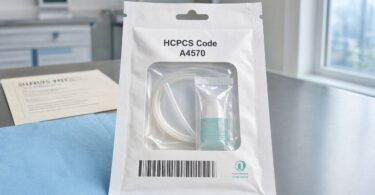
Healthcare billing and coding are critical components of medical practice management, ensuring accurate reimbursement for services rendered. Among the myriad of codes, HCPCS Code G0296 stands out as a specialized identifier used in specific clinical scenarios.
This article provides an in-depth exploration of HCPCS Code G0296, including its definition, appropriate use cases, documentation requirements, and reimbursement policies. Whether you’re a healthcare provider, medical coder, or billing specialist, understanding this code is essential for compliance and maximizing revenue.
By the end of this guide, you’ll have a thorough grasp of:
-
When and how to use G0296
-
Key differences between G0296 and related codes
-
Best practices for documentation and claims submission
-
Common pitfalls and how to avoid them
Let’s dive in!

HCPCS Code G0296
2. What Is HCPCS Code G0296?
HCPCS Code G0296 is a temporary Healthcare Common Procedure Coding System (HCPCS) Level II code used primarily in Medicare billing. It falls under the category of “Miscellaneous Diagnostic and Therapeutic Services” and is specifically designated for:
“Low-dose computed tomography (LDCT) for lung cancer screening in high-risk patients.”
Key Features of G0296
-
Temporary Status: Unlike permanent CPT codes, G0296 is a temporary code that may be updated or replaced.
-
Specific Use Case: It applies only to lung cancer screening via low-dose CT scans.
-
High-Risk Patients: Eligible patients must meet Medicare’s criteria for high-risk individuals (e.g., long-term smokers).
3. Purpose and Clinical Applications of G0296
Why Was G0296 Created?
Lung cancer is the leading cause of cancer-related deaths in the U.S., with early detection significantly improving survival rates. Low-dose CT (LDCT) scans have proven highly effective in detecting lung cancer at earlier, more treatable stages.
To encourage screening among high-risk populations, Medicare introduced G0296 to standardize billing for these services.
Who Qualifies for G0296?
Medicare covers LDCT lung cancer screening only if the patient meets all of the following criteria:
| Criteria | Details |
|---|---|
| Age | 55-77 years |
| Smoking History | ≥30 pack-years (e.g., 1 pack/day for 30 years or 2 packs/day for 15 years) |
| Current Smoker or Quit Within Last 15 Years | Must have no signs/symptoms of lung cancer |
| Physician’s Order Required | Must include a counseling session on risks/benefits |
4. Coverage and Reimbursement Guidelines
Medicare Coverage for G0296
Medicare Part B covers one LDCT scan per year for eligible beneficiaries. The reimbursement rate varies but typically ranges between $100-$300 per scan, depending on the provider’s contract.
Private Insurance Coverage
While Medicare mandates coverage, private insurers may have different policies. Some follow Medicare guidelines, while others impose additional restrictions.
Table: Reimbursement Comparison (2025 Estimates)
| Insurance Type | Coverage Status | Frequency Allowed | Estimated Reimbursement |
|---|---|---|---|
| Medicare | Covered | Once every 12 months | $100-$300 |
| Medicaid (Varies by State) | Partial | Case-by-case basis | $80-$250 |
| Private Insurance (e.g., Aetna, Blue Cross) | Varies | Often follows Medicare | $150-$400 |
5. Documentation Requirements for G0296
To prevent claim denials, providers must ensure proper documentation, including:
✅ Patient eligibility verification (age, smoking history)
✅ Physician’s order with shared decision-making notes
✅ LDCT scan results and interpretation report
✅ Counseling session documentation
Failure to include these elements may result in rejected claims.
6. Common Mistakes and How to Avoid Them
Top Errors When Using G0296
-
Incorrect Patient Eligibility: Billing for non-qualifying patients.
-
Missing Documentation: Forgetting to include the counseling session notes.
-
Incorrect Frequency: Billing more than once per year.
Solution: Implement a pre-billing checklist to verify all requirements before submission.
7. G0296 vs. Similar Codes: Key Differences
| Code | Description | Key Difference |
|---|---|---|
| G0296 | LDCT for lung cancer screening | Only for asymptomatic high-risk patients |
| 71250 | CT thorax (diagnostic) | Used for symptomatic patients or non-screening purposes |
| G0297 | Counseling visit for LDCT | Separate code for the counseling session |
8. Case Studies and Real-World Examples
Case Study 1: Successful Claim Submission
A 65-year-old male with a 35-pack-year smoking history underwent an LDCT scan. His provider:
✔ Verified eligibility
✔ Documented counseling
✔ Submitted G0296 with supporting notes
Result: Full reimbursement ($275) with no denials.
Case Study 2: Denied Claim Due to Missing Documentation
A 58-year-old female had an LDCT scan, but the provider forgot to include counseling notes.
Result: Claim denied for insufficient documentation.
9. Frequently Asked Questions (FAQs)
Q1: Can G0296 be used for non-Medicare patients?
Yes, but private insurers may have different policies. Always verify coverage beforehand.
Q2: How often can G0296 be billed?
Medicare allows once per year for eligible patients.
Q3: What happens if a patient doesn’t meet the smoking history requirement?
The claim will likely be denied unless there’s an alternative justification.
10. Conclusion
HCPCS Code G0296 is essential for lung cancer screening reimbursement in high-risk patients. Proper documentation, adherence to Medicare guidelines, and awareness of common pitfalls ensure smooth claims processing. By following best practices, providers can maximize accuracy and revenue while promoting early cancer detection.