In the intricate world of orthopedic surgery and medical coding, few procedures encapsulate the confluence of clinical complexity and administrative precision quite like the repair of a ruptured quadriceps tendon. For the surgeon, it is a race against time to restore the extensor mechanism of the knee, a critical function for walking, climbing, and basic mobility. For the medical coder, biller, and healthcare administrator, it is a meticulous exercise in translating that surgical artistry into a language of numbers and modifiers that accurately reflects the work performed, justifies medical necessity, and ensures appropriate reimbursement.
The Current Procedural Terminology (CPT) code 27385 is the central pillar of this process. At first glance, it appears deceptively simple: “Suture of quadriceps or hamstring muscle rupture; primary.” However, beneath this succinct description lies a labyrinth of clinical considerations, coding rules, and payer policies. A deep understanding of the anatomy, the surgical techniques, the nuances of the CPT code set, and the supporting ecosystem of ICD-10-CM diagnoses is not merely beneficial—it is imperative.
This exhaustive guide is designed to be the definitive resource for surgeons, physician assistants, nurse practitioners, medical coders, billers, and practice managers. We will embark on a detailed journey from the cellular makeup of the tendon to the final adjudication of a claim. We will dissect the CPT code 27385, explore its associated codes, demystify modifiers, and build a robust framework for ICD-10-CM coding. Furthermore, we will delve into the critical topics of documentation, compliance, and the financial mechanics of reimbursement. By the end of this exploration, you will view CPT 27385 not as a mere five-digit number, but as a comprehensive narrative of patient care, clinical skill, and administrative excellence.
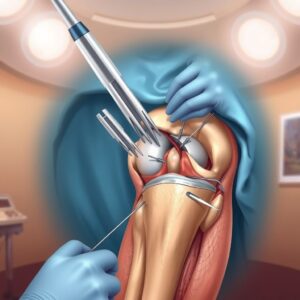
CPT Codes for Quadriceps Tendon Repair
2. Anatomy of a Catastrophe: Understanding the Quadriceps Tendon
To accurately code a repair, one must first understand what is being repaired. The quadriceps tendon is a formidable, multilayered structure that is the linchpin of knee extension.
-
The Muscles: The quadriceps femoris muscle group consists of four heads: the rectus femoris, vastus lateralis, vastus intermedius, and vastus medialis. These muscles reside on the anterior (front) of the femur (thigh bone).
-
The Tendon Formation: As these four muscle heads descend toward the knee, their individual tendons converge and fuse into a single, robust tendon—the quadriceps tendon.
-
The Insertion: The quadriceps tendon inserts directly onto the superior pole (top) of the patella (kneecap). Some fibers continue over the front of the patella, blending with the patellar tendon (or ligament), which in turn attaches to the tibial tuberosity on the shin bone.
-
The Extensor Mechanism: This entire chain—quadriceps muscles, quadriceps tendon, patella, and patellar tendon—functions as a unified “extensor mechanism.” When the quadriceps contract, they pull on the quadriceps tendon, which moves the patella and extends the knee joint. This action is fundamental to standing up from a seated position, walking, kicking, and stabilizing the knee during weight-bearing.
Anatomically, the quadriceps tendon is a dense, fibrous connective tissue composed primarily of Type I collagen. Its blood supply is relatively hypovascular in a specific area just proximal to the patellar insertion, known as the “watershed zone.” This area is particularly vulnerable to degeneration and subsequent rupture. Understanding this anatomical vulnerability is key to understanding the pathology and, by extension, the medical necessity of the repair procedure.
3. The Mechanism of Injury: How Quadriceps Tendons Fail
Quadriceps tendon ruptures are not random events; they typically occur through specific mechanisms, which are crucial to document for both clinical and coding purposes.
-
Traumatic Rupture: This is the most common scenario. It often involves a sudden, forceful contraction of the quadriceps muscle against a fixed load or a flexed knee. Classic examples include:
-
A Misstep: Tripping or stumbling where the patient attempts to violently regain balance, causing an eccentric load on the tendon.
-
A Fall: Landing directly on the flexed knee.
-
Sports Injuries: A sudden jump or cut in sports like basketball, volleyball, or tennis.
-
-
Degenerative (Spontaneous) Rupture: This occurs in the absence of significant trauma. The tendon has been weakened over time by underlying conditions, making it susceptible to rupture during mundane activities like walking up a stair or stepping off a curb. Key predisposing factors include:
-
Chronic Systemic Diseases: Diabetes mellitus, renal failure, hyperparathyroidism, rheumatoid arthritis, systemic lupus erythematosus (SLE), and gout can all lead to tendon weakening.
-
Medications: Long-term use of corticosteroids (oral or injectable) and fluoroquinolone antibiotics are well-known to compromise tendon integrity.
-
Previous Surgery: Prior knee surgery or repeated corticosteroid injections into the knee can inadvertently weaken the quadriceps tendon.
-
Age and Deconditioning: The natural aging process leads to decreased collagen elasticity and vascularity.
-
From a coding perspective, the mechanism of injury directly informs the ICD-10-CM diagnosis code selection. A traumatic rupture will have an external cause code from Chapter 20, while a degenerative rupture will be linked to the underlying systemic condition.
4. Clinical Presentation and Diagnosis: Connecting Symptoms to Codes
A patient with a complete quadriceps tendon rupture will present with a classic clinical picture:
-
History: A report of a “pop” or tearing sensation in the knee, followed immediately by intense pain and an inability to bear weight.
-
Pain and Swelling: Significant acute pain and rapid swelling over the anterior knee.
-
Palpable Defect: A noticeable gap or defect can often be felt in the suprapatellar region (above the kneecap) where the tendon has retracted.
-
Loss of Function: The most telling sign is the complete inability to actively extend the knee or perform a straight leg raise. The knee may buckle or give way.
-
Hemarthrosis: Blood within the joint cavity.
Diagnostic Confirmation: While the clinical exam is highly suggestive, imaging is essential for definitive diagnosis and surgical planning.
-
X-Ray (Radiography): While the tendon itself is not visible on X-ray, it can show patellar baja (an abnormally low-lying kneecap) due to the unopposed pull of the hamstrings, and sometimes avulsion fractures.
-
Ultrasound (Sonography): An excellent, dynamic, and cost-effective tool for visualizing tendon rupture, retraction, and the presence of a hematoma.
-
Magnetic Resonance Imaging (MRI): The gold standard. MRI provides exquisite detail of the soft tissues, confirming the diagnosis, defining the exact location and extent of the rupture (complete vs. partial), measuring the degree of retraction, and evaluating for other associated injuries (e.g., meniscal tears).
The choice of diagnostic tool will be reflected in the claim through respective CPT codes (e.g., 73560 for knee X-ray, 76881 for musculoskeletal ultrasound, 73721 for knee MRI). The radiologist’s report provides the definitive diagnosis that the surgeon uses to plan the repair and that the coder uses to justify the procedure.
5. The Surgical Spectrum: Techniques for Quadriceps Tendon Repair
The surgical approach to quadriceps tendon repair is not monolithic. The technique chosen depends on the acuity of the injury, the quality of the tissue, and the surgeon’s preference. Understanding these techniques is vital for coding, as they are all captured under the umbrella of CPT 27385.
Standard Primary Repair:
-
Incision: A longitudinal midline incision is made over the anterior knee.
-
Exposure: The torn ends of the tendon are identified. The hematoma is evacuated.
-
Debridement: The ragged ends of the tendon are trimmed back to healthy, viable tissue.
-
Mobilization: The proximal tendon stump, which has retracted up the thigh, is carefully mobilized to allow it to be brought down to its anatomical position without undue tension.
-
Suture Preparation: Heavy, non-absorbable sutures (e.g., #5 Ethibond or FiberWire) are placed in the proximal tendon stump using a locking, non-slipping suture technique (e.g., Krackow whipstitch, Mason-Allen).
-
Bone Preparation: The superior pole of the patella is debrided and freshened to create a bleeding bone surface to promote tendon-to-bone healing.
-
Fixation:
-
Transosseous Tunnels: Holes are drilled vertically through the patella. The sutures from the tendon are then passed through these tunnels and tied down over the inferior pole of the patella, securing the tendon to bone.
-
Suture Anchors: As an alternative to tunnels, suture anchors (metal or bioabsorbable implants pre-loaded with strong sutures) can be embedded into the patella. The sutures from the anchors are then used to secure the tendon down.
-
Augmented and Chronic Repairs:
For chronic tears with significant retraction or poor tissue quality, the simple primary repair may be insufficient. These cases often require augmentation techniques, which are still reported with 27385, as the primary procedure remains the suture of the rupture.
-
V-Y Plasty (Codivilla Technique): A V-shaped incision is made in the quadriceps tendon and muscle fascia proximal to the rupture. As the tendon is pulled distally for repair, the V is closed into a Y, effectively lengthening the tendon complex.
-
Achilles Tendon Allograft: In cases of massive tissue loss or poor quality, a cadaveric Achilles tendon bone-block allograft can be used to reconstruct the extensor mechanism. The bone block is fixed to the patella, and the tendon portion is woven into the native quadriceps tissue.
It is critical to note that while these techniques vary in complexity, CPT code 27385 is inclusive. There is not a separate CPT code for a “complex” quadriceps repair. The work is accounted for by the code’s assigned Relative Value Units (RVUs), which we will discuss later.
6. The CPT Code Lexicon: 27385 and Its Essential Modifiers
CPT Code 27385: Suture of quadriceps or hamstring muscle rupture; primary.
This is the workhorse code for the procedure. Let’s break down its components:
-
“Suture”: Encompasses the entire repair process, including suturing, drilling bone tunnels, and placing suture anchors.
-
“Quadriceps or hamstring”: This code is used for either tendon group. A hamstring rupture repair is far less common.
-
“Rupture”: Implies a complete tear. For a partial tear that is debrided but not sutured, a different code (e.g., 27310) might be more appropriate, though this is a nuanced distinction.
-
“Primary”: This indicates the repair is being performed acutely, typically within weeks of the injury, and is not a revision of a previous failed repair.
The Critical Modifiers:
Modifiers are two-digit codes that provide additional information about the service performed. Their correct use is non-negotiable for compliant billing.
-
Modifier -50 (Bilateral Procedure): If a patient, though rare, sustains bilateral quadriceps tendon ruptures and both are repaired during the same operative session, append modifier -50 to 27385. Do not report the code twice. Payer:
27385-50. Reimbursement is typically 150% of the allowable for a single procedure. -
Modifier -51 (Multiple Procedures): This modifier is used when multiple distinct procedures are performed during the same surgical session. The primary procedure (usually the one with the highest RVU) is listed first without a modifier. All subsequent procedures are appended with -51. For example, if a meniscectomy (CPT 29881) is performed along with the quadriceps repair, 27385 would be listed first (no modifier), and 29881-51 would be listed second. Note: Many payers have automated systems that apply -51 logic, and its requirement is diminishing. Always check payer-specific guidelines.
-
Modifier -59 (Distinct Procedural Service): This is a powerful and often misused modifier. It indicates that a procedure was distinct and independent from other services performed on the same day. It is used to bypass National Correct Coding Initiative (NCCI) edits that would otherwise bundle two codes together. For instance, if an arthroscopic procedure (e.g., 29877) is performed in a different compartment of the knee and is truly separate from the open quadriceps repair, modifier -59 might be necessary on the arthroscopic code. However, its use requires meticulous documentation justifying the separateness. More specific modifiers (like -XE, -XS, -XP, -XU) are now encouraged to replace -59 in many circumstances.
-
Modifier -47 (Anesthesia by Surgeon): If the surgeon also administers the regional block (e.g., a femoral nerve block) for postoperative pain, this modifier can be appended to the surgical code. The anesthesia service itself is also reported separately (e.g., 64447 for femoral nerve block). This is uncommon, as anesthesiologists typically handle this.
-
LT/RT (Left/Right): While not numeric modifiers, always indicate the laterality. Payer:
27385-LTor27385-RT.
7. Beyond the Repair: Ancillary and Associated CPT Codes
A surgical case is rarely just one code. Several other services are integral to the patient’s surgical episode.
Anesthesia: The anesthesia service is billed separately by the anesthesia provider using codes from the CPT anesthesia section (e.g., 01402 for Anesthesia for open procedures on patella).
Diagnostic Imaging: As mentioned, the pre-operative MRI, X-rays, or ultrasound are billed separately on the date they were performed.
Surgical Supplies: Implants and materials are often billed separately.
-
Suture Anchors: These are typically billed using HCPCS Level II codes (e.g., C1721 for suture anchor, C1722 for absorbable suture anchor) or sometimes specific CPT codes (e.g., 110+ codes for grafts). Their billing is highly payer-specific. Medicare often bundles implant costs into the APC payment for hospital outpatient procedures.
-
Allograft: If a cadaveric Achilles tendon allograft is used, it is billed with a HCPCS code like Q4081 (Cadaveric tendon).
Other Surgical Procedures:
If other procedures are performed in the same setting, they must be considered. Common examples include:
-
Arthroscopy (e.g., 29870, 29874, 29877): If diagnostic or therapeutic arthroscopy is performed to address intra-articular pathology before proceeding with the open repair, it may be separately reportable with modifier -59 or a X-modifier if it meets the criteria for a distinct service.
-
Chondroplasty (29877): Shaving of damaged cartilage.
-
Meniscectomy (29881): Removal of a torn meniscus.
-
Debridement (e.g., 110+): Extensive debridement of non-viable tissue around the rupture site.
NCCI Edits: The National Correct Coding Initiative edits are rules that prevent improper payment when certain services are reported together. There are NCCI edits that bundle many arthroscopic codes into 27385 because the arthroscopy is considered a necessary antecedent to the open repair. To unbundle them, specific documentation must show the arthroscopic procedure was separately identifiable and medically necessary for a different reason.
8. The Foundation of Medical Necessity: ICD-10-CM Coding
The CPT code describes what was done; the ICD-10-CM code explains why it was done. Without accurate diagnosis codes that demonstrate medical necessity, a claim for 27385 will be denied.
Primary Diagnosis Codes:
-
S76.111-: Strain of right quadriceps muscle, fascia and tendon. (This is for a partial tear).
-
S76.112-: Strain of left quadriceps muscle, fascia and tendon. (Partial tear).
-
S76.211-: Laceration of right quadriceps muscle, fascia and tendon.
-
S76.212-: Laceration of left quadriceps muscle, fascia and tendon.
-
M66.371: Spontaneous rupture of right quadriceps tendon. (For degenerative tears).
-
M66.372: Spontaneous rupture of left quadriceps tendon.
-
S76.311-: Complete rupture of right quadriceps muscle, fascia and tendon. (This is the most common code for a traumatic, complete rupture).
-
S76.312-: Complete rupture of left quadriceps muscle, fascia and tendon.
The 7th Character:
The S76.- codes require a 7th character to indicate the encounter:
-
A: Initial encounter
-
D: Subsequent encounter
-
S: Sequela
For the surgical repair, you would use the “A” for initial encounter.
External Cause Codes (Chapter 20):
For traumatic injuries, you must add external cause codes to describe how, where, and when the injury occurred. These are crucial for data tracking and public health.
-
W01.0-: Fall on same level from slipping, tripping, and stumbling.
-
W03.-: Fall due to collision with another person.
-
W04.-: Fall from being carried or supported by other persons.
-
W17.81: Fall into well.
-
W18.09: Other fall on same level.
-
Y93.6-: Activity, basketball (and other sports codes).
-
Y92.-: Place of occurrence (e.g., home, gym, street).
Contributing Factor Codes:
For spontaneous ruptures (M66.37-), you must code first the underlying condition, if known.
-
E10.- / E11.-: Diabetes mellitus
-
M10.-: Gout
-
M1A.-: Chronic gout
-
M05.- / M06.-: Rheumatoid arthritis
-
M32.-: Systemic lupus erythematosus
-
N18.-: Chronic kidney disease
-
E21.-: Hyperparathyroidism
-
T38.0X5- / T38.1X5-: Adverse effect of glucocorticoids and steroids
Example of a complete ICD-10-CM code set for a traumatic rupture:
-
S76.312A: Complete rupture of left quadriceps tendon, initial encounter.
-
W01.0XXA: Fall on same level from slipping, tripping, and stumbling, initial encounter.
-
Y93.66: Activity, volleyball.
-
Y92.029: Garden or yard as the place of occurrence.
9. The Operating Room Fee: Understanding RVUs and Reimbursement
The value of a CPT code is quantified by its Relative Value Units (RVUs). The Centers for Medicare & Medicaid Services (CMS) establishes these values annually. The total RVU has three components:
-
Work RVU (wRVU): Measures the physician’s time, skill, effort, and stress.
-
Practice Expense RVU (peRVU): Covers overhead (staff, equipment, office space).
-
Malpractice RVU (mRVU): Covers the cost of professional liability insurance.
The total RVU is multiplied by a conversion factor (CF) (a dollar amount set by CMS) to determine the reimbursement.
2025 RVUs for CPT 27385 (Facility Setting – Hospital) (Note: These are hypothetical for 2025 based on historical trends. Always check the current year’s Final Rule.)
| RVU Component | Value |
|---|---|
| Work RVU | 18.50 |
| Practice Expense RVU | 9.25 |
| Malpractice RVU | 2.10 |
| Total RVU | 29.85 |
Calculation Example: If the 2025 CF is $34.00, the Medicare allowable fee would be: 29.85 Total RVUs * $34.00 = $1,014.90.
This reimbursement is for the surgeon’s fee only. The facility (hospital or Ambulatory Surgery Center) bills separately for its services (use of the OR, nursing staff, supplies, etc.) using an Ambulatory Payment Classification (APC) code.
10. Navigating Payer Policies: A Roadmap to Clean Claims
Medicare rules are just the beginning. Private payers (Blue Cross, Aetna, UnitedHealthcare, etc.) often have their own policies, known as Local Coverage Determinations (LCDs) or Commercial Coverage Policies.
-
Medical Necessity: Payers will have specific criteria for when they deem 27385 medically necessary. This often includes documentation of a complete rupture, failed non-operative management (for some cases), and significant functional impairment.
-
Pre-authorization: Most payers require prior authorization for a procedure like 27385. The request must include the clinical notes, imaging reports, and a letter of medical necessity from the surgeon.
-
Bundling Rules: Payers may have their own bundling rules that are even more restrictive than NCCI. It is essential to check each payer’s policy manual.
-
In-Network vs. Out-of-Network: Reimbursement rates and rules vary drastically.
11. The Global Surgical Package: What’s Included and What’s Not
CPT 27385 has a 90-day global period. This means the surgeon’s fee for the procedure includes all related preoperative, intraoperative, and postoperative services for 90 days following the surgery.
Included in the Global Fee:
-
Preoperative visits the day of or day before surgery.
-
The operation itself.
-
Local infiltration of anesthesia by the surgeon.
-
Immediate postoperative care.
-
Writing orders.
-
Evaluating the patient in the Post-Anesthesia Care Unit (PACU).
-
Typical postoperative follow-up visits (e.g., stitch removal, wound checks, routine progress visits).
-
Management of uncomplicated postoperative care.
Not Included (Separately Billable):
-
The initial evaluation and management (E/M) visit where the decision for surgery was made. Append modifier -57 (Decision for Surgery) to the E/M code.
-
Treatment for unrelated conditions or complications that require additional trips to the operating room (e.g., a return to OR for irrigation and debridement of an infection).
-
Postoperative physical therapy services (billed by the PT provider).
-
Durable Medical Equipment (DME) like knee immobilizers or braces.
12. Documentation: The Blueprint for Accurate Coding
The operative note is the source of all truth for coding. A well-documented note for 27385 should include:
-
Indication for Surgery: A clear statement of the diagnosis and medical necessity.
-
Procedure in Title: “Open Primary Repair of Left Quadriceps Tendon Rupture.”
-
Findings: Description of the complete rupture, retraction distance, quality of tissue, condition of the patella, and any other intra-articular findings.
-
Technique Description:
-
Incision details.
-
Description of debridement and mobilization.
-
Suture technique used (e.g., “A #5 FiberWire suture was placed in the proximal tendon stump using a locking Krackow technique.”).
-
Method of fixation: “Three transosseous tunnels were drilled…” or “Two 5.0mm suture anchors were placed in the superior pole of the patella…”
-
Type and number of implants used (specify manufacturer and size if possible).
-
-
Closure: How the wound was closed.
-
Dressings and Immobilization: Type of dressing applied and the postoperative brace or cast.
Without this detail, the coder cannot be certain that 27385 is the correct code and cannot defend the claim in an audit.
13. Auditing and Compliance: Mitigating Risk in Orthopedic Coding
Given the high RVU value of 27385, it is a target for audits by both government (OIG, RAC) and private payers.
-
Common Audit Risks:
-
Lack of Medical Necessity: Inadequate documentation of a complete rupture or functional deficit.
-
Unbundling: Improperly reporting separately bundled services (like a minor debridement code) without meeting modifier criteria.
-
Incorrect Global Period Billing: Billing for E/M visits within the 90-day global period that are not for unrelated problems.
-
Upcoding: Using 27385 for a partial tear that was only debrided.
-
-
Compliance Plan: Practices should conduct periodic internal audits of their orthopedic coding, especially for high-value procedures like this one, to ensure accuracy and proactively identify any areas of risk.
14. The Patient Journey: Postoperative Care and Physical Therapy Coding
The surgeon’s job isn’t over when the suture is tied. Postoperative management is critical for a successful outcome.
-
Immobilization: The knee is immobilized in full extension for 4-6 weeks to protect the repair.
-
Physical Therapy (PT): A gradual, phased PT protocol is initiated. This starts with passive range of motion and progresses to active motion, strengthening, and finally, return to sport/activity. PT is billed by the physical therapist using codes like 97110 (therapeutic exercises), 97112 (neuromuscular reeducation), and 97530 (therapeutic activities). These are separate from the surgeon’s global fee.
-
Follow-up: The surgeon monitors healing and progress through the 90-day global period and beyond.
15. Conclusion: Synthesizing Art and Science
CPT code 27385 represents far more than a simple suture; it is the culmination of precise surgical skill applied to a devastating injury. Accurate coding for this procedure demands a synergistic understanding of complex anatomy, diverse surgical techniques, a intricate coding lexicon, and rigorous documentation standards. By mastering the interplay between the clinical narrative of the operative report and the administrative language of CPT, ICD-10, and modifiers, healthcare professionals ensure that this vital restorative work is justly recognized and compensated, ultimately sustaining the ecosystem of quality patient care.
16. Frequently Asked Questions (FAQs)
Q1: Is there a different CPT code for a revision quadriceps tendon repair?
A: Yes. CPT code 27386 (Suture of quadriceps or hamstring muscle rupture; secondary reconstruction, including graft procurement) is used for revision surgeries or cases requiring significant reconstruction with a graft (like an Achilles tendon allograft) that was not part of the primary repair. Using 27385 for a true revision is incorrect.
Q2: How do I code a partial quadriceps tendon tear that is surgically addressed?
A: This is a nuanced area. If the partial tear is simply debrided (shaved down to stable tissue), you would likely use CPT 27310 (Arthrotomy, knee, with excision of semilunar cartilage [meniscectomy]). If the partial tear is so significant that it requires suturing to prevent complete rupture, some surgeons may argue 27385 is still appropriate. The documentation must strongly justify the medical necessity for a suture repair on a partial tear. The diagnosis code would be S76.111- or S76.112- (strain).
Q3: Can I bill for the suture anchors used in the repair?
A: It depends on the place of service and the payer.
-
Hospital Outpatient Setting: For Medicare, the cost of implants is generally bundled into the facility’s APC payment. The hospital cannot separately bill for them.
-
Ambulatory Surgery Center (ASC): Similarly, implants are often bundled.
-
Private Payers: Some commercial insurers allow separate billing for implants using HCPCS codes (e.g., C1721). You must check the individual payer’s policy. The surgeon’s fee for the repair (27385) includes the work of placing the anchor, but not necessarily the cost of the device itself.
Q4: What is the typical recovery time after a quadriceps tendon repair?
A: Recovery is prolonged. It involves 4-6 weeks of strict immobilization in extension, followed by months of physical therapy. Return to light activities may take 4-6 months, and return to sports or heavy labor can take 6-12 months, depending on the individual’s progress and the surgeon’s protocol.
17. Additional Resources
-
American Medical Association (AMA): For the official CPT® code set and guidelines. https://www.ama-assn.org
-
Centers for Medicare & Medicaid Services (CMS): For ICD-10-CM guidelines, NCCI edits, and Medicare coverage policies. https://www.cms.gov
-
American Academy of Orthopaedic Surgeons (AAOS): For clinical guidelines and educational materials on quadriceps tendon injuries. https://www.aaos.org
-
American Health Information Management Association (AHIMA): For resources on coding compliance and best practices. https://www.ahima.org
-
American Academy of Professional Coders (AAPC): For coding certification, training, and industry updates. https://www.aapc.com
Date: August 28, 2025
Author: Orthopedic Coding Specialist
Disclaimer: This article is for informational and educational purposes only. It is not intended as medical, legal, or coding advice. Medical coding is complex and constantly evolving. Always consult the latest official CPT®, ICD-10-CM, and HCPCS Level II code sets from the American Medical Association (AMA) and the Centers for Medicare & Medicaid Services (CMS), along with payer-specific policies, for accurate coding and billing. The author and publisher assume no liability for errors or omissions or for any damages resulting from the use of the information contained herein.