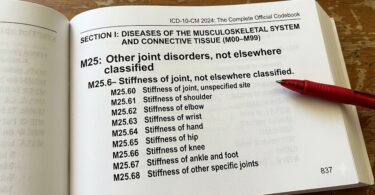
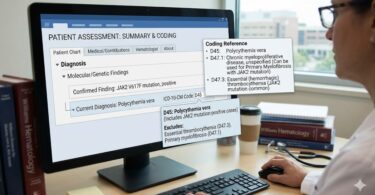
In the silent, solitary confines of a depressive episode, the world can shrink to the size of a single, painful thought. For the millions of individuals living with Major Depressive Disorder (MDD), their experience is one of profound emotional pain, cognitive fog, and physical lethargy. It is a deeply human, deeply personal struggle. Yet, in the cold, logical world of healthcare administration and data, this complex human experience is distilled into a single, alphanumeric code: an ICD-10 designation beginning with F32 or F33.
To the uninitiated, this might seem like a reductionist, even callous, practice. How can a few characters possibly capture the weight of despair? However, this perspective misses the profound utility and, ironically, the compassion embedded within a well-structured diagnostic coding system. Accurate ICD-10 coding for MDD is not about erasing the patient’s narrative; it is about creating a universal language that ensures their story is understood, their condition is validated, and their path to treatment is cleared.
This article delves deep into the world of ICD-10 codes for Major Depressive Disorder. We will move beyond simple code lookup and explore the intricate relationship between clinical reality, diagnostic criteria, and administrative necessity. For clinicians, medical coders, healthcare administrators, and informed patients, understanding this system is paramount. It is the linchpin that connects patient care with the resources needed to sustain it, and the data that fuels the research to improve it. This is more than a guide to codes; it is a map to navigating one of the most critical interfaces between clinical medicine and the systems that support it.
ICD-10 Codes for Major Depressive Disorder
2. Understanding the Foundations: What is the ICD-10?
Before we can understand the specific codes for MDD, we must first grasp the system that houses them. The International Classification of Diseases, Tenth Revision (ICD-10), is the global standard for diagnostic health information. Maintained by the World Health Organization (WHO), it is the foundational tool for morbidity and mortality statistics, providing a common language for reporting and monitoring diseases across countries and populations.
2.1. The History and Global Role of the ICD
The origins of the ICD trace back to the 1850s, with the International List of Causes of Death. Over more than a century, it has evolved from a simple mortality tool into a comprehensive health classification system. The ICD-10, endorsed by the World Health Assembly in 1990 and implemented by many countries throughout the 1990s and 2000s, represented a massive expansion in detail and scope from its predecessor, ICD-9.
Its primary roles are:
-
Epidemiology: Tracking the incidence, prevalence, and distribution of diseases.
-
Health Management: Informing public health policies and resource allocation.
-
Clinical Use: Supporting treatment decisions and patient records.
-
Research: Enabling the study of disease patterns and treatment outcomes.
2.2. ICD-10-CM: The Clinical Modification for the United States
While the WHO oversees the core ICD-10, many countries create their own clinical modifications to better suit their healthcare systems. In the United States, the system in use is the ICD-10-CM (Clinical Modification). Developed and maintained by the Centers for Disease Control and Prevention’s (CDC) National Center for Health Statistics (NCHS), ICD-10-CM is used for diagnostic coding in all healthcare settings.
ICD-10-CM features significant enhancements over the international version and the older ICD-9-CM, including:
-
Greater Specificity: It offers a much larger code set, allowing for more precise descriptions of a patient’s condition, including laterality, severity, and etiology.
-
Improved Structure: Its logical, hierarchical structure makes it easier to navigate.
-
Updated Terminology: It reflects modern medical practice and terminology.
The codes for mental, behavioral, and neurodevelopmental disorders, including MDD, are found in Chapter V of ICD-10-CM, which ranges from codes F01–F99. It is within this chapter that we find the crucial categories F32 (Major depressive disorder, single episode) and F33 (Major depressive disorder, recurrent episode).
3. Clinical Primer: Defining Major Depressive Disorder (MDD)
To code a condition accurately, one must first understand it clinically. While the ICD-10 provides the codes, the diagnostic criteria for MDD are most authoritatively defined in the American Psychiatric Association’s Diagnostic and Statistical Manual of Mental Disorders, Fifth Edition, Text Revision (DSM-5-TR). The DSM and ICD systems are designed to be complementary, with the DSM providing detailed diagnostic criteria and the ICD providing the corresponding codes for official reporting.
3.1. The DSM-5 Diagnostic Criteria for MDD
According to the DSM-5-TR, a diagnosis of Major Depressive Disorder requires the presence of five or more of the following symptoms during the same 2-week period, representing a change from previous functioning. At least one of the symptoms must be either (1) depressed mood or (2) loss of interest or pleasure (anhedonia).
The full list of symptoms includes:
-
Depressed mood most of the day, nearly every day (e.g., feels sad, empty, hopeless). (In children and adolescents, this can appear as irritable mood.)
-
Markedly diminished interest or pleasure in all, or almost all, activities most of the day, nearly every day (anhedonia).
-
Significant weight loss when not dieting, weight gain, or decrease or increase in appetite nearly every day.
-
Insomnia (difficulty sleeping) or hypersomnia (excessive sleeping) nearly every day.
-
Psychomotor agitation (e.g., restlessness, inability to sit still) or retardation (e.g., slowed speech, thinking, body movements) observable by others.
-
Fatigue or loss of energy nearly every day.
-
Feelings of worthlessness or excessive or inappropriate guilt (which may be delusional) nearly every day.
-
Diminished ability to think or concentrate, or indecisiveness, nearly every day.
-
Recurrent thoughts of death (not just fear of dying), recurrent suicidal ideation without a specific plan, or a suicide attempt or a specific plan for committing suicide.
Furthermore, these symptoms must:
-
Cause clinically significant distress or impairment in social, occupational, or other important areas of functioning.
-
Not be attributable to the physiological effects of a substance or another medical condition.
-
Not be better explained by other psychiatric disorders like Schizoaffective Disorder or Schizophrenia.
-
There has never been a manic or hypomanic episode (which would point to Bipolar Disorder).
3.2. The Human Experience: Symptoms Beyond the Checklist
While the DSM-5 provides a necessary checklist, MDD manifests in profoundly personal ways. The “depressed mood” is not mere sadness; it is often a crushing sense of emptiness or apathy. “Fatigue” is not just tiredness; it is a paralyzing heaviness that makes even simple tasks feel Herculean. “Worthlessness” can be a deeply ingrained, delusional belief that one is a burden to others. Understanding these nuances is critical for clinicians to accurately assess severity and for coders to appreciate the gravity of the condition they are documenting.
4. The Core of the Code: Navigating the F32 and F33 Categories
Here we arrive at the heart of the matter. The ICD-10-CM coding for MDD is primarily divided into two categories based on the patient’s history of depressive episodes. This distinction is the first and most critical branching point in the diagnostic tree.
4.1. F32: Major Depressive Disorder, Single Episode
This category is used when an individual is experiencing their first-ever major depressive episode. There is no history of a prior episode.
ICD-10-CM Codes for Major Depressive Disorder, Single Episode (F32.x)
| ICD-10 Code | Description | Clinical Context & Key Differentiators |
|---|---|---|
| F32.0 | Major depressive disorder, single episode, mild | Meets the minimum diagnostic criteria (5 symptoms). Symptoms result in minor functional impairment. |
| F32.1 | Major depressive disorder, single episode, moderate | Symptom count and intensity lie between “mild” and “severe.” Functional impairment is more pronounced. |
| F32.2 | Major depressive disorder, single episode, severe without psychotic features | Several symptoms are marked and intense, significantly interfering with daily functioning. There is an inability to function in most social, occupational, or personal care domains. Crucially, no psychotic features are present. |
| F32.3 | Major depressive disorder, single episode, severe with psychotic features | Meets criteria for severe MDD and includes the presence of delusions and/or hallucinations. These can be mood-congruent (themes of guilt, punishment, nihilism) or mood-incongruent. |
| F32.4 | Major depressive disorder, single episode, in partial remission | The patient is no longer fully meets the diagnostic criteria, but significant depressive symptoms persist, causing some functional impairment. |
| F32.5 | Major depressive disorder, single episode, in full remission | The patient is essentially asymptomatic, with no significant signs of the disorder for an extended period. This code is used when the focus of care is on the history of the resolved episode. |
| F32.8 | Other specified depressive episodes | Used for single depressive episodes that do not fit the standard MDD criteria but have specific defining features (e.g., “depressive episode with insufficient symptoms”). |
| F32.9 | Major depressive disorder, single episode, unspecified | A diagnosis of MDD is confirmed, but the documentation lacks the detail to specify severity or remission status. This should be used sparingly, as it is non-specific and can impact reimbursement. |
4.2. F33: Major Depressive Disorder, Recurrent Episode
This category is used when an individual has a history of one or more major depressive episodes prior to the current one. A recurrence is typically defined as an interval of at least two consecutive months between episodes in which the patient did not meet the full criteria for an episode.
The codes under F33 mirror those under F32, but with the critical distinction of “recurrent episode.”
-
F33.0: Recurrent, mild
-
F33.1: Recurrent, moderate
-
F33.2: Recurrent, severe without psychotic features
-
F33.3: Recurrent, severe with psychotic features
-
F33.4: Recurrent, in partial remission
-
F33.4: Recurrent, in full remission
-
F33.8: Other recurrent depressive disorders
-
F33.9: Recurrent, unspecified
The Recurrence Specifier and its Coding Implications: The distinction between single and recurrent episode is not just a historical footnote. It has significant prognostic and treatment implications. Recurrent MDD often suggests a more persistent biological vulnerability, potentially requiring long-term maintenance therapy. From a coding perspective, incorrectly coding a recurrent episode as a single episode (or vice versa) paints an inaccurate clinical picture for future providers and can skew epidemiological data.
5. A Deeper Dive: Specifiers and Their Impact on Treatment & Coding
The DSM-5-TR allows clinicians to add “specifiers” to an MDD diagnosis to create a more nuanced clinical picture. These specifiers describe features of the current or most recent episode and can have a profound impact on treatment selection. While the current ICD-10-CM system does not have unique codes for most of these specifiers, their documentation in the patient’s medical record is essential for justifying the chosen code’s severity level and for guiding care.
-
With Anxious Distress: The presence of significant tension, restlessness, difficulty concentrating due to worry, and fear that something awful may happen. This is a very common specifier and is associated with a higher risk of suicide and poorer treatment response. It supports the use of a more severe code (e.g., F32.1 or F32.2 instead of F32.0).
-
With Mixed Features: The patient experiences at least three symptoms of mania/hypomania concurrently with the major depressive episode (e.g., elevated mood, grandiosity, increased energy). This is a high-risk presentation that closely borders on Bipolar Disorder and requires careful management.
-
With Melancholic Features: A classic, severe form of depression characterized by a near-complete inability to experience pleasure, lack of reactivity to positive stimuli, profound despair, morning worsening of mood, early morning awakening, and significant psychomotor changes. This specifier strongly suggests the need for biological treatments like antidepressant medication or ECT.
-
With Atypical Features: A pattern characterized by mood reactivity (mood brightens in response to positive events) alongside symptoms like significant weight gain/increased appetite, hypersomnia, leaden paralysis (heavy feeling in arms/legs), and a long-standing pattern of interpersonal rejection sensitivity. This presentation may respond better to certain classes of antidepressants (e.g., MAOIs, SSRIs).
-
With Mood-Congruent vs. Mood-Incongruent Psychotic Features: This specifier is directly coded in ICD-10-CM as F32.3 or F33.3. Mood-congruent psychotic features involve delusions or hallucinations whose content is consistent with typical depressive themes (e.g., personal inadequacy, guilt, disease, nihilism, deserved punishment). Mood-incongruent features do not (e.g., persecutory delusions without self-blame, thought insertion). Both are severe and typically require antipsychotic medication in addition to antidepressants.
-
With Peripartum Onset: This specifier is applied if the onset of mood symptoms occurs during pregnancy or in the four weeks following delivery. While ICD-10-CM does not have a unique code for this, it is critical clinical information. Documentation must clearly link the depression to the peripartum period. (Note: There are separate codes for mental and behavioral disorders associated with the puerperium, but F32/F33 codes with peripartum specifier are standard).
-
With Seasonal Pattern: A historical pattern of recurrent depressive episodes that occur at a characteristic time of year (typically fall/winter) and fully remit at another characteristic time (typically spring). This pattern, formerly known as Seasonal Affective Disorder (SAD), is a powerful predictor of a positive response to light therapy.
6. The Critical Link: Why Accurate ICD-10 Coding for MDD Matters
Accurate coding is far from a mundane administrative task. It is a vital component of a modern, efficient, and effective healthcare system.
6.1. Ensuring Appropriate Reimbursement
In the United States, ICD-10-CM codes are the foundation of the medical billing process. They justify the medical necessity of the services provided by a clinician—be it a psychotherapy session, a medication management appointment, or hospitalization. An imprecise code like F32.9 (unspecified) may lead to claim denials or down-coding by insurance payers, who require specific documentation of severity and complexity to authorize payment. Using a precise code like F33.1 (recurrent, moderate) or F32.3 (severe with psychotic features) directly communicates the resource intensity required to treat the patient.
6.2. Supporting Clinical Decision-Making and Treatment Planning
A patient’s medical record, populated with accurate and specific codes, creates a longitudinal story. Seeing a progression from F33.0 to F33.2 over several years tells a provider that the patient’s condition is worsening and may necessitate a more aggressive treatment approach. Conversely, a change from F32.2 to F32.5 signals successful treatment and a transition to maintenance care. This data-driven history supports better, more personalized patient care.
6.3. Powering Public Health Surveillance and Research
When aggregated, ICD-10 codes become powerful public health data. They allow organizations like the CDC and the National Institute of Mental Health (NIMH) to:
-
Track the prevalence and incidence of MDD across different demographics and regions.
-
Identify risk factors and health disparities.
-
Allocate funding for mental health services and research.
-
Measure the effectiveness of public health interventions on a population level.
Inaccurate coding creates “noise” in this data, leading to flawed conclusions and potentially misguided policy decisions.
6.4. Reducing Administrative Burden and Audit Risks
Precise and consistent coding streamlines the revenue cycle, reduces the frequency of claim denials and appeals, and minimizes the time staff spend on reworking claims. Furthermore, in an era of increased auditing by both public and private payers, detailed clinical documentation that supports a specific ICD-10 code is the best defense against allegations of fraud or abuse.
7. Common Pitfalls and Best Practices in MDD Coding
Even experienced professionals can stumble in the complex landscape of mental health coding. Awareness of common pitfalls is the first step toward avoiding them.
-
Pitfall 1: Confusing MDD with Adjustment Disorder. Adjustment Disorder with Depressed Mood is a less severe condition triggered by an identifiable psychosocial stressor, with symptoms that are disproportionate to the severity of the stressor and typically resolve once the stressor is removed. Its ICD-10 codes are in the F43.2- range. MDD is more severe, has a specific symptom profile, and may not have an obvious trigger.
-
Pitfall 2: Failing to Differentiate from Bipolar Depression. This is a critical error with major treatment implications. A depressive episode in Bipolar Disorder is coded under F31.- (Bipolar disorder). A careful patient history probing for past manic or hypomanic episodes is essential to avoid miscoding.
-
Pitfall 3: Defaulting to “Unspecified” Codes (F32.9/F33.9). While sometimes necessary, these codes should be a last resort. They provide little clinical or administrative value. The coder and clinician must work together to ensure the documentation supports the highest level of specificity.
-
Best Practice: Document to the Highest Level of Specificity. Clinicians should be trained to document not just the diagnosis, but its severity (mild, moderate, severe), its episode type (single/recurrent), and the presence of any key specifiers (psychotic features, peripartum onset, etc.). Phrases like “patient presents with a severe recurrent major depressive episode with anxious distress” are coding gold.
-
Best Practice: Regular Communication Between Clinicians and Coders. A collaborative environment where coders can query clinicians for clarification and clinicians understand the impact of their documentation leads to optimal coding accuracy and patient care.
8. Case Studies: Applying ICD-10 Codes to Real-World Scenarios
Let’s apply our knowledge to realistic patient presentations.
Case Study 1: First-Time Presentation with Moderate Severity
-
Scenario: A 28-year-old female presents with a 3-week history of low mood, anhedonia, insomnia, fatigue, and difficulty concentrating. She is still able to go to her office job but is struggling to keep up with her workload and has withdrawn from friends. She has no history of depressive episodes and no psychotic symptoms.
-
Analysis: This is a single episode. The functional impairment is notable but not complete, pointing to moderate severity.
-
Appropriate ICD-10 Code: F32.1 (Major depressive disorder, single episode, moderate)
Case Study 2: Recurrent Episode with Seasonal Pattern
-
Scenario: A 45-year-old male with a known history of two prior winter-onset depressive episodes presents in November with a return of symptoms: hypersomnia, overeating, low energy, and anhedonia. He reports this pattern has occurred for the past three years.
-
Analysis: The history of prior episodes makes this recurrent. The documentation does not specify “severe” impairment or psychotic features. The seasonal pattern is a critical specifier for treatment but does not change the base code.
-
Appropriate ICD-10 Code: F33.1 (Major depressive disorder, recurrent, moderate) – with the “with seasonal pattern” specifier documented clinically.
Case Study 3: Severe Single Episode with Psychotic Features
-
Scenario: A 52-year-old female is brought to the emergency department by her family. She is nearly catatonic, expresses delusional beliefs that her organs are “rotting” and that she is responsible for a global catastrophe, and has not eaten or slept properly for days. This is her first such presentation.
-
Analysis: This is a single episode. The symptoms are severe, and the presence of nihilistic delusions confirms psychotic features.
-
Appropriate ICD-10 Code: F32.3 (Major depressive disorder, single episode, severe with psychotic features)
9. The Future of Diagnosis: From ICD-10 to ICD-11
The world of medical classification is not static. The World Health Organization’s ICD-11 came into effect in January 2022, representing the next evolutionary step. While the U.S. has not yet set a date for transitioning from ICD-10-CM to ICD-11, understanding its changes is forward-thinking.
9.1. Key Changes in ICD-11 for Depressive Disorders
ICD-11 introduces a more streamlined and clinically user-friendly structure for mood disorders.
-
Single Episode vs. Recurrent: This distinction remains, but the coding structure is different.
-
Severity Specifiers: ICD-11 uses “Mild,” “Moderate,” and “Severe” specifiers, much like ICD-10.
-
Psychotic Specifier: The presence of psychotic features remains a key specifier.
-
New Code for “Mixed Depressive and Anxiety Disorder”: ICD-11 provides a specific code for this common presentation, which was often awkwardly coded in ICD-10.
-
Simplified Code Format: ICD-11 codes are alphanumeric and are designed for easier use in electronic health records.
The transition to ICD-11, when it happens, will require extensive training for clinicians and coders alike, but its goal is to enhance clinical utility and global comparability of health data.
10. Conclusion: The Code as a Compassionate Tool
The alphanumeric strings of the ICD-10—F32.1, F33.3, F32.5—are far more than bureaucratic shorthand. They are a carefully constructed language that translates the profound, subjective agony of Major Depressive Disorder into an objective, actionable format. An accurate code ensures the patient’s suffering is recognized by the healthcare system, that their provider is compensated fairly for their expertise and time, and that their individual data contributes to a broader understanding of the disorder that affects millions. In mastering this language, clinicians, coders, and administrators do not lose sight of the human behind the code; rather, they empower themselves to better serve that human in their journey toward recovery.
11. Frequently Asked Questions (FAQs)
Q1: What is the difference between ICD-10 code F32.9 and F33.9?
-
A: F32.9 is “Major depressive disorder, single episode, unspecified.” It is used for a first-time episode where the documentation lacks detail on severity. F33.9 is “Major depressive disorder, recurrent, unspecified,” used when there is a history of prior episodes but the current episode’s specifics are not documented. Both are non-specific and should be avoided when possible.
Q2: How do you code for depression with anxiety?
-
A: If the anxiety symptoms are part of the depressive syndrome (e.g., “with anxious distress” specifier), you only code the MDD code (F32.x or F33.x). The clinical documentation should note the anxious features. If the patient has a separate, independent anxiety disorder (e.g., Generalized Anxiety Disorder), you would assign an additional code from the F41.- category alongside the MDD code.
Q3: When should a coder use an “unspecified” code?
-
A: An unspecified code should be used only when the information in the patient’s medical record is insufficient to assign a more specific code. It is a temporary or default code and should be updated to a specific code as soon as more clinical information is available.
Q4: Can a patient’s MDD code change from one visit to the next?
-
A: Absolutely. A patient’s condition is dynamic. A patient admitted with F32.2 (severe without psychosis) might develop psychotic features, requiring a change to F32.3. A patient being treated for F33.1 (recurrent, moderate) may achieve remission, warranting a change to F33.4x (in full remission). The code should always reflect the current clinical state.
Q5: What is the most critical piece of information a clinician can provide to ensure accurate coding?
-
A: A clear, concise diagnostic statement that includes: 1) The diagnosis (Major Depressive Disorder), 2) Episode type (Single or Recurrent), and 3) Severity and/or specifiers (Mild, Moderate, Severe, with/without psychotic features). For example, “Major Depressive Disorder, Recurrent Episode, Severe without Psychotic Features.”
12. Additional Resources
-
Centers for Disease Control and Prevention (CDC) ICD-10-CM: https://www.cdc.gov/nchs/icd/icd-10-cm.htm (The official source for guidelines and files)
-
American Psychiatric Association (APA) DSM-5-TR: The definitive source for diagnostic criteria.
-
American Medical Association (AMA): Provides resources and training on CPT and ICD-10 coding.
-
American Health Information Management Association (AHIMA): A key professional organization for medical coders, offering certifications and educational resources.
-
National Institute of Mental Health (NIMH) – Depression: https://www.nimh.nih.gov/health/topics/depression (For clinical and research updates on MDD)
-
World Health Organization (WHO) ICD-11 Website: https://icd.who.int/ (To explore the future of disease classification)
Date: October 12, 2025
Disclaimer: The information contained in this article is intended for educational and informational purposes only. It is not a substitute for professional medical advice, diagnosis, or treatment from a qualified healthcare provider. Always seek the advice of your physician or other qualified health provider with any questions you may have regarding a medical condition. The author and publisher are not responsible for any errors or omissions or for any outcomes related to the use of this information.