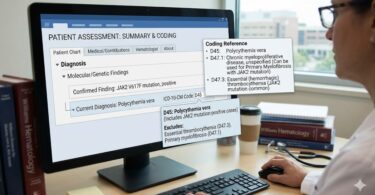
In the intricate world of modern healthcare, a single code can tell a profound story. It can dictate the course of treatment, determine the viability of a hospital’s finances, and contribute to the vast pool of data that shapes future medical discoveries. Nowhere is this more evident than in the coding of thrombocytopenia, a condition characterized by a dangerously low platelet count. To the uninitiated, the ICD-10 code D69.6 might seem like just another alphanumeric sequence in a dense medical chart. But for the medical coder, the clinical provider, and the healthcare administrator, this code, and its many nuanced relatives, represent a critical junction where clinical reality meets administrative necessity.
Thrombocytopenia is not a single disease but a symptom, a hematological signpost pointing to a wide array of underlying disorders. It can be a transient side effect of a common medication, a life-threatening complication of sepsis, a hallmark of a rare autoimmune disease, or a expected finding in a high-risk pregnancy. Each of these stories requires a different code. Using the generic D69.6 when a more specific code exists is not merely an administrative oversight; it is a failure to capture the patient’s true clinical picture. This can lead to denied claims, skewed epidemiological data, and an incomplete understanding of the patient’s health journey.
This article is designed to be the definitive guide for navigating the complex landscape of ICD-10 coding for thrombocytopenia. We will journey beyond the basic code, delving deep into the clinical nuances that dictate code selection. We will explore the specific codes for drug-induced cases, thrombotic microangiopathies, and pregnancy-related manifestations. Through detailed explanations, practical case studies, and a focus on official coding guidelines, this resource aims to empower coders, clinicians, and healthcare students alike. Our goal is to transform the task of coding thrombocytopenia from a rote memorization exercise into an exercise in clinical reasoning and precision, ensuring that every code assigned accurately reflects the complex story of the patient it represents.
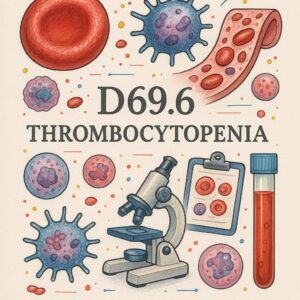
ICD-10 code for Thrombocytopenia
Chapter 1: Understanding the Patient Behind the Code – A Clinical Primer on Thrombocytopenia
Before a single code can be assigned, one must first understand the clinical reality it is meant to represent. Thrombocytopenia is far more than a laboratory value; it is a condition with direct implications for patient safety, treatment pathways, and outcomes.
The Vital Role of Platelets
Platelets, or thrombocytes, are small, colorless cell fragments circulating in our blood. Their primary function is to initiate hemostasis—the process of stopping bleeding at the site of an injured blood vessel. When a vessel is damaged, platelets rapidly adhere to the site, become activated, and aggregate to form a temporary “platelet plug.” This plug is then stabilized by a fibrin mesh formed through the coagulation cascade, creating a stable clot. A normal platelet count ranges from 150,000 to 450,000 platelets per microliter (µL) of blood. Thrombocytopenia is diagnosed when the platelet count falls below 150,000/µL.
Defining Thrombocytopenia and Its Clinical Significance
The severity of thrombocytopenia is categorized based on the platelet count, which directly correlates with the risk of bleeding:
-
Mild (100,000 – 150,000/µL): Rarely associated with significant bleeding risk.
-
Moderate (50,000 – 99,000/µL): May be associated with increased bleeding with significant trauma or surgery.
-
Severe (<50,000/µL): Risk of spontaneous bleeding, such as petechiae (pinpoint red spots on the skin), purpura (larger purple bruises), or epistaxis (nosebleeds).
-
Very Severe (<10,000-20,000/µL): High risk of spontaneous, life-threatening internal bleeding, particularly intracranial hemorrhage.
The clinical presentation is crucial for coders. Documentation of terms like “petechiae,” “ecchymosis,” “gum bleeding,” “menorrhagia,” or “melena” not only confirms the diagnosis but also indicates its symptomatic nature, which can influence code assignment and DRG (Diagnosis-Related Group) weighting.
Common Etiologies: A Spectrum of Causes
Understanding the cause is the key to selecting the correct ICD-10 code. The mechanisms behind thrombocytopenia generally fall into three categories:
-
Decreased Production: The bone marrow is not producing enough platelets. This can be due to:
-
Bone marrow failure (aplastic anemia)
-
Bone marrow infiltration (leukemia, lymphoma, metastatic cancer)
-
Nutritional deficiencies (Vitamin B12 or folate deficiency)
-
Viral infections (HIV, HCV)
-
Chemotherapy or radiation therapy
-
-
Increased Destruction or Consumption: Platelets are being destroyed or used up faster than they can be produced. This is often associated with a normal or even increased number of megakaryocytes (platelet precursors) in the bone marrow. Causes include:
-
Immune-mediated destruction (Immune Thrombocytopenic Purpura – ITP)
-
Drug-induced antibodies (heparin, quinine, sulfa drugs)
-
Thrombotic microangiopathies (Thrombotic Thrombocytopenic Purpura – TTP, Hemolytic Uremic Syndrome – HUS)
-
Disseminated Intravascular Coagulation (DIC)
-
Splenic sequestration (enlarged spleen trapping platelets)
-
-
Dilutional: Massive transfusion or crystalloid infusion can dilute the concentration of platelets in the blood.
This pathophysiological understanding is the foundation upon which accurate ICD-10 coding is built. A code for aplastic anemia (D61.9) tells a very different story than a code for heparin-induced thrombocytopenia (D75.82), even though both result in a low platelet count.
Chapter 2: Navigating the ICD-10-CM Universe: An Introduction to the Coding System
The International Classification of Diseases, Tenth Revision, Clinical Modification (ICD-10-CM) is the standardized system used in the United States to classify and code all diagnoses, symptoms, and procedures. Its structure is logical but complex, demanding a meticulous approach from its users.
The Structure and Logic of ICD-10
ICD-10-CM codes are alphanumeric, ranging from 3 to 7 characters. Each character has a specific meaning:
-
Chapter: The first character is a letter, which corresponds to a chapter based on disease type or body system. For example, Chapter 3 (Codes D50-D89) covers Diseases of the Blood and Blood-Forming Organs.
-
Category: The first three characters define the general category of the disease (e.g., D69 for Purpura and other hemorrhagic conditions).
-
Etiology, Anatomy, Severity, and Laterality: Characters 4 through 7 provide increasing levels of detail. The 4th character often specifies the type, the 5th character may specify the body system, and the 6th and 7th characters often indicate laterality (right, left, bilateral) or other specifics.
The Importance of Specificity and Laterality
ICD-10 was designed to be highly specific. Using an unspecified code (one that ends in .9, like D69.6) is generally a last resort, to be used only when the clinical documentation does not support a more specific code. The push for specificity is driven by the need for:
-
Accurate Reimbursement: Specific codes map to more precise DRGs and APCs (Ambulatory Payment Classifications), which directly impact payment.
-
Quality Data: Public health tracking, research, and epidemiological studies rely on granular data to identify disease patterns and outcomes.
-
Clinical Decision Support: Specific codes can trigger alerts for drug interactions or necessary preventive care.
Where to Find Thrombocytopenia Codes: The Chapter Guide
While thrombocytopenia codes are primarily located in Chapter 3 (D50-D89), the condition can be classified elsewhere depending on its etiology. This is a critical concept in ICD-10 coding.
-
Chapter 3: Diseases of the Blood and Blood-Forming Organs: This is the home for most primary hematologic conditions, including the core code D69.6 and codes for ITP (D69.3) and drug-induced thrombocytopenia (D69.5-).
-
Chapter 15: Pregnancy, Childbirth, and the Puerperium (O00-O9A): Thrombocytopenia complicating pregnancy is coded from this chapter (O99.11-), as the coding guidelines prioritize chapter-specific codes for pregnancy-related conditions.
-
Chapter 1: Certain Infectious and Parasitic Diseases (A00-B99): If thrombocytopenia is a manifestation of a specific infection (e.g., HIV, Dengue fever), the code for the underlying infection is sequenced first, and the thrombocytopenia may be coded as a manifestation.
-
Chapter 2: Neoplasms (C00-D49): If thrombocytopenia is due to bone marrow infiltration by a malignancy, the neoplasm code is sequenced first.
-
Chapter 20: External Causes of Morbidity (V00-Y99): These codes can be used as secondary codes to indicate the cause of injury or poisoning, such as an adverse effect of a drug.
Understanding this cross-chapter relationship is essential for correct code sequencing, which we will explore in detail in Chapter 5.
Chapter 3: The Central Code – A Deep Dive into D69.6 (Thrombocytopenia, Unspecified)
At the heart of this topic lies code D69.6 – Thrombocytopenia, unspecified. This code is both a necessary tool and a potential trap for the unwary coder.
Deconstructing the Code: What “Unspecified” Truly Means
The term “unspecified” does not mean “unknown to the clinician.” In the context of ICD-10, it means “not specified in the available medical record documentation at this encounter.” There are legitimate clinical scenarios where the etiology of the thrombocytopenia is genuinely not known at the time of coding. For example:
-
A patient presents to the Emergency Department with bruising, and a CBC reveals a platelet count of 25,000/µL. The emergency physician documents “severe thrombocytopenia, etiology unclear, requires hematology consult.” In this case, D69.6 is appropriate.
-
During a hospital admission for pneumonia, a routine blood test shows mild thrombocytopenia. The treating physician notes “thrombocytopenia, likely reactive/inflammatory, will monitor,” but does not investigate or document a specific cause further. D69.6 may be used.
Clinical Scenarios Appropriate for D69.6
D69.6 is correctly used when the documentation is limited to broad, non-specific terms such as:
-
“Thrombocytopenia”
-
“Low platelet count”
-
“Decreased platelets”
It should not be used if the record contains more specific descriptors that point to a different code.
The Pitfalls of Overusing Unspecified Codes
Relying on D69.6 as a default is a poor coding practice with significant consequences:
-
Financial Risk: Payers may deny claims or downcode them if a more specific code is available but not used. An unspecified code suggests a less complex clinical picture, warranting lower reimbursement.
-
Compliance Risk: During an audit, the consistent use of unspecified codes for conditions that are typically well-defined (like HIT or ITP) can be flagged as a lack of coding specificity, potentially leading to recoupments and penalties.
-
Data Integrity Risk: It contributes “noise” to health data. If a large number of drug-induced thrombocytopenia cases are coded as D69.6, it becomes impossible to study the true incidence and impact of drug-induced cases.
The coder’s mission is always to move from “unspecified” to “specified” whenever the documentation allows.
Chapter 4: Beyond D69.6 – Coding for Specific Etiologies and Types
This is where the art and science of medical coding truly come into play. Let’s explore the specific codes that should replace D69.6 when more detailed clinical information is available.
Drug-Induced Thrombocytopenia (D69.5-)
When a drug is identified as the cause, code D69.59, Other drug-induced thrombocytopenia, is used. This requires two codes, sequenced in a specific order, per the ICD-10-CM guidelines.
-
First: The code for the thrombocytopenia: D69.59
-
Second: The code for the adverse effect of the drug, using codes from the T36-T50 series with a 5th or 6th character ‘5’ (e.g., T45.1X5A, Adverse effect of anticoagulants, initial encounter).
Crucial Documentation: The provider must clearly link the thrombocytopenia to the drug. Phrases like “thrombocytopenia likely due to [Drug X],” “drug-induced,” or “[Drug X] induced thrombocytopenia” are necessary.
Heparin-Induced Thrombocytopenia (HIT) (D75.82)
HIT is a particularly dangerous and distinct form of drug-induced thrombocytopenia that carries a high risk of thrombosis. It has its own unique code, D75.82, located in Chapter 4 (Diseases of the Immune System). This highlights its unique immunological mechanism.
-
Coding HIT: Code only D75.82. You do not also code D69.59.
-
Coding HIT with Thrombosis: This is a critical scenario. If the patient has HIT and develops a thrombosis (e.g., a deep vein thrombosis or pulmonary embolism), you would code:
-
D75.82 (Heparin-induced thrombocytopenia)
-
I82.619 (Acute embolism and thrombosis of inferior vena cava) – or the specific code for the thrombosis.
-
The code for the adverse effect of heparin: T45.515A (Adverse effect of unfractionated heparin, initial encounter).
-
Thrombotic Microangiopathies (D59.3-, M31.1, M31.19)
This group includes life-threatening conditions like Thrombotic Thrombocytopenic Purpura (TTP) and Hemolytic Uremic Syndrome (HUS), where thrombocytopenia is a key diagnostic feature.
-
Thrombotic Thrombocytopenic Purpura (TTP): Code M31.1 (Thrombotic thrombocytopenic purpura).
-
Hemolytic-Uremic Syndrome (HUS): Code D59.31 (Hemolytic-uremic syndrome).
-
Other Thrombotic Microangiopathies: Code M31.19 (Other thrombotic microangiopathy).
These codes are highly specific and should be used instead of D69.6 when these diagnoses are confirmed.
Bone Marrow Failure and Hypoplasia (D61.9, D61.01, D61.09)
When thrombocytopenia is due to the bone marrow’s failure to produce platelets, the underlying bone marrow condition is coded.
-
Aplastic Anemia: Code D61.9 (Aplastic anemia, unspecified).
-
Antineoplastic Chemotherapy induced: Code D61.01 (Constitutional (pure) red blood cell aplasia).
-
Other Drug-induced: Code D61.09 (Other constitutional aplastic anemia).
The thrombocytopenia itself is considered an integral part of the bone marrow failure syndrome and is not coded separately unless it requires specific clinical attention.
Thrombocytopenia in Pregnancy (O99.11-)
Per ICD-10-CM guidelines, conditions complicating pregnancy, childbirth, and the puerperium take precedence. Therefore, thrombocytopenia in a pregnant patient is coded from Chapter 15.
-
Code: O99.111 (Anemia complicating pregnancy, first trimester), O99.112 (second trimester), O99.113 (third trimester). There is also a code for childbirth and the puerperium.
-
Important Note: This code is used for gestational thrombocytopenia or when the thrombocytopenia is the primary reason for the obstetric care. If the patient has a pre-existing condition like ITP, the coding sequence changes, with the pre-existing condition being sequenced first, followed by a code from the O9A.2- series (Injury, poisoning and certain other consequences of external causes complicating pregnancy).
Postprocedural and Transfusion-Related Thrombocytopenia
Thrombocytopenia can occur after procedures or massive transfusions.
-
Postprocedural: If thrombocytopenia develops as a direct result of a procedure (not due to a drug given during the procedure), it may be coded as a complication. The appropriate complication code from the T81.- series would be used, followed by D69.6.
-
Dilutional from Transfusion: This is inherent in the massive transfusion and is typically not coded separately unless it is a focus of treatment.
Chapter 5: The Art of Sequencing – Primary Diagnosis, Comorbidities, and Manifestations
Knowing which code to use is only half the battle. Knowing which code to list first is equally critical. Sequencing determines the principal diagnosis, which has major implications for DRG assignment and reimbursement.
The Foundation: Coding Guidelines for Causality
The ICD-10-CM Official Guidelines for Coding and Reporting provide a clear hierarchy:
-
The “Due To” Rule: When a condition is described as being due to another condition, the etiology (the “due to” condition) is sequenced first, followed by the manifestation (the condition that is caused).
-
The “With” Rule: The word “with” should be interpreted as meaning “associated with” or “due to” when it appears in a code title, the Alphabetic Index, or an instructional note in the Tabular List. In these cases, the code title including “with” often already links the two conditions.
Sequencing in Complex Cases: Which Code Comes First?
Let’s apply these rules to thrombocytopenia.
-
Scenario: Thrombocytopenia due to Sepsis.
-
Documentation: “Severe thrombocytopenia secondary to urosepsis.”
-
Correct Sequencing:
-
First: A41.9 (Sepsis, unspecified organism)
-
Second: D69.6 (Thrombocytopenia, unspecified)
-
-
Rationale: The sepsis is the cause; the thrombocytopenia is the manifestation.
-
-
Scenario: Thrombocytopenia due to AML.
-
Documentation: “Patient with acute myeloid leukemia presenting with symptomatic thrombocytopenia.”
-
Correct Sequencing:
-
First: C92.00 (Acute myeloid leukemia, not having achieved remission)
-
Second: D69.6 (Thrombocytopenia, unspecified) – Only if the thrombocytopenia requires specific therapeutic treatment or extends the stay.
-
-
Rationale: The leukemia is the underlying disease causing the bone marrow failure.
-
-
Scenario: Drug-Induced Thrombocytopenia.
-
Documentation: “Thrombocytopenia due to vancomycin.”
-
Correct Sequencing:
-
First: D69.59 (Other drug-induced thrombocytopenia)
-
Second: T36.8X5A (Adverse effect of other systemic antibiotics, initial encounter)
-
-
Common Clinical Scenarios and Correct Code Sequencing
| Clinical Scenario | Provider Documentation Example | Principal/First Code | Secondary/Other Codes | Rationale |
|---|---|---|---|---|
| Unspecified Cause | “Admitted for evaluation of severe thrombocytopenia.” | D69.6 | None | The reason for the encounter is the unspecified thrombocytopenia. |
| Drug-Induced | “Quinine-induced thrombocytopenia.” | D69.59 | T37.8X5A (Adverse effect of other antiprotozoal drugs) | Follows guideline for adverse effects. |
| Heparin-Induced (HIT) | “Heparin-induced thrombocytopenia confirmed by antibody test.” | D75.82 | T45.515A (Adverse effect of unfractionated heparin) | HIT has a unique code that takes precedence. |
| Manifestation of Sepsis | “Septic shock with associated consumptive coagulopathy and thrombocytopenia.” | A41.9 (Sepsis) | R65.21 (Severe sepsis with septic shock), D69.6 | The underlying infection is the cause. |
| Immune (ITP) | “New diagnosis of Immune Thrombocytopenic Purpura.” | D69.3 | None | ITP is a specific, primary diagnosis. |
| Complicating Pregnancy | “38-week pregnant female with gestational thrombocytopenia.” | O99.113 | Z3A.38 (38 weeks gestation of pregnancy) | Chapter 15 codes take priority for pregnancy-related conditions. |
Chapter 6: Case Studies in Real-World Coding – From Clinical Notes to Accurate Code Assignment
Let’s apply everything we’ve learned to realistic patient cases.
**Case Study 1: The Elderly Patient with Sepsis
-
Presentation: An 82-year-old male is admitted through the ER with fever, confusion, and hypotension. Blood cultures are drawn, and he is started on IV fluids and broad-spectrum antibiotics.
-
Labs: WBC 18,000, Platelets 45,000 (down from a baseline of 220,000 one year ago).
-
Hospital Course: Blood cultures return positive for E. coli. The patient’s blood pressure remains low despite fluids, requiring vasopressors. The hematology consultant notes: “Thrombocytopenia is consistent with a consumptive process in the setting of severe sepsis.”
-
Discharge Summary Diagnosis: “Septic shock due to E. coli bacteremia; severe sepsis with associated thrombocytopenia and acute kidney injury.”
Coding Analysis:
-
The underlying cause is the E. coli bacteremia.
-
This has progressed to severe sepsis with septic shock.
-
The thrombocytopenia and acute kidney injury are both manifestations of the severe sepsis.
-
Correct Code Assignment:
-
A41.50 (Gram-negative sepsis, unspecified)
-
R65.21 (Severe sepsis with septic shock)
-
D69.6 (Thrombocytopenia, unspecified)
-
N17.9 (Acute kidney failure, unspecified)
-
-
*Rationale: The sepsis sequence (A41.50 + R65.21) is the principal diagnosis. D69.6 and N17.9 are added as they represent specific, significant complications of the sepsis.*
Case Study 2: The Post-Operative Cardiac Patient
-
Presentation: A 65-year-old female undergoes coronary artery bypass grafting (CABG). Post-operatively, she is placed on a heparin drip for DVT prophylaxis.
-
Labs: Post-op day 5, her platelet count drops from 250,000 to 80,000. A HIT antibody test is sent and returns positive. On post-op day 7, a Doppler ultrasound confirms a new deep vein thrombosis (DVT) in her right lower extremity.
-
Discharge Summary Diagnosis: “Heparin-induced thrombocytopenia (HIT) with confirmed thrombosis. Status post CABG.”
Coding Analysis:
-
The primary hematological problem is HIT.
-
A complication of HIT is a new DVT.
-
The HIT was caused by an adverse effect of heparin.
-
The CABG is the reason for the encounter, but the HIT with thrombosis is a new, acute problem that became the focus of inpatient care.
-
Correct Code Assignment:
-
D75.82 (Heparin-induced thrombocytopenia)
-
I82.4B1 (Acute embolism and thrombosis of deep veins of right distal lower extremity)
-
T45.515A (Adverse effect of unfractionated heparin, initial encounter)
-
Z98.61 (Coronary angioplasty status and coronary artery bypass status)
-
-
Rationale: The acute conditions (HIT and DVT) are sequenced before the external cause (T45.515A) and the status code (Z98.61).
Case Study 3: The Young Adult with ITP
-
Presentation: A 25-year-old female presents to her PCP with complaints of easy bruising and petechiae on her legs. She is otherwise healthy and on no medications.
-
Labs: Platelet count is 18,000. Other blood counts are normal.
-
Referral & Diagnosis: She is referred to a hematologist who performs a workup, including a peripheral smear and bone marrow biopsy. The final diagnosis is “Immune Thrombocytopenic Purpura (ITP).”
-
Encounter: Follow-up with hematologist for first-line treatment with corticosteroids.
Coding Analysis:
-
The specific, definitive diagnosis is ITP.
-
There is no underlying cause; this is the primary disease.
-
Correct Code Assignment:
-
D69.3 (Immune thrombocytopenic purpura)
-
-
Rationale: This is a straightforward case where the specific code for the primary condition is used. No other codes are necessary for this encounter.
Case Study 4: The Pregnant Patient with Preeclampsia
-
Presentation: A 32-year-old female at 32 weeks gestation presents with hypertension, proteinuria, and a severe headache.
-
Labs: Platelet count is 90,000. ALT and AST are elevated.
-
Diagnosis: She is diagnosed with severe preeclampsia with HELLP syndrome (Hemolysis, Elevated Liver enzymes, Low Platelets).
-
Management: She is admitted, and an emergency C-section is performed.
Coding Analysis:
-
This is a pregnancy-related condition.
-
HELLP syndrome is a severe form of preeclampsia, and the thrombocytopenia is a key component of it.
-
The codes for HELLP syndrome already include the thrombocytopenia.
-
Correct Code Assignment:
-
O14.24 (HELLP syndrome, complicating the puerperium) – Note: The 4th character specifies the trimester or puerperium.
-
O82 (Encounter for cesarean delivery without indication)
-
-
Rationale: The HELLP syndrome code is comprehensive and is sequenced as the principal diagnosis because it is the reason for the delivery. You would NOT assign a separate code for D69.6, as it is integral to HELLP.
Chapter 7: The Consequences of Inaccuracy – Reimbursement, Compliance, and Patient Care
The impact of inaccurate or non-specific thrombocytopenia coding extends far beyond a simple clerical error.
Impact on Reimbursement and Denials
Medicare, Medicaid, and private payers use sophisticated software to map ICD-10 codes to DRGs and APCs. An unspecified code like D69.6 will often map to a lower-paying DRG than a more complex combination.
-
Example: A patient admitted with “sepsis with thrombocytopenia” (A41.9 + R65.20 + D69.6) will typically map to a higher-weighted DRG than a patient admitted with “thrombocytopenia, unspecified” (D69.6) alone. If the coder only uses D69.6 for the septic patient, the hospital will be underpaid for the resources used to treat the severe infection.
Compliance Risks: Audits and Potential Penalties
Government auditors (e.g., from the OIG, RACs) actively look for patterns of “undercoding” and “overcoding.” Consistently using unspecified codes when specific ones are supported by documentation can be interpreted as “cloning” or a lack of diligence, potentially triggering a focused audit. If overpayments are identified, the healthcare organization must repay the funds, often with interest and sometimes with additional penalties.
The Ripple Effect on Clinical Data and Research
ICD-10 codes are a primary source of data for public health agencies and clinical researchers. If cases of HIT are consistently coded as D69.6, it becomes impossible to accurately track the incidence of HIT, identify risk factors, or measure outcomes. This “garbage in, garbage out” problem hinders our ability to improve patient safety and develop new treatments on a population level.
Chapter 8: Best Practices for Providers and Coders – Ensuring Accuracy and Specificity
Achieving coding excellence is a collaborative effort between the clinical team and the coding team.
For Clinicians: The Power of Precise Documentation
The coder can only code what is documented. Clinicians play the most critical role in ensuring accuracy.
-
Be Specific: Avoid “thrombocytopenia” alone. Document the suspected or confirmed etiology.
-
Instead of: “Thrombocytopenia”
-
Write: “Thrombocytopenia, likely drug-induced from vancomycin” or “Thrombocytopenia consistent with ITP.”
-
-
Link Conditions: Use phrases that establish causality: “due to,” “secondary to,” “as a manifestation of.”
-
Document Pre-existing Conditions: Clearly note if a condition like ITP was present before admission.
-
Respond to Queries: If a coder sends a query for clarification, provide a clear and timely response.
For Coders: The Necessity of Proactive Queries
Coders must not make assumptions. If the documentation is unclear or conflicting, a query is required.
-
When to Query: When the etiology of thrombocytopenia is not stated, when the relationship between two conditions (e.g., sepsis and low platelets) is implied but not explicit, or when a more specific diagnosis seems likely but is not confirmed in the record.
-
How to Query: Use a non-leading, compliant format. “Please clarify the etiology of the patient’s thrombocytopenia,” or “The patient has sepsis and thrombocytopenia; can you clarify if the thrombocytopenia is a manifestation of the sepsis?”
Leveraging Technology and Continuous Education
-
Use Encoders and EHR Tools: Utilize computer-assisted coding (CAC) software and EHR alerts that can flag unspecified codes and suggest more specific alternatives based on clinical terms in the record.
-
Stay Updated: ICD-10-CM guidelines are updated annually. Coders and clinicians involved in documentation must engage in ongoing education to stay current with changes.
Chapter 9: The Future of Coding – ICD-11 and the Promise of Greater Granularity
The World Health Organization’s International Classification of Diseases, 11th Revision (ICD-11) came into effect in 2022 and represents a significant modernization. While the US has not yet set a timeline for adoption, understanding its direction is valuable.
ICD-11 moves away from a purely linear, chapter-based structure to a more flexible, digital “foundation” model. It allows for extensive clustering of codes to describe a clinical situation with unprecedented detail. For thrombocytopenia, this could mean seamlessly linking the condition to its cause, severity, and specific genetic markers (if known) in a single, machine-readable entity. This will further enhance data quality for research and public health, but will also demand even greater clinical specificity and coder proficiency.
Conclusion: Synthesizing the Journey
-
Precision is Paramount: Accurate ICD-10 coding for thrombocytopenia requires moving beyond the generic D69.6 to capture the specific etiology, whether it is drug-induced, related to pregnancy, a manifestation of a systemic illness, or a primary hematologic disorder.
-
Documentation is the Foundation: The clinical provider’s detailed documentation is the essential raw material from which accurate codes are built, making collaboration between clinicians and coders non-negotiable.
-
Accuracy Drives Outcomes: Correct and specific coding is not a bureaucratic exercise; it is a critical function that directly impacts fair reimbursement, regulatory compliance, and the integrity of the health data that guides future medical care and research.
Frequently Asked Questions (FAQs)
Q1: When is it absolutely correct to use D69.6 (Thrombocytopenia, unspecified)?
A: It is correct when the medical record documentation does not specify a cause or type (e.g., ITP, drug-induced, etc.) and the provider is still in the process of working up the low platelet count, or when the cause is deemed irrelevant to the current encounter and no further specification is documented.
Q2: How do I code a patient with both cancer and chemotherapy-induced thrombocytopenia?
A: This requires careful sequencing. The neoplasm code (e.g., C92.00 for AML) is sequenced first. If the thrombocytopenia is directly due to antineoplastic chemotherapy, you would also assign D61.01 (Constitutional red cell aplasia). Do not use D69.6 in this scenario, as D61.01 is more specific. You may also assign a code from the T45.1X5- category for the adverse effect of the chemotherapeutic drug.
Q3: What is the difference between D69.59 (Other drug-induced) and D75.82 (Heparin-induced)?
A: D75.82 is reserved specifically for Heparin-Induced Thrombocytopenia (HIT) due to its unique and dangerous immunological mechanism and high thrombosis risk. D69.59 is a catch-all for all other drug-induced thrombocytopenias (e.g., from antibiotics, anticonvulsants, etc.). HIT always gets its own specific code.
Q4: A patient has HIV and thrombocytopenia. Which code do I use first?
A: In this case, the thrombocytopenia is often a manifestation of the HIV disease itself. Per coding guidelines, you would sequence the HIV code first (B20), followed by the manifestation code D69.6. However, if the thrombocytopenia is due to a medication for HIV, you would use the drug-induced thrombocytopenia codes (D69.59 and T36.-X5A).
Q5: Can I code thrombocytopenia if the platelet count is just barely below normal (e.g., 148,000/µL)?
A: Yes, if the physician has documented it as a diagnosis or a condition being monitored or treated. The coding is based on the provider’s documentation of the diagnosis, not solely on the lab value. However, a single, marginally low value without a diagnostic statement may not be coded.
Additional Resources
-
The Official ICD-10-CM Guidelines for Coding and Reporting: Published annually by the CDC and CMS. This is the definitive source for all coding rules. https://www.cdc.gov/nchs/icd/icd-10-cm.htm
-
American Health Information Management Association (AHIMA): Provides a wealth of resources, toolkits, and continuing education on coding best practices, compliance, and query management. https://www.ahima.org/
-
American Academy of Professional Coders (AAPC): Offers certification, training, and resources for medical coders, including specialty-specific information. https://www.aapc.com/
-
National Center for Biotechnology Information (NCBI) Bookshelf: Provides free access to medical textbooks like Williams Hematology, which can offer deep clinical insights into the pathophysiology of thrombocytopenic disorders. https://www.ncbi.nlm.nih.gov/books/
-
Platelet Disorder Support Association (PDSA): A patient advocacy group that provides excellent, patient-friendly explanations of conditions like ITP, which can help coders understand the patient experience and clinical journey. https://www.pdsa.org/
Date: October 28, 2025
Author: Dr. Evelyn Reed, Hematology Informatics Specialist
Disclaimer: This article is intended for informational and educational purposes only. It is not a substitute for professional medical coding, billing, or clinical advice. Medical coders must consult the most current, official ICD-10-CM coding guidelines and payer-specific policies for accurate code assignment. The author and publisher are not responsible for any errors or omissions, or for any outcomes resulting from the use of this information.