Navigating the world of dental insurance and billing can sometimes feel like learning a new language. If you’ve ever stared at a claim form and wondered why a simple tooth filling requires a specific code, you’re not alone. At the heart of this system lies the HIPAA dental procedure code, a standardized language that ensures dentists get paid correctly and patients’ records remain consistent.
Whether you’re a seasoned practice manager, a dentist opening a new practice, or a dental student trying to understand the business side of healthcare, this guide is for you. We’ll break down what these codes are, why they matter under HIPAA, and how to use them effectively without getting lost in the jargon.
Let’s demystify the process together.
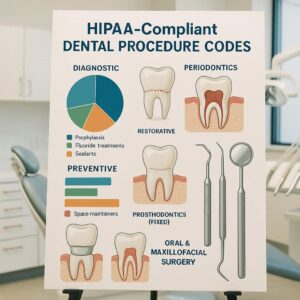
HIPAA Dental Procedure Codes
What is a HIPAA Dental Procedure Code?
To put it simply, a HIPAA dental procedure code is a standardized alphanumeric identifier used to describe a specific dental treatment or service. When you hear someone mention a “dental code,” they are most likely referring to the Current Dental Terminology (CDT) code set.
However, the “HIPAA” part is crucial. The Health Insurance Portability and Accountability Act (HIPAA) didn’t invent dental codes, but it mandated that all electronic healthcare transactions (like insurance claims) must use specific, standard code sets. For dentistry, that official set is the CDT code.
Think of it this way:
-
CDT Code: The specific word for “tooth” (e.g., D1234).
-
HIPAA: The rule that says everyone in the country must use that exact same word when talking about that tooth electronically.
Why Standardization Matters
Before HIPAA, a dentist in California might send a claim using a code invented by their software, while a dentist in New York might write a description. The insurance company then had to manually interpret these claims, leading to:
-
Massive delays in payment.
-
Higher administrative costs.
-
A higher chance of human error.
HIPAA stepped in to create a level playing field. By mandating the use of standardized HIPAA dental procedure codes, the entire industry—from the smallest private practice to the largest insurance conglomerate—now speaks the same language.
The History: From Paper Charts to Digital Compliance
Understanding where these codes come from helps us appreciate why they are so rigidly enforced today.
The Birth of CDT
The need for standardization was recognized long before HIPAA. The American Dental Association (ADA) began publishing the CDT code set to give dentists a uniform way to report procedures. This was a voluntary system for decades.
The HIPAA Shake-Up of the 1990s
When HIPAA was enacted, it contained the “Administrative Simplification” clause. This clause demanded that the healthcare industry adopt standard electronic transactions. The Department of Health and Human Services (HHS) looked at existing code sets and designated the ADA’s CDT as the official standard for dental procedures.
This simple designation transformed the CDT from a “best practice” into a legal requirement. Since the HIPAA compliance date, using the correct HIPAA dental procedure code isn’t just about getting paid faster; it is a federal requirement for electronic claims.
Understanding the CDT Code Set
To master HIPAA dental billing, you must first master the CDT manual. It is your bible for coding accuracy.
The Anatomy of a Code
Every dental procedure code follows a simple structure:
-
It begins with the letter D (for Dental).
-
It is followed by four numbers.
Example:
-
D1110: Prophylaxis (a standard dental cleaning) for an adult.
The “D” tells the software and the insurance adjuster that this is a dental service, not a medical service (which might start with a letter like “J” for drugs or “T” for medical visits).
Categories of Service
The ADA organizes the CDT codes into logical categories, making it easier to find the right code based on the type of treatment provided.
| Category | Code Range | Description |
|---|---|---|
| I. Diagnostic | D0100 – D0999 | Exams, X-rays, tests, and observations. |
| II. Preventive | D1000 – D1999 | Cleanings, fluoride treatments, sealants. |
| III. Restorative | D2000 – D2999 | Fillings, crowns, inlays, and onlays. |
| IV. Endodontics | D3000 – D3999 | Root canals, pulpotomies, apicoectomies. |
| V. Periodontics | D4000 – D4999 | Gum disease treatments, scaling and root planing. |
| VI. Prosthodontics (Removable) | D5000 – D5899 | Dentures and partials. |
| VII. Maxillofacial Prosthetics | D5900 – D5999 | Prostheses for patients with facial defects. |
| VIII. Implant Services | D6000 – D6199 | Surgical placement and restoration of implants. |
| IX. Prosthodontics (Fixed) | D6200 – D6999 | Bridges and implant-supported prosthetics. |
| X. Oral Surgery | D7000 – D7999 | Extractions, biopsies, and surgical incisions. |
| XI. Orthodontics | D8000 – D8999 | Braces, retainers, and aligners. |
| XII. Adjunctive General Services | D9000 – D9999 | Miscellaneous services like sedation or emergency visits. |
Important Note for Readers: The CDT code set is updated every year. The ADA releases a new manual in the fall, which becomes effective for claims processing on January 1st of the following year. Always ensure you are using the current year’s manual to remain HIPAA compliant.
Why HIPAA Compliance Matters for Your Dental Codes
Using the wrong code can be costly, but using an outdated or non-standard code can be illegal.
The Legal Obligation
Under HIPAA law, if you submit an electronic claim for a dental procedure, you must use a valid CDT code. If you submit a claim using an internal code, a blank description, or an old code that has been deleted, you are technically out of compliance with federal regulations. While a single mistake won’t land you in jail, a pattern of non-compliance can lead to audits, fines, and exclusion from federal health programs like Medicare/Medicaid.
Insurance Claim Processing
Insurance companies are legally required to accept and process only standard transactions. Their computers are programmed to read CDT codes. If you send them a code that doesn’t exist in the current year’s data set, their system will automatically reject the claim. This is the most common reason for claim denials.
Common HIPAA Dental Procedure Codes and How to Use Them
While there are hundreds of codes, a handful make up the bulk of a general dentistry practice’s daily billing. Let’s look at some of the most common ones and the nuances you need to know.
Diagnostic Codes (The Exam)
-
D0120: Periodic oral evaluation (recall patient, established patient).
-
D0150: Comprehensive oral evaluation (new patient, full workup).
-
D0210: Intraoral – complete series of radiographic images (full mouth X-rays).
-
D0274: Bitewings – four radiographic images.
-
D0330: Panoramic radiographic image.
Preventive Codes (The Cleaning)
-
D1110: Prophylaxis – adult (a standard cleaning on a healthy mouth).
-
D1120: Prophylaxis – child.
-
D1208: Topical application of fluoride (fluoride varnish or tray).
Restorative Codes (The Fix)
-
D2140: Amalgam – one surface, primary or permanent.
-
D2330: Resin-based composite – one surface, anterior.
-
D2391: Resin-based composite – one surface, posterior.
-
D2740: Crown – porcelain/ceramic substrate.
-
D2750: Crown – porcelain fused to high noble metal.
The “By-Report” Codes
Some codes end with the suffix “-BY REPORT.” For example, D2999 (Resin-based composite restoration, by report). This is a “catch-all” code used for procedures that don’t have a specific code.
How to use it:
You cannot just bill D2999 and expect to get paid. Because it is vague, you must attach a narrative report explaining exactly what you did, why you did it, and how long it took. These claims are processed manually, not automatically, and are scrutinized closely.
A Comparative Look: Medical vs. Dental Codes
One of the biggest points of confusion in a dental office is when to use a medical code versus a dental code. While HIPAA dental procedure codes (CDT) are for teeth and gums, medical procedure codes (CPT/HCPCS) are for the rest of the body.
| Feature | HIPAA Dental Codes (CDT) | Medical Codes (CPT/HCPCS) |
|---|---|---|
| Governing Body | American Dental Association (ADA) | American Medical Association (AMA) / CMS |
| Primary Use | Teeth, gums, and oral cavity procedures. | Systemic diseases, injuries, and medical conditions. |
| Example Procedure | Tooth extraction (D7140). | Setting a broken jaw or treating oral cancer. |
| Insurance Payer | Dental Insurance (Delta Dental, MetLife, etc.) | Medical Insurance (Blue Cross, Aetna, etc.) |
| The “Cross-Over” | Sleep apnea appliances (D codes sometimes billed to medical). | Medically necessary extractions (e.g., due to chemotherapy). |
The Hybrid Case:
Imagine a patient with severe gum disease caused by diabetes. You perform scaling and root planing (D4341). This is a dental procedure. However, if the patient has a medical condition that requires a dental exam before a heart surgery, you might need to report the exam to medical insurance. This is where understanding the difference between the code sets becomes critical for reimbursement.
How to Stay HIPAA Compliant When Coding
Staying compliant isn’t just about buying a codebook; it’s about creating a culture of accuracy in your office.
1. Annual Training and Updates
Every October, when the new CDT manual drops, schedule a team meeting. Go through the changes together.
-
Deleted Codes: Codes that are removed. If you use a deleted code in January, the claim is dead.
-
Revised Codes: Codes where the description has changed.
-
New Codes: Brand new procedures that now have their own identifiers.
2. The Gold Standard: Documentation
A HIPAA auditor or insurance adjuster doesn’t just look at the code; they look at the patient’s chart to see if the code matches the notes.
-
If you bill for a “D4341” (periodontal scaling), the chart must show probing depths, bleeding points, and notation of inflammation.
-
If you bill for a “D2950” (core buildup), the chart must show that there wasn’t enough tooth structure left to hold a crown without building it up.
Quote from the Trenches:
“I’ve been auditing dental charts for 15 years. The number one reason for paybacks during audits isn’t fraud—it’s laziness. The chart notes just don’t support the fancy code that was billed. If it isn’t written down, it didn’t happen.” — Sarah Jenkins, RHIA, CDIP.
3. Beware of Unbundling
“Unbundling” is a serious compliance issue. It means taking a single procedure that should be one code and breaking it into parts to charge more.
-
Incorrect (Unbundling): Billing a gum surgery in two parts (flap and sutures separately) instead of the single comprehensive code.
-
Correct: Using the comprehensive code that includes the flap, the surgery, and the sutures.
Insurance software is specifically designed to flag unbundling patterns, which leads to automatic denials and potential fraud investigations.
The Future of HIPAA Dental Procedure Codes
The world of coding is not static. As technology and treatment methods evolve, so do the codes.
The Rise of Digital Dentistry
We are seeing a surge in codes related to digital workflows.
-
D0350: 2D oral/facial photographic image.
-
D0367: Cone beam CT capture and interpretation.
-
D6058: Abutment-supported porcelain/ceramic crown (for implants).
As 3D printing and digital scanning become the norm in dental offices, expect to see even more granular codes for “digital impressions” versus “physical impressions.”
Integration with Medical Codes
The link between oral health and overall health is stronger than ever. We are likely to see more “cross-coding” opportunities in the future, where dental procedures are reimbursed by medical insurance for specific conditions (like dental work required after jaw reconstruction due to an accident). This will require dental coders to become fluent in both CDT and CPT code sets.
Common Pitfalls and How to Avoid Them
Even experienced billers make mistakes. Here are the most common errors regarding HIPAA dental procedure codes and how to sidestep them.
Pitfall 1: Using “Unspecified” or “By Report” Codes Too Often
If you find yourself using D1999 (unspecified preventive procedure) frequently, stop.
-
The Fix: Ask yourself why. Is the procedure you are performing truly that unique? Or do you just not know the correct code? A “by report” code invites scrutiny and delayed payment. Use the specific code whenever possible.
Pitfall 2: Ignoring the “Frequency” Limitations
Most insurance plans have frequency limitations. For example, a standard cleaning (D1110) is usually limited to two per year.
-
The Fix: Your software should flag these, but the human eye is the final check. If a patient is back for a third cleaning in 10 months, you need to verify if it’s a “deep cleaning” (periodontal maintenance D4910) or if the patient is paying out-of-pocket.
Pitfall 3: Failing to Update Software
The ADA releases new codes, but if your practice management software isn’t updated, you can’t select them.
-
The Fix: Confirm with your software vendor in December that the new CDT update will be pushed to your system by January 1st.
Additional Resources for Mastering Dental Coding
To truly become an expert, you need to look beyond just this article. Here are some essential resources:
-
The ADA CDT Manual: This is your primary source. Buy the print version or the digital subscription. It includes the “CDT Assistant” which offers coding scenarios and guidance. [Link to ADA Store]
-
NovoDynamics: A tool that uses artificial intelligence to review dental radiographs and claims data to identify potential coding errors before the claim is sent.
-
Dental Coding and Billing Handbook: A supplementary guide that offers practical workflow advice.
-
Local Dental Society Coding Seminars: Many state dental associations offer half-day or full-day coding workshops. These are invaluable for hands-on learning.
Conclusion
Mastering the HIPAA dental procedure code system is more than just a compliance requirement; it is the backbone of a healthy, profitable, and ethical dental practice. By treating the CDT code set as a language of precision rather than a bureaucratic hurdle, you protect your practice from audits, ensure fair reimbursement, and contribute to the clarity of the patient’s health record.
Remember to stay updated, document thoroughly, and never stop learning. The codes may change, but the principle remains: clear communication leads to better care.
Frequently Asked Questions (FAQ)
Q1: What is the difference between CDT and HIPAA codes?
There is no difference. “HIPAA dental procedure codes” are simply the CDT codes that HIPAA mandates for use in electronic transactions. The CDT is the code set; HIPAA is the law requiring its use.
Q2: How often do dental codes change?
The CDT code set is updated annually. A new manual is published in the fall, and the new codes become effective on January 1st of the following year.
Q3: What happens if I use the wrong code on a claim?
If the code doesn’t match the procedure or is invalid, the claim will likely be rejected or denied by the insurance company. You will then need to correct the code and resubmit the claim, delaying your payment.
Q4: Can I use medical codes for dental procedures?
Generally, no. For standard dental treatment, you must use CDT codes. However, for specific procedures related to trauma, congenital defects, or medical conditions (like oral cancer), you may need to bill a medical payer using CPT codes. This is often called “medical cross-coding.”
Q5: Where can I find the official list of HIPAA dental procedure codes?
The only official source is the Current Dental Terminology (CDT) manual published by the American Dental Association (ADA). While many websites list the codes, the manual provides the official language and guidelines necessary for proper use.
Author: Dental Billing & Compliance Desk
Date: March 14, 2026
Disclaimer:
This article is intended for informational and educational purposes only and does not constitute legal or billing advice. Coding requirements, HIPAA regulations, and insurance policies are subject to change. While we strive to provide accurate and up-to-date information, readers should consult with a qualified healthcare attorney, compliance officer, or their local ADA representative for advice regarding specific billing situations. The use of this information is at the reader’s own risk.