If you have ever sat in a dentist’s chair with a child who has a toothache—or experienced a deep cavity yourself—you may have heard the term “pulpotomy.” It sounds clinical, and frankly, a little intimidating. But at its heart, a pulpotomy is a dental lifesaver. It is a procedure designed to save a tooth, usually a primary (baby) tooth, from extraction by removing infected pulp tissue while leaving the healthy root structure intact.
However, when the treatment plan is presented, you will likely see a string of numbers and letters on the billing statement. This is the dental code for pulpotomy.
Understanding these codes is not just about satisfying curiosity. It is about financial transparency. Knowing the difference between code D3220 and D3221 can mean the difference between a fully covered procedure and a surprise out-of-pocket expense. In this guide, we will break down everything you need to know about pulpotomy coding, insurance navigation, and the clinical realities of the procedure.
We will look at the numbers, explore why they matter, and give you the tools to have an informed conversation with your dental provider. Whether you are a parent navigating pediatric dentistry, a dental student studying for boards, or simply a patient trying to decipher a bill, this guide is for you.
Dental Code for Pulpotomy
What is a Pulpotomy? (And Why the Code Matters)
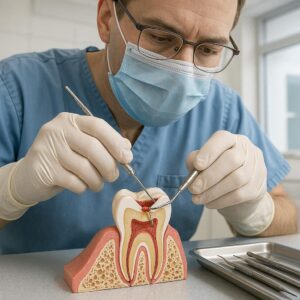
Before we dive into the code itself, it is important to understand what a pulpotomy actually is. In simple terms, a pulpotomy is a “baby root canal,” though that description is a bit of a misnomer. Unlike a traditional root canal (pulpectomy) which removes the entire pulp from both the crown and the root, a pulpotomy removes only the infected pulp from the crown portion of the tooth.
The goal is to keep the nerve tissue in the roots healthy and alive. This allows the tooth to remain functional and in place until it is naturally ready to fall out (exfoliate).
Why Do Dentists Perform Pulpotomies?
-
Deep Decay: When a cavity is so deep that it reaches the pulp (nerve) of the tooth.
-
Trauma: If a tooth is injured or chipped, exposing the nerve.
-
Pain Management: To alleviate persistent tooth pain caused by irreversible pulpitis (inflammation of the nerve) limited to the crown.
Now, why does the coding matter so much? Because insurance companies are strict. They use the specific dental code to determine what they will pay for. If a dentist uses the wrong code—or if the clinical situation doesn’t match the code—the claim can be denied. This leaves the patient responsible for the full cost.
The Primary Dental Code for Pulpotomy: D3220
When we talk about the standard dental code for pulpotomy, we are referring to CDT Code D3220.
According to the American Dental Association (ADA) Current Dental Terminology (CDT), D3220 is defined as: Pulpotomy – removal of the coronal portion of the pulp.
This code is specifically designed for primary (baby) teeth. It signifies that the dentist removed the infected pulp from the top part of the tooth (the crown), applied a medicament to stop bleeding and preserve the remaining root pulp, and then placed a restorative filling (usually a stainless steel crown) to protect the tooth.
When is D3220 Used?
-
Primary Teeth Only: Typically, this code is reserved for deciduous (baby) teeth. Permanent teeth have a different set of codes.
-
Vital Root Pulp: The roots must be healthy and free of infection. If the infection has spread to the roots, D3220 is no longer appropriate.
-
Following Pulpotomy: After the procedure, the tooth usually requires a crown (D2930 or D2931) to prevent fracture. This is often billed separately.
Pulpotomy vs. Pulpectomy: Avoiding Code Confusion
One of the most common sources of billing confusion is the difference between a pulpotomy and a pulpectomy. They sound similar, but they are drastically different procedures with different codes and costs.
Let’s clarify the difference:
| Procedure | Pulpotomy (D3220) | Pulpectomy (D3221 or D3330) |
|---|---|---|
| Definition | Removal of infected pulp from the crown only. | Removal of infected pulp from the crown AND roots. |
| Tooth Type | Almost exclusively primary (baby) teeth. | Primary teeth (D3221) or Permanent teeth (D3330). |
| Goal | To save the tooth until natural exfoliation. | To treat infection in the roots and save the tooth. |
| Ancillary Code | Usually followed by a Stainless Steel Crown (D2930). | Usually followed by a filling or crown. |
If a dentist performs a pulpectomy (removing the nerve from the roots) but accidentally bills it under D3220, the insurance company will likely deny the claim. They will argue that the work described (D3220) does not match the radiographs (X-rays) showing root canal filling material.
Secondary Code: D3221 – Pulpal Debridement
There is another code that often gets grouped into the “pulpotomy” conversation, but it serves a different purpose.
CDT Code D3221 is defined as: Pulpal debridement, primary and permanent teeth.
This code is used for the emergency removal of pulp tissue to relieve pain. It is essentially a “temporary” pulpotomy. If a patient comes in with a severe toothache, the dentist might do a pulpal debridement to stop the pain immediately. This buys time until a definitive procedure (like a pulpotomy or root canal) can be completed.
Key Differences: D3220 vs. D3221
-
D3220 is a definitive treatment. It includes placing a medicament to preserve the root and is usually finished with a permanent restoration (crown).
-
D3221 is a palliative (relief) treatment. It is an emergency measure to drain infection and reduce pain, often leaving the tooth temporarily filled with a sedative dressing.
Important Note: Some insurance plans do not cover D3221 as a standalone procedure if it is performed on the same tooth as a subsequent pulpotomy (D3220) within a short timeframe (e.g., 30 days). Always check how your plan handles emergency debridement.
The Role of Radiographs and Diagnosis Codes
A dental claim is not just about the procedure code. To get a claim approved for D3220, the dentist must also submit a diagnosis code (ICD-10). The diagnosis must justify the need for the pulpotomy.
Common diagnosis codes used with D3220 include:
-
K02.9: Dental caries (cavity), unspecified.
-
K04.01: Reversible pulpitis.
-
K04.02: Irreversible pulpitis (limited to the crown).
-
K04.00: Pulpitis, unspecified.
-
S02.5XXA: Fracture of tooth (traumatic), initial encounter.
If the diagnosis code indicates “pulp necrosis” (dead nerve) or “periapical abscess” (infection at the root tip), the insurance company will likely deny D3220. In those cases, the correct procedure is a pulpectomy (D3221 for primary teeth) or extraction.
Pulpotomy and Restorative Codes: The “Crown” Connection
A pulpotomy is rarely a standalone procedure. Once the dentist removes the infected pulp and places the medicament, the tooth is structurally compromised. Baby teeth, in particular, are prone to fracturing after a pulpotomy if they are simply filled with composite (white filling).
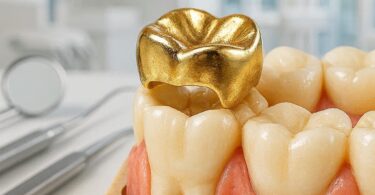
For this reason, the standard of care following a pulpotomy on a primary molar is a stainless steel crown (SSC) . This crown covers the entire tooth, protecting it from fracturing and ensuring it lasts until the baby tooth falls out.
Common Restorative Codes Following D3220:
-
D2930: Prefabricated stainless steel crown, primary tooth.
-
D2931: Prefabricated stainless steel crown, permanent tooth.
-
D2932: Prefabricated resin crown.
-
D2933: Prefabricated stainless steel crown with resin window.
Why This Matters for Your Bill
If your dentist performs a pulpotomy (D3220) and places a stainless steel crown (D2930), you will see two separate line items on your bill. Insurance coverage varies for each.
-
D3220: Usually covered at 70-80% of the dentist’s fee (depending on your plan).
-
D2930: Usually covered at 50-70% of the dentist’s fee.
Some insurance policies have “alternate benefits.” This means if the insurance company decides a filling (D2940) would have sufficed instead of a crown, they will only pay for the cost of the filling, leaving you responsible for the difference.
Navigating Insurance Coverage for Pulpotomy
Insurance billing can feel like navigating a maze. However, understanding a few key principles can help you anticipate costs and avoid surprises.
1. The “UCR” (Usual, Customary, and Reasonable)
Every dental insurance company sets a maximum allowable fee for each code, known as UCR. If your dentist charges $250 for D3220, but the insurance UCR is $180, the insurance will only pay based on the $180 fee. You are responsible for the $70 difference (unless the dentist is in-network and has agreed to write it off).
2. Frequency Limitations
Insurance companies impose frequency limitations to prevent over-treatment. For pulpotomies (D3220), most plans allow the procedure once per tooth per lifetime (for a primary tooth). You cannot have a second pulpotomy on the same baby tooth. If the tooth fails, the next step is extraction.
3. Age Limitations
Most insurance policies only cover D3220 for patients under a specific age, typically 14 or 16. While adults rarely have pulpotomies on primary teeth (as they should have lost them by then), it is a factor to consider in orthodontic cases where baby teeth are retained longer than usual.
4. In-Network vs. Out-of-Network
This is perhaps the biggest factor affecting your out-of-pocket cost.
-
In-Network: The dentist has a contract with the insurance company. They accept the insurance’s pre-negotiated fee. You pay your copay (e.g., 20% of the negotiated rate).
-
Out-of-Network: The dentist does not have a contract. You may have to pay the full fee upfront and seek reimbursement. The insurance will pay based on their UCR, which is often lower than the dentist’s actual fee.
Step-by-Step: What Happens During a Pulpotomy Procedure
To fully appreciate the coding, it helps to understand the clinical process. A pulpotomy is a meticulous procedure. Here is what happens in the chair, and what those steps mean for the billing sheet.
Step 1: Diagnosis and Anesthesia
The dentist takes X-rays to ensure the decay has not reached the roots. Local anesthetic is administered to numb the tooth and surrounding area. (This is usually included in the fee for the procedure code).
Step 2: Isolation
A rubber dam is placed around the tooth. This is a small sheet of latex or non-latex material that isolates the tooth, keeping it dry and preventing contamination from saliva.
Step 3: Removal of Decay and Pulp
The dentist uses a high-speed handpiece to remove all decay and open the pulp chamber. Then, using a slow-speed handpiece and sterile burs, they remove the infected portion of the pulp (the “coronal pulp”) from the chamber.
Step 4: Hemostasis and Medicament
Once the pulp is removed, the dentist controls any bleeding. This is a critical moment. If bleeding cannot be controlled, it indicates that the infection may have spread to the roots. In that case, the dentist might switch to a pulpectomy (D3221) or extraction. Once bleeding stops, a medicament (like formocresol, ferric sulfate, or MTA) is placed to treat the remaining root pulp.
Step 5: Restoration
The tooth is sealed. If a stainless steel crown is planned (which is typical), the dentist will prepare the tooth, fit the crown, and cement it into place.
Permanent Teeth and Pulpotomy: What Code is Used?
While the primary focus of D3220 is baby teeth, pulpotomies are sometimes performed on permanent teeth. This is usually done in a specific scenario known as an apexification or apexogenesis in young permanent teeth (teeth that have recently erupted and have open apexes—roots that haven’t fully formed).
When performing a pulpotomy on a permanent tooth, the code is different.
For permanent teeth, dentists often use:
-
D3222: Partial pulpotomy for apexogenesis – permanent tooth with incomplete root development.
This code is used specifically when the goal is to allow the root to finish developing. It is a specialized procedure usually performed by pediatric dentists or endodontists (root canal specialists).
If a permanent tooth has fully formed roots and requires removal of the coronal pulp, it is typically considered an endodontic procedure and falls under the root canal codes (D3330 – Endodontic therapy, molar, etc.).
Geographic Variations in Pricing
The cost of a pulpotomy (D3220) varies significantly based on where you live. The dental fee is influenced by the cost of living, overhead, and local market rates.
To give you a realistic idea of the cash price (without insurance) for D3220 in the United States:
| Region | Estimated Cash Price (D3220) | Estimated Cash Price (D2930 Crown) |
|---|---|---|
| Rural/Small Town | $150 – $220 | $250 – $350 |
| Suburban/Mid-Size City | $180 – $280 | $300 – $450 |
| Urban/Metropolitan | $200 – $350 | $400 – $600 |
Note: These are estimates. High-cost areas like New York City, Los Angeles, or Boston can see fees at the top end of these ranges or higher.
If you have dental insurance, your out-of-pocket cost will likely be your deductible (if not met) plus your coinsurance percentage. For example, if the negotiated fee is $200 and your plan pays 80% for basic services, you pay $40.
Common Reasons for Claim Denials
Insurance claims for pulpotomies are denied more often than you might think. Knowing the “red flags” can help you appeal a denial if necessary.
1. Lack of Pre-operative X-ray
Insurers require visual proof of decay. If the claim is submitted without a radiograph (X-ray) showing the decay reaching the pulp, they will deny it, stating that a simple filling would have sufficed.
2. No Post-operative X-ray (for crowns)
While not always required for the pulpotomy itself, if the pulpotomy was followed by a crown (D2930), insurers often want a post-op X-ray to confirm the crown fits properly.
3. Periapical Pathology
If the X-ray shows a dark spot at the tip of the root (periapical radiolucency), it indicates the infection has spread beyond the pulp. The insurer will argue that D3220 is not appropriate for a non-vital tooth and will demand a pulpectomy or extraction code instead.
4. Alternate Benefit Denial
This is a frustrating one. The insurer agrees the tooth needed treatment, but they “downgrade” the benefit. If the dentist placed a crown (D2930) after the pulpotomy, the insurer might say a filling (D2940) would have been “adequate” and only pay for the filling portion, leaving you to pay the difference for the crown.
Tips for Discussing Pulpotomy Costs with Your Dentist
Transparency is key in dentistry. If you are looking at a treatment plan that includes D3220 and D2930, do not be afraid to ask questions. Here are a few conversation starters to help you navigate the financial side:
-
“Is this tooth restorable?”
Ask the dentist to confirm that the tooth can be saved. If the decay is too extensive, a pulpotomy may be a waste of money if the tooth will fail in a few months. -
“Are these codes in-network fees?”
Make sure the fees quoted are based on your specific insurance network status. -
“Is the crown medically necessary, or is there an alternative?”
While stainless steel crowns are the gold standard for baby molars after a pulpotomy, some small anterior (front) teeth might be treated with a composite filling (though this carries a higher risk of fracture). Understanding your options helps you weigh the cost versus the longevity. -
“Can I get a pre-determination?”
Before proceeding, ask the dental office to send a “pre-treatment estimate” to your insurance. This is not a guarantee of payment, but it gives you a very accurate estimate of what the insurance will pay and what you will owe.
Frequently Asked Questions (FAQ)
Here are some of the most common questions patients ask about pulpotomy codes and procedures.
Q1: Is a pulpotomy considered a basic or major service?
Generally, D3220 (Pulpotomy) is classified as a Basic service by most dental insurance companies. Basic services usually include fillings, extractions, and pulpotomies. Major services usually include crowns, bridges, and dentures. However, remember that the stainless steel crown (D2930) that often follows a pulpotomy is typically classified as a Major service. This means you may have a higher copay for the crown (e.g., 50%) than for the pulpotomy (e.g., 20%).
Q2: What is the dental code for a pulpotomy on an adult?
For a young permanent tooth with an open apex (incomplete root formation), the code is D3222 (Partial pulpotomy for apexogenesis) . For an adult permanent tooth with closed roots, a simple “pulpotomy” is rarely billed. Instead, the definitive treatment is a root canal (D3330). In emergency cases, D3221 (Pulpal debridement) may be used as a temporary measure before the root canal.
Q3: Does insurance cover pulpotomy for baby teeth?
Yes, most dental insurance plans cover pulpotomies (D3220) for primary (baby) teeth. It is considered a standard of care to preserve space for permanent teeth. However, coverage is subject to the patient’s age (usually under 14) and the specific plan’s frequency limitations.
Q4: What is the difference between a pulpotomy and a pulpectomy code?
-
D3220: Pulpotomy (crown only).
-
D3221: Pulpal debridement (emergency).
-
D3221 (for primary tooth pulpectomy): Interestingly, there is no separate “pulpectomy primary” code. The same code D3221 is often used for primary tooth pulpectomies in many practices, although it is technically defined as debridement. For permanent teeth, the root canal code is D3330.
Q5: Why did my insurance deny the pulpotomy code?
Common reasons include:
-
Lack of X-ray evidence.
-
The patient’s age exceeded the plan’s limit.
-
The X-ray showed an abscess (infection at the root tip).
-
The procedure was performed on a permanent tooth that required a root canal instead.
-
The dentist used a code that didn’t match the tooth number (e.g., billing for a primary tooth that was already missing).
The Future of Pulpotomy Coding
Dental coding is not static. The ADA updates the CDT codes every year, usually with minor revisions and clarifications. In recent years, there has been a push for more specific codes regarding biomaterials used in pulpotomies.
Currently, D3220 does not specify which medicament is used (e.g., MTA vs. formocresol). However, as new materials gain popularity for their ability to regenerate pulp tissue (vital pulp therapy), we may see separate codes emerge to distinguish between traditional pulpotomies and more advanced regenerative procedures.
For now, D3220 remains the workhorse code for saving primary teeth. Understanding it empowers you to ask the right questions and ensure your treatment aligns with your insurance benefits.
Additional Resources
If you need to verify the latest codes or check your insurance coverage, the following resources are helpful:
-
American Dental Association (ADA) – CDT Code Book: The official source for current dental terminology. You can purchase the latest guide on the ADA website to ensure you have the most up-to-date codes.
-
Your Dental Insurance Portal: Most insurance providers offer a “cost estimator” tool. By entering the code D3220, you can see your estimated copay before the work is done.
-
National Association of Dental Plans (NADP): A resource for understanding different types of dental plans (HMO, PPO, Indemnity) and how coverage differs.
Conclusion
Navigating dental insurance can be overwhelming, especially when you are already worried about a child’s toothache or your own dental health. The dental code for pulpotomy—CDT D3220—is more than just a billing number. It represents a specific clinical procedure designed to save a tooth, alleviate pain, and maintain proper dental structure.
We have explored how this code differs from pulpectomy codes, why it is usually paired with a stainless steel crown (D2930), and how insurance companies evaluate claims for approval. By understanding these nuances, you can review your treatment plan with confidence, ask your dentist informed questions, and avoid unexpected costs. Remember, the goal is to ensure that the clinical treatment you receive is not only effective for your oral health but also accurately reflected in your insurance billing for maximum coverage.
Disclaimer: This article is for informational purposes only and does not constitute medical, dental, or legal advice. Dental coding standards (CDT codes) are updated regularly by the American Dental Association (ADA). Always consult with your dental insurance provider and dental professional for accurate diagnosis, coding, and coverage information.
Author: Dental Industry Insights Team
Date: March 24, 2026