If you are facing the prospect of replacing a full arch of upper teeth, you have likely come across a mix of clinical terms and administrative jargon. Among the most important pieces of information you will encounter is a simple five-character code: D5110.
In the world of dentistry, this code acts as a key. It unlocks understanding between your dentist, your insurance company, and your own financial planning. But what does this code actually represent? Is it simply the price of a set of teeth, or does it include the journey of fittings, adjustments, and the final smile?
This guide is designed to walk you through everything you need to know about the dental code for a full upper denture. We will strip away the confusing terminology and give you a realistic, honest look at what happens when this code is submitted, what you can expect to pay, and how to ensure you are getting the care you deserve.
Whether you are a patient preparing for your first consultation or a caregiver helping a loved one navigate the process, consider this your roadmap to understanding one of the most common—and life-changing—restorative dental procedures.
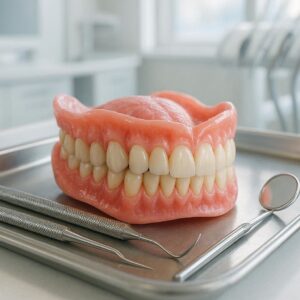
Dental Code for Full Upper Denture
What is D5110? Defining the Standard
When we talk about the dental code for full upper denture, we are specifically referring to the Current Dental Terminology (CDT) code D5110. This is a standardized code maintained by the American Dental Association (ADA) that dentists use to bill insurance companies and document patient records.
The Official Definition
D5110 is defined as “Complete Denture – Maxillary.” In simpler terms, it is the code used for a full set of artificial teeth designed to replace all of the natural teeth in the upper jaw (maxilla).
It is crucial to understand that this code represents a specific service. It is not a vague estimate for “work on the top teeth.” When you see D5110 on a treatment plan, it signifies a comprehensive process that includes:
-
The initial impressions and bite registrations.
-
The fabrication of the denture base and teeth in a dental laboratory.
-
The placement (insertion) of the final prosthesis.
-
The necessary follow-up adjustments to ensure comfort and fit within a standard timeframe (usually 90 days).
How It Differs From Other Codes
To truly grasp what D5110 covers, it helps to look at what it does not cover. Patients often confuse the full upper denture code with other restorative procedures.
| CDT Code | Description | Key Difference |
|---|---|---|
| D5110 | Complete Denture – Maxillary | Replaces all upper teeth; no existing natural teeth remain. |
| D5120 | Complete Denture – Mandibular | Replaces all lower teeth. This is a separate code for the lower arch. |
| D5211 | Maxillary Partial Denture | Replaces one or more (but not all) upper teeth, usually clasping onto remaining natural teeth. |
| D6110 | Implant Supported Complete Denture (Upper) | A denture that is supported by dental implants, rather than resting on the gum tissue. This is a more complex and expensive procedure. |
If you have any natural teeth remaining in your upper jaw that are healthy enough to keep, your dentist will likely recommend a partial denture (D5211) rather than a full denture (D5110). Understanding this distinction is vital because insurance benefits differ dramatically between “full” and “partial” prosthetics.
The Realistic Journey: What D5110 Covers
One of the biggest misconceptions patients have is that the dental code for a full upper denture covers only the “plastic teeth” they take home. In reality, D5110 covers a journey that typically takes four to six weeks (or longer, depending on healing if extractions are involved). Let’s break down what this process looks like step-by-step.
Phase 1: The Consultation and Preliminary Impressions
Before the code is even submitted, your dentist will perform an examination. If you have existing teeth that need to be extracted, the extractions are billed under separate codes (e.g., D7140 for a single extraction). Once the decision is made to proceed with a full denture, the first step under D5110 involves taking preliminary impressions.
These impressions are used to create a custom tray for a more precise final impression. Your dentist is essentially mapping the unique contours of your mouth to ensure the denture fits snugly against your gums and palate.
Phase 2: Bite Registration and Tooth Selection
This is often the most exciting phase for patients. Once the anatomy of your mouth is captured, the dentist will determine the “vertical dimension”—essentially, how far apart your upper and lower jaws should sit when you bite down.
You will also get to make aesthetic choices. This is where the human touch of dentistry shines. You can usually choose:
-
Tooth shade: From bright white to more natural, age-appropriate tones.
-
Tooth mold: The shape and size of the teeth.
-
Gum color: The shade of the acrylic base that sits against your gums.
Phase 3: Laboratory Fabrication
Your dentist does not actually make the denture in the back office. They rely on skilled dental laboratory technicians. The impressions, bite records, and aesthetic preferences are sent to the lab. Using this data, technicians craft the denture in wax first. You will have a “try-in” appointment to see how the wax denture looks and feels. This is your last chance to make adjustments to the appearance or bite before the final product is processed into acrylic.
Phase 4: Insertion (Delivery)
Once the final denture is processed and returned to the office, you come in for the insertion. This is when the code D5110 is officially “completed” in terms of active treatment. The dentist will seat the denture, check the fit, and make any immediate minor adjustments.
Phase 5: Post-Insertion Adjustments
A common fear among new denture wearers is that if the denture hurts immediately, something went wrong. This is rarely the case. The code D5110 typically includes a series of post-insertion adjustments for a specific period—usually 60 to 90 days. As your gums heal (if extractions occurred) or as you learn to wear the appliance, the tissues change shape. Your dentist will adjust the denture to alleviate sore spots and ensure the fit remains stable.
Navigating Insurance: Coverage and Limitations
Understanding the financial side of D5110 can feel like deciphering a foreign language. Insurance companies use the dental code for a full upper denture to determine how much of the cost they are willing to cover. However, “coverage” is rarely 100%.
The Frequency Limitation
Most dental insurance plans have a “frequency limitation” for dentures. This is often referred to as the “5/5/5” rule or a similar variation. Typically, insurance will cover a new denture once every five to eight years. If you lose or break your denture before that timeframe, the insurance may not pay for a replacement.
The “Allowable Amount”
Insurance companies negotiate contracted rates with dentists. If your dentist is in-network, they must charge you the negotiated “allowable amount” for D5110. For example, if a dentist charges $2,000 for a denture, but the insurance allowable is $1,500, the dentist must write off the $500 difference. Your insurance then pays a percentage of that $1,500.
Typical Coverage Tiers
Most PPO dental plans follow a structure:
-
Preventive (Cleanings/Exams): Usually 80%–100% covered.
-
Basic Procedures (Fillings/Extractions): Usually 70%–80% covered.
-
Major Procedures (Dentures/Crowns): Usually 50% covered.
This means if your denture costs $1,800, and you have met your annual deductible, your insurance might pay 50% ($900), leaving you responsible for the remaining 50% ($900).
Important Note: If your treatment plan includes extractions (D7140) before the denture, those are often categorized as “basic” services, which might have higher coverage than the denture itself. However, the denture code remains classified as “major.”
Waiting Periods
Many dental insurance plans impose a “waiting period” for major services like D5110. If you have a new insurance policy, you may need to wait six to twelve months before the insurance will contribute anything toward the cost of a denture. This is a critical factor to check before scheduling your procedure.
Types of Dentures Under D5110
Not all dentures billed under D5110 are created equal. While the code remains the same, the quality, durability, and aesthetics of the denture can vary significantly based on the materials used. It is essential to discuss these options with your dentist, as the code does not differentiate between a “budget” denture and a “premium” denture.
Conventional vs. Immediate
This is the first major fork in the road.
-
Conventional Full Upper Denture: This is the standard D5110 process. It occurs after the gums have healed from extractions, usually waiting 8 to 12 weeks. Because the gums are fully healed, the fit is often more accurate from the start.
-
Immediate Full Upper Denture: If you need teeth extracted, some dentists offer an “immediate” denture. The impressions are taken before extractions, the denture is made, and it is inserted immediately after the teeth are pulled. This means you are never without teeth. However, because the gums will shrink drastically during healing, this usually requires a “reline” (a separate procedure coded D5710 or D5750) a few months later to refit the base to the new gum shape.
Material Differences
| Material/Type | Description | Pros | Cons |
|---|---|---|---|
| Standard Acrylic | Traditional pink acrylic base with plastic teeth. | Affordable, widely available, easy to adjust. | Less durable; can break if dropped; may look artificial. |
| Premium Acrylic | Higher grade acrylic with layered, more natural-looking teeth and gum tissue. | More aesthetic, slightly more durable, better fit. | Higher cost; may not be fully covered by basic insurance plans. |
| Flexible Partial (Not D5110) | This applies to partials, not fulls. Full dentures require a rigid base for stability. | N/A | N/A |
| Implant-Retained (D6110) | A full upper denture that snaps onto implants placed in the jawbone. | Maximum stability; preserves jawbone health; feels like natural teeth. | Significantly more expensive; requires surgery; separate billing codes for implants. |
When you receive a treatment plan with D5110, ask your dentist: “Is this a standard or premium acrylic? Does this price include a reline if I need an immediate denture?” These questions ensure there are no surprises later.
The Cost Reality: What to Expect
One of the most common searches related to the dental code for full upper denture is the price. Because dental care is largely private in the United States, prices vary wildly by geography, dentist experience, and laboratory quality.
Average Price Ranges
While we cannot give an exact price without a consultation, we can provide realistic market averages for 2026.
-
Low Cost / Dental School: $600 – $1,200 per denture. This is an excellent option if you are on a tight budget. The work is supervised by experienced faculty, but appointments take significantly longer.
-
Private Practice (Standard / Insurance Rate): $1,200 – $2,500 per denture. This is the most common range for patients with dental insurance. The price usually covers the entire process from impressions to adjustments.
-
Private Practice (Premium / Digital): $2,500 – $4,000+ per denture. This involves digital scanning (no goopy impressions), premium teeth, and often includes a warranty for adjustments or breakage.
It is rare for insurance to cover the premium tier fully. If you opt for a premium denture, you will likely pay the difference between the standard fee the insurance allows and the premium price.
Life with a Full Upper Denture: Adapting to Change
Understanding the code and the cost is only half the battle. The real journey begins when you start wearing the denture. For many, the upper denture is easier to adapt to than a lower denture because the upper palate provides natural suction. However, it still requires a period of adjustment.
The First Week
You will produce more saliva. This is your mouth’s natural reaction to a foreign object. It usually subsides within a week. You may also feel that the denture is “too big.” This is normal. Your brain is learning a new spatial awareness. You will be instructed to wear the denture constantly (even while sleeping) for the first 24 to 48 hours to allow your gums to adjust to the pressure. After that, you should remove it at night to give your tissues a rest and to prevent fungal infections (denture stomatitis).
Eating and Speaking
You will not be able to bite into an apple with the same force as natural teeth—at least not initially. Dentists recommend starting with a soft diet cut into small pieces. Chew on both sides of your mouth simultaneously to prevent the denture from tipping.
For speaking, reading out loud helps. Words with “F” and “V” sounds may initially sound different because the denture changes the placement of your teeth. Within a few weeks, your tongue and lips adapt.
The Reality of Adjustments
There is a misconception that a denture should fit perfectly on day one and never change. The reality is that your mouth is dynamic. Bone resorption (shrinkage) continues over the years. A denture that fit perfectly five years ago will feel loose today. This is not a manufacturing defect; it is human biology.
When you visit the dentist for a “denture adjustment,” they are not fixing a broken code; they are providing a service to maintain the health and function of the prosthesis.
Common Mistakes and How to Avoid Them
Navigating the administrative side of D5110 can lead to financial pitfalls if you are not careful. Here are common mistakes patients make and how to avoid them.
Mistake 1: Assuming Insurance Covers “Everything”
Many patients assume that because they have “dental insurance,” a medically necessary denture is covered at 100%. As noted earlier, major services typically cap out at 50% of the allowable amount. Always get a pre-treatment estimate (predetermination) from your insurance company before starting. This document tells you exactly what they will pay.
Mistake 2: Confusing the Denture Code with Extractions
If you are having teeth removed, ensure your treatment plan separates the extraction codes from the denture code. Sometimes, if you are using a provider that bundles fees, you may lose out on insurance benefits. Extractions (D7140, etc.) often fall under “basic” coverage, while the denture is “major.” If the dentist bundles them into one “global fee” not broken down by code, insurance may deny it or process it incorrectly.
Mistake 3: Ignoring the “Replacement” Clause
If you have an existing denture that is 10 years old, and you want a new one, you might need to prove to your insurance that the old one is “unserviceable.” Some plans require a narrative from the dentist explaining why a new denture is necessary (e.g., cracked base, broken teeth, severe looseness due to bone loss). Without this, the claim might be denied as a “duplicate.”
The Implant Alternative: D6110 vs. D5110
In recent years, there has been a significant shift toward implant-supported dentures. While this article focuses on the standard full upper denture (D5110), it is irresponsible not to mention the alternative, as it affects long-term satisfaction.
A standard D5110 denture rests entirely on your gums and palate. It relies on suction and adhesion.
An implant-supported denture (D6110) attaches to 2 to 4 dental implants placed in the jawbone.
| Factor | D5110 (Standard Full Upper) | D6110 (Implant Supported) |
|---|---|---|
| Stability | Moderate; can move during eating/speaking. | Excellent; snaps into place. |
| Bone Preservation | Does not prevent bone loss; bone shrinks over time. | Stimulates bone, preventing facial collapse. |
| Palate Coverage | Covers the entire palate (roof of mouth). | Often has an open palate (horseshoe shape), improving taste and sensation. |
| Cost | Lower initial cost ($1,500–$3,000). | Higher initial cost ($5,000–$15,000+ per arch). |
| Insurance | Usually covered as “major.” | Often limited coverage; implants may be a separate benefit or not covered. |
If you are younger or concerned about long-term bone health, it is worth discussing the implant-retained option, even if it means waiting to save up the funds. A standard denture can be a wonderful solution, but it does not halt the natural bone resorption that occurs after tooth loss.
Maintaining Your Investment
Once the dental code for full upper denture has been billed and paid for, your responsibility shifts to maintenance. A well-cared-for denture can last 5 to 10 years or more, though the fit may require adjustments.
Daily Care
-
Handle with care: Fill the sink with water or place a towel down when handling your denture. Acrylic breaks easily if dropped on a hard surface.
-
Brushing: Use a soft-bristled brush designed for dentures. Regular toothpaste is too abrasive and will scratch the acrylic, creating places for bacteria to hide. Use denture cleaner or mild soap.
-
Soaking: Keep the denture moist when not in your mouth. If it dries out, it can warp and no longer fit. Soak it in water or a denture cleaning solution overnight.
The Reline
Over time, the bone under your denture shrinks. When the denture becomes loose, you may need a “reline.” This is a procedure where the dentist takes a new impression inside your existing denture and adds new acrylic material to the base to make it fit snugly again. A reline has its own codes (D5710 – hard reline) and is usually much less expensive than a new denture.
Important Notes for Readers
As you move forward with your treatment, keep these crucial points in mind:
-
Get a Written Treatment Plan: Always ask for a printed treatment plan that lists the dental code (D5110), the description, the total fee, the insurance estimate, and your estimated out-of-pocket cost. Do not rely on verbal estimates.
-
Clarify the Warranty: Ask your dentist what happens if the denture breaks in the first year. Some offices include a “laboratory warranty” that covers breakage. Others may charge a repair fee.
-
Understand the Adjustment Window: Confirm how many months after insertion the dentist will cover adjustments. If you go to a different dentist for adjustments later, they will likely charge a new fee.
-
Bone Health Matters: If you are considering a denture after extractions, ask about “socket preservation” (bone grafting) at the time of extraction. While this adds cost (D7953), it can help maintain the ridge shape, leading to a better-fitting denture for years.
-
Don’t Settle for Pain: If your denture causes persistent sores or pain that does not resolve after a few adjustments, speak up. You may need a “rebase” or “reline” sooner rather than later. Chronic pressure sores can lead to infections.
Conclusion
The dental code for full upper denture—D5110—is far more than a billing number. It represents a comprehensive clinical journey that restores function, confidence, and quality of life. From the initial impressions to the final smile, this code covers the expertise of your dentist, the skill of the laboratory technician, and the essential follow-up care required to ensure a comfortable fit.
By understanding what D5110 entails, how insurance processes it, and what your responsibilities are as a patient, you can navigate the process with confidence, avoid unexpected costs, and focus on what truly matters: enjoying a healthy, functional, and beautiful smile.
Frequently Asked Questions (FAQ)
Q: Does the dental code D5110 include the cost of extractions?
No. D5110 strictly covers the fabrication and placement of the denture. Tooth extractions are billed separately using extraction codes (such as D7140). If you need teeth pulled, you will receive two separate line items on your treatment plan.
Q: How long does it take to get a full upper denture after the code is submitted?
If no extractions are needed (conventional denture), the process typically takes 4 to 6 weeks. If you are having teeth extracted and need an immediate denture, the denture is usually ready by the day of the extraction appointment.
Q: Will my insurance pay for a new denture if I lost mine?
It depends on your policy. Most insurance plans have a frequency limit (e.g., once every 5 years). If you lose your denture before that time frame, the insurance may deny the claim as “too soon.” You should file a claim for a replacement; sometimes, the insurance will pay a reduced benefit or require a “lost denture” narrative from you.
Q: What is the difference between D5110 and D5120?
D5110 is the code for a full upper denture (maxillary). D5120 is the code for a full lower denture (mandibular). They are separate codes because the lower denture is often harder to fit due to the lack of a large palate for suction, and they are billed individually.
Q: Can I upgrade to a better denture after the code has been submitted?
Yes, but this may require an amendment to your treatment plan. If you decide you want premium teeth or a different material after the standard code has been submitted, your dentist can provide an “upgrade” fee that represents the difference in laboratory costs. Your insurance will likely only pay the portion they originally approved for the standard code.
Additional Resource
For further reading on understanding dental insurance codes and patient rights, the American Dental Association (ADA) offers a comprehensive guide to CDT codes and patient resources.
-
Link: www.ada.org/en/publications/cdt [Please note: This is the official resource for dental coding standards. Always verify coding with your provider.]